
Best Time to Visit Melbourne: Choose Your Season
Autumn for a balanced city break, summer for longer evenings, winter for indoor culture: choose Melbourne dates that suit the trip you want.
For a first Melbourne visit combining neighbourhood walks, gardens and galleries, start by comparing March–April with October–November. My editorial preference is March–April if you want that mixed trip without making summer heat part of the bargain. Choose December–February when long evenings and time beside the bay matter most; choose June–August when exhibitions, food and indoor visits are the main reason to come.
That is a recommendation about how to spend your time, not a promise of dry weather or cheaper rooms. Melbourne rewards a flexible outdoor day in every season. Your particular exhibition, match or family commitment may also be a better reason to choose dates than a general weather ranking.
Choose the season for the trip
| Your priority | Start your search with | Practical advantage | Compromise to accept |
|---|---|---|---|
| A balanced first city visit | March–April | Mix neighbourhood walks with indoor culture | Evenings cool; daylight decreases |
| Longer outdoor evenings | December–February | More scope for an evening river or bay walk | Hot spells can reshape the middle of the day |
| Galleries, food and a compact city break | June–August | Indoor visits can form the main programme | Shorter daylight and cold outdoor transfers |
| Gardens and a spring visit | October–November | An outdoor-led trip with indoor alternatives | Spring weather can change quickly |
| A particular performance or sporting event | Its confirmed dates | The trip matches its main purpose | Accommodation and other plans must fit those dates |
Australia's seasons run opposite to those in the northern hemisphere: Visit Victoria defines summer as December–February, autumn as March–May, winter as June–August and spring as September–November. Do not choose an Australian July holiday expecting a European summer.
What the weather figures do, and do not, tell you
Tourism Australia's Melbourne weather guide describes summer hot spells, cold and cloudy winter weather, and particularly changeable spring conditions. It gives approximate December sunrise and sunset times of 06:00 and 20:45, compared with 07:30 and 17:00 in June. These illustrate the seasonal difference, not a timetable for your travel date.
The useful decision is how much of your day needs pleasant conditions outside. A gallery-and-lunch trip can work in weather that would disappoint someone planning long waterfront walks. Conversely, warmer months add little value if the exhibition you want runs in winter and you dislike heat.
Keep climate and forecast separate. Climate helps you shortlist a season; the forecast determines which day gets the gardens. Check again near departure, then change the order of flexible visits once you are in the city. A wet morning does not automatically justify cancelling an entire outdoor afternoon, but persistent rain is a reason to replace it.
March–May: choose early autumn for a mixed visit
March and April are my starting point for travellers who want a substantial amount of walking and also care about Melbourne's cultural venues. The appeal is the balance: a garden visit need not dominate the holiday, and indoor time does not have to be treated as a weather rescue. May is a different proposition as the season progresses towards winter, so compare actual dates rather than treating autumn as one uniform block.
Build a day around a neighbourhood and a nearby indoor anchor. A clear spell can go to Carlton Gardens and a Carlton meal; a less inviting afternoon can become a longer museum visit. Around Federation Square, keep the lanes and river as adjustable outdoor sections before or after your main cultural stop.
Do not use an autumn label as evidence that hotels will be inexpensive. Search your actual nights, then compare nearby dates with the same room type and cancellation terms. A major event or holiday can matter more to the price you see than the seasonal average implied by a travel guide.
Pack for leaving dinner as well as starting a walk. A light daytime outfit alone is not a plan for a cool evening. If autumn colour is your main motivation, treat it as a possible seasonal feature rather than booking a non-refundable trip around a promised peak week.
December–February: use the extra evening
Summer makes most sense if your ideal Melbourne day includes substantial outdoor time, a waterfront outing or an evening walk after an indoor visit. The longer daylight gives you more choices about sequence. It does not require you to fill every available hour with sightseeing.
On a hot forecast, move the longer walk towards the cooler part of the day and give the middle to a gallery or an unhurried meal. Keep that adjustment possible when choosing timed tickets. A late outdoor appointment followed immediately by another reservation leaves less room to respond to uncomfortable conditions.
For St Kilda, decide whether the goal is a foreshore walk, a meal or time on the beach. These are different outings. A summer booking is not a guarantee of beach conditions, and a windy day may make a shorter walk plus lunch the more enjoyable choice. Avoid committing every clear day to city museums if the bay is the main reason you selected this season.
The garden timetable provides a concrete example of what changes. Royal Botanic Gardens Melbourne lists general opening of 07:30–19:30, changing to 07:30–17:30 from 1 April to 30 September, subject to updates. General entry is free; special ticketed events are separate. Check the current notice before treating a late visit as fixed.
June–August: plan a city break around indoor culture
Winter is a useful choice when you would happily spend the best part of a day with art, screen culture and good meals. The compromise is outdoor comfort and a shorter daylight window. Choose it because those activities suit you, rather than because someone has promised that every hotel will be cheap.
An effective winter rhythm is a short daylight walk, one substantial indoor visit and dinner in the same general area. Put the outdoor section before it gets dark, not automatically after the museum. If the morning is unpleasant, swap the walk for a cafe pause and keep a smaller outside section for later.
NGV's visitor information lists both NGV International and NGV Australia as normally open 10:00–17:00 with free general entry; special exhibitions may charge. Both close on Christmas Day and open from 13:00 on ANZAC Day. Those exceptions also matter if you select summer or autumn dates.
For a different indoor emphasis, ACMI's The Story of the Moving Image is a free exhibition about film, television and videogames, listed for 10:00–17:00. ACMI's museum closes on Christmas Day; special exhibitions and cinema sessions have their own arrangements. These are substantial visits, not just doorways to shelter in until rain stops.
Allow 2–3 hours for one main cultural visit and 45–60 minutes for a compact outdoor section. These are editorial planning allowances, not venue requirements. They leave room for a meal and transfers without turning limited winter daylight into a race across several districts.
September–November: keep the garden day movable
Spring appeals when gardens and being outside are central to the trip. The important trade-off is variability: do not interpret the season's name as a guarantee of gentle weather. October and November are reasonable months to compare for this kind of visit, but keep at least one indoor-led day that can switch places with the outdoor one.
Choose the garden visit after looking at the forecast rather than assigning it permanently to the final afternoon. If you postpone it until departure day and conditions deteriorate, there may be no second opportunity. A compact garden circuit in an earlier clear window is often more useful than waiting for ideal conditions that never arrive.
Seasonal blooms are another reason to preserve flexibility. Pick a visit for the landscape as a whole, with any particular flowers as an addition. Families should check the Children's Garden's own opening and seasonal rules: general access to Melbourne Gardens does not mean every feature inside follows the same timetable.
Dates and opening patterns can outweigh the season
When a specific exhibition or event drives the trip, confirm its actual programme and ticket availability before arranging flights around a remembered month. A city can host an annual event without repeating precisely the same dates, venues or admission arrangements. Keep an arrival buffer before a performance that you would be disappointed to miss.
Weekly patterns deserve equal attention. Check Queen Victoria Market's visitor information before assigning your food-browsing morning, and distinguish ordinary trading from separately scheduled evening events. A seasonal night-market idea should not become a promise that a market visit is available on any night of your stay.
Accommodation decisions should follow your planned journeys. For a winter visit focused on central cultural venues, a convenient central address may save you more inconvenience than a distant room with a lower headline rate. For a bay-led summer stay, compare the journey back after dinner with the central sightseeing you still want to do. Our Melbourne accommodation guide compares those base choices.
Turn your chosen dates into a flexible plan
For a short visit, leave one substantial outdoor block movable and book only the cultural experiences that genuinely require a fixed time. Avoid filling every day with advance commitments and then discovering that the sole sunny afternoon is occupied by an easily moved indoor visit.
Use our Melbourne itinerary for the order of neighbourhoods and transport decisions. For choosing between cultural venues, consult things to do in Melbourne. The season changes the balance and timing of that trip; it does not make every listed attraction compulsory.
Before leaving, check the forecast, your booked venue's current information and the opening notice for any garden visit. Pack removable layers, something for rain and footwear you can comfortably walk in. The best month is ultimately the one that supports your main reason to travel while leaving you a workable alternative when the weather changes.
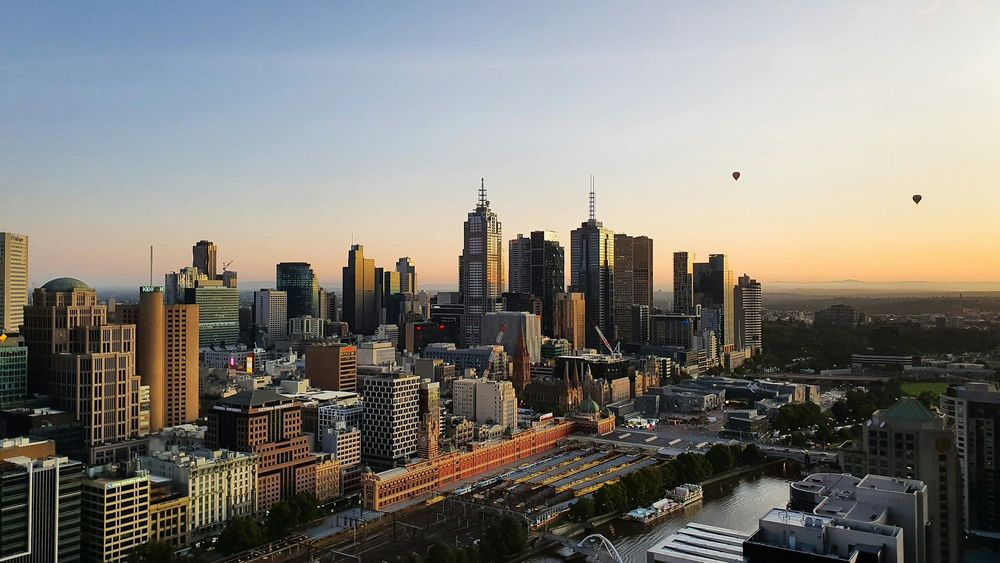
Cover photograph: Melbourne skyline in warm light with hot-air balloons overhead. Photo by Urlaubstracker on Unsplash.
Frequently Asked Questions
What is the best time to visit Melbourne for a first trip?
March–April is my editorial starting point for a balanced trip with walks, gardens and galleries. October–November is another useful comparison if spring appeals. Neither window guarantees dry days, lower prices or an event-free calendar.
Is Melbourne worth visiting in winter?
Yes, especially for art, screen culture and meals. Plan shorter outdoor sections in daylight and give substantial time to an indoor anchor. Winter is less suitable if long beach or garden days are the main reason for your trip.
Should I choose summer for Melbourne's beaches?
Summer is the logical season to compare for a bay-led visit and longer evenings. Keep the actual beach day flexible with conditions. A foreshore walk and a meal are useful alternatives when a full beach outing does not appeal.
Is there a guaranteed cheapest month to visit Melbourne?
No month guarantees the lowest price for your trip. Compare accommodation and transport for your exact nights and check events, holidays, room type and cancellation terms before deciding that one seasonal offer is better value.

Keep Exploring

Best Time to Visit Oaxaca: Weather and Festivals
Choose Oaxaca dates around comfortable sightseeing or a specific celebration. Compare the seasons, festival commitments and alternatives for rainy days.
Best Time to Visit Kyoto: Seasons and Tradeoffs
Compare Kyoto's seasons by walking comfort, crowds and seasonal scenery. Plan around uncertain blossom dates, summer heat and shorter winter days.

Best Time to Visit New York City: A Seasonal Guide
Match your New York City dates to the trip you want: spring gardens, autumn walks, summer evenings or winter culture, with practical weather alternatives.