
Best Time to Visit Singapore: Weather and Planning
February is a useful weather-first starting point, but your best Singapore dates depend on outdoor plans, holidays and how flexibly you can travel.
February is a sensible first choice for the best time to visit Singapore if lower rainfall is your main priority. It is the driest month in the official climate averages. That recommendation does not promise a dry holiday, and it does not identify the cheapest dates. For a trip centred on food, museums and neighbourhoods, a convenient flight and a suitable room may matter more than the month.
Start by separating the decisions: the season influences your outdoor plan; holidays influence which dates need closer checking; your bookings determine how easily you can change the day. Singapore rewards that approach more than a rigid division into a good season and a bad one.
Choose a period around your priorities
| Period | Weather distinction | Planning consequence |
|---|---|---|
| January | Early-month monsoon rain can persist; conditions usually become relatively drier later | Keep outdoor highlights movable |
| February–early March | Relatively dry late Northeast Monsoon; February has the lowest average rainfall | A useful starting point for a walking-focused trip |
| Late March–May | Inter-monsoon conditions; hot afternoons and thunderstorms | Break up long walks and protect indoor flexibility |
| June–September | Southwest Monsoon; showers and occasional early-day squalls | Do not assume mornings are always clear |
| October–November | Inter-monsoon thunderstorms; November enters the wetter part of the year | Give weather-dependent bookings alternatives |
| December | Wet Northeast Monsoon conditions | Choose dates for your reasons to travel, with a substantial indoor plan |
These are broad patterns, not precise seasonal boundaries for a particular year. The Meteorological Service Singapore climate overview identifies February as the driest month and November–January as the wetter stretch. It also shows how little temperature changes through the year: typical night minima are around 23–25°C, with daytime maxima around 31–33°C.
Why February is a starting point, not a guarantee
If you can choose freely and want neighbourhood walks, gardens and outdoor evenings, compare February dates first. Then check the holiday calendar and the actual cost of those dates. A weather advantage is useful only if the complete trip still suits your budget and interests.
Early March can belong to the relatively dry late Northeast Monsoon. Avoid treating all of March, April and May as interchangeable extensions of February. The official explanation of monsoon winds describes the wetter start and drier end of the Northeast Monsoon, followed by the transition between monsoons.
For a short stopover, resist paying a large premium solely to move into a supposedly perfect weather window. If both options give you a comfortable arrival, an adequate stay and bookings you can use, compare the total price before making weather the deciding factor. An extra usable afternoon can be more valuable than the label attached to the month.
What “rainy season” means for your trip
The most useful distinction is between a passing shower and a longer rain episode. A quick change of plans may handle the first; the second needs a day you would still enjoy largely indoors. Neither can be solved by assuming rain always clears after lunch.
The MSS guide to weather systems explains that local showers, Sumatra squalls and monsoon surges behave differently. Squalls can affect Singapore overnight or in the morning, while monsoon surges can produce prolonged rain. This is why “outdoors every morning, indoors every afternoon” should remain a flexible preference rather than a promise.
For a December or January visit, ask whether the holiday still appeals if your longest garden outing becomes a shorter walk between indoor stops. If the answer is yes, those dates can work well for your interests. If the whole purpose is continuous outdoor photography or uninterrupted pool time, the compromise matters more.
Do not turn a forecast rain symbol into an automatic cancelled day. Equally, do not turn an umbrella into permission to ignore a venue's weather closure. Follow the site's operating advice when outdoor facilities pause, and keep an indoor option that does not depend on the same outdoor access.
How to interpret climate averages
A monthly rainfall total describes accumulated water; it does not tell you how many complete sightseeing days you will lose. A rain-day count does not describe the duration of every shower either. Comparing those figures can help choose a broad period, but it cannot reserve a clear afternoon at Marina Bay.
The weather service's explanation of climate and weather makes the distinction explicit: climate summarises long-term patterns, while weather describes changing daily conditions. Use the first when selecting dates months ahead, then the second when deciding the order of activities near departure.
For a combined holiday, assess Singapore separately from your next destination. Do not assume a beach resort or another city shares its weather window just because it is in the same region. A sensible compromise might place the more weather-dependent part of your trip first in the decision, then fit Singapore around it.
Plan for heat without searching for winter
Choosing a nominally cooler month does not create a cool-weather city break. If heat shapes how you travel, make the accommodation and daily rhythm part of the date decision. Consider whether you can comfortably return to your room, change damp clothes and head out again without a complicated transfer.
Pack light clothing that dries readily, comfortable shoes that you do not mind getting wet, a compact umbrella and protection for your phone or camera. A light layer can be useful indoors. These are packing suggestions, not a claim that any particular clothing makes outdoor conditions suitable for everyone.
For a family or mixed-pace group, agree in advance what happens when someone wants a break. Pair a shorter neighbourhood walk with a meal or indoor visit in the same part of town. That arrangement gives everyone an acceptable alternative without requiring the whole group to abandon its plans or cross the city.
A rooftop pool should be a bonus rather than the only reason a room is worth its price. Check operating arrangements and weather restrictions directly with the hotel if that facility is central to your booking. A photograph of sunshine cannot answer either question.
Check holidays by year, not by month alone
Holiday dates deserve a separate check even after you have chosen a season. The Ministry of Manpower's official calendar for 2027 lists Chinese New Year on 6 and 7 February 2027, with 8 February also a public holiday. Those dates fall inside the month that otherwise makes a strong weather-first shortlist.
That does not make the period unsuitable. It means deciding whether the celebration is part of the trip you want and checking individual opening arrangements. A public holiday does not prove that every restaurant closes or every attraction becomes crowded. Contact a specific food venue if visiting it is essential; keep another meal option nearby.
A holiday date also does not establish the start and end of a street festival, light display or ticketed programme. If an event drives your booking, verify the organiser's current programme and ticket terms before committing. Avoid choosing flights around an old article's recurring month without a confirmed date for your year.
Find value through date comparisons
There is no verified cheapest month in this guide. Weather averages cannot establish hotel prices, and a rainy period does not guarantee a discount. Compare real flight and room totals for the dates you can actually travel, keeping the room type, occupancy, luggage and cancellation terms consistent.
Try a nearby date range as well as a different month. Record the complete stay cost, not only a nightly headline. If moving dates saves money but removes a usable sightseeing day, decide whether that trade is worthwhile for your particular trip.
Refundability has a purpose when your plans depend on weather or an unconfirmed event. Compare its cost with the amount you could lose under the cheaper terms. Do not assume an attraction will refund you simply because it rains; check what the purchased ticket allows, including any rules for changes or operator closures.
For a longer international trip, keep the comparison at itinerary level. A cheaper Singapore hotel can be outweighed by a more expensive connecting flight. Conversely, a slightly higher room rate may be acceptable if it lets you arrive rested and leave at a useful time.
Build a rain alternative you would choose willingly
Select the indoor alternative before buying a tightly timed outdoor activity. Make it something you actually want to do, and check that it works on the same day. A closed conservatory is no more useful than a rain-soaked outdoor plan.
The Gardens by the Bay opening-hours and closures page lists maintenance arrangements separately for attractions including Flower Dome and Cloud Forest. Check the relevant facility, rather than assuming the whole gardens complex has a single schedule. An indoor attraction also does not guarantee a fully sheltered journey from your hotel.
Keep the backup close enough to make the switch worthwhile. For example, organise your bay-area alternatives together instead of pairing a waterfront activity with an unrelated reservation across town. Leave at least one flexible part of the day so a change does not unravel every subsequent booking. This is a planning recommendation, not a prescribed sightseeing route.
What to check shortly before departure
Replace long-range assumptions with current information as your dates approach. Check attraction notices and your cancellation deadlines first, while there is still time to act on them. Then use the official weather tools to decide which day gets your most weather-dependent outing.
The MSS rain-area map helps you inspect where rain is occurring. The current rainfall observations show recent measurements at stations. These are short-term tools, not a reason to reinterpret a whole season or a guarantee about conditions at your next stop.
On the day, look at the location of your planned activity as well as your hotel. Carry the essentials for a shower, but retain the option to change course. The goal is a trip that works under different conditions, with dates chosen for your priorities and enough flexibility to use them well.
Plan the next part of your trip
Use these related guides to compare where to stay, what to visit or another destination in the same region. Each guide covers a separate decision; this is not a combined itinerary.
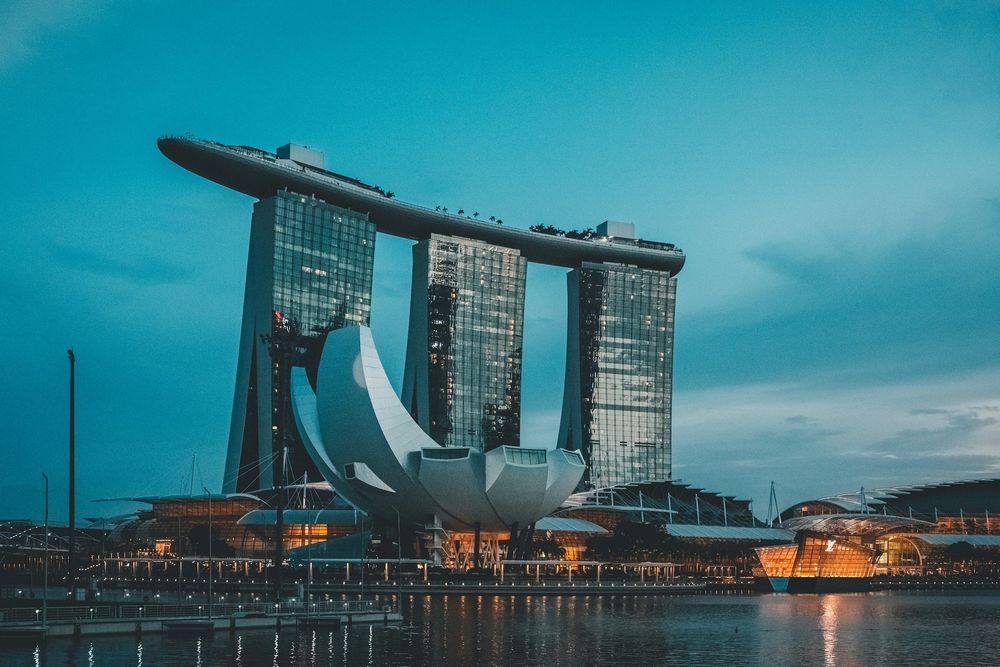
Cover photograph: Marina Bay Sands and the Singapore waterfront at dusk. Photo by Lily Banse on Unsplash (Unsplash).
Frequently Asked Questions
What is the best month to visit Singapore for weather?
February is the strongest initial choice when lower average rainfall is your priority. Check the holiday calendar and prices for your actual dates, and retain a rain alternative even in that month.
Should I avoid Singapore in December?
Not automatically. A trip built around meals, culture and flexible outdoor visits can suit December; a holiday dependent on uninterrupted outdoor conditions carries a more important weather compromise.
Does a rainy forecast mean it will rain all day?
Not necessarily. Local showers and prolonged rain episodes are different, so consult current information rather than interpreting a single weather symbol as the duration of the rain.
Is Singapore cheaper in the rainy months?
No saving is guaranteed. Compare actual flight and room totals for equivalent bookings, including cancellation terms, instead of treating a wetter month as proof of lower prices.
Can I choose dates around Chinese New Year?
Yes, but use the official calendar for your year and check the specific experiences you want. A public holiday date does not confirm the complete festival programme or every venue's opening arrangements.

Keep Exploring

Best Time to Visit Oaxaca: Weather and Festivals
Choose Oaxaca dates around comfortable sightseeing or a specific celebration. Compare the seasons, festival commitments and alternatives for rainy days.
Best Time to Visit Kyoto: Seasons and Tradeoffs
Compare Kyoto's seasons by walking comfort, crowds and seasonal scenery. Plan around uncertain blossom dates, summer heat and shorter winter days.
When to Visit Sydney: Seasons and Trip Planning
Compare Sydney's seasons for a beach holiday or city break, then check daylight, school holidays and major events before choosing your dates.