
Vienna to Budapest by Train: 2026 Route & Ticket Guide
Hourly Railjets link Vienna and Budapest in about 2h20. 2026 fares from €13, the MÁV booking trick, rail pass rules, station guides and day-trip timings.
Vienna and Budapest sit roughly 250 km apart along the Danube, and the railway that links them is one of the easiest international train rides in Europe: departures every hour, no airport transfers, and city centre to city centre in about two and a half hours. Fares start at €13 if you know which operator to book with — and that single booking trick, explained below, routinely cuts the ÖBB price by a third or more on exactly the same train.
Fast Facts
| Detail | Info |
|---|---|
| Best time to go | Trains run hourly year-round; April–June and September–October for the best city weather; late November–December to combine both capitals' Christmas markets in one rail trip |
| Getting there | ÖBB Railjet or EuroCity, Wien Hauptbahnhof → Budapest-Keleti, hourly, 2h20–2h40; advance fares from €13 (MÁV) or €19.90 (ÖBB Sparschiene, checked July 2026) |
| Where to stay | Vienna: Innere Stadt €150–250/night, Neubau €100–160; Budapest: District V (Belváros) €90–160, District VII (Jewish Quarter) €60–120 |
| Average daily budget | Vienna €120–180 mid-range; Budapest €80–130 — Hungary runs roughly a third cheaper for food, transit and hotels |
| Don't miss | The Railjet restaurant car crossing the Hungarian plain; booking via MÁV instead of ÖBB to pay €13 instead of €19.90+; Kelenföld station's M4 metro shortcut to southern Buda |
The route and the trains: Railjet vs EuroCity
The Vienna–Budapest corridor is jointly operated by Austria's ÖBB and Hungary's MÁV, and according to ÖBB there is a Railjet or EuroCity service every hour between Vienna and the Hungarian capital. The fastest Railjets cover the route in about 2 hours 20 minutes; most EuroCity services take closer to 2 hours 40 minutes. All trains call at Wien Hauptbahnhof (and usually Wien Meidling), then Győr, Budapest-Kelenföld and finally Budapest-Keleti.
The two train types are not identical, and it is worth checking which one you are booking:
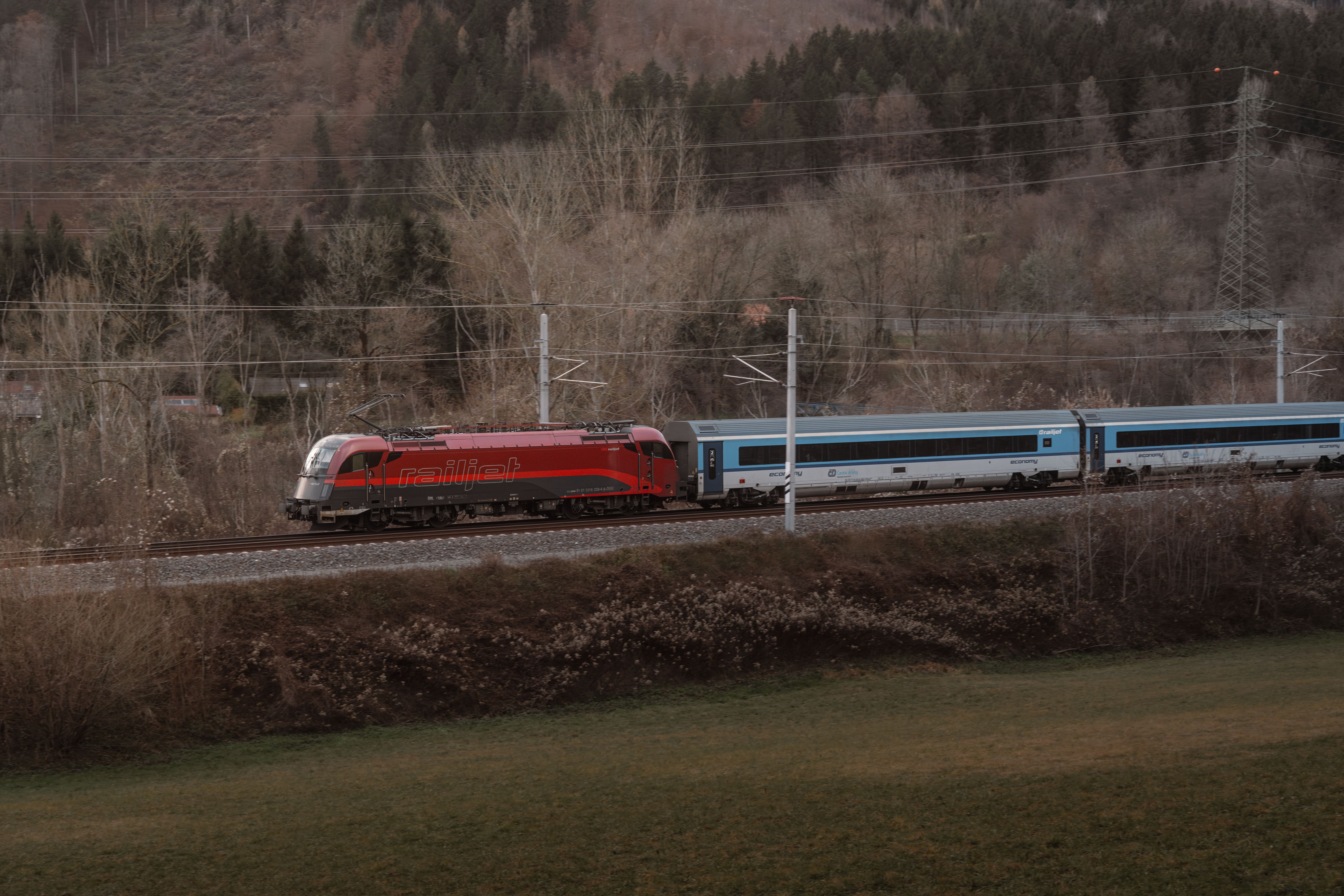
- Railjet (RJ/RJX) is ÖBB's flagship train, running at up to 230 km/h with three classes — Economy, First and Business — plus a proper sit-down restaurant car, free Wi-Fi with an onboard entertainment portal, power sockets at every seat, quiet zones and family zones with a children's play area. Business Class on the Railjet is a genuine step up: wide leather reclining seats in semi-compartments, with a seat reservation always included.
- EuroCity (EC) services use Hungarian MÁV carriages — air-conditioned, with a mix of open-plan saloons and classic six-seat compartments, plus a restaurant car. They are older and slightly slower than the Railjet but perfectly comfortable, and they cost exactly the same. Compartment fans often prefer them.
A third option exists on the corridor: the private Czech operator RegioJet runs a small number of daily trains between Vienna and Budapest with low-cost fares from around €9 and a seat assignment included with every ticket. Note one crucial difference: RegioJet trains use Budapest-Déli station on the Buda side, not Keleti, so double-check which station your ticket names before planning onward connections.
There is no sensible flight alternative for this hop — a plane plus two airport transfers takes longer door to door than the train and emits many times the carbon. The bus (Flixbus) is cheaper on some dates but takes around 3 hours in good traffic and drops you at less central stops.
Tickets and 2026 prices: Sparschiene, MÁV fares and the walk-up trap
This route uses dynamic pricing from both national operators, and the spread between the cheapest advance fare and the walk-up price is enormous — roughly €13 versus €52.70 in second class. All figures below were checked in July 2026.
ÖBB Sparschiene is the Austrian advance-purchase fare, sold at oebb.at and in the ÖBB app up to 6 months before departure. For Vienna–Budapest, Sparschiene fares start at €19.90 in second class, €29.90 in first class and €44.90 in Business Class when booked early. Sparschiene tickets are train-bound — valid only on the specific departure you book — and non-refundable, so treat them like a budget-airline fare: commit to a time, then enjoy the savings. ÖBB itself advises booking well ahead on this route, especially during peak periods.
The MÁV pricing trick. Hungarian Railways sells seats on the same trains under its own international fare, the START Europa ticket, with prices from €13 in second class between Budapest and Vienna. That undercuts the cheapest ÖBB fare by roughly a third, and it works in both directions — you can buy a Vienna→Budapest ticket from MÁV even though you are starting in Austria. Book at jegy.mav.hu or in the MÁV app; the app even includes a complimentary seat reservation, while online purchases pay a small discounted reservation fee. Like Sparschiene, the cheapest START Europa fares are tied to a specific border-crossing train, journey breaks are not allowed, and only the pricier "Plus" version can be exchanged or refunded before the first day of validity. International MÁV fares are set in euros but can be paid in forints online or at ticket offices.
Walk-up fares are the trap. Turn up at Wien Hauptbahnhof and buy a fully flexible ticket for the next train and you will pay around €52.70 in second class, €86.10 in first or €106.10 in business — roughly four times the cheapest advance price. Flexibility is the only thing you gain: the seat, the train and the journey time are identical. If your plans are genuinely uncertain, the walk-up fare at least lets you take any train that day; if you are even 80% sure of your departure time, book ahead.
Two smaller cost notes. Seat reservations on Railjet and EuroCity are optional in Economy and First — these trains are never reservation-compulsory for ordinary tickets — and cost €3 per seat via ÖBB. On summer weekends, Friday and Sunday afternoons, and around holidays, that €3 is the best money you will spend on this trip, because the trains genuinely fill. Both operators sell tickets in their mobile apps with QR-code boarding, so nothing needs printing on this daytime route, and children travel at substantial discounts.
Using a rail pass: Interrail and Eurail
Vienna–Budapest is fully covered by Interrail and Eurail passes, and it is one of the friendliest major routes in Europe for pass holders: seat reservations are optional, not compulsory. You can walk onto any hourly Railjet or EuroCity, sit in an unreserved seat and simply show your pass — Eurail's Railjet page confirms that reservations are not usually required on Railjet services like this one. If you want the certainty of an assigned seat, add one for €3 through the ÖBB website or app (the German DB site sells the same reservation for €5.50–6.90, so use ÖBB).
Whether a pass makes sense depends on the rest of your itinerary. For this route alone, a €13–19.90 point-to-point advance fare beats any pass on price. But if Vienna and Budapest are two stops on a longer swing through Central Europe — Prague, Bratislava, Kraków, Ljubljana — a pass plus optional €3 reservations is hard to beat for flexibility. Our full guide to choosing between Interrail, Eurail and country passes runs the break-even maths in detail. And if you are extending east or need to cover a long overnight leg elsewhere in Europe, see our European night trains guide for how sleeper reservations differ from daytime rules like these.
Station guide: Wien Hauptbahnhof and Budapest-Keleti
Wien Hauptbahnhof is Vienna's modern through-station, about 3 km south of St. Stephen's Cathedral. It sits on the U1 metro line (station "Hauptbahnhof", two stops to Stephansplatz in the historic centre), plus S-Bahn lines, trams D, O and 18, and dozens of bus routes. The station itself is easy: a bright, open concourse with around 90 shops and restaurants, luggage lockers, ÖBB ticket machines and a staffed travel centre. Railjets to Budapest generally depart from the central platforms; boards display the coach order so you can stand at the right sector — useful, because Railjets are long and the Business and First coaches cluster at one end. Most Budapest trains also call at Wien Meidling a few minutes later, which can be handier if you are staying in the south-west of the city.
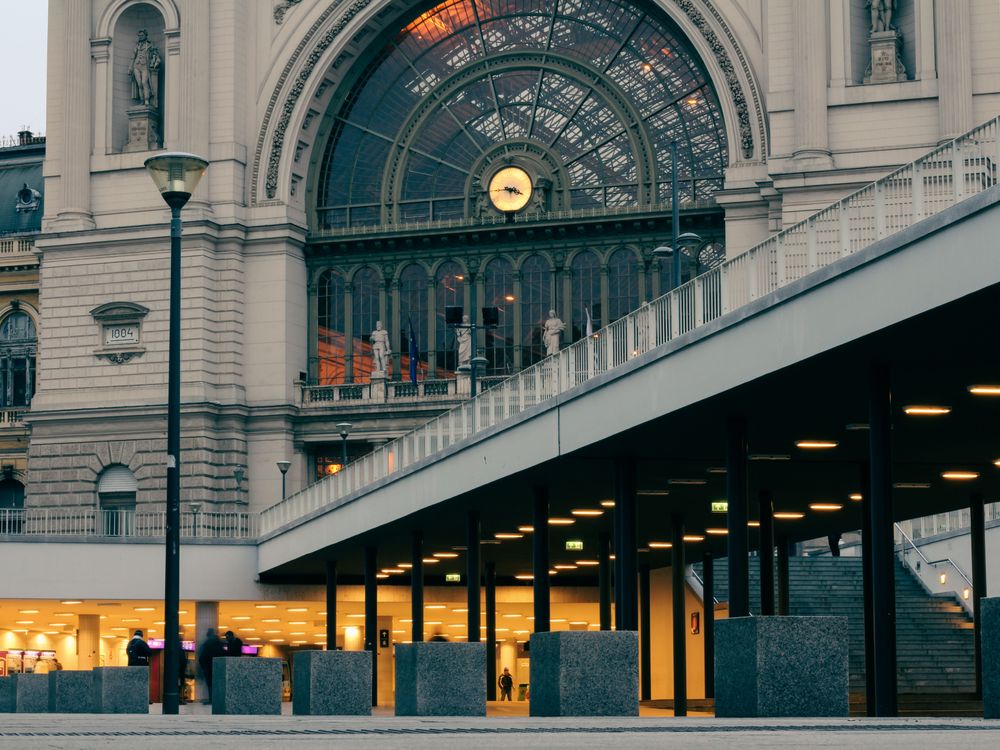
Budapest-Keleti (Eastern Station) is the grand 1884 terminus that receives the Railjets and EuroCities, and it is a sight in its own right — a vast iron-and-glass train hall behind a monumental stone façade. It connects directly to metro lines M2 (red, three stops to Deák Ferenc tér in the centre) and M4 (green), plus trams and buses on Baross tér. Inside you will find ticket machines, an international ticket office, luggage storage and the usual bakeries and convenience stores; the neighbourhood immediately around the station is workaday rather than charming, so hop on the metro rather than walking with luggage. Buy a Budapest transit ticket (single 450 HUF, about €1.15) or a 24-hour travelcard from the purple BKK machines at the metro entrance.
The Kelenföld shortcut. Every Vienna train stops at Budapest-Kelenföld on the Buda side about 10 minutes before Keleti. If your accommodation is in Buda, near Gellért Hill, or you are connecting toward Lake Balaton, get off here: Kelenföld is also on the M4 metro, and you can be checked in before the train you left has even reached Keleti. In the other direction, boarding at Kelenföld with a reserved seat saves a cross-town trek.
Remember the RegioJet exception: its trains use Budapest-Déli, the third main station, at the western end of the M2 line.
Border checks, luggage and practicalities on board
Austria and Hungary are both in the Schengen Area, so there is no systematic passport control on this route — the train does not stop at the border, and in normal operation nobody checks documents when crossing at Hegyeshalom. That said, police on either side can carry out spot identity checks on international trains, so keep your passport or EU ID card in your daypack, not in the suitcase over your head.
Luggage travels free and unweighed: you simply carry it aboard and use the racks at the coach ends or the space above and between seats — there is no check-in and no realistic size limit for normal suitcases. Bicycles can be taken on Railjets, but bike spaces are limited (5–7 per train) and must be reserved in advance; book the bike place together with your ticket. Small pets in carriers generally travel free, while larger dogs need a reduced-fare ticket and a muzzle — check the operator's current pet rules when you book. The restaurant car serves full hot meals, Austrian wine and draught beer; on the roughly 2½-hour run, lunch on the move is one of the route's genuine pleasures, and in First and Business you can order to your seat.
Timetable bookends worth knowing (checked July 2026 — always verify close to travel): the first direct train leaves Vienna around 06:40 and the last around 21:40; from Budapest the first departs around 05:40 and the last around 20:40. That spread is exactly what makes the day trip below possible.
Day trip or two-city break?
Budapest as a day trip from Vienna is entirely realistic. Take the ~06:40 Railjet, arrive at Keleti just after 09:00, and you have about eleven hours before the last comfortable return at 20:40 — enough for the Castle District's funicular views, a lángos lunch in the Great Market Hall, an afternoon soak at Széchenyi or Gellért baths and a golden-hour walk along the Danube Corso. Book both legs as separate advance singles (from €13 each with MÁV) the moment your date is fixed; the same day trip bought walk-up costs over €105 return.
Vienna as a day trip from Budapest works identically in reverse: out at 05:40 or 06:40, back on the 20:40, with a full day for the Hofburg, the Kunsthistorisches Museum and a schnitzel that overhangs the plate.
Better still: the two-city break. With hourly trains and a 2½-hour hop, the classic pattern is 3 nights in one capital and 2–3 in the other — fly into Vienna, out of Budapest (or vice versa), and use the train as the connector instead of backtracking. December is the standout season for this: Vienna's imperial Christmas markets pair naturally with Budapest's Advent fair and steaming outdoor thermal baths, and our Budapest Christmas guide covers the Hungarian half of that itinerary in detail. Trains around Christmas and New Year sell out earliest of all — book those Sparschiene or START Europa fares as soon as they open.
What to skip and the booking mistakes to avoid
- Don't buy walk-up unless you truly need flexibility. €52.70 versus €13 for the same seat is the single most expensive mistake on this route.
- Don't default to ÖBB without checking MÁV. Same trains, same day, and jegy.mav.hu is frequently €5–10 cheaper per leg. Compare both before paying.
- Don't book "Budapest" without reading the station name. ÖBB and MÁV trains arrive at Keleti; RegioJet at Déli; and Kelenföld may actually be closer to your hotel.
- Don't skip the €3 reservation on Friday or Sunday afternoons, in July–August, or around public holidays — unreserved passengers can end up standing in the vestibule for two hours.
- Don't fly this route. Door to door the train wins on time, cost and comfort — there is no direct commercial flight worth taking between the two cities.
- Don't board without water in summer. The trains are air-conditioned, but Keleti's platforms in a heatwave are not, and restaurant-car queues form.
- Skip the taxi touts at Keleti. Use the metro from inside the station or order a licensed Bolt or Főtaxi; unmetered "taxis" on Baross tér are Budapest's oldest arrival scam.
Frequently Asked Questions
How long does the train from Vienna to Budapest take?
The fastest Railjets take about 2 hours 20 minutes from Wien Hauptbahnhof to Budapest-Keleti; most services take 2 hours 30–40 minutes. Trains run hourly in both directions throughout the day.
How much does the Vienna to Budapest train cost in 2026?
Advance fares start at €13 in second class with MÁV's START Europa ticket and €19.90 with ÖBB's Sparschiene, rising to €44.90 for Railjet Business Class (checked July 2026). Fully flexible walk-up tickets cost about €52.70 in second class.
Do I need a seat reservation on the Railjet to Budapest?
No — reservations are optional on both Railjet and EuroCity services and cost €3 via ÖBB. They are strongly recommended on Friday and Sunday afternoons, in July–August, and around Christmas, when trains fill completely.
Is there passport control between Vienna and Budapest?
Both countries are in the Schengen Area, so there is no systematic border control and the train does not stop at the frontier. Police can make occasional spot ID checks, so keep your passport or EU identity card handy.
Can I visit Budapest as a day trip from Vienna by train?
Yes. Take the first Railjet around 06:40, arrive just after 09:00, and return on the last train at about 20:40 — roughly 11 hours in Budapest. Booked in advance, the round trip costs from €26 with MÁV.

Keep Exploring
Prague to Vienna by Train: 2026 Times, Fares & Tips
Everything about the Prague–Vienna train in 2026: journey time, ČD/ÖBB Railjet vs RegioJet fares from €15, rail pass rules, station guides and a Brno stopover.
London to Amsterdam by Train: Complete Eurostar Guide
The complete guide to the London–Amsterdam Eurostar: 4h19 direct from £39, check-in at St Pancras and Amsterdam Centraal, booking windows, Interrail and alternatives.
Europe by Train: Interrail, Eurail & Country Networks
How to actually travel Europe by train in 2026: Interrail vs Eurail, pass prices, reservation traps, country-by-country operators, night trains, and when point-to-point tickets beat the pass.