
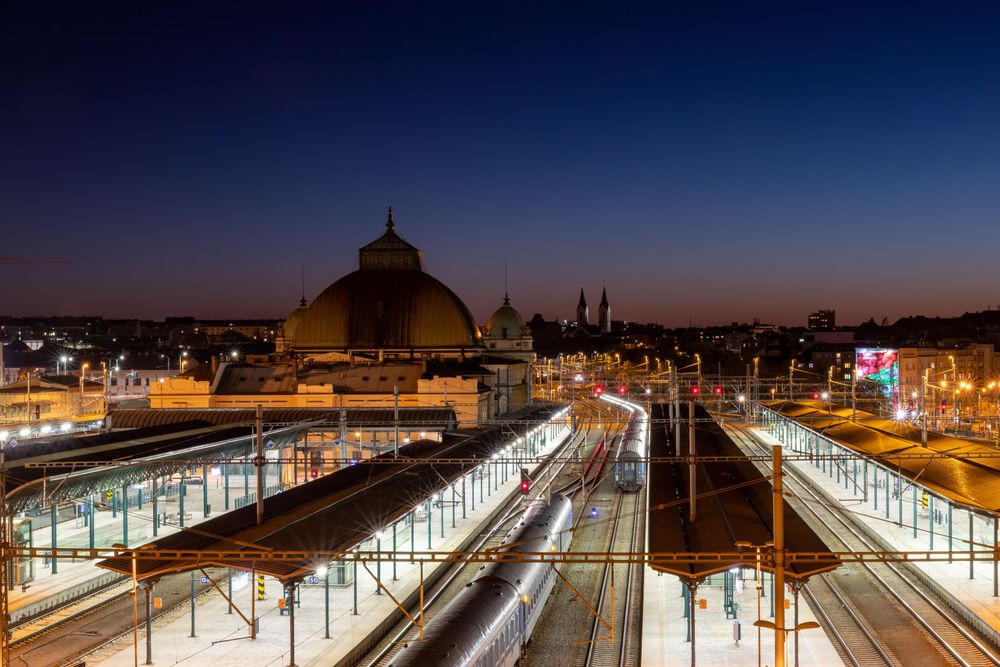
Night Trains in Europe 2026: Routes and Booking
Compare European night trains, cabins and booking rules. Updated Milan route, station changes and practical advice for connecting journeys.
A night train can turn a long transfer into part of your trip, but the useful question is not simply whether two cities appear on a route map. You need a train on your travel date, the right boarding station and a sleeping arrangement you are comfortable sharing. This guide separates the current routes from future changes and explains what to check before buying.
Routes and booking information checked on 11 September 2026. Timetable examples are dated observations, not live availability or a guarantee of punctuality.
Fast Facts
| Decision | What to check |
|---|---|
| Operator | European Sleeper for its Paris/Berlin, Brussels/Prague and Brussels/Milan routes; ÖBB Nightjet and EuroNight partners for other corridors |
| Sleeping arrangement | A seat, shared berth, private compartment and mini cabin are different products |
| Price | Compare the final amount for the same passengers, date and privacy level; a “from” fare is not a quote |
| Booking | Nightjet generally opens 180 days ahead, but some departures open later |
| Connecting trains | Use the exact station and leave a deliberate transfer margin; check whether tickets form one journey or separate contracts |
For passes, daytime trains and the wider network, begin with our Europe by train guide.
2026 night-train map and booking comparison
A route line on a map does not prove that a train runs on your date. Start with the operator that owns the service, search the exact stations and date, then compare the accommodation itself—not just the headline fare.
| Network | Best starting point | Accommodation to compare | Where to verify and book |
|---|---|---|---|
| ÖBB Nightjet | Austria, Germany, Switzerland, the Netherlands and Italy | Seat, couchette, sleeper; selected trains also show mini cabins | Nightjet destinations and the departure-specific booking result |
| European Sleeper | Paris, Brussels, Amsterdam, Berlin, Prague and the new Brussels–Milan corridor | Budget, Classic, Comfort Standard and Comfort Plus | European Sleeper timetable and disruption page |
| EuroNight partners | Central and Eastern European international routes | Product varies by operating railway | The operating railway shown for the exact train |
Do not compare a seat with a private sleeper as if they were the same product. Record the total for your party, whether the compartment is shared or private, breakfast and bedding, refund rules and the cost of daytime connections before choosing.
Choose the route before the cabin
Paris–Berlin: get off at the right Hamburg station
European Sleeper's Paris–Berlin service is useful both for Germany and for a journey onwards to Scandinavia. A dated example in the operator's timetable shows departure from Paris Nord at 18:03 on 10 September and arrival at Hamburg-Harburg at 06:57 and Berlin Gesundbrunnen at 10:10 on 11 September. That is a timetable entry, not evidence that the train arrived on time.
If Copenhagen is your destination, look at the Hamburg connection before staying aboard to Berlin. Hamburg-Harburg is not Hamburg Hbf. A daytime ticket starting at Hbf needs a separate station transfer built into the itinerary. The destination station in Berlin can also change during works. Use the departure-specific result rather than treating the city name as sufficient boarding information.
For 20 September 2026, the operator’s disruption notice specifies a replacement bus between Paris and Mons for service ES475. Check the arrangements for that departure before booking.
Brussels–Amsterdam–Berlin–Prague: check direction and works
This corridor connects Belgium, the Netherlands, Germany and Czechia. On a Prague-bound journey the Dutch calls precede the overnight run across Germany: do not apply the reverse-direction arrival times to the outward train. Likewise, an Amsterdam stop does not automatically mean Amsterdam Centraal.
The September disruption notice lists temporary changes including Berlin Gesundbrunnen and Amsterdam Bijlmer ArenA on affected dates. The regular annual route and the dated operational timetable can therefore differ. Check the notice when planning and again shortly before departure; if you already hold a ticket, also read the operator's messages about your train.
A stop in Prague can become the start of a daytime rail journey rather than another overnight transfer. Our Prague–Vienna train guide covers that next decision separately.
Brussels–Milan: current service and the December extension
The Milan route page gives 9 September 2026 as the service start and names Milano Porta Garibaldi as the destination. It separately announces Antwerp, Breda and Eindhoven from 13 December. Antwerp is in Belgium; Breda and Eindhoven are in the Netherlands. Amsterdam is not one of these announced Milan-line stops. Reaching Amsterdam therefore requires an onward connection rather than remaining on a direct Milan–Amsterdam train.
The operator's date-specific timetable now lists Brussels–Milan journeys. Check that result for your date: intermediate Swiss calls can differ from the promotional route description during works. Choose the railway station written on the ticket, including Porta Garibaldi rather than automatically assuming Milano Centrale.
For the departure pattern, SNCB International's route information lists Brussels departures on Monday, Thursday and Saturday and Milan departures on Wednesday, Friday and Sunday. Treat those as the standard pattern, subject to the dated timetable. A particular train may have seats but no private compartments, or no remaining accommodation matching your group.
Nightjet: Austria, Switzerland, Germany and Italy
Nightjet is a different operator with its own booking system and accommodation names. Use its destination directory to find the corridor, then search your exact stations and date. Vienna, Amsterdam, Zurich, Berlin and Italian destinations are starting points for a search, not a promise that every city pair has a direct nightly service.
Do not assume that a route via Germany necessarily passes through Munich or that all Nightjets carry the newest equipment. Two trains sharing a brand may offer different cabins. If a mini cabin or accessible compartment is essential, look for that specific product in the result before buying any connecting ticket. EuroNight partner services can also have different accommodation and catering from Nightjet-branded trains.
Seat, couchette, sleeper or mini cabin?
Start with the privacy you need rather than the lowest advertised fare. A seat is suitable only if you accept spending the night sitting up. A shared berth means other passengers can occupy the compartment. A private compartment means booking the specified space for your group; buying two individual berths does not necessarily secure a whole room.
European Sleeper currently distinguishes Budget, Classic, Comfort Standard and Comfort Plus. Its train guide describes the differences, including bedding and breakfast. Comfort Standard should not be assumed to have the same fittings as Comfort Plus merely because both use the word “Comfort”. Compare the actual compartment description, number of occupants and shared or private designation.
Nightjet's 2026 accommodation brochure describes mini cabins as individual sleeping spaces in the new-generation couchette carriage. They are not small hotel rooms with private bathrooms. For a couple, decide whether individual spaces suit you or whether you want a compartment together. For a family, check capacity and the children's sleeping arrangements rather than choosing solely by the adult headline price.
If climbing to an upper berth would be difficult, resolve the berth position before payment. Accessible accommodation and boarding assistance need their own check with the operator: a train serving an accessible station does not establish that every compartment will work for your needs.
Compare prices without mixing different products
European Sleeper advertises shared Classic accommodation on the Milan route from €49.99 per person one way. This is an entry price, not a fare found for a particular departure in this guide. Prices depend on the operator, privacy level and availability.
Build a comparison for your actual party:
- Enter the same date, departure station, destination and passengers for each option.
- Record whether the amount is per person, per berth or for the entire compartment.
- Check whether the result is shared or private and whether breakfast is included.
- Read change and refund conditions before deciding that the cheaper option is better value.
- Add the connecting train, any station transfer and food that the ticket does not include.
A private compartment may be attractive when its total is split among several passengers, but calculate the total first. Conversely, a rail pass does not automatically make the night train free. Search with the correct passholder option and compare the required reservation with the complete point-to-point fare. Do not buy a reservation-only product if you lack the valid underlying ticket or pass.
Keep currencies separate until you apply a dated exchange rate. Comparing a price in euros with a Swiss-franc onward fare as though the numbers were interchangeable obscures the real trip cost.
When to book and how to connect safely
Nightjet's booking FAQ says sales generally begin 180 days before departure. Its fare information notes that the December timetable change can shorten that window. “No result” several months out can therefore mean sales have not opened; it is not automatically proof that the route has been cancelled or sold out.
Check the operating days before arranging accommodation. A train running three times a week can be a good fit for a longer city break but an awkward choice for fixed weekend dates. Compare the return journey at the same time as the outward one: reversing an itinerary does not guarantee the same connections or timings.
For separate tickets, choose a buffer that reflects the consequence of missing the next train. A flexible regional connection is a different risk from the last reserved international departure of the day. A one-hour margin can be a planning starting point at the same station, not a guarantee; station changes, assistance needs or an important onward connection may justify more time or an overnight stop. Check the protection attached to the tickets you actually buy rather than assuming that all trains sold in one browsing session form a protected through journey.
Before boarding
Download the tickets and the station names before travelling. Keep identification, medication, a charger and the items needed overnight in a small accessible bag, leaving the main suitcase packed. Check luggage limits and storage arrangements for your chosen product, especially with bicycles, pets or bulky bags.
Bring water and decide on dinner before reaching the platform. Breakfast and catering are product-specific: European Sleeper's breakfast help page includes it with Comfort Plus but sells it separately for Comfort Standard and Classic. Do not extrapolate that rule to every other operator or carriage.
Arrive with time to locate the platform and carriage, using the reporting time in your booking instructions. Earplugs and an eye mask can help, but no cabin category guarantees uninterrupted sleep. Plan the first morning accordingly: luggage storage, a relaxed breakfast and a walk are easier to adapt than a tightly timed non-refundable activity immediately after arrival.
Frequently Asked Questions
Is there a direct Milan–Amsterdam sleeper in this guide?
No. The Milan line's announced December additions include Antwerp in Belgium and Breda and Eindhoven in the Netherlands, not Amsterdam. Plan an onward connection and verify the timetable for the travel date.
Does the Paris sleeper use Hamburg Hbf?
The dated September example above uses Hamburg-Harburg. Check your specific train; a connection departing Hamburg Hbf requires a station transfer.
Does a private sleeper fare mean the whole compartment?
Only if the booking explicitly says private and covers your party. Compare the total price, occupancy and facilities; individual berths in a shared compartment are a different purchase.
Does “not available” mean a Nightjet has sold out?
Not necessarily. Sales usually open 180 days ahead, but timetable changes can delay them. Check the operator's booking information and distinguish unopened sales from an unavailable accommodation category.
Should I book a tight connection after a night train?
Avoid building a trip that depends on an unverified short transfer. Check the exact arrival station, ticket conditions and alternative departures; allow more margin when tickets are separate or the onward train is the last useful service.

Keep Exploring
Scenic Trains in Switzerland: Routes, Passes and Prices
Explore top Swiss scenic trains like Glacier Express and Bernina. Get 2026 prices, pass comparisons, reservation tips, and a sample 5-day itinerary.

Where to Stay in Melbourne: Choose Your Base
Choose the right Melbourne base: central sightseeing, riverside evenings, inner-north neighbourhoods or the bay, with clear transport trade-offs.

Where to Stay in Oaxaca: Choose Your Neighbourhood
Choose your Oaxaca City base by the streets you will use most: markets near the Zócalo, Santo Domingo's cultural sights, Jalatlaco or Xochimilco.