
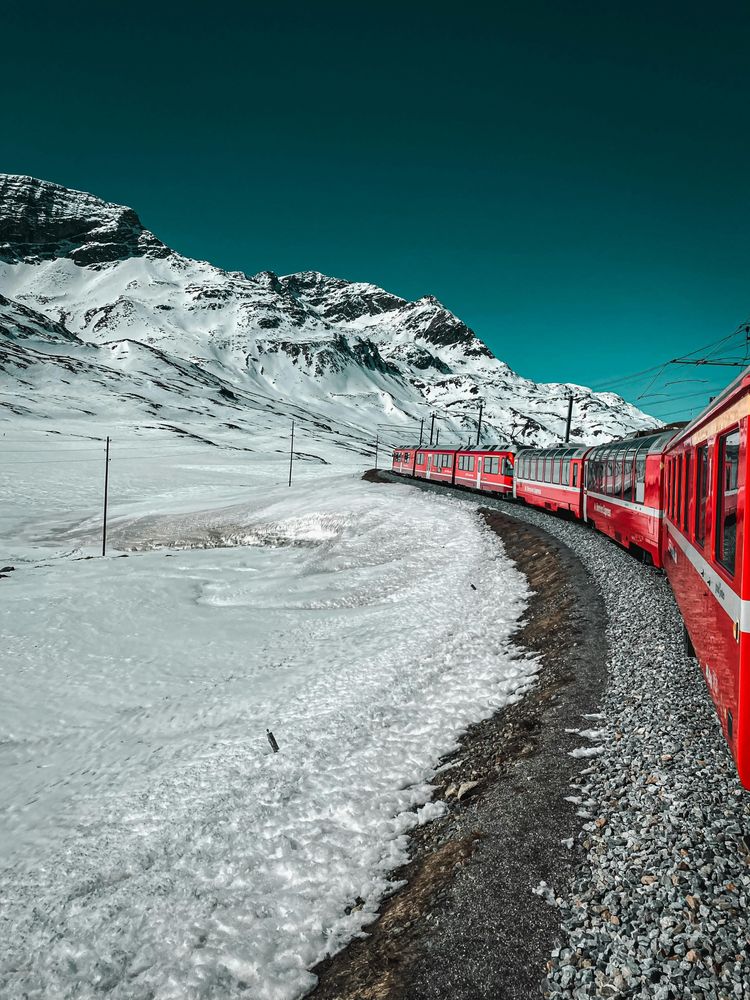
Europe by Train: Interrail, Eurail & Country Networks
How to actually travel Europe by train in 2026: Interrail vs Eurail, pass prices, reservation traps, country-by-country operators, night trains, and when point-to-point tickets beat the pass.
Europe runs on rails like nowhere else on earth. You can roll out of Paris after breakfast and be eating dinner in the Alps, cross five borders without a single passport stamp, and sleep your way from Brussels to Prague while saving a hotel night. The Interrail and Eurail pass system is what makes that hop-on freedom affordable — but only if you understand the one thing most first-timers miss: the pass price is only half the cost. Seat reservations on high-speed and night trains are where unprepared travellers quietly lose money.
This guide cuts through the marketing. We cover real 2026 prices straight from the official Interrail and Eurail sites, who each pass is actually for, when a pass beats point-to-point tickets, how reservations really work, and which scenic and night routes are worth planning your whole trip around. Prices below are 2026 figures and change at least once a year — always confirm on interrail.com or eurail.com before buying.
Quick answer: An Interrail pass is a single train ticket that lets you travel across 33 European countries. For residents of Europe, the 2026 Interrail Global Pass starts at about €283 for an adult (4 travel days within one month), with roughly 25% off for under-28s and 10% off for over-60s. Travellers who live outside Europe buy the equivalent Eurail pass. On top of the pass, some high-speed and night trains charge a small seat-reservation fee.
Fast Facts
| Interrail | Eurail | |
|---|---|---|
| Who it's for | Residents of Europe (incl. Turkey, Russia, Morocco, Algeria, Tunisia) | Residents of non-European countries (USA, Canada, Australia, Asia, etc.) |
| Coverage | 33 countries, same network | 33 countries, same network |
| Global Pass | All-country travel; flexible or continuous | Identical product, different name |
| One Country Pass | Single country, 3–8 travel days | Single country, 3–8 travel days |
| Sample Global Pass (adult, 2nd class) | 4 days/1 month ≈ €283; 7 days/1 month ≈ €381; 15 days continuous ≈ €476 | Same prices (Interrail and Eurail now align) |
| Seat reservations | Extra, not included; €0–€20+ per train | Extra, not included; €0–€20+ per train |
| Key high-speed networks | TGV/Lyria, Eurostar, Frecciarossa/Italo, RENFE AVE, ICE, Railjet | Same |
| App | Rail Planner (mobile pass + timetables) | Same Rail Planner app |
The single most important takeaway: Interrail and Eurail are the same passes, run by the same company (Eurail B.V.), at the same prices. The only thing that differs is your residency — that determines which one you're allowed to buy.
How to choose: Interrail vs Eurail
There is no quality or coverage difference, so the choice is made for you:
- Live in Europe? You buy an Interrail pass. (This also covers residents of Turkey, the Russian Federation, Morocco, Algeria and Tunisia.)
- Live outside Europe — USA, Canada, Australia, New Zealand, most of Asia, Africa, Latin America? You buy a Eurail pass.
You'll show your passport or ID on board, so don't try to game the system by buying the "wrong" one. Both give you the same Global Pass (all countries) or One Country Pass options, the same first/second-class choice, and the same Rail Planner app.
One genuine quirk: with both passes you can use your own country of residence for only one outbound and one inbound journey (the "home country rule"). If you're touring mostly within your own country, a domestic operator pass or advance tickets is usually cheaper than a Global Pass.
2026 pass prices: Global Pass and One Country examples
These are 2026 second-class adult prices, with youth (ages 12–27, ~25% off) and senior (60+, ~10% off) variants. First class runs roughly 25–30% higher. Prices are revised annually and frequently discounted in flash sales — verify before buying.
Global Pass (all 33 countries)
Interrail Global Pass prices 2026 — these are the official second-class fares listed on interrail.com. Youth travellers (12–27) pay about 25% less than adults, seniors (60+) about 10% less, and up to two children aged 4–11 travel free with each adult pass holder. First class runs roughly 25–30% higher.
| Pass | Adult 2nd class | Youth (12–27) | Senior (60+) |
|---|---|---|---|
| 4 days within 1 month | €283 | €212 | €255 |
| 5 days within 1 month | €318 | €239 | €286 |
| 7 days within 1 month | €381 | €286 | €343 |
| 10 days within 2 months | €447 | €335 | €402 |
| 15 days within 2 months | €553 | €415 | €498 |
| 15 days continuous | €476 | €357 | €428 |
| 22 days continuous | €586 | €440 | €527 |
| 1 month continuous | €696 | €522 | €626 |
| 2 months continuous | €826 | €620 | €743 |
| 3 months continuous | €956 | €717 | €860 |
Prices checked July 2026 on the official interrail.com Global Pass page, matching The Man in Seat 61 exactly. Interrail revises prices annually and runs frequent flash sales — confirm before buying.
A note on "flexi" vs "continuous": a flexi pass (e.g. "7 days within 1 month") lets you pick which 7 days you actually travel inside a one-month window — ideal for a trip with city stays in between. A continuous pass covers every single day in the period — only worth it if you're moving almost daily.
One Country Pass examples
One Country Passes cover 3, 4, 5, 6 or 8 travel days within one month and suit a single-country trip. Exact 2026 prices vary by country, but as a rough guide adult second-class passes for popular countries (Italy, France, Spain, Germany) typically fall in the €140–€260 range for a few travel days, with shorter/cheaper countries starting around €50. Confirm the current figure on the country's pass page at interrail.com or eurail.com.
When a pass saves money — and when it doesn't
The pass wins when you:
- Travel long distances frequently (e.g. several countries in two weeks).
- Want flexibility to change plans, hop on regional trains, and skip the ticket queue.
- Use reservation-free networks like Germany (ICE/IC, no compulsory reservation) and much of Central Europe, where the pass alone gets you on board.
Point-to-point advance tickets often win when you:
- Book early on fixed routes. A Paris–Marseille TGV or Madrid–Barcelona AVE booked 2–3 months ahead can be cheaper than a pass day plus its mandatory reservation fee.
- Travel mostly in your home country (remember the one-out/one-in home rule).
- Make few, predictable journeys. Two or three set trips rarely justify a Global Pass.
The hidden math: in France, Italy, Spain, Portugal and Sweden, budget €10+ in reservation fees for almost every fast train on top of your pass day. In reservation-free Germany and Austria, you usually just board and show the pass. So a pass-heavy itinerary through France and Spain costs more in reservations than the same number of days in Germany and the Benelux.
Reservations and the Rail Planner app
The free Rail Planner app (iOS/Android) is now the heart of the system. Your pass lives in the app as a mobile pass, you build a day-by-day trip, search offline timetables, and "connect" each journey to your travel day. You no longer carry a paper pass.
What the app does not always handle smoothly is seat reservations. High-speed and night trains require a reservation in addition to your pass, and quotas for pass-holders are limited and sell out — especially on French TGVs and Italian high-speed in summer. Book reservations as early as the booking window opens (often up to 90 days ahead) for popular routes. You can reserve via the Interrail/Eurail reservation service, the operator's own site, or sometimes at a station.
Typical 2026 reservation fees (per train, on top of your pass)
| Train / network | Reservation cost (approx.) |
|---|---|
| TGV / TGV Lyria (France) | €10 (limited quota) rising to ~€20 when cheap seats sell out |
| Eurostar (London–Paris/Brussels/Amsterdam) | Pass-holder fare ~£35 standard / £40+ peak; very limited quota |
| Frecciarossa (Italy) | ~€13 |
| Italo (Italy) | Not valid on a pass — Italo is private; take Trenitalia instead |
| RENFE AVE (Spain) | ~€10+ |
| ICE / IC (Germany) | No compulsory reservation; optional ~€4–€6 |
| Railjet (Austria/Central Europe) | Usually no compulsory reservation |
| Nightjet (seats) | from ~€14; couchettes from ~€34; private sleepers €74–€134+ |
Fees change and peak-season pricing applies — treat these as planning estimates, not quotes.
Night trains: sleep across borders
Europe's night-train revival is real and genuinely useful — you save a hotel night and wake up in a new city.
- Nightjet (ÖBB) is the dominant operator, linking Vienna, Munich, Hamburg, Zurich, Amsterdam, Paris, Rome, Venice and more. Reservations are compulsory: seats from ~€14, couchettes from ~€34, private sleepers higher. Details and routes at nightjet.com.
- European Sleeper runs the Brussels–Amsterdam–Berlin–Prague "Good Night Train" and is expanding; pass-holders pay a berth supplement. See europeansleeper.eu.
Book sleeper berths the moment the window opens — they're the first thing to sell out on a rail-pass trip.
Busiest scenic routes worth planning around
Some routes are destinations in themselves. Most don't require a pricey reservation, which makes them ideal pass days:
- Switzerland's Glacier Express / Bernina Line — alpine grandeur; scenic panoramic trains need a seat reservation/supplement.
- Flåm Railway & Bergen Line (Norway) — fjords and high plateau.
- Rhine Valley (Cologne–Mainz, Germany) — castles and vineyards, no reservation needed.
- Cinque Terre regional line (Italy) — clifftop villages on a local train, pass covers it outright.
- Glacier-to-sea runs through the Austrian and French Alps on Railjet and TER services.
Because Switzerland and Germany lean reservation-free, a Central European, alps-and-Rhine-focused itinerary is one of the best-value ways to use a pass.
Trains from London to Europe
Starting your rail trip in the UK? Eurostar runs high-speed trains from London St Pancras International straight under the Channel, so you can reach the heart of Europe without flying. These are the most-searched routes and how they connect.
| Destination | Journey time | Notes |
|---|---|---|
| Paris (Gare du Nord) | about 2h16 | Direct Eurostar |
| Brussels (Midi/Zuid) | about 2h | Direct Eurostar |
| Lille (Europe) | about 1h22 | Direct Eurostar |
| Amsterdam (Centraal) | about 4h | Direct Eurostar (stops at Lille, Brussels, Rotterdam) |
| Berlin | full-day trip | Change at Brussels onto ICE high-speed trains |
| Barcelona | around 10h | Change in Paris (Nord → Lyon), then TGV |
| Rome | full day | Via Paris, then an onward high-speed or overnight train through Milan |
| Switzerland (Basel/Zurich) | about 7–8h | Change in Paris onto a TGV Lyria |
Book Eurostar tickets in advance at eurostar.com — fares are cheapest early and seat reservations are compulsory on every Eurostar and connecting high-speed train. Arrive at St Pancras at least 60–90 minutes before departure for check-in and security. Non-European travellers should factor in the 2026 EES and ETIAS entry rules for the Schengen Area — see our Schengen 2026 guide before you go.
Country-by-country rail networks
Each country runs its own national operator with its own reservation rules, and that detail decides how much your pass really costs day to day. Here's what to know for the most popular Interrail and Eurail destinations.
Germany — Deutsche Bahn (DB)
Deutsche Bahn is Germany's state operator, running ICE high-speed, IC/EC intercity and regional trains, all covered by your pass. Reservations are optional on ICE and IC — you can simply board and sit in any unreserved seat — which makes Germany one of the cheapest, most flexible countries to pass-travel. The exception: a handful of busy routes turn reservation-compulsory in peak summer (for 2026, parts of the network from late June to mid-August), so check before boarding in high season. Tip: an optional reservation costs about €5.50 in second class and is worth it on Friday or Sunday ICEs, which fill up fast.
France — SNCF (TGV)
SNCF runs France's network, and its flagship TGV InOui high-speed trains require a compulsory paid reservation on every journey, no matter how short. Pass-holder quotas are tight — roughly 50 seats per train at the cheaper €10 fee, rising to ~€20 once those sell out — and they vanish weeks ahead in summer. Tip: book TGV reservations the moment the window opens (about four months out for domestic trains); slower TER regional trains need no reservation, so they're a useful free workaround on shorter hops.
Italy — Trenitalia (and Italo)
Trenitalia is Italy's state railway, and your pass covers its Frecciarossa, Frecciargento and Frecciabianca high-speed trains, intercity, night and regional services. High-speed Le Frecce trains need a compulsory reservation costing about €13; regional trains need none — just board and show your pass. Crucially, Italo (NTV), the private high-speed operator, does not accept Interrail or Eurail passes at all — to travel on a pass between cities like Rome, Florence and Milan, choose Trenitalia's Frecciarossa instead. Tip: reserve Le Frecce seats up to three months ahead at a staffed station counter or online, not at Trenitalia.com.
Spain — Renfe (AVE)
Renfe is Spain's national operator, and its AVE high-speed trains (Madrid–Barcelona, Madrid–Seville and more) require a compulsory paid reservation, typically around €10, with limited pass-holder quotas. Slower regional and Cercanías commuter trains are covered by the pass with no reservation. Tip: AVE pass-holder seats sell out early, so book up to three months ahead — and note Spain also now has rival operators (Ouigo, Iryo) that, like Italo in Italy, are not valid on your pass.
Switzerland — SBB
SBB (Swiss Federal Railways) runs one of Europe's densest, most punctual networks, and almost none of it requires a reservation — InterCity, regional and most scenic trains are covered by the pass outright, so you just hop on. That makes Switzerland superb pass value despite its high regular fares. The exceptions are the premium panoramic services (Glacier Express, Bernina Express, GoldenPass), which need a seat reservation or supplement. Tip: a Swiss-heavy itinerary squeezes huge value from a Global Pass because you skip nearly all reservation fees.
Netherlands — NS
NS (Nederlandse Spoorwegen) operates Dutch domestic trains, all covered by your pass with no reservation on Intercity or Sprinter services — just board and go. The catch is the international ICE to Germany, which becomes reservation-compulsory during peak summer (for 2026, late June to the end of August). Tip: for the popular Amsterdam–Berlin run, lock in a reservation early in summer; domestically you never need one.
Austria — ÖBB
ÖBB (Austrian Federal Railways) runs the country's network plus the Railjet trains that fan out to Munich, Prague, Budapest and beyond, and reservations are optional on standard and first-class Railjet and EC services — only Railjet Business class requires one. That keeps Austria, like Germany and Switzerland, refreshingly reservation-light. ÖBB is also the powerhouse behind the Nightjet sleeper network. Tip: you can board most Railjets with just your pass, but a cheap optional reservation is sensible on busy Vienna–Salzburg and cross-border departures.
Practical tips before you buy
- Match days to your actual movement. Count the days you'll genuinely take a long train; a 7-days-in-1-month flexi often beats a continuous pass.
- Time your trip. Reservation quotas and the best scenic routes get busiest in peak summer, so shoulder-season travel is smoother and cheaper — our month-by-month guide to the best time to visit Europe helps you pick your dates.
- Front-load reservations for France, Italy and any night train.
- Keep ID handy — pass + passport are checked together.
- Crossing the continent by coach too? Compare costs with our Europe by bus guide — buses often undercut trains on shorter or off-peak hops.
- Sort your paperwork. Non-EU travellers should check entry rules in our Schengen visa & travel rules 2026 guide before booking a multi-country pass.
Frequently Asked Questions
For the most spectacular stretch of European rail, see our dedicated guide to scenic trains in Switzerland — Glacier Express, Bernina Express and what your pass actually covers.
The bottom line
An Interrail or Eurail Global Pass is the most flexible — and often the most affordable — way to see multiple European countries by train in 2026, if you plan around reservation fees rather than ignore them. Buy the pass that matches your residency, pick a flexi-day count that fits how you'll actually move, lean on reservation-free networks like Germany and Switzerland for scenic days, and book French, Italian, Spanish high-speed and all night trains the instant the window opens. Do that, and the romance of waking up in a new country every morning comes without the budget surprises.
All prices are 2026 figures from official Interrail/Eurail sources and reputable rail guides; they change at least annually and are often discounted in sales. Always confirm current prices and reservation fees before booking.
Frequently Asked Questions
What is the difference between Interrail and Eurail?
Almost nothing except eligibility. They are the same passes, run by the same company, with the same coverage and the same 2026 prices. Interrail is for residents of Europe; Eurail is for residents of non-European countries. You prove your residency with ID when buying and on board.
Is a Eurail or Interrail pass worth it in 2026?
It's worth it if you travel long distances frequently, value flexibility, and route through reservation-free countries like Germany and Austria. For a few fixed journeys booked well in advance — especially on French or Spanish high-speed lines — point-to-point advance tickets are often cheaper once you add mandatory reservation fees.
Do I need seat reservations with a rail pass?
Yes, on most high-speed and all night trains, and they cost extra on top of the pass — roughly €10–€20 on TGV, ~€13 on Frecciarossa, ~£35+ on Eurostar, and from ~€34 for Nightjet couchettes. Many regional trains and most German/Austrian intercity trains need no reservation; just board and show your pass.
How much is an Interrail Global Pass?
In 2026, a second-class adult Global Pass starts around €283 for 4 travel days within a month, ~€381 for 7 days within a month, and ~€476 for 15 continuous days. Youth (12–27) get about 25% off and seniors (60+) about 10% off. Prices change yearly and go on sale periodically — confirm on the official site.
Can I use Interrail or Eurail on high-speed trains?
Yes — your pass is valid on TGV, Eurostar, Frecciarossa, Italo, RENFE AVE, ICE, Railjet and more. But high-speed services require a paid seat reservation in addition to the pass, and pass-holder quotas are limited, so book popular routes as early as the booking window allows.
What's the difference between a flexi pass and a continuous pass?
A flexi pass (e.g. "7 days within 1 month") lets you choose which days you travel inside a window, ideal for trips with city stopovers. A continuous pass covers every consecutive day in the period and only pays off if you're on a train almost daily.
Are night trains covered by the pass?
Yes, but you must pay a compulsory berth or seat reservation. Nightjet (ÖBB) and European Sleeper both honour passes; book sleeper berths the moment reservations open because they sell out fastest.
Do you need reservations for high-speed trains in Europe?
It depends on the operator. French TGV (SNCF), Italian Frecciarossa (Trenitalia) and Spanish AVE (Renfe) all require a compulsory paid reservation on top of your pass, usually €10–€13. German ICE (Deutsche Bahn) and Austrian Railjet (ÖBB) are reservation-optional — you can just board and show your pass — except on a few peak-summer routes. Always check the specific train before you travel.
Is an Interrail pass worth it in 2026?
For most multi-country trips, yes. A pass pays off when you cover long distances, want the freedom to change plans, and route through reservation-light countries like Germany, Switzerland and Austria where you board without extra fees. It's less worthwhile if your trip is a few fixed journeys booked far in advance on French or Spanish high-speed lines, where advance point-to-point tickets plus saved reservation fees can come out cheaper.
Can tourists buy an Interrail or Eurail pass?
Yes — both passes are open to travellers, but which one you can buy is set by your residency. If you live in Europe (including Turkey, Russia, Morocco, Algeria and Tunisia) you buy Interrail; if you live outside Europe, such as the USA, Canada, Australia or most of Asia, you buy Eurail. The passes are otherwise identical in price, coverage and the Rail Planner app, and you'll show ID on board to confirm eligibility.

Keep Exploring
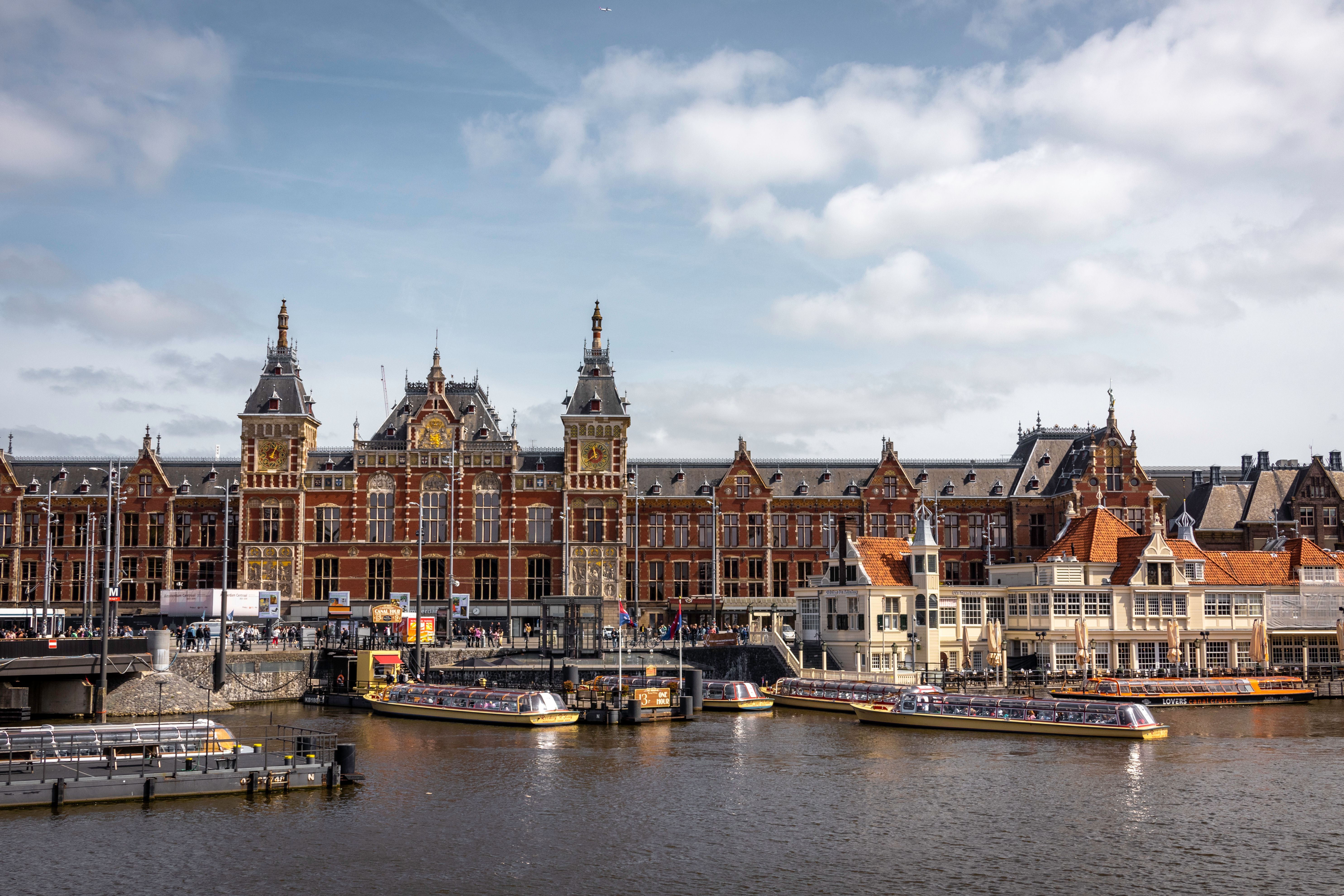
London to Amsterdam by Train: Complete Eurostar Guide
The complete guide to the London–Amsterdam Eurostar: 4h19 direct from £39, check-in at St Pancras and Amsterdam Centraal, booking windows, Interrail and alternatives.

Where to Stay in Melbourne: Choose Your Base
Choose the right Melbourne base: central sightseeing, riverside evenings, inner-north neighbourhoods or the bay, with clear transport trade-offs.

Where to Stay in Oaxaca: Choose Your Neighbourhood
Choose your Oaxaca City base by the streets you will use most: markets near the Zócalo, Santo Domingo's cultural sights, Jalatlaco or Xochimilco.