
A Kamakura day trip works best with one main area. Compare the eastern shrine and bamboo garden with Hase's Great Buddha, Hasedera and an optional coastal walk.
A Kamakura day trip from Tokyo is easiest to enjoy when you choose between two outings: the eastern shrine and temple area, centred on Tsurugaoka Hachimangu and Hokokuji, or Hase, for the Great Buddha, Hasedera and an optional walk toward the sea. Both work without changing hotels. Combining everything usually turns a day of looking into a day of transfers.
Choose the east if a bamboo garden and a substantial shrine visit appeal most. Choose Hase if the outdoor Buddha is the reason you are coming, or if you want religious art followed by a coastal change of scene. This guide deliberately keeps Enoshima and the northern temple circuit outside both routes.
Visitor information checked on 21 October 2026. Suggested visit lengths and the overall day allowance are editorial estimates; journeys, queues and breaks must be added where indicated.
Choose your part of Kamakura
| Decision | Eastern route | Hase route |
|---|---|---|
| Main visits | Hokokuji and Tsurugaoka Hachimangu | Kotoku-in and Hasedera |
| Starting point | Kamakura Station east exit | Enoden from Kamakura to Hase |
| Main attraction | Bamboo garden and shrine setting | Great Buddha, temple grounds and sea views |
| Local transport | Bus or taxi for Hokokuji; walking around the shrine | Short train journey and local walking |
| Optional finish | Central streets and a meal | Yuigahama coast, weather permitting |
| What to leave out | Hase, Enoshima and northern temples | Eastern temples, Enoshima and northern temples |
Allow a full day away from your Tokyo hotel. As a starting point, protect 4–6 hours in Kamakura, then add the outward and return journeys. That is space for two meaningful visits, lunch and some wandering, rather than a claim that every traveller will need the same number of hours.
If your Tokyo stay is short, first decide what the excursion replaces. Our Tokyo in 3 days itinerary groups the city's main neighbourhoods; Kamakura should replace a day or a substantial part of one, not be attached to an already full programme. In the 14-day Japan itinerary, make this trade before filling the last Tokyo day with shopping and packing.
Get to Kamakura before choosing local transport
Kamakura Station is the simplest shared arrival point for these routes. Hokokuji's official access information identifies the JR Yokosuka Line from Tokyo and JR Shonan-Shinjuku Line from Shinjuku. Check a journey planner for your precise departure station and service; a line name alone does not establish that every train reaches your destination without a change.
Keep your arrival flexible. A station-to-station estimate does not include finding the correct platform, walking from your hotel or reaching the first temple. Avoid booking a meal or activity immediately after the train's expected arrival. If you have luggage, arrange storage before starting; this outing is more comfortable with a small day bag.
For the eastern route, use the east exit and confirm the bus for Hokokuji before boarding. The temple directs visitors to bus stand 4, alighting at Jomyoji, followed by a short walk. Check the displayed destination rather than boarding any bus at the station. For Hase, follow the Enoden signs and take a Fujisawa-bound train to Hase.
These are separate transport decisions. You do not need to ride the whole Enoden line to reach the Great Buddha, and travelling through Fujisawa is not compulsory simply because that station appears on a regional pass advertisement.
Eastern route: bamboo first, shrine later
Start with Hokokuji so its earlier closing time shapes the day sensibly. The temple's visitor page lists 09:00–16:00 and ¥400 for visitors of high-school age and above. The bamboo garden is closed 29 December–3 January, and weather can interrupt access. Check notices before making it the reason for your excursion.
Allow 45–60 minutes as a planning estimate for a considered garden visit, with extra time if you want tea. Look at the spaces between the bamboo, the changing light and how the path directs your view. It is a garden to experience at walking pace; expecting a long wilderness hike sets up the wrong kind of visit.
Tea is optional and separate from garden admission. Confirm availability at reception before building your break around it. A crowded day can change the amount of time you spend waiting, so keep lunch flexible and do not assume an attractive photograph means you will have the setting to yourself.
Return toward central Kamakura by the locally confirmed bus or taxi connection. Walking is an option only after assessing the actual road route, weather and your energy; do not substitute an unverified wooded shortcut for an ordinary transport link. This plan does not rely on hiking trails being open.
Give Tsurugaoka Hachimangu the next substantial visit. Its official access page places it a short walk from Kamakura Station's east exit and lists gate opening 06:00–20:00 year-round. That broad access window does not mean its museums and other facilities share the same hours.
Allow 60–90 minutes for the shrine precinct as an editorial estimate. Notice the approach, the arrangement of spaces and the movement of worshippers before deciding whether you want a separately operated museum. Treat stairs and elevated areas as choices within the visit; someone unable to manage them should establish the suitable route in advance.
Finish with a meal and the central streets while you still have energy to enjoy them. Shops and restaurants have individual opening arrangements. Choose somewhere for the food and the available seating, rather than joining a queue solely because it is long. You have completed the route without needing to reach the sea.
Hase route: Great Buddha and Hasedera
Take the Enoden to Hase, then walk to Kotoku-in. The railway's Hase station guide identifies both Kotoku-in and Hasedera as nearby visits. It also provides station access information; wheelchair and stroller users arriving on a Fujisawa-bound service are asked to alert staff at their boarding station about the temporary exit arrangement.
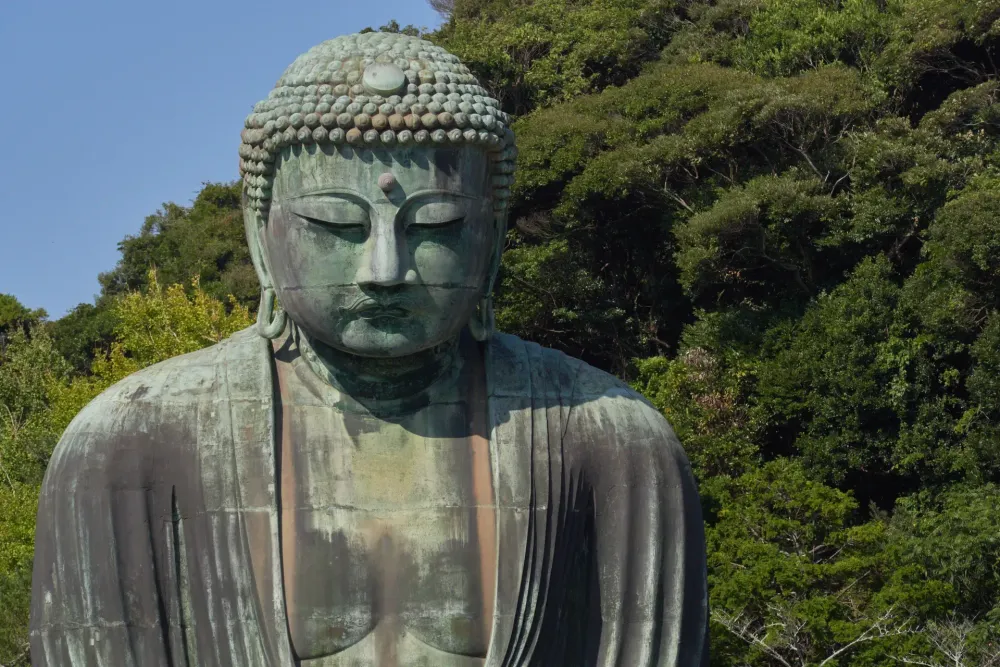
The Great Buddha is the principal image of an active temple. Give yourself time to see it as a sculpture and a religious object, not just the background to a photograph. Consider its scale from different permitted viewpoints, then look at details without blocking the route through the grounds. An editorial allowance of 30–45 minutes suits a focused visit, with longer if you want to sit quietly.
Kotoku-in's official visitor information lists general admission at ¥300. Opening is 08:00–17:30 in April–September and 08:00–17:00 in October–March, with entry ending 15 minutes before closing. Entering the statue, when available, is a separate choice with its own conditions; the route does not depend on doing so.
Continue to Hasedera and allow 60–90 minutes, more if you want an unhurried garden visit. This is the more varied stop: halls, landscaped grounds and the elevated setting invite a different kind of attention from the single monumental sculpture. Follow site signs about interiors and photography, and leave time for the uphill movement instead of treating the grounds as a flat courtyard.
Hasedera's official admission page lists adult entry at ¥400, with last entry 16:30 in July–March and 17:00 in April–June; closing follows 30 minutes later. Visit it before a long lunch if reaching the last entry time might otherwise become a race. Seasonal plants are a bonus, not a condition for this route to work.
Add the coast only while it improves the day
After the two temples, decide between a seated meal and a coastal walk toward Yuigahama. The coast changes the feel of the outing, but it does not need to become another target with a compulsory endpoint. Keep the walk short enough that returning to Hase or Kamakura Station remains straightforward.
Check conditions locally before approaching the water, and do not treat this sightseeing plan as a swimming recommendation. Wind, rain and heat can make an exposed stretch less appealing than the streets behind it. A beach view is also not a promise of seeing Mount Fuji; this guide does not schedule the day around distant visibility.
If the Great Buddha matters more than everything else, you can make that the only paid visit and spend the remaining time eating and walking. Equally, someone interested mainly in Hasedera can give it longer and shorten the coast. The useful constraint is geographical: stay with Hase instead of using every saved minute to chase an eastern temple.
Costs, crowds and changing the plan
For an adult, the two Hase temple admissions listed above total ¥700, excluding rail travel, food and optional extras. That is a simple planning subtotal, not a package price. Compare individual journeys with any pass only after selecting the route; a pass does not create time to use every included service.
When arrival is late, remove the optional finish first. If a temple's last admission is approaching, choose one substantial visit rather than rushing through two. In heavy rain, an outdoor temple day may be less satisfying than staying in Tokyo; neither route is an all-indoor fallback.
Before leaving your hotel, confirm the day's temple notices, the rail connection home and the weather. In Kamakura, keep photography and pauses clear of entrances, roads and worshippers. Return to Tokyo with time for an uncomplicated evening: the benefit of a day trip is being able to enjoy another place while keeping the same base.
Cover photograph: The Great Buddha at Kotoku-in, Kamakura. Photo: lumoplank, Wikimedia Commons, CC0 1.0. Source · License.
Frequently Asked Questions
Which Kamakura route is best for a first visit?
Choose Hase if the Great Buddha is your priority. Choose the eastern route for Hokokuji's bamboo garden and Tsurugaoka Hachimangu. Both offer a coherent day without crossing between all the main areas.
Can I combine both routes in one day?
It may be physically possible, but it leaves less time for the visits, meals and delays. Choose one route first and only add a single extra stop if actual conditions leave comfortable room.
Do I need to include Enoshima?
No. Enoshima is an additional destination and is not included in either route. Visiting Kamakura does not require riding the full Enoden line.
How long should I allow locally?
Use 4–6 hours in Kamakura as an editorial starting point, then add your journeys from and back to Tokyo. Adjust for access needs, queues and the visits you choose.


Keep Exploring
Teotihuacan from Mexico City: Plan Your Visit
Plan a day among Teotihuacan's plazas, pyramids and museums, with a route that works without a summit climb and a clear separation between ground visits and balloon packages.
Ait Ben Haddou from Marrakech: Day Trip or Overnight?
A practical choice between a long day from Marrakech and a night near the ksar, with architectural highlights, access limits and realistic time tradeoffs.
Singapore in the Rain: Choose an Indoor Outing
Build a wet-weather Singapore day around one indoor anchor, a nearby meal and a flexible next step, with clear free-area and ticket boundaries.