
Build a relaxed Yanaka walk around the shopping street, temple lanes and one optional art stop, with practical choices for closures, steps and onward travel.
Yanaka is a good choice when you want a Tokyo outing built around streets rather than a queue of major attractions. The pleasure is in the change of pace between a cemetery avenue, a small museum, a shopping street and a meal. It works best when you leave room to stop rather than trying to turn every lane into another landmark.
For a first visit, start at Nippori, make a short cemetery detour if it interests you, consider the Asakura Museum of Sculpture, then continue to Yuyake Dandan and Yanaka Ginza. Finish towards Sendagi, or return to Nippori if that suits your next journey. Our Tokyo city guide helps place this quieter outing within a wider trip.
Choose the version of the walk
| Your priority | Suggested plan |
|---|---|
| A short introduction | Nippori, Yuyake Dandan, Yanaka Ginza and nearby lanes |
| Sculpture and architecture | Add Asakura Museum when its calendar and access suit you |
| A quiet historical setting | Include a respectful walk on Yanaka Cemetery's public paths |
| Contemporary art | Add SCAI THE BATHHOUSE only during an exhibition |
| Limited walking or steps | Use the Sendagi side for a shorter shopping-street visit; verify your exact route |
| Time allowance | Around 2–3 hours for a relaxed street walk; a half-day with an indoor visit and meal |
These are editorial time allowances, not measured walking times or required visit lengths. The route is modular: you can omit the cemetery or museum without losing the shopping-street part.
Start with the right station and a workable order
Nippori is a convenient starting point on the JR network, while Sendagi provides an alternative on the Chiyoda subway line. GO TOKYO's Yanaka walking guide uses the Nippori approach towards the shopping street and the Yuyake Dandan steps. Decide which station suits the rest of your day before choosing the direction of the walk.
For the route here, begin on the west side of Nippori and orient yourself towards Yanaka. Keep the station, cemetery, Asakura Museum and Yanaka Ginza saved on a map. This is a neighbourhood route rather than a waymarked trail; check the street at each decision point rather than following a crowd into residential space.
If an indoor visit matters, put its opening arrangements first. A museum early in the route followed by shopping gives you flexibility when a visit takes longer than expected. If you mainly want food and shops, start from the shopping-street end and add only the detour that still appeals.
Yanaka Ginza is not the luxury-shopping district of central Ginza. Use the full name when looking up directions. A search for “Ginza” alone can send the rest of your group to a very different part of Tokyo.
A cemetery detour requires a different pace
Yanaka Cemetery is part of the neighbourhood's historical landscape and an active place of remembrance. The cemetery operator's official page provides maps that help distinguish the main paths from individual plots. Use those maps if you want to understand the layout rather than searching casually between graves.
The Tokyo Metropolitan Park Association's cemetery guidance asks visitors to walk quietly, avoid entering plots without permission and take litter away. Give people visiting graves priority and change your route if a service or private gathering is taking place.
Choose a short section of the public paths and return towards the museum and shopping-street side. You do not need to find a particular famous grave for the detour to be worthwhile. Avoid close photographs of mourners, offerings or personal inscriptions, and do not treat the cemetery as a picnic stop.
This can also be the part to omit with a group that mainly wants shopping or with children who need a livelier break. A respectful visit includes recognising when this setting does not suit the day's mood.
Asakura Museum: one focused indoor choice
The Asakura Museum of Sculpture's official introduction explains that the building was the sculptor's home and studio. That makes it an appealing choice for someone interested in the relationship between art and domestic architecture, rather than another large museum collection to complete.
Allow the visit to stand on its own. Look at how the studio and living spaces differ, then return to the streets rather than immediately adding several other museums. This is where Yanaka can offer a different afternoon from a day built around Ueno's major institutions.
Check both the current Japanese museum homepage and its calendar before setting out. At the research check on 20 October 2026, the museum announced exterior work; its specific closure notice covers 5–12 November 2026, including ordinary closing days. Do not rely only on a standing English information page.
The museum asks visitors to remove shoes and wear socks, and it states that it is not barrier-free. Confirm requirements directly if access is important to you. Do not assume that an open museum guarantees access to every garden or room, especially while work is taking place.
If it is closed, keep the walk. There is no need to replace the museum automatically with a distant attraction: use the time for the shopping street, a meal or an art gallery with a confirmed exhibition.
Yuyake Dandan and Yanaka Ginza
Yuyake Dandan is the staircase above Yanaka Ginza. Stop briefly for the view while keeping the steps passable, then descend if they suit your mobility. The name and familiar photographs can encourage visitors to wait for a perfect sunset, but the walk does not depend on a particular light or weather.
The shopping street is the place to slow down. GO TOKYO describes Yanaka Ginza as a traditional shotengai with small independent food and daily-goods shops. Browse one stretch before deciding where to buy a snack; a little attention to what the shops actually sell is more rewarding than collecting every item mentioned online.
The shopping association's official site is the useful starting point for its shop directory and local information. Opening arrangements belong to individual businesses. Do not expect every shutter to rise together, or assume that a public street being accessible means the shop you want is open.
A late morning or afternoon visit is our suggested starting point if shopping matters, after checking any particular business you intend to visit. An early walk can still suit architecture and quiet streets, but it is a different outing from browsing active shops.
Ask where a takeaway item should be eaten and dispose of packaging as the vendor requests. Pause out of the flow of pedestrians, leave shop entrances clear and ask before photographing displays or staff. A small purchase or a proper café stop can make the visit more satisfying than walking the length of the street while looking only at a screen.
Keep the side streets selective
Once you have explored Yanaka Ginza, choose a few nearby lanes rather than trying to cover the entire Yanaka–Nezu–Sendagi area. The smaller streets give the main shopping strip its context, but they remain routes used by residents and businesses.
Follow public streets and posted signs. An open gate is not an invitation to enter a temple building, courtyard or home. Where a religious site welcomes visitors, follow its own instructions and give worshippers space. The exterior of a wall, roofline or doorway can be appreciated without turning it into a photo session.
The shopping association's area map helps you relate the shopping street to nearby stations and cultural places. Use it to choose one next stop, not as a checklist. For a compact visit, finishing towards Sendagi is a straightforward way to keep the outing contained.
If your group is tired, end with a meal instead of adding another neighbourhood because it appears nearby. Short distances on a map still accumulate when you stop frequently, navigate small streets and browse shops.
An optional contemporary-art extension
SCAI THE BATHHOUSE is a separate choice towards southern Yanaka, useful if contemporary art is one of your reasons for coming. Check the gallery's own access and opening information before adding the detour: it closes between exhibitions, as well as on its stated weekly and holiday closures.
Choose the exhibition first, then decide whether to extend the walk south or approach from the gallery's recommended station route. Do not assume that a gallery's published weekly hours mean it has an exhibition every week of the year.
For a short visit, choose Asakura or SCAI according to your interests and the day's calendar. Doing both can work with more time, but the purpose is to enjoy the work rather than make two quick doorway stops. Keep lunch or a café break between indoor visits if you build a longer afternoon.
Steps, rain and practical comfort
Yuyake Dandan is a staircase, and the wider area includes slopes. The museum also has explicit access limitations. If you need a route without stairs, plan a shorter approach from the Sendagi side with current station-access information and a checked street route; do not assume the whole walk becomes accessible by changing its starting point.
In rain, reduce the outdoor circuit around a confirmed indoor opening and a café rather than extending the cemetery portion. On a hot day, choose a shorter route and an indoor break. Neither shops nor galleries should be treated as guaranteed shelters when their opening has not been checked.
Travel with a small bag if possible. Nippori's airport connection can make the neighbourhood look tempting immediately before or after a flight, but the narrow shopping street and steps are awkward with large luggage. Confirm storage separately if that is part of your plan, and protect the time needed to reach your train.
Combine Yanaka with Ueno only when the day has room
Yanaka and Ueno are close enough to consider together, but they offer different visit structures. Yanaka is a neighbourhood walk with optional small art stops; Ueno can involve substantial museum time. Our Ueno Park guide helps you choose that second part deliberately.
For one day, pair a focused Ueno museum visit with a shorter Yanaka walk, or give Yanaka the afternoon and leave the major museums for another day. Avoid stacking several indoor collections onto a route intended to be relaxed. Our three-day Tokyo itinerary can help you distribute the bigger neighbourhood choices.
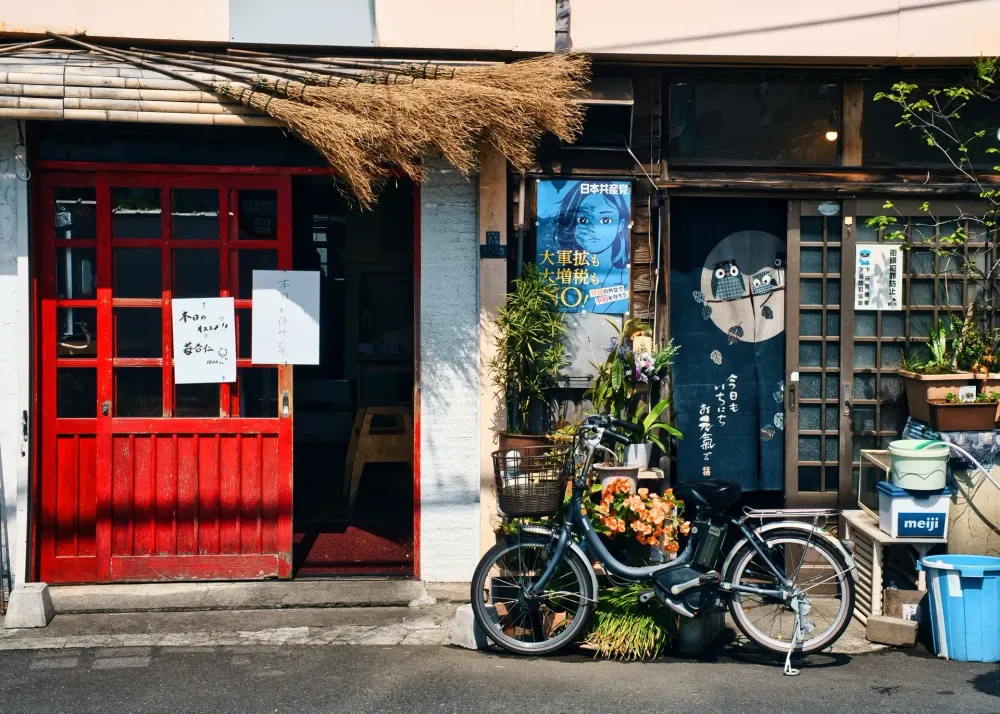
Cover photograph: Shopfront and parked bicycle in Yanaka, Tokyo. Photo by Travel with Lenses / Pexels. Source · License.
Frequently Asked Questions
How much time should you allow for Yanaka?
Around two to three hours is our suggested allowance for a relaxed street walk. Leave a half-day if you add a museum or gallery and a meal; shop browsing can easily change the pace.
Which station is best for the walk?
Nippori suits a route including the cemetery and Asakura side before Yanaka Ginza. Sendagi is useful for a shorter shopping-street visit or an onward subway journey. Choose around your route and access needs.
Does Yanaka Ginza have one opening time?
No. Shops set their own opening arrangements. Check any particular business you want to visit; an accessible street does not mean every shop is trading.
Can you visit Yanaka Cemetery as a tourist?
A respectful walk on public paths is possible. Follow the operator's guidance, remain quiet, avoid entering plots without permission and give people visiting graves priority.
Should you book the whole walk around Asakura Museum?
Only after checking its current calendar and access requirements. The museum announced work and a 5–12 November 2026 closure during our research. The street route still works without an indoor visit.

Keep Exploring
Palermo Buenos Aires: Choose Your Neighbourhood Walk
Choose between Palermo Soho, Hollywood and the parks, with practical walking plans, transport checks and room for a proper café stop.
Kampong Glam: A Neighbourhood Walk
Choose a compact Kampong Glam walk, understand mosque visiting arrangements and leave time for Malay heritage, independent shops and a meal.
Recoleta: Cemetery, Museums and a Neighbourhood Walk
Choose a cemetery visit, a substantial art stop and a manageable Recoleta walk, with admission distinctions and alternatives for rain or limited time.