
UNESCO World Heritage Cities in Europe: Complete Guide
From Krakow's 1978 inscription to Vienna's 2024 reprieve: 16 European UNESCO heritage cities with criteria, named monuments, entry fees in EUR and the best month to visit.
Europe holds roughly 470 UNESCO World Heritage sites — more than any other continent — and around sixty of them are historic city cores inscribed for their architecture, urban fabric, or living cultural traditions. The list opens in 1978 with Krakow's historic centre, one of the very first twelve sites ever inscribed, and stretches forward to inscriptions still being added each summer. This guide is a working itinerary for sixteen of the most rewarding heritage cities, with the UNESCO criteria that justify each listing, the specific monuments that anchor a visit, and what it actually costs to walk through the door in 2026.
Fast Facts
| Detail | Info |
|---|---|
| UNESCO city sites in Europe | ~60 historic urban cores out of ~470 European sites (cultural inscriptions, excludes natural and industrial heritage) |
| Oldest inscription | Krakow historic centre — 1978, among the first twelve sites ever inscribed on the World Heritage List |
| Peak-season premium | Expect +30–50% on hotels in Florence, Venice, Prague and Bruges between June and August; April–May and October give the same monuments without the queue |
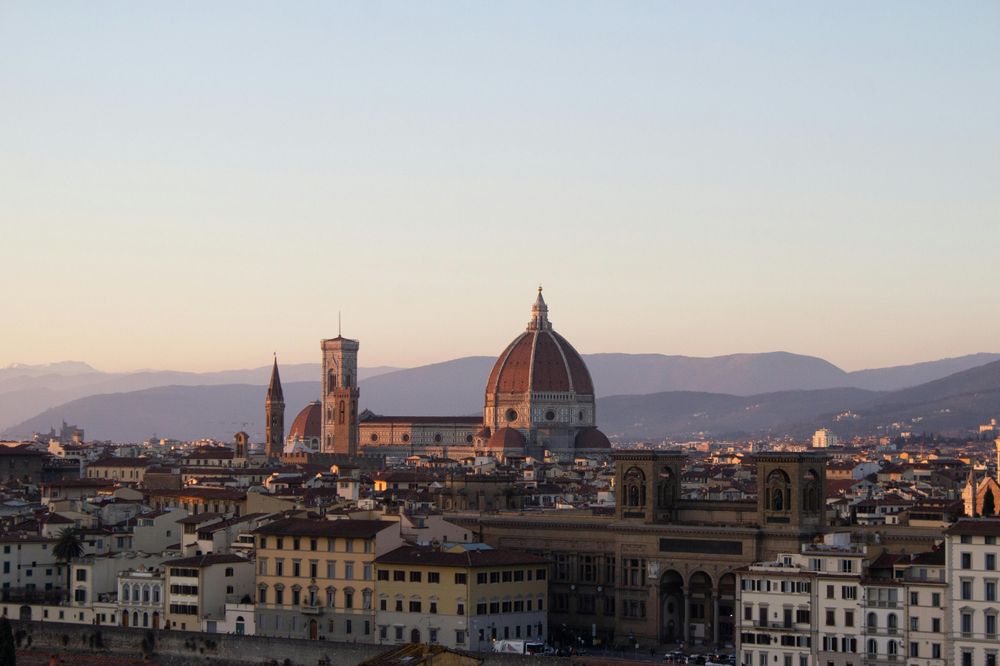
| Must-not-miss | Florence: Brunelleschi's dome (completed 1436), the architectural breakthrough that defined the Renaissance |
| Free walking access | The historic cores themselves cost nothing to enter — most UNESCO value sits in the streetscape; paid tickets apply only to specific monuments and museums |
What "World Heritage City" actually means
The UNESCO World Heritage List ranks sites against ten selection criteria, six cultural and four natural. A historic city core typically qualifies under three or four of them. Criterion (i) rewards a "masterpiece of human creative genius" — Florence's dome, Bruges's Béguinage. Criterion (ii) rewards cities that show "an important interchange of human values" across cultures or eras — Cordoba's Mezquita, where caliphal Islam, Mudéjar Christianity and Renaissance baroque meet on one footprint. Criterion (iv) rewards "an outstanding example of a type of building, architectural or technological ensemble" — Bath's Georgian terraces, Prague's intact medieval-baroque street plan. Criterion (vi) rewards association with "events, living traditions, ideas, beliefs, artistic and literary works" — Salzburg as Mozart's birthplace, Krakow as Poland's royal coronation city.
A site can also lose its status. Vienna's historic centre spent eight years on the List of World Heritage in Danger over a planned high-rise development before being removed in 2024 — the same mechanism that delisted Liverpool's docks in 2021. Inscription is a recognition, not a guarantee.
For context on how cities use heritage status to anchor their cultural calendars, see our guide to European festivals across the year — many of the most resonant festivals happen inside UNESCO-listed cores.
Italy: five cities, five centuries
Italy has 61 UNESCO sites, more than any other country, and five of them are historic city cores within striking distance of each other.
Florence (inscribed 1982, ID 174)
The historic centre of Florence was inscribed under criteria (i), (ii), (iii), (iv) and (vi) — the maximum possible cultural reach. The case is essentially that Florence built the Renaissance: Brunelleschi's dome over the Cattedrale di Santa Maria del Fiore, completed in 1436 and still the largest masonry dome ever built, was the technological breakthrough; the Uffizi, Palazzo Vecchio, Santa Croce and the Medici tombs by Michelangelo are the cultural payoff.
The dome climb itself costs €30 (cupola + cathedral + baptistery + Giotto's bell tower + museum, valid 3 days) and must be booked online in advance through the Opera del Duomo. The Uffizi Gallery runs €25 in peak season (March–October) and €12 in low season. Go in February or November for half-empty churches and bookable dome slots; June and July queue times routinely exceed two hours.
Venice and its Lagoon (1987, ID 394)
Venice is inscribed under all six cultural criteria, one of only a handful of sites in the world to achieve this. The lagoon city, founded in the fifth century on 118 small islands separated by canals and joined by 400 bridges, is read by UNESCO as a single architectural masterpiece. The Bridge of Sighs (Ponte dei Sospiri, 1614) connecting the Doge's Palace to the New Prisons, the Basilica di San Marco with its Byzantine mosaics, and the Rialto Bridge stand at the centre of the inscribed area.
A Doge's Palace + St Mark's Museum combined ticket is €30; the Basilica's main floor is free but the Pala d'Oro and treasury cost €5 and €7 separately. Since April 2024 Venice charges a €5 day-tripper access fee on peak days (currently 54 days per year, mostly weekends April–July); overnight guests are exempt. November and early February — outside Carnival — are the city at its best.
Rome (1980, ID 91)
The historic centre of Rome including the Vatican City extraterritorial properties was inscribed in 1980, extended in 1990, and covers two and a half thousand years of continuous urban occupation. Criteria (i), (ii), (iii), (iv) and (vi). The Colosseum, Roman Forum and Palatine Hill share a single ticket (€18 standard, €24 with the Arena floor) and now require timed entry booked through the official site. The Vatican Museums and Sistine Chapel run €20; St Peter's Basilica is free, but the cupola climb is €10 by stairs or €15 by elevator-plus-stairs.
Naples (1995, ID 726)
Naples's historic centre is inscribed under criteria (ii) and (iv) for an urban fabric that has continuously evolved over 2,500 years on the same Greco-Roman street grid — a rare case of architectural strata still visible street-level. The Cappella Sansevero (Veiled Christ sculpture, 1753) costs €10; the underground Napoli Sotterranea tour is €15; the Museo Archeologico Nazionale (which holds the Pompeii frescoes) is €22. Walking the Spaccanapoli line from Piazza del Gesù to Forcella shows the inscribed area for free.
Siena (1995, ID 717)
Siena is inscribed under (i), (ii) and (iv) for the Gothic urban planning of its shell-shaped Piazza del Campo and the integrity of the medieval skyline. The Torre del Mangia climb is €10, the Palazzo Pubblico museum €6, and a combined ticket is €15. The Palio horse race runs twice every summer — 2 July and 16 August — with the entire piazza turned into a packed-earth racetrack; standing in the centre is free but you need to be in place by mid-afternoon for the 7 pm race.
Central Europe: Habsburg, Bohemian, Magyar
Prague (1992, ID 616)
The historic centre of Prague was inscribed under criteria (ii), (iv) and (vi) for the most complete intact medieval-baroque cityscape in Europe — 866 hectares spanning Old Town, Lesser Town, New Town, Hradčany and Vyšehrad. The Charles Bridge (Karlův most), commissioned 1357 by Charles IV and finished around 1402, is the single most photographed monument; it's free and best walked at 6 am. Prague Castle Circuit B (St Vitus Cathedral + Old Royal Palace + Basilica of St George + Golden Lane) is 350 CZK (~€14); the official site lists timed entry slots. November–March halves both prices and crowds.
Vienna (2001, ID 1033)
Vienna's historic centre — inscribed under (ii), (iv) and (vi) — was added in 2001 for its layered architectural history from medieval Stephansdom through Habsburg baroque to fin-de-siècle Ringstrasse. The site spent 2017–2024 on the In-Danger list over the Heumarkt high-rise project; UNESCO removed it in 2024 after the project was scaled back. The Hofburg Imperial Apartments + Sisi Museum + Silver Collection is €19.50; Schönbrunn Palace's Grand Tour is €27 (this lies just outside the inscribed core but is a Habsburg-era extension); Stephansdom's nave is free, the catacombs €7 and the south tower climb €6.
Budapest — Banks of the Danube + Castle Quarter + Andrássy (1987, ID 400)
Budapest's UNESCO listing spans three discrete zones: the Danube Banks, Buda Castle Quarter and Andrássy Avenue, inscribed in 1987 and extended in 2002. Criteria (ii) and (iv). The Royal Palace housing the Hungarian National Gallery (HUF 3,400, ~€8.50), Matthias Church (HUF 2,500, ~€6) and Fishermen's Bastion upper terraces (HUF 1,200, ~€3 in peak season; free overnight) anchor the Castle Hill visit. The Hungarian State Opera House guided tour, on Andrássy, runs around €15. For local context on the food side, our Budapest food guide maps the city's most distinctive culinary corners.
Salzburg (1996, ID 784)
The historic centre of Salzburg was inscribed under (ii), (iv) and (vi) for a baroque townscape preserved from the Prince-Archbishop era, plus the association with Mozart (born 1756 at Getreidegasse 9, now the Mozart Geburtshaus, €13). The Hohensalzburg Fortress access by funicular plus interior is €16.30; DomQuartier (cathedral residence complex) is €13. The annual Salzburg Festival runs five weeks across July and August — hotel rates roughly double during the run.
Iberia: caliphates, kings and aqueducts
Spain has 50 UNESCO sites, the third-highest tally globally, and four heritage cities sit within easy train range of Madrid.
Cordoba (1984, extended 1994, ID 313)
The historic centre of Cordoba is inscribed under criteria (i), (ii), (iii) and (iv) for the Mezquita-Catedral — a sixth-century Visigothic church converted into the Great Mosque under Abd al-Rahman I in 785, then converted again into a cathedral after the 1236 reconquest. The 856 jasper-and-marble columns and double-tier red-and-white horseshoe arches remain mostly intact. Entry is €13 (€11 in low season), or free Monday–Saturday 8:30–9:30 am. The Patios Festival in early May is recognised by UNESCO as Intangible Cultural Heritage in its own right — over 50 private courtyards open to the public for free.
Toledo (1986, ID 379)
Toledo — inscribed under (i), (ii), (iii) and (iv) — was the medieval capital of Spain and the working laboratory of the Three Cultures: Christian, Jewish and Muslim coexistence visible in surviving synagogues, mosques and churches. The cathedral entry is €12.50; the Sephardic Museum (in the Synagogue of El Tránsito) is €3; the El Greco Museum is €3 (free Saturday afternoons and Sundays). The AVE high-speed train from Madrid Atocha runs the 75 km in 33 minutes for around €13 each way.
Avila (1985, ID 348)
Avila is inscribed under (iii) and (iv) for its 11th–14th-century city walls — 2.5 km of intact medieval walls with 87 towers and 9 gates, the most complete in Europe. Walking the wall costs €5; the Cathedral of Christ the Saviour (a fortified cathedral, built into the wall itself) is €7. Saint Teresa of Avila was born here in 1515; her birthplace convent on Plaza de la Santa is free to enter.
Segovia (1985, ID 311)
The old town of Segovia was inscribed under (i) and (iii) for the Roman aqueduct built around the 1st century AD, still standing — 28.5 m at its highest point, 167 visible granite arches, originally 17 km long carrying water from the Río Frío. The aqueduct is free and floodlit at night. The Alcázar castle (the Disney-style turreted one) is €9; the cathedral is €4; the Casa de la Moneda mint museum is €5. The AVE from Madrid Chamartín reaches Segovia in 27 minutes for around €13.
Portugal: Atlantic frontier
Portugal has only four cities on the UNESCO list (and one cultural landscape, the Alto Douro), but two of them are very different in character and both make sense as one trip with our Portugal wine tourism guide.
Porto (1996, ID 755)
The historic centre of Porto, Luiz I Bridge and Monastery of Serra do Pilar were inscribed under criterion (iv). The Ribeira waterfront, the Sé cathedral district and the 1886 Eiffel-school iron bridge define the inscribed area. Igreja de São Francisco's gilded interior is €9; the Bolsa Palace Arabian Room guided tour is €13; the Lello bookstore (used in Harry Potter scouting) charges €8 redeemable against book purchase. Cross the Luiz I top deck on foot for free for the canonical view back over Porto.
Évora (1986, ID 361)
Évora's historic centre is inscribed under (ii) and (iv) for a complete walled Roman-medieval-Renaissance town in the Alentejo plain. The Roman Temple (Templo Romano, 1st century AD) is free standing in the open square; the Capela dos Ossos (chapel of bones, lined with the remains of 5,000 monks) is €6; the cathedral with cloister and rooftop access is €5. From Lisbon the Intercidades train takes 1h 30m for around €18.
North Atlantic and Baltic capitals
Bruges (2000, ID 996)
The historic centre of Bruges was inscribed under (ii), (iv) and (vi) for an exceptionally preserved medieval merchant city centred on the canal-girdled inner core. The Belfry of Bruges (366 steps, panoramic view) is €15; the Groeningemuseum (Flemish Primitives including Jan van Eyck's Madonna with Canon van der Paele, 1436) is €15; the Béguinage courtyard is free, the museum house €4. Canal boat tours run €15 for half an hour.
Edinburgh — Old and New Towns (1995, ID 728)
Edinburgh's Old and New Towns are inscribed under (ii) and (iv) for the contrast between the medieval Old Town (built along the volcanic-ridge Royal Mile) and the Georgian-planned New Town (designed by James Craig from 1767). Edinburgh Castle is £21.50 (€25); the Real Mary King's Close underground tour is £24 (€28); the Scottish National Gallery is free. August is dominated by the Fringe Festival — book accommodation eight months ahead or come in May or September.
Bath (1987, ID 428, extended 2021)
The city of Bath — inscribed under (i), (ii) and (iv) — was added in 1987 for the Roman baths and Georgian crescents (the Royal Crescent and Circus by John Wood), then absorbed into the transnational "Great Spa Towns of Europe" extension in 2021. The Roman Baths entry runs £30 in peak summer (€35), £24 in winter (€28); Bath Abbey suggests £6 (€7); the Jane Austen Centre is £14.40 (€17). The Thermae Bath Spa modern facility (the only place you can actually bathe in the thermal waters today) is £42 for two hours (~€49).
Baltic Hanseatic trio
Tallinn, Riga and Vilnius — all inscribed in the late 1990s — make one of Europe's best heritage triangles, linked by Lux Express coaches and the Rail Baltica project. Our Eastern Europe hidden gems guide covers each in greater detail; the UNESCO context here is the summary.
Tallinn (1997, ID 822)
Tallinn's Old Town, inscribed under (ii) and (iv), preserves the most complete Hanseatic merchant town in Northern Europe. Town Hall Square (Raekoja plats), the city walls and 1.85 km of medieval defensive perimeter are walkable for free; the Town Hall tower climb is €5; Kiek in de Kök fortifications museum + Bastion tunnels is €17.
Riga (1997, ID 852)
Riga's historic centre was inscribed under (i) and (ii) specifically for the largest concentration of Art Nouveau (Jugendstil) buildings in Europe — over 800 examples, with Alberta iela 2, 4, 6, 8 and 13 by Mikhail Eisenstein as the headline ensemble. The Art Nouveau Museum is €9; the House of the Black Heads (a 14th-century rebuilt Hanseatic guildhall) is €6. Free outdoor admiration of the Alberta iela facades is the actual highlight. Riga is a natural anchor for our wider Art Nouveau trail across Europe's most beautiful buildings, which threads the movement's finest cities into one route.
Vilnius (1994, ID 541)
Vilnius historic centre is inscribed under (ii) and (iv) for one of the largest surviving baroque old towns in Eastern Europe, 3.6 km² with the Cathedral of Saint Stanislaus and Saint Vladislav and the Gediminas Tower at its eastern anchor. The Gediminas Tower museum is €6; the Vilnius Cathedral underground crypts tour is €5; the bohemian self-declared Republic of Užupis across the Vilnia stream is free and politically charged in equal measure.
How to plan a heritage-cities trip
One city per three days, not per day. A UNESCO core rewards slow looking: morning in a cathedral with the lights, lunch in a piazza, afternoon in a museum, evening watching the architecture change colour. Trying to do Florence + Siena + Rome in five days will leave you with three blurred memories.
Cluster by region. Iberian heritage cities are an Avila–Segovia–Toledo loop from Madrid in three days; Italian Tuscany can pair Florence + Siena over four days; Central Europe makes Prague + Vienna + Budapest a one-week train circuit (the Vienna–Budapest leg is 2h 40m by Railjet at around €19 advance fare).
Book monument tickets in advance — but not always. The Uffizi, Vatican Museums, Doge's Palace and Prague Castle Circuit B genuinely sell out 1–3 weeks ahead in summer. The Mezquita, Évora cathedral, Tallinn Town Hall and Bruges Belfry are walk-up almost any day of the year. Check the official site, not third-party resellers; the markup is typically 30–80%.
Time around festivals carefully. A festival inside a UNESCO city core is the experience of a lifetime — Palio in Siena (2 July, 16 August), Venice Carnival in February (covered in detail in our Venice Carnival complete guide), Salzburg Festival in late July–August. It also doubles hotel rates and triples queues. Decide which trade you're making.
What to skip and common mistakes
Don't try to "do" UNESCO sites as a checklist. The list isn't a ranking; it's a recognition of significance. A leisurely week in Bruges teaches more about late-medieval Flemish urbanism than three days each in Bruges, Ghent and Antwerp.
Don't trust the inscription year as a freshness signal. Krakow was inscribed first (1978); Salzburg, Naples, Siena were inscribed in the 1990s; Bath was extended into a transnational site as recently as 2021. The inscription year tells you when UNESCO recognised the case, not when the site became significant.
Don't pay for things that are free. The historic streetscape itself — Florence's Piazza della Signoria, Vienna's Stephansplatz, Krakow's Rynek Główny, Lyon's Vieux Lyon traboules, Edinburgh's Royal Mile — costs nothing to walk. Paid tickets are for specific interiors and museums.
Don't ignore Lyon. The historic site of Lyon (1998, ID 872, criteria ii and iv) covers 500 hectares of continuous occupation from the 1st century BC Roman Lugdunum through Renaissance silk-trade Vieux Lyon and into the 19th-century industrial Croix-Rousse — and is one of the least crowded major heritage cities in Western Europe. The Fourvière basilica and Roman theatres are free; the Musée des Confluences is €9.
Don't underestimate Cordoba in May or Avila in winter. The Patios Festival (Cordoba, first two weeks of May) and the lit Avila walls under snow (December–February) are dramatically better than peak summer in the same cities.
Frequently Asked Questions
How many UNESCO heritage cities are there in Europe in total?
The World Heritage List records about 470 sites across Europe, with roughly 60 of those being historic urban cores inscribed for their architecture, urban planning, or living cultural traditions. The exact count moves slightly each year as new sites are added and occasionally delisted. The UNESCO World Heritage Centre keeps the authoritative running list, filterable by country and category.
Which UNESCO heritage city is the least touristy?
Évora and Avila are the quietest of the major listings. Évora (inscribed 1986) sits in the Alentejo plain 1h 30m by train from Lisbon and rarely sees the coach-tour volumes of Lisbon or Porto; Avila (inscribed 1985), 1h 30m from Madrid by AVE, has fewer than 60,000 residents inside walls that are 2.5 km long. Lyon is the surprise pick in Western Europe — a vast inscribed area with a fraction of Paris's footfall.
Are UNESCO city entry fees worth paying?
The inscription itself doesn't create the fee — individual monuments and museums set their own prices, and most historic cores are free to walk. Plan your budget per monument, not per city: the Uffizi (€25), Vatican Museums (€20) and Edinburgh Castle (~€25) genuinely reward the price; the Lello bookstore (€8) and the Mezquita early-morning free slot are examples where you can avoid paying altogether. Many cities also run free admission days — Cordoba's Mezquita 8:30–9:30 am Monday to Saturday is the headline example.
Which UNESCO cities are family-friendly with children?
Bruges is the easiest: compact, canal boats (€15 for 30 minutes), chocolate museums, and no monument requiring stamina. Segovia works for the Disney-style Alcázar and the visible Roman aqueduct. Salzburg makes the Mozart connections concrete enough for school-age children, with the Hohensalzburg funicular adding novelty. Avila's wall walk is a 2.5 km loop with no underground sections — easy with strollers on the gentler eastern section.
How are sites selected, and can they lose UNESCO status?
A site must demonstrate "outstanding universal value" against at least one of UNESCO's ten criteria, be properly protected under national law, and meet authenticity and integrity tests. State Parties nominate; the World Heritage Committee inscribes by vote at its annual session. Sites can be delisted if their universal value is destroyed — Dresden's Elbe Valley in 2009 (after the Waldschlößchen bridge was built), Liverpool's Maritime Mercantile City in 2021 (over waterfront development). Vienna's historic centre was on the In-Danger list 2017–2024 over the Heumarkt high-rise project and was reinstated only after the project was scaled back.

Keep Exploring
Things to Do in Tokyo: Pick Your Highlights
Build a Tokyo shortlist that suits you. Compare Asakusa, Meiji Jingu, Ueno, Shibuya, Shinjuku Gyoen, Omotesando, Tsukiji and teamLab Borderless.
Things to Do in Marrakech: A First-Visit Guide
Plan a first visit around the Marrakech experiences you actually want: decorative palaces, garden walks, photography, souks and Moroccan cooking.
Things to Do in the Maldives: Planning Your Stay
A practical guide to Maldives experiences, from snorkeling and sandbanks to local food and island walks, with advice on choosing a base and making room for the things you want to do.