
Choose your Tokyo Tower visit with current ticket prices, deck differences, access details and realistic time allowances.
Tokyo Tower offers two different visits inside the same landmark: the Main Deck at 150 metres and the Top Deck Tour, which adds the 250-metre observation level. Choose the Main Deck if you want a straightforward city view with a smaller budget. Choose the Top Deck if the higher viewpoint and the staged experience matter enough to justify a timed reservation and the extra cost.
There is another decision before either ticket: do you want to look from Tokyo Tower, or photograph the orange-and-white tower in the city? You cannot include the tower itself in the skyline while standing inside it. If its exterior is the main attraction for you, a walk around Shiba may meet your goal without an observation ticket. Our broader Tokyo sightseeing guide helps place this stop among the city's other districts.
Main Deck or Top Deck: the useful differences
| Choice | What it includes | Best fit |
|---|---|---|
| Main Deck | Observation level at 150 metres | A simpler visit, lower cost and less commitment to a timed tour |
| Top Deck Tour | Main Deck plus the 250-metre level | A higher panorama and an experience built around a reserved departure |
| Exterior only | Street-level views of the tower | Travellers whose priority is photographing the landmark itself |
The Top Deck is not a separate tower or an alternative entrance across town. The official tour description explains the progression from Foot Town at ground level through the Main Deck, where visitors change lifts. Its mirrored interior is part of the experience, so the upgrade is about the setting as well as elevation. Do not book two full tickets simply because both deck names appear on the website: the Top Deck ticket already includes the Main Deck.
For a first visit on a limited budget, the Main Deck is our default recommendation. The higher option makes more sense when this is your chosen observation attraction for the trip, rather than a third skyline stop squeezed into an already full day. Height alone cannot settle the choice: visibility, your interest in the tour and the opportunity cost all matter.
Tickets and the real price difference
At our check on 17 November 2026, the official tariff lists adult Main Deck admission at ¥1,500. The adult Top Deck Tour is ¥3,300 online or ¥3,500 at the counter. That makes the online upgrade ¥1,800 above the Main Deck, or ¥3,600 extra for two adults. Use those differences to decide whether the upper deck belongs in your budget; they are not a claim that one experience is objectively worth more.
Age categories have separate rates. Check the actual category for each member of your party before purchasing, rather than multiplying the adult total for children. The premium Tokyo Diamond Tour is another product with additional services; it is not the standard Top Deck Tour discussed here. Booking through a reseller can also introduce different conditions, so compare the exact product, date and cancellation terms rather than only a large advertised discount.
The Top Deck requires a reservation. A counter purchase can reserve a place when available, but it does not guarantee the slot you want. If sunset is the reason for your visit, inspect the available times before arranging the rest of the evening. If you are still deciding which day has the clearest forecast, buying far ahead can reduce your flexibility. Read the terms on the ticket you actually buy, especially for late arrival, cancellation and weather disruption.
Opening hours and choosing a time
The current published hours are 09:00–23:00 for the Main Deck, with last admission at 22:30, and 09:00–22:45 for the Top Deck, with the final admission window ending at 22:15. Check the day's operating notice before setting out: the tower warns that operations may change because of weather or other restrictions, and congestion can bring Main Deck last admission forward.
Daylight is the practical choice if you want to distinguish neighbourhoods and orient yourself. Evening suits a visit focused on city lights. The transition between the two can give you both experiences, but only if you leave time to stay; arriving at the station at sunset is not the same as reaching the observation floor at sunset. Look up that day's sunset time and work backwards through the walk, entrance process and your reserved slot.
Do not build the purchase around a guaranteed distant view. A high observation deck cannot remove haze or low cloud. Equally, disappointing visibility is not automatically the same as an operator-cancelled tour. Before paying, distinguish your own preference to change plans from a closure announced by the attraction.
Getting there without adding an unnecessary transfer
The official access page lists several useful approaches: Akabanebashi Station is about five minutes away on foot, Kamiyacho about seven, and Onarimon about six. Hamamatsucho is around fifteen minutes away. These are operator walking estimates, not door-to-door journey times from your hotel.
Choose the station that works with where you are starting. A slightly longer walk may be simpler than changing lines solely to arrive at the closest stop. If you already have a timed Top Deck booking, add a buffer for finding the correct exit and the tower entrance. The ticket meeting point is inside Foot Town; reaching the base of the tower still leaves the entry process to complete.
Travellers needing step-free access should plan around lifts and usable entrances, not simply the shortest walking route shown in an ordinary map. A station exit named on a general tourism page is not, by itself, confirmation of a fully accessible journey. Check the transport operator's station map and the tower's own access information together.
A visit that leaves room for the surroundings
Allow roughly 60–90 minutes for a Main Deck visit, or 90–120 minutes for the Top Deck and Main Deck together, as planning allowances rather than official tour durations. Queues, photography and how long you want to look around can change them. Keep your onward dinner reservation or transfer loose enough that a slower lift queue does not become a missed booking.
Start with an exterior look if the light is useful, then enter Foot Town with your ticket ready. At the Main Deck, make a full circuit before settling on a favourite view. The Main Deck guide identifies the glass Skywalk Window and the two floors; visitors heading higher change lifts at the Top Deck Gate. If you booked the upper deck, organise the lower-level browsing around that reserved time rather than missing it for a photo.
Afterwards, leave space for a ground-level walk in the Shiba area instead of treating the observation floor as a complete neighbourhood visit. If you add a temple, garden or museum, check its own opening hours independently: the tower's late closing does not mean nearby attractions remain open equally late. Within a longer two-week Japan itinerary, this is a compact Tokyo stop rather than a reason to reshuffle several days.
Accessibility, children and photography
The tower publishes a Main Deck accessibility route with staff assistance between its levels. Top Deck access has additional constraints because of the small lifts and narrow passages. Its specific visitor FAQ requires a companion for wheelchair users and specifies a maximum wheelchair size of 700 by 1,200 millimetres. Confirm arrangements directly before buying if these details affect your visit; accessible toilets are on lower levels, not the Top Deck.
The operator also advises leaving strollers at the Foot Town operation centre because the route involves stairs. Do not interpret a lift to an observation floor as evidence that every part of the experience is convenient with a stroller. With young children, choose the deck and visit length around their comfort rather than the maximum height available.
For photographs, remember that glass can introduce reflections. Give yourself time to change your angle and avoid blocking other visitors while composing a shot. Tripods are prohibited on the Top Deck, although the tower's general FAQ permits them on the Main Deck and in Foot Town. Staff instructions and circulation still take priority. For exterior pictures, use legitimate pedestrian space and leave access routes clear; the access page specifically asks visitors not to photograph on the underground car-park stairs.
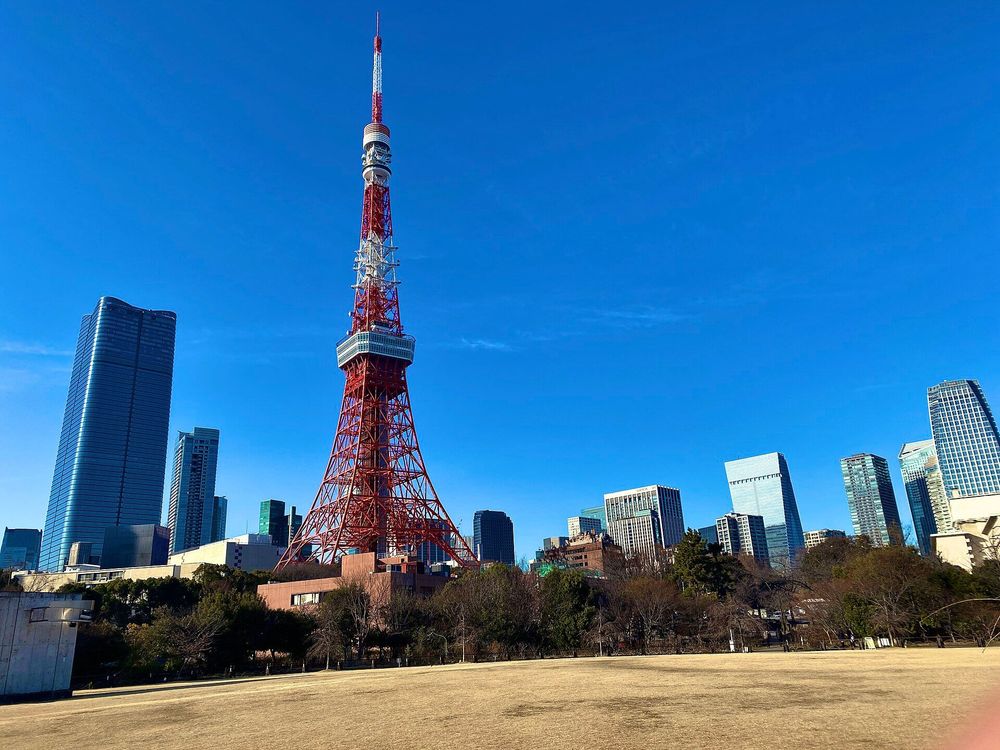
Cover photograph: Tokyo Tower seen from Shiba Park in February 2024 — Qian2007, CC BY-SA 4.0.
Frequently Asked Questions
Does the Tokyo Tower Top Deck ticket include the Main Deck?
Yes. The standard Top Deck Tour includes both the 150-metre Main Deck and the 250-metre Top Deck. You do not need a separate full-price Main Deck ticket for the same visit.
Is the Main Deck enough for a first visit?
It is a reasonable choice if your priority is a city view with a lower cost and a simpler visit. Choose the Top Deck when its higher viewpoint and tour experience are priorities, rather than assuming the most expensive ticket is necessary.
Can I visit Tokyo Tower without booking the Top Deck in advance?
The Top Deck requires a reserved place, which can be bought online or at the counter subject to availability. A same-day counter visit does not guarantee your preferred slot. Check the current ticket rules before travelling.
How much time should I allow?
As a planning estimate, allow 60–90 minutes for the Main Deck or 90–120 minutes for both decks. These are not official fixed durations: queues, photographs and time spent enjoying the view can make the visit longer.


Keep Exploring
Sumida Hokusai Museum: Choose Your Tokyo Visit
Choose the Sumida Hokusai Museum ticket for your interests: replicas, changing original works, Ryogoku access and practical visit planning.
Hassan Tower and Mausoleum: Plan Your Rabat Visit
Plan Hassan Tower and the Mohammed V Mausoleum together, with published hours, a practical route and respectful visitor advice.
National Museum of Nature and Science Tokyo: Visit Guide
Choose Japan Gallery or Global Gallery, plan a family visit and understand current floor closures, tickets and ComPaSS reservations in Ueno.