
National Museum of Nature and Science Tokyo: Visit Guide
Choose Japan Gallery or Global Gallery, plan a family visit and understand current floor closures, tickets and ComPaSS reservations in Ueno.
Tokyo's National Museum of Nature and Science is a strong choice for a day built around fossils, animals and the natural history of Japan. The useful planning decision is which parts of its two permanent galleries to explore, not how quickly to see every floor. Start with your main interest, then add a contrasting section while everyone still has the energy to look closely.
The museum, also called Kahaku, is in Ueno Park. It is a different institution from the Tokyo National Museum and from science attractions elsewhere in Tokyo. For the larger choice of neighbourhoods and outings, use our guide to things to do in Tokyo; this guide focuses on making a manageable visit to Kahaku itself.
Checked on 13 November 2026: the Global Gallery's B3 floor is closed for renovation from 8 September 2026, and the museum also flags a partial closure on 2F. Do not plan a complete floor-by-floor circuit from an older map. ComPaSS, the children's exploration area, requires a separate timed booking and payment for every participant, including babies and accompanying adults.
Japan Gallery or Global Gallery first?
| Your main interest | Start here | How to keep the visit focused |
|---|---|---|
| Japan's landscapes, wildlife and people | Japan Gallery | Follow the connection between the islands and their inhabitants |
| Dinosaurs and the evolution of life | Global Gallery B1 | Give the fossil displays time before adding another floor |
| Mammals and birds | Global Gallery 3F | Compare specimens instead of rushing past every case |
| A visit with younger children | A small selection of permanent displays; ComPaSS if booked | Build around attention span and a proper break |
| A particular temporary exhibition | Its own current exhibition page and ticket rules | Allow time for that exhibition before adding permanent rooms |
The museum's exhibition overview separates the two permanent buildings and their themes. The Japan Gallery makes the country's natural setting the organising idea. The Global Gallery takes a wider view of life and science. They complement each other, but you do not need equal time in each for the visit to feel complete.
For a first visit, allow around two to three hours for selected permanent displays, or half a day with a break and a second strong interest. These are editorial planning allowances, not a promise of how long every visitor needs. A keen fossil enthusiast may spend much longer in one section than a family doing a broad introduction.
Getting to the right museum in Ueno
The address is 7-20 Ueno Park, Taito-ku. The official access page estimates a five-minute walk from JR Ueno Station's Park Exit and ten minutes from Tokyo Metro Ueno or Keisei Ueno. Treat those as orientation estimates: finding the right exit, a stroller or a stop along the way can lengthen the journey.
Search for the full museum name when setting your route. Ueno contains several major museums, and arriving at the wrong one is easy if you save only “national museum”. Check the entrance information for your ticket type as well; the permanent galleries and a special exhibition should not be assumed to share every admission arrangement.
Plan luggage storage before arrival rather than making the museum your first stop straight from a flight with large suitcases. Its visitor rules exclude large suitcases. Carrying a small day bag also makes moving between floors and stopping at specimens much more comfortable.
Hours and tickets: separate the ordinary visit from extras
The official admission page currently lists regular opening from 09:00 to 17:00, with last admission 30 minutes before closing. The usual closure is Monday; when Monday is a national holiday, the museum opens that day and closes the following Tuesday. It also lists the year-end closure from 28 December to 1 January. Check the linked opening calendar for exceptions on your actual date.
At the 13 November 2026 check, general and university-student admission to the permanent exhibitions was ¥630, while high-school students and younger were free. Special exhibitions have their own conditions, and free permanent admission does not mean every paid experience is included. Check proof requirements for any age-based concession rather than relying on a companion's interpretation of the categories.
Decide whether you want a special exhibition before buying. Read what its ticket includes, its date or time restrictions and the entrance instructions. A permanent-exhibition ticket should not be treated as an all-access pass. Likewise, ComPaSS has a separate reservation process; an ordinary museum ticket does not establish that a family slot is available.
Arriving near last admission leaves little time to navigate two buildings. If you only have the final hour, choose a narrow interest and accept that much will remain unseen. The museum is more rewarding as a deliberate stop than as a hurried indoor gap between other bookings.
A Japan Gallery route for understanding the country
The Japan Gallery works well for travellers who want their museum visit to connect with the landscapes they are seeing elsewhere in Japan. Begin with the islands' formation and natural environments, then look at living organisms and the relationship between people and nature. This creates a thread through the collection instead of a sequence of unrelated display cases.
Use the official floor map to locate your choices. On 3F, the map identifies the history and nature of the Japanese islands, including the plesiosaur Futabasaurus. On 2F, the broad themes are the islands' organisms and Japanese people and nature. Choose one question to carry through: how geography shapes habitats, for example, or how people adapted to those environments.
This is also a useful alternative for mixed-interest groups. Someone drawn to fossils can start with the ancient-life displays, while another visitor may find more in the human relationship with nature. Agree on a meeting point and a modest amount of time for individual looking, rather than forcing everyone to read the same labels at the same pace.
Do not dismiss this building as a brief introduction before the “main” museum. It provides the most direct connection to Japan within the permanent collection. If that is your reason for visiting, give it the best part of your attention and treat the Global Gallery as an optional second chapter.
A Global Gallery route for fossils and animal life
For dinosaur interests, begin with B1, whose permanent theme addresses dinosaur evolution. Look for differences in skeletons and body shapes, and use the explanations to ask what those differences reveal. With children, one comparison they can describe afterwards is often more memorable than a photograph of every skeleton.
The 3F animal displays offer another clear focus, particularly for visitors drawn to mammals and birds. B2 covers the broader evolution of life. Choose one of these as your second stop rather than climbing through every available floor simply because it appears on the map. A break between themes helps avoid turning impressive objects into visual background.
The closure matters here: B3 has been closed for renovation since 8 September 2026, and part of 2F is also flagged as temporarily closed. The general exhibition page still describes those areas and some associated highlights. A description remaining online is not evidence that the display is currently accessible. Check the day's signage before walking to a particular object or promising it to a child.
The museum also lists Theater 36◯ in the Japan Gallery. Treat it as an optional addition after checking current operation, viewing conditions and any queue. Do not use a dome experience as the fixed centre of a visit without confirming the practical details at the museum.
ComPaSS: make the booking decision before travel
ComPaSS is a specific family exploration room, not a name for all the child-friendly exhibits. Its current official instructions require a date-and-time reservation and payment for everyone entering, from age zero through accompanying adults. Older advice about simply collecting a free numbered ticket should not guide a new visit.
The room is mainly aimed at children aged four to six, while children from infancy through sixth grade may attend with a guardian aged 18 or over. Adults alone and children alone cannot use it. Sessions last 45 minutes; arriving late does not move the finishing time. Build the surrounding gallery visit around the booked session rather than expecting the session to absorb delays elsewhere.
If no suitable slot is available, the permanent collection can still support a good family visit. Pick a few animals or fossils, take a real break and leave before everyone is exhausted. ComPaSS is worth planning when it matches the children, but it need not become a requirement for enjoying Kahaku.
Breaks, accessibility and interpretation
Look up practical facilities before deciding the order of the floors. The museum's accessibility information identifies a nursing station on Japan Gallery B1 and changing facilities in both buildings. It also explains wheelchair assistance and loan equipment. Loan wheelchairs and strollers cannot be reserved and depend on availability, so do not make an essential mobility plan depend on borrowing one on arrival.
The museum lists audio guidance in Japanese, English, Mandarin and Korean. Do not assume Italian, French or Spanish audio is available. A specimen-led visit can still work well across languages, but visitors who want detailed interpretation should check the available guidance before choosing a demanding thematic route.
Use designated areas for eating and drinking, and consult the restaurant and rest-area information for the current options. If you plan to leave for lunch and return to the permanent exhibitions, ask the information desk about re-entry before going out. A meal break should refresh the visit rather than create uncertainty at the entrance.
Pairing Kahaku with the rest of Tokyo
For a short stay, use our three-day Tokyo itinerary to avoid placing this museum beside too many other major visits. Ueno Park makes a natural setting for a slower walk afterwards. Adding another large museum immediately can work for an enthusiast, but it is a substantial second commitment, especially with children.
Before setting off, confirm the opening calendar, current gallery closures and any special-exhibition or ComPaSS booking. At the entrance, choose two or three priorities and locate your break. That is enough structure to explore freely without turning the day into a checklist of floors.
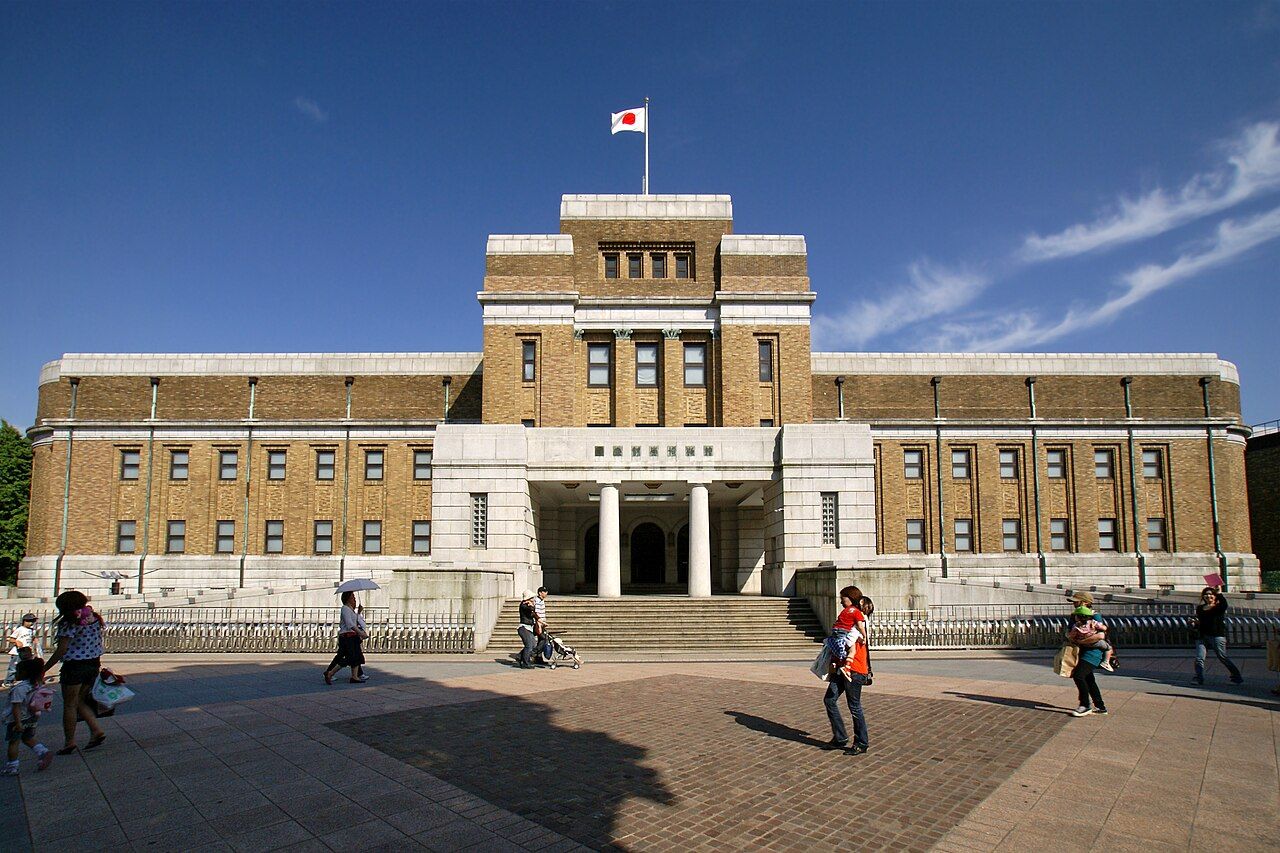
Cover photograph: Japan Gallery facade at Tokyo’s National Museum of Nature and Science in Ueno — 663highland, CC BY 2.5.
Frequently Asked Questions
How long should you allow for the National Museum of Nature and Science?
Around two to three hours is a useful planning allowance for selected permanent displays. Allow half a day if you want both buildings, a break or a booked family session. Specialist interests or a special exhibition can require longer.
Are the Japan Gallery and Global Gallery the same museum?
Yes. They are the two main permanent-exhibition buildings of Kahaku in Ueno. The Japan Gallery focuses on the Japanese islands and their people and nature; the Global Gallery explores broader life and science themes.
Are all Global Gallery floors open?
No. At the 13 November 2026 check, B3 was closed for renovation from 8 September 2026 and part of 2F was also flagged as temporarily closed. Recheck current notices before planning around a specific display.
Does a museum ticket include ComPaSS without booking?
No. ComPaSS requires a separate timed reservation and payment for every participant, including babies and accompanying adults. It is for children with guardians, not unaccompanied children or adults visiting alone.


Keep Exploring
Tokyo National Museum: Choose Your Visit
Choose Tokyo National Museum galleries and tickets, with a focused Honkan route, late-2026 closures, hours and suitcase rules.
Sumida Hokusai Museum: Choose Your Tokyo Visit
Choose the Sumida Hokusai Museum ticket for your interests: replicas, changing original works, Ryogoku access and practical visit planning.
Edo-Tokyo Open Air Museum: Plan Your Visit
Choose historic shops, Kodakara-yu and modern houses at Koganei, with current hours, access and the Jisho-in repair closure.