
Edo-Tokyo Open Air Museum: Plan Your Visit
Choose historic shops, Kodakara-yu and modern houses at Koganei, with current hours, access and the Jisho-in repair closure.
Choose the Edo-Tokyo Open Air Architectural Museum when you want to explore historic buildings at room scale: a bathhouse, shops, farmhouses and modern homes. Allow roughly three hours inside and protect a half day once the journey to Koganei is included. Start with either the eastern streetscape or the western houses, then use the other as a contrast.
This is the museum in Koganei Park, west of central Tokyo. It is a different destination from the Edo-Tokyo Museum in Ryogoku. The similar names can hide a substantial difference in travel and experience. Our Tokyo highlights guide helps decide whether this architecture-focused outing deserves space in your wider stay.
Fast facts before you travel
| Detail | Current planning information |
|---|---|
| Location | Inside Koganei Park, 3-7-1 Sakuracho, Koganei |
| April–September | 09:30–17:30 |
| October–March | 09:30–16:30 |
| Last entry | 30 minutes before closing |
| Standard adult admission | ¥400 |
| Regular closure | Monday; the following day when Monday is a national holiday, plus New Year holidays |
| Current building exception | Jisho-in Mausoleum closed for repairs until late March 2027, subject to change |
The official admission page provides the calendar and ticket categories. Information was checked on 11 November 2026. Suggested visit lengths are editorial allowances; they exclude transport, queues and a long meal.
Decide what kind of history you want to see
The museum preserves relocated and reconstructed buildings rather than presenting an untouched historical neighbourhood. That is part of its value: you can compare different forms of domestic and commercial architecture within one visit. Read each building's original location and period instead of assuming that adjacent structures once stood together.
Choose the eastern zone if shops, shared neighbourhood services and the bathhouse are your strongest interests. Choose the western zone first if house plans, daylight and the relationship between rooms appeal more. A balanced visit can sample both, but a specialist may prefer to spend most of the afternoon on one theme.
The experience is physical and observational. You move between buildings, cross thresholds where access is permitted and notice differences in scale. It is especially useful for visitors who find a room layout easier to understand than a display case. It is less suitable as a completely indoor escape from bad weather.
For a short first Tokyo trip, consider whether that experience matters enough to justify the journey west. You do not need to visit both museums simply because they share Edo-Tokyo in their names. One focused outing usually contributes more than two rushed museum visits separated by a cross-city transfer.
East Zone: read a street through its everyday services
Use the official building directory or the on-site map to identify Kodakara-yu, Takei Sanshodo stationery store, Kodera soy sauce shop and the other preserved commercial buildings. Begin with the street as a whole before entering individual interiors. Compare frontage, entrance width and the way each building addresses the passer-by.
The interesting question is how these places worked. Where would a customer stand? What separated the public sales area from other spaces? How much could someone understand about a business from its façade? You do not need to read every label to notice that a shop presents itself differently from a home.
Takei Sanshodo is a useful stop for looking at the relationship between a specialised trade and its interior arrangement. Pair it with one other shop rather than trying to remember every business name. A small comparison gives the street more meaning than a rapid sequence of photographs.
Keep the distinction between exhibit and operating business clear. A restored shop or bar is not automatically somewhere to buy the goods or drink associated with its historical name. Use the museum's current café and dining information when planning a break; preserved interiors serve the collection first.
Kodakara-yu: look beyond the recognisable façade
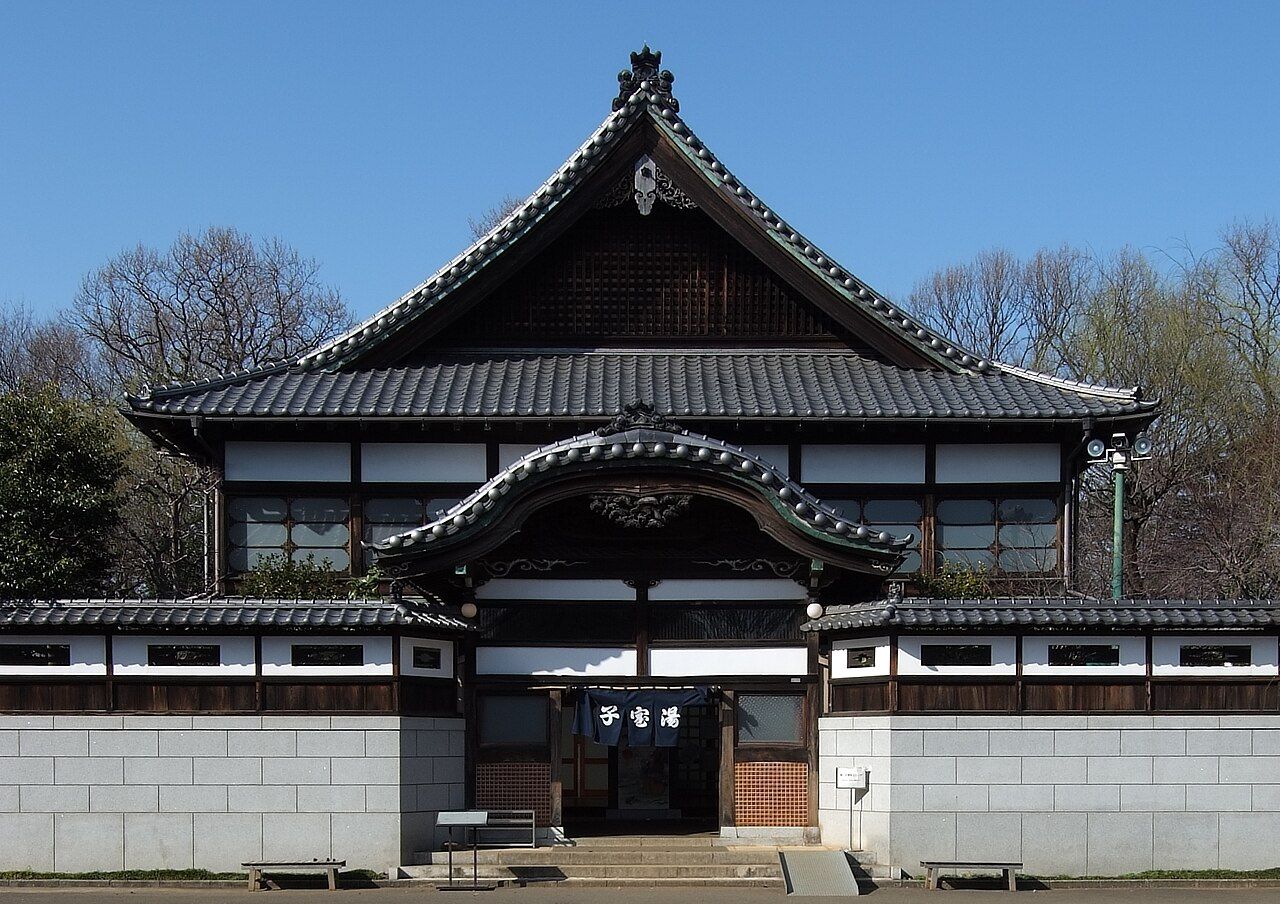
The Tokyo Museum Collection entry for Kodakara-yu dates the bathhouse to 1929 and identifies its original location in Adachi. It describes a prominent gable, carvings above the entrance and a lattice ceiling in the changing room. These details give you specific things to look for rather than treating the building as a single exterior photograph.
Start outside and consider how the roof and entrance announce a public place. Then, where access is available, compare that elaborate presentation with the practical organisation inside. A bathhouse has to accommodate arrival, changing and bathing; its rooms reveal a different set of needs from the homes you will see later.
This is a museum exhibit, not a working bath. Plan to observe the architecture and interpretation rather than arrive expecting to bathe. Follow the signs governing shoes, barriers and photography. The aim is to understand the building without treating preserved surfaces and fittings as unrestricted hands-on displays.
For children, ask which features suggest a shared facility rather than a private home. Let them compare the answer with a house in the western zone. One recurring question can connect the visit more effectively than a long explanation of architectural periods.
West Zone: compare two homes before adding more
The official West Zone guide offers several useful contrasts. Kunio Mayekawa's house, the House of Koide and the House of Okawa in Den'enchofu make a manageable starting selection for an interest in modern domestic design. Add a farmhouse if you want a stronger contrast in roof, interior organisation and relationship to work.
The collection entry for Mayekawa's house explains that the architect built it for himself in 1942, during a period of material shortages. Its rooms are organised around a living space with a high ceiling. Look at how that central room connects to the surrounding spaces, rather than expecting a large or ostentatious residence.
The House of Koide, designed by Sutemi Horiguchi, dates to 1925. The museum describes a combination of contemporary Dutch and traditional Japanese design. Use that interpretation as an invitation to compare forms and proportions, not as a requirement to identify every influence unaided.
At the Tokiwadai Photo Studio, the museum explains the role of frosted north-facing windows in providing light before photographic lighting was as developed. That makes a useful third stop if daylight interests you. Compare a room designed for taking portraits with a room designed for daily living: the windows serve different purposes.
Do not turn the western zone into a competition to enter the most houses. After two interiors, pause and name one difference you have actually noticed. A slower comparison of light, thresholds or room connections is a substantial visit even if some buildings remain for another time.
Account for the current repair closure
The museum's repair notice, dated 25 August 2026, states that Jisho-in Mausoleum is closed until late March 2027. The work period may change. Do not make it the essential stop in your planned route during that period.
Other building access can vary, so read the current notices before travelling and ask at the visitor centre which interiors are available. A map showing a building in the collection is not confirmation that every room is open that day. Keep an alternative house or commercial building in mind if a particular stop matters to you.
This is also why a route based on themes works well. If one house cannot be entered, the question you wanted to explore—light, domestic space or shop layout—can often still be pursued elsewhere in the collection. You retain the purpose of the outing without pretending that a closure has no effect.
Reach Koganei with the final bus leg included
The museum's access page describes a bus from the north side of Musashi-Koganei Station on the JR Chuo Line to Koganei-koen Nishi-guchi, followed by about five minutes on foot. It gives an approximate five-minute bus journey, but you must add waiting and your train journey from your own starting point.
The same page also describes access from Hana-Koganei on the Seibu Shinjuku Line and Higashi-Koganei using the CoCo bus. Choose the station that fits your accommodation and current transport planner. Check the stop and direction carefully; “Koganei Park” covers a larger area than the museum entrance.
In the October–March season, a late lunch in central Tokyo followed by a leisurely journey can leave little museum time before 16:30. Work backwards from the visit you want. Arriving just before the final admission cutoff is technically different from arriving with enough time to enjoy the buildings.
Make the visit comfortable without losing its focus
Wear shoes that are practical for repeated removal where required. Historic interiors can have thresholds, steps and restricted sections. The official accessibility information states that mobility aids can be used, while some buildings are not available for such access; wheelchairs and strollers are available to borrow. Confirm specific buildings if step-free entry is essential.
Keep food and drinks out of the reconstructed buildings and use designated eating areas. Allow for a break without assuming that a particular café is open throughout museum hours. Koganei Park can extend the outing, but it does not need to become another compulsory circuit after several hours of architectural observation.
The free Tatemonoen Navi guide supports English, Japanese, Chinese and Korean and requires an internet connection. It can help you interpret selected buildings; you do not need to consume every item of audio or text. Bring enough phone charge if it will replace your paper map.
Leave with a comparison you can remember: the bathhouse's public entrance versus a private house, a shopfront versus a domestic threshold, or studio light versus a living room. That is a more useful result than a count of buildings entered.
Cover photograph: Ornate tiled roof and entrance of Kodakara-yu at the open-air museum — Archive photograph from March 2009; cropped by Loominade, Wikimedia thumbnail — Wiiii; crop by Loominade, CC BY-SA 3.0.
Frequently Asked Questions
Is this the same as the Edo-Tokyo Museum in Ryogoku?
No. The open-air architectural museum is in Koganei Park, west of central Tokyo. It focuses on preserved buildings. Check the full destination name and address before planning transport.
How long should I allow for the visit?
About three hours inside is a useful starting point for eastern shops and selected western houses. Protect a half day with travel, and allow longer if you want detailed architectural study or a substantial park walk.
Can I visit Jisho-in Mausoleum?
The official notice checked on 11 November 2026 says it is closed for repairs until late March 2027, with the period subject to change. Recheck the museum's notices for your date.
Is the museum suitable for a rainy day?
You can enter available buildings, but the connections between them are outdoors. It is not a fully indoor museum visit. Bring suitable weather protection and consider how wet conditions affect your comfort and mobility.


Keep Exploring
Edo-Tokyo Museum: Plan Your Visit
Visit the reopened Edo-Tokyo Museum in Ryogoku: current tickets, hours, a focused exhibition route and practical access advice.
Academy Museum Los Angeles: Plan Your Visit
Plan an Academy Museum visit with gallery tickets, separate screenings and Oscars Experience, current closures and a realistic afternoon route.
Oaxaca Textile Museum: Plan Your Visit
Plan a thoughtful textile museum visit, with current hours, guided tours, workshop checks and a useful link to Oaxaca’s weaving communities.