
Visit the reopened Edo-Tokyo Museum in Ryogoku: current tickets, hours, a focused exhibition route and practical access advice.
The Edo-Tokyo Museum in Ryogoku is open again: it reopened on 31 March 2026. Choose it when you want to understand how the city developed through its streets, homes, commerce and everyday life. For most first visits, the permanent exhibition is the right starting point; add a special exhibition only if its subject interests you and you have time for both.
This is the indoor museum at 1-4-1 Yokoami, Sumida, not the Edo-Tokyo Open Air Architectural Museum in Koganei. Check the address before planning your journey. The names are similar, but the visits and locations are different. Our wider guide to things to do in Tokyo helps place Ryogoku in your trip; this guide focuses on buying the right ticket and following a manageable museum route.
The practical essentials
Information below was checked on 5 November 2026. Recheck the museum calendar for your date, especially around national holidays and temporary exhibitions.
| Detail | Current information |
|---|---|
| Normal hours | 09:30–17:30 |
| Saturdays | 09:30–19:30 |
| Last admission | 30 minutes before closing |
| Regular closure | Mondays; following weekday when Monday is a national holiday |
| Adult permanent-exhibition ticket | ¥800 |
| Permanent exhibition | Fifth and sixth floors |
| Suggested time | 2–3 hours for a selective permanent-exhibition visit |
| Nearest rail choices | JR Sobu Line or Toei Oedo Line, both at Ryogoku |
The official hours page also lists extended opening until 20:00 on 6, 13, 20 and 27 November 2026. These are specific Friday dates, not a permanent Friday schedule. The museum closes during the year-end and New Year period as well. An evening opening can help your itinerary, but arriving just before last admission does not leave enough time for a substantial exhibition.
What changed with the reopening?
GO TOKYO's official museum introduction confirms the March 2026 reopening after extensive renovation. Older articles saying the museum is closed indefinitely are therefore obsolete. Equally, an old room-by-room description may not match the renewed presentation, so use the current floor guide after arrival.
The museum still centres on the transition from Edo to Tokyo through reconstructions, scale models and objects. The renewed experience includes projections and a full-scale recreation of the Hattori watch shop at the entrance to the Tokyo zone. Treat the visual effects as an introduction to the historical material rather than the only reason to come.
The third-floor entrance hall has a projection programme with its own schedule. If this interests you, check the current programme separately from the building's opening hours. Do not assume that arriving at any time guarantees the show. A good permanent-exhibition visit can stand on its own even if the projection timetable does not fit.
Buy the permanent exhibition first
The official admission page lists permanent-exhibition individual admission at ¥800 for adults, ¥400 for visitors aged 65 and over, ¥480 for university students and ¥300 for high-school students. Junior-high-school students and younger enter free. Bring the required age or student documentation for a reduced category; check eligibility rather than assuming a foreign identification document will automatically establish every concession.
Tickets are sold online through the museum's linked service and at the first-floor counter. The museum warns that purchased tickets cannot be refunded or have their dates changed. Read the date and ticket description before paying, particularly if choosing a combined ticket. This guide does not claim a timed slot is available simply because an online sales page exists.
Special exhibitions are a separate decision. Their prices and conditions vary, and the permanent ticket does not automatically include them. As checked on 5 November, the current special exhibition ends on 8 November 2026, with the next scheduled to begin on 28 November. Use the current exhibition listing for the title and details relevant to your actual visit; a changeover period is not evidence that the permanent collection is closed.
For a first introduction to Tokyo's history, do the permanent exhibition well before adding another paid component. Choose a combined ticket when you want the special exhibition in its own right, not just because the option is available. A lower bundle price is of little use if you hurry through both sections.
A route that gives the visit a story
The permanent-exhibition guide divides the collection into the Edo and Tokyo zones, with a feature-exhibition area. Follow the current visitor route and floor map rather than trying to navigate solely from an old photograph. The sequence below is an editorial way to select material, not a promise that every object remains on display unchanged.
Begin with Nihonbashi and the shape of Edo
The reconstruction of Nihonbashi introduces the permanent exhibition. It reproduces part of the historic bridge at full scale, while nearby models make the city's layout easier to grasp. Pause here before moving towards the smaller scenes: a city becomes more understandable when you can see how its roads, waterways and districts relate.
Compare the model of a daimyo residence with the townspeople's quarters. The contrast in space is more useful than simply admiring the craftsmanship. Ask who could occupy a large compound, how other residents shared smaller buildings and what that tells you about the organisation of the city. You do not need to read every label to leave with this central idea.
Move from the city plan into daily life
The reconstructed nagaya, or row housing, shifts attention to ordinary residents. Look at the room's scale and the way work, cooking and storage fit into limited space. Give this section time if you enjoy understanding how people actually lived rather than following only rulers and major events.
Continue selectively through printing and commerce. Bookshop displays, goods and street scenes connect information, entertainment and trade. Instead of treating each model as a separate miniature world, notice what moved through the city: people, food, money and printed material. That thread provides a way to remember the exhibition after leaving the building.
The Nakamuraza theatre reconstruction offers another change of scale. Its façade connects the city to popular entertainment. Follow the current access signs for the structure; a life-size reconstruction is not permission to touch or enter every visible part.
Finish with Tokyo's transformation
The Tokyo zone changes the visual language, including the recreated Hattori watch-shop building. Look for what changes in streets, transport and domestic life, and what continues from Edo. This prevents the visit becoming a simple divide between an old wooden city and a modern one.
GO TOKYO highlights the Entaro Bus, associated with recovery after the 1923 Great Kanto Earthquake. If transport interests you, use it as a focus for thinking about rebuilding and everyday mobility. Leave room for the later city story rather than spending all your attention in the first rooms and rushing through the conclusion.
How much time should you allow?
Two to three hours is our editorial allowance for a selective permanent-exhibition visit, excluding the journey, a substantial meal and any special exhibition. A history enthusiast who reads closely may want longer. A family following only a few large reconstructions can choose a shorter visit without pretending to have covered everything.
For a compact route, retain the Nihonbashi introduction, one daily-life section and a substantial part of the Tokyo zone. For a longer visit, add printing, commerce and the material that most connects to your interests. Use a pause to decide whether more information is still enjoyable before buying or entering another exhibition.
Bring headphones if you plan to use the smartphone audio material promoted by the museum and GO TOKYO. Check available languages and how to access the service on arrival. Using your own device also means managing battery power; do not depend on a long audio visit with an almost empty phone.
Arrive at the correct Ryogoku station exit
The museum's access page gives approximately three minutes on foot from JR Ryogoku's west exit, or seven from its east exit. For the Toei Oedo Line, it lists exits A3/A4, about one minute away. These are the museum's approach estimates, not the full journey from your hotel or platform.
Choose the railway connection that works from your starting point, then check its exit. The JR and Toei stations share a name but are not interchangeable entrances. If you need step-free travel, verify the lift route rather than choosing an exit solely because it has the shortest walking time.
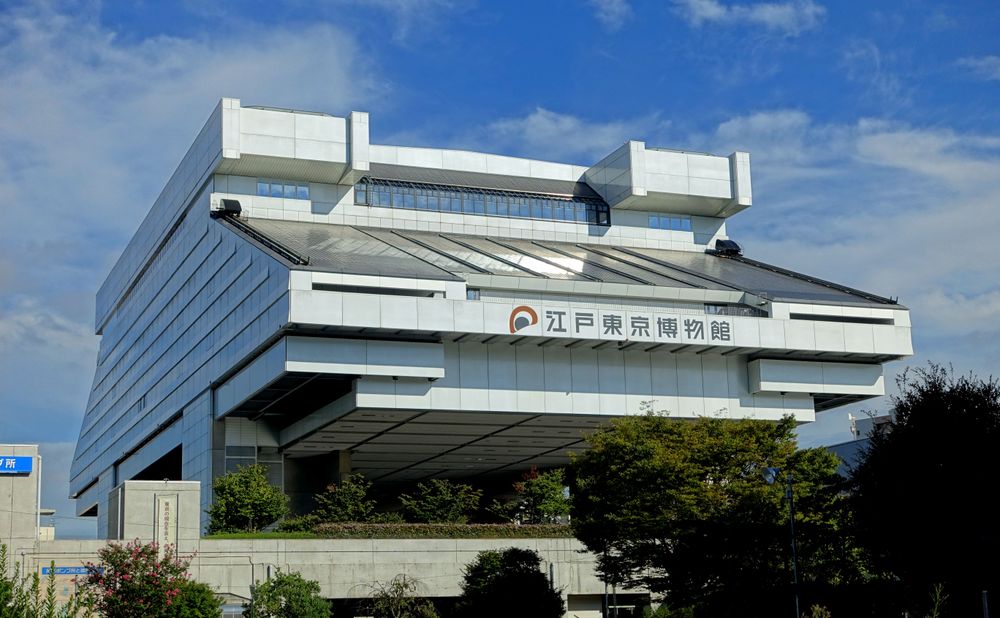
The large building is part of the visit, but avoid relying on photographs taken before renovation to identify the entrance process. Follow current signs to the counter or your ticket's designated access. Leave enough time to orient yourself before starting the exhibition.
Families, access and photography
The museum's accessibility information confirms that wheelchairs, strollers and walking aids may be used inside. It lists loan wheelchairs and strollers, accessible toilets and baby-care rooms. Ask staff about availability and the route best suited to your needs; listed equipment is not a reservation held for your arrival.
With children, choose a handful of reconstructions and let questions guide the pace. The exhibition is visually rich, but it remains a museum: supervise children and respect barriers. Plan food breaks in designated areas rather than assuming snacks are allowed throughout the galleries.
The visitor rules generally permit personal photography in the permanent galleries, with restrictions for individual displays and special exhibitions. Tripods, selfie sticks and similar equipment are prohibited; follow signs about flash. Take photographs without blocking other visitors and do not treat photo permission as permission to touch exhibits.
Pair the museum with a modest next stop
Leave time for a meal or a short Ryogoku walk after the museum rather than immediately scheduling another major indoor collection. The permanent exhibition already supplies a substantial narrative. A quieter follow-up gives you time to connect what you saw with the city outside.
If your primary interest is Japanese art and archaeological objects across a broader national history, compare our Tokyo National Museum guide. Choose the Edo-Tokyo Museum for the city's changing life and built environment, or the national museum for that different collection focus. Visiting both is worthwhile when the distinction interests you, not because a Tokyo itinerary needs two museum tickets.
Cover photograph: Angular exterior of the Edo-Tokyo Museum in Ryogoku, photographed before renovation — Archive photograph; no edits to the downloaded file — Daderot, CC0 1.0.
Frequently Asked Questions
Has the Edo-Tokyo Museum reopened?
Yes. The Ryogoku museum reopened on 31 March 2026. Check its current calendar for ordinary closing days and date-specific changes.
Does the ¥800 adult ticket include special exhibitions?
No. ¥800 is the individual adult permanent-exhibition price checked on 5 November 2026. Special and combined tickets have their own conditions and prices.
Is this the Edo-Tokyo Open Air Architectural Museum?
No. This guide covers the indoor museum in Ryogoku, Sumida. The open-air architectural museum is in Koganei and requires a different journey and visit plan.
Can I visit the museum in the evening?
Saturdays normally run until 19:30. The official page also lists closing at 20:00 on 6, 13, 20 and 27 November 2026. Check your date; last admission is 30 minutes before closing.


Keep Exploring
9/11 Memorial and Museum: Plan Your New York Visit
Choose the free memorial or ticketed museum, check Tuesday openings and plan a considerate visit with time for reflection.
Yves Saint Laurent Museum Marrakech: Plan Your Visit
Plan the Yves Saint Laurent Museum in Marrakech: current exhibition, Wednesday closure, official tickets and how to combine it with Majorelle.
Tokyo National Museum: Choose Your Visit
Choose Tokyo National Museum galleries and tickets, with a focused Honkan route, late-2026 closures, hours and suitcase rules.