
Tokyo Imperial Palace East Gardens: Plan Your Visit
Plan a free walk through Edo Castle remains and Ninomaru, with seasonal hours, gate choices and the difference from a palace tour.
The Imperial Palace East Gardens give you a way to explore the site of Edo Castle without booking a palace tour. The appeal lies in the sequence: guarded entrances, large stone walls, the open ground of the former main compound, then a more intimate pond garden. Come for that landscape and its history, rather than expecting furnished imperial rooms or a complete castle keep.
For most first visits, allow 90 minutes to two hours, an editorial estimate for a selected walk with pauses. Check the opening calendar before choosing the day: these gardens normally close on both Monday and Friday, and winter closing comes early. A free attraction still needs a deliberate place in your itinerary.
Official information checked on 9 November 2026. Suggested visit lengths and route choices below are editorial estimates. Temporary restrictions and the official calendar take precedence.
Choose the right Imperial Palace visit
The East Gardens occupy parts of Edo Castle's former Honmaru, Ninomaru and Sannomaru areas. They opened to the public in 1968. Their paths and surviving structures let you read the old castle's layout even though the main keep is gone. The Imperial Household Agency's visitor page is the starting point for the public garden visit.
A guided visit to the Imperial Palace is a separate arrangement. The official tour information describes advance registration and a limited walk-in process at Kikyo-mon, with valid identification required. Do not join that queue simply because your map says “Imperial Palace.” Nor should you treat entering the East Gardens as access to the Imperial Family's residence.
Decide which experience matters before plotting your route. For a flexible outdoor walk through castle remains, choose the gardens. If the organized palace tour is the priority, check its own calendar, application conditions and meeting point. Doing both requires two separate plans; one admission process does not arrange the other.
Opening days, seasonal hours and admission
Admission to the East Gardens is free. The Japanese visitor page and its visitor information are useful for current notices as well as the English page. Check the specific date rather than relying on a general Tokyo attraction list.
The regular seasonal timetable checked for this guide is:
| Period | Opening hours | Last entry |
|---|---|---|
| 1 March–14 April | 09:00–17:00 | 16:30 |
| 15 April–31 August | 09:00–18:00 | 17:30 |
| September | 09:00–17:00 | 16:30 |
| October | 09:00–16:30 | 16:00 |
| November–February | 09:00–16:00 | 15:30 |
Regular closure days are Monday and Friday, with national-holiday exceptions; the Emperor's Birthday on 23 February is excluded from that holiday opening rule. When a national holiday falls on Monday, the following Tuesday closes. The gardens also close 28 December–3 January, and imperial functions or other circumstances can cause additional closures.
Last entry is a cutoff, not enough time for the walk described here. In November, for example, an arrival at 15:25 leaves barely half an hour before the 16:00 closure. Aim much earlier if both the castle remains and Ninomaru matter to you. In summer, a later closing time provides flexibility, but it does not remove heat or the need for breaks.
Late-November access exception: the official notice dated 6 November announces restrictions on daytime entrance gates and times from 28 November to 6 December 2026, during the autumn opening of Inui Street. Check its detailed access instructions before following the Ote-mon route below; the regular gate arrangement is not a guarantee for those dates.
Pick a gate before choosing a station exit
There are three visitor gates: Ote-mon, Hirakawa-mon and Kitahanebashi-mon. Save the gate name in your navigation rather than a pin in the middle of the palace grounds. A route to the nearest point on the perimeter can still leave you walking alongside a wall to reach an entrance.
Ote-mon is a useful first-visit starting point because it introduces the castle through an entrance sequence and guardhouses. The Chiyoda Tourism Association's guide places it toward Otemachi Station; Hirakawa-mon is toward Takebashi Station. Kitahanebashi-mon sits near the northern part of the gardens and the keep foundation.
Choose the exit gate according to your next destination. If you are returning toward Tokyo Station and Marunouchi, a loop back toward Ote-mon may suit you. If your next stop lies north of the gardens, finishing near the keep foundation can reduce retracing. Check actual pedestrian navigation for the onward connection instead of assuming all gates lead to the same station.
The agency conducts baggage inspections at entrances and recommends bringing minimal belongings, leaving larger luggage at a hotel or station locker. Build the visit around a light day bag. A garden walk is a poor place to insert the interval between hotel checkout and a train if that means carrying everything you own.
A first visit: castle approach, Honmaru, then Ninomaru
This suggested order begins at Ote-mon and ends with a choice of exit. It is a planning outline, not a mandatory signed circuit. Follow the current site map and any local diversions; shorten the route whenever weather or mobility makes that sensible.
Read the entrance as part of the castle
From Ote-mon, pay attention to the scale of the walls and the relationship between the approach and the guardhouses. The official map identifies Doshin Bansho, Hyakunin Bansho and Obansho. Rather than photographing each building and moving straight on, look at how the route organizes entry into the former castle.
This is also a useful moment to orient yourself on the map. Identify the higher Honmaru area and the Ninomaru garden before choosing your next turn. Keeping those two areas in mind makes the visit easier to follow than treating every numbered feature as a separate obligation.
Give the open Honmaru area time
Honmaru is the former main compound. Its broad lawn and the Tenshudai, the base of the castle keep, are different kinds of evidence: one shows the extent of a lost complex, the other the physical scale of its foundations. Do not expect a reconstructed tower above the stone base.
The Kikuyou Cultural Association's garden guide describes the lawn, keep remains and surrounding plantings. Use it to identify a few features that interest you, such as the orchard or bamboo, rather than attempting a complete botanical inventory. The value of this section is the space between the monuments as much as the monuments themselves.
If access to the top of the keep foundation is available and suits your mobility, include it. Otherwise, seeing the base from below still communicates its size. Avoid turning a particular viewpoint into a condition for enjoying the visit: maintenance restrictions can change the route without removing the wider historic landscape.
Slow down around Ninomaru
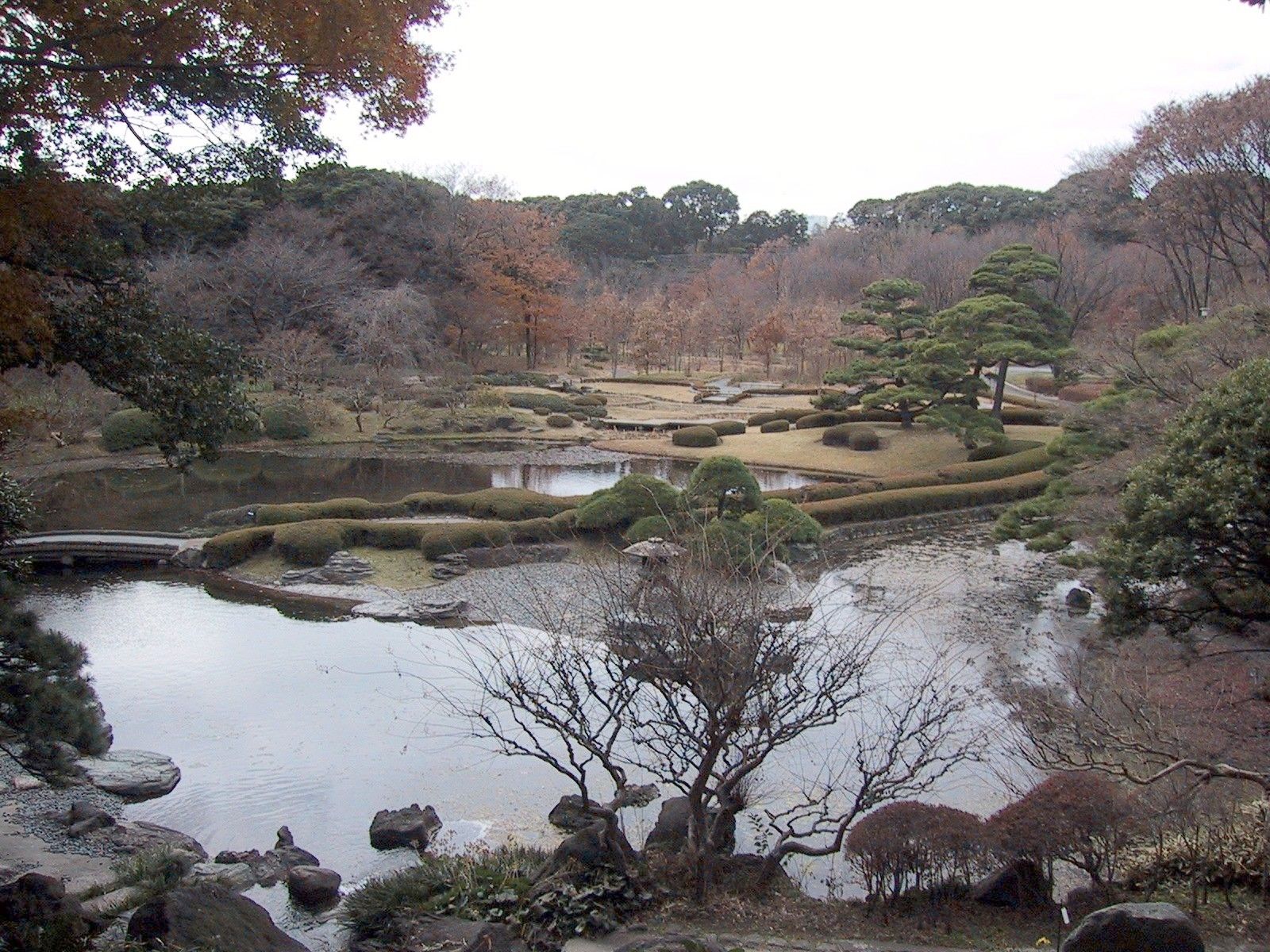
Ninomaru offers a change of scale after the main compound. The pond garden, wooded area and trees representing Japan's prefectures reward a slower circuit. The cultural association explains that the garden was based on an eighteenth-century plan; it should not be read as an untouched survival of every detail from the castle period.
Choose a few viewpoints around the water and notice how the planted edges frame them. If you are interested in gardens more than military history, this is where to spend the largest share of your time. You can reduce the Honmaru detours and still retain a coherent visit.
The official map also identifies the iris garden and Suwa no Chaya teahouse. A labelled building is not a promise that you can enter it or buy refreshments there. Likewise, the presence of an iris garden does not mean flowers will be in bloom on your date. Use seasonal reports for that separate question.
What to shorten, and what to leave for another visit
With about an hour, select one emphasis: the entrance and castle remains, or a shorter walk focused on Ninomaru. Do not try to compress every feature into a rapid circuit. With two hours, you have more room for both areas and a rest, but the appropriate pace depends on your walking needs.
The Museum of the Imperial Collections, Sannomaru Shozokan, near Ote-mon, is a separate museum visit. Its official site records the full reopening on 3 November 2026. The current ticket page requires advance date-and-time reservations for the grand-opening exhibitions, with no tickets sold at the venue on the day. Check the museum's own calendar and eligibility rules; free garden admission is not a museum ticket. Older closure notices and descriptions of free museum entry do not describe these reopening arrangements.
For a broader choice of attractions, use our Tokyo highlights guide. If you are following our three-day Tokyo itinerary, treat the East Gardens as a replacement for a substantial central-city block. Appending them after another garden and several districts makes their opening deadline harder to respect.
Weather, access and a realistic backup
This is primarily an outdoor visit. In sustained rain, shorten the exposed sections or move the visit; do not count on the historic buildings providing an indoor sightseeing alternative. In hot weather, carry water, take breaks and reduce the route before the walk becomes tiring. Winter offers less afternoon time, so place the gardens before open-ended shopping.
The presence of broad paths does not establish a completely step-free circuit. There are changes in level, and the keep foundation is a distinct access question from the surrounding grounds. If slopes, steps or distance matter, ask the staff which current route suits you and check station-exit accessibility separately. You do not need to reach every monument to understand the site.
If the gardens are closed, keep the rest of the day flexible around an independently verified open attraction or a meal in the central districts. Walking the outside perimeter is a different experience, not an equivalent replacement for Ninomaru and Honmaru. The simplest useful preparation is to check the calendar before leaving your accommodation and navigate to an actual gate.
Cover photograph: Pond and shaped pine trees in Ninomaru Garden at Tokyo’s Imperial Palace — Chris 73 / Wikimedia Commons, CC BY-SA 3.0.
Frequently Asked Questions
Are the Imperial Palace East Gardens free?
Yes. Admission to the public East Gardens is free. A palace guided tour and a visit to Sannomaru Shozokan have their own arrangements; garden entry does not organize either of them.
Are the East Gardens open every day?
No. They normally close on Monday and Friday, with national-holiday exceptions, and from 28 December to 3 January. A holiday Monday normally shifts closure to Tuesday; check the official calendar for additional closures.
How long should I allow for the East Gardens?
Allow 90 minutes to two hours for a selected walk through the castle remains and Ninomaru. This is an editorial estimate. A shorter visit works if you choose one main area and arrive well before last entry.
Can I enter the Imperial Palace from the East Gardens?
A public garden visit does not grant access to the Imperial Family's residence or substitute for the separate palace tour process. Follow the official tour information if that is the visit you want.


Keep Exploring

Edo-Tokyo Museum: Plan Your Visit
Visit the reopened Edo-Tokyo Museum in Ryogoku: current tickets, hours, a focused exhibition route and practical access advice.
Meiji Jingu: Plan Your Tokyo Shrine Visit
Plan Meiji Jingu with seasonal gate hours, the forest approach, shrine etiquette, photography rules and optional garden or museum visits.
El Badi Palace: Plan Your Marrakech Visit
Plan El Badi Palace with verified admission categories, an outdoor route, the minbar access question and a practical comparison with Bahia.