
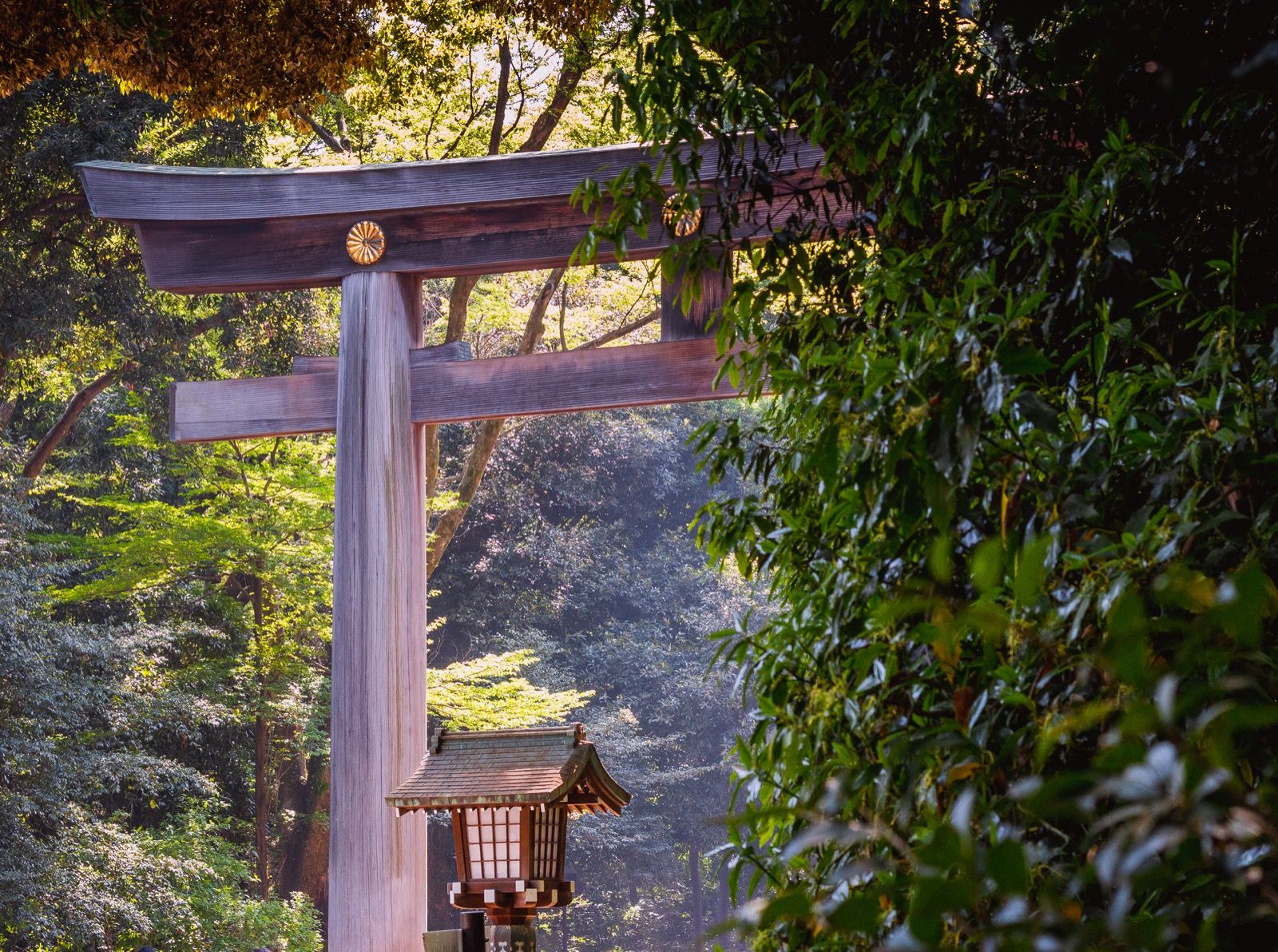
Plan Meiji Jingu with seasonal gate hours, the forest approach, shrine etiquette, photography rules and optional garden or museum visits.
Allow about an hour for Meiji Jingu's forest approach and main shrine, then decide whether the Inner Garden or museum deserves extra time. The key is to treat the walk as part of the visit and check the month's closing time before arriving. A late shopping break can leave too little daylight for the shrine itself.
Meiji Jingu is a working Shinto shrine, established in 1920 in honour of Emperor Meiji and Empress Shoken. Its wooded setting makes a distinctive cultural stop within Tokyo. Our Tokyo highlights guide places it alongside Asakusa, museums and other neighbourhoods; this guide helps you organise the actual visit without confusing the free precinct, paid facilities and nearby places with similar names.
Fast facts for your visit
| Decision | What to know |
|---|---|
| Main shrine and precinct | Free admission |
| Basic visit | Around 1 hour according to the shrine; add time for your pace and pauses |
| Seasonal gate hours | October 05:40–16:40; November 06:10–16:10; other months differ |
| Inner Garden | Published maintenance contribution ¥500 |
| Museum | Dedicated museum page lists adult admission ¥1,000; separate opening schedule |
| Common approach | Harajuku or Meiji-jingumae, followed by a walk through the grounds |
Charges are published in Japanese yen, not converted estimates. Check the official pages for your date, particularly around special events. The shrine's gates and the facilities within them do not all share the same hours.
Understand the place before planning the route
The shrine's introduction explains its establishment and dedication. This is a religious precinct where people come to pray, not simply a wooded park containing decorative buildings. Understanding that distinction makes practical decisions about behaviour, photography and time much easier.
The forest is also part of the story. The official forest account explains that it was deliberately planted with a long-term, self-sustaining landscape in mind. Its apparent naturalness is therefore something to notice rather than evidence that this is untouched ancient woodland. You do not need a botany lesson to appreciate the transition from city streets to the shaded approach.
Keep the shrine, Yoyogi Park and Meiji Jingu Gaien distinct on your map. A search result for an outer garden or sports facility is not automatically the main sanctuary. Save the official precinct map before travelling and identify the entrance you intend to use. This prevents a familiar place name from becoming an unnecessary detour.
Choose the entrance from your actual journey
The Harajuku side is a practical choice when your day also includes Harajuku or Omotesando. The official access page and precinct map show the relationship with Harajuku, Meiji-jingumae, Yoyogi and Sangubashi. Choose the approach that fits where you are coming from and where you will go next.
A station beside the grounds is not a station beside the sanctuary. The shrine warns that at least another ten minutes is needed from the entrance to the main buildings. Allow more for a slower pace, photographs in permitted areas or a pause to read signs. Do not schedule the next appointment based only on a map's station-to-gate walking time.
If you arrive from the north or west, returning by the same entrance may be simpler than automatically following someone else's south-entry route. Alternatively, a different exit can suit your onward neighbourhood. Decide this before the visit, but leave the option to retrace your steps if a companion is tired or the weather changes.
Check closing time before deciding on an afternoon visit
The official monthly opening table lists October hours as 05:40–16:40 and November as 06:10–16:10. These seasonal changes matter for an autumn trip: a plan that worked earlier in the year can finish after the gates close. Look up your month instead of assuming a standard late-afternoon opening.
A morning visit gives you more room to adjust, although it does not guarantee empty paths. For an afternoon visit, work backwards from closing and include the walk out. If time is short, choose the main shrine and approach rather than trying to add both paid facilities. A relaxed core visit is more useful than rushing through three different experiences.
Special events can affect the atmosphere and arrangements. Consult the official rites and events information and current notices if ceremonies are the reason for your trip. The existence of a ritual in the calendar does not mean every part is open to casual spectators or that you can photograph it freely.
A simple route that leaves space to observe
From your chosen entrance, follow the signed approach towards the main shrine. Pause at a torii without blocking people passing underneath. Let the forest walk set the pace instead of treating it as a transfer to be completed as quickly as possible. On the southern approach, the precinct map helps locate features such as the displayed sake and wine barrels without inventing a compulsory sequence of photo stops.
Near the sanctuary, put the camera away where required and give people who are praying room. You can look at the architecture and observe respectfully without trying to enter spaces reserved for worship or ceremonies. If a procession passes, stand aside and follow staff instructions; it is not an invitation to step into its path.
Afterwards, decide whether to return directly, enter the Inner Garden or visit the museum if open. This decision can be made on the day. Weather, walking energy and your interest in the subject should matter more than completing every numbered feature on a map.
Participate respectfully, or observe quietly
Visitors who are not Shinto believers are welcome, as the shrine explains in its visitor questions. Participation should be respectful rather than a performance for a camera. If you are unsure about a gesture, read the on-site instructions and wait without holding up the space.
The shrine's worship guidance describes purification before approaching the sanctuary and the prayer sequence of two bows, two claps and a final bow. An offering may be placed in the box. Follow the current arrangement at the water font rather than assuming equipment or procedures are identical to a photograph you saw online.
You do not need to purchase an amulet or collect a seal to complete a meaningful visit. If those interest you, use the appropriate counter and allow time for others. The official FAQ says the amulet office and goshuin counter do not accept credit cards, so bring cash for those purchases rather than assuming the payment options of the restaurants apply everywhere.
Know where photographs and food belong
The official etiquette rules prohibit photography and video at the main sanctuary where prayers take place. They also restrict filming and promotional photography without permission. Treat signs and staff instructions as decisive, even when other visitors are using phones.
Look for photographs on permitted approaches, with enough space to stop safely. Do not turn another person's prayer, wedding or family ceremony into a close-up subject without consent. A memorable visit does not require a photograph of every moment, and choosing one permitted view is better than trying to find a loophole in a restriction.
Eating and drinking belong in designated areas. Plan a snack stop accordingly rather than opening food while walking towards the sanctuary. Stay on the paths, leave plants and natural materials where they are, and keep voices low enough for the setting. The forest is part of the sacred precinct, with different expectations from an ordinary picnic park.
Choose the Inner Garden or museum for a reason
The Inner Garden page lists a ¥500 maintenance contribution and features including the South Pond and Kiyomasa's Well. Choose it if a separate garden walk adds something to your visit. Seasonal photographs are illustrations of particular periods: June irises are not a promise of flowers during an autumn trip.
The Meiji Jingu Museum is the better addition for objects associated with Emperor Meiji and Empress Shoken and the building designed by Kengo Kuma. Its dedicated page lists 10:00–16:30, last admission 16:00, Thursday closure and adult admission ¥1,000. Recheck exhibition notices and the specific date before going.
The museum's own page is the more specific fee source; the general English opening page shows a different museum figure. Use the dedicated page for planning and confirm the charge at purchase. Also avoid confusing this museum with the older Treasure Museum marked closed on the precinct map. A similar name at a different point in the grounds can create an avoidable walk.
Bags, access and the rest of your day
The official FAQ says there is no suitcase storage inside the grounds. Arrange luggage before arrival, allowing time to find an available facility outside the shrine. Do not build a visit around the assumption that a particular station locker will be free. A small day bag makes the walking easier and reduces the need to retrace your route.
The access page notes that wheelchairs are available at entrances. If you need one or have specific mobility requirements, contact the shrine to confirm arrangements and a suitable route. Availability is not a guarantee that every surface and optional facility fits every visitor. Allow extra time and choose the essential part of the visit first.
After the shrine, Harajuku or Omotesando can provide a contrasting next stop without a cross-city transfer. Choose a meal or one neighbourhood interest instead of filling the rest of the day automatically. If you are still deciding where to base your trip, our Tokyo accommodation-area guide helps compare the journey from different districts. Keep Meiji Jingu's opening hours as a fixed constraint, and let the more flexible city browsing follow.
Cover photograph: Wooden torii gate and lantern among trees at Meiji Jingu in Tokyo — Photographed 22 April 2018; resized proportionally for display, not cropped. CC BY 2.0. — Ray in Manila, CC BY 2.0.
Frequently Asked Questions
Is Meiji Jingu free to visit?
The main shrine and precinct are free. The Inner Garden and museum are separate paid additions; check their own admission information rather than treating them as included facilities.
How long should I allow?
The shrine suggests around 1 hour for the shrine alone and around 2 hours when including the garden and museum. Add time for your walking pace, queues and deeper interest; those are planning estimates.
Can I visit in the evening?
Do not assume evening access. Regular gate hours change by month and finish around sunset; check the current table and any special-event arrangements before travelling.
Can I photograph the main sanctuary?
Photography and video are prohibited at the main sanctuary where people pray. Use permitted areas elsewhere, respect posted restrictions and obtain permission for filming or promotional work.


Keep Exploring
Palacio de Bellas Artes: Plan Your Mexico City Visit
Choose murals, architecture or a performance at Bellas Artes. Plan museum admission, Sunday access, time, tickets and the historic-centre visit.
Museum of Tomorrow: Plan Your Rio Visit
Plan the Museum of Tomorrow in Rio: timed tickets, current hours, exhibition languages, Cosmos, access and a waterfront half-day.
Saadian Tombs: Plan Your Marrakech Visit
Plan the Saadian Tombs with current ticket categories, conflicting published hours, chamber viewing and a sensible El Badi pairing.