
Plan the Museum of Tomorrow in Rio: timed tickets, current hours, exhibition languages, Cosmos, access and a waterfront half-day.
Visit the Museum of Tomorrow if you want a multimedia exploration of people, the planet and possible futures; choose an exterior stop if the building is your main interest. The Museu do Amanhã works best as the central activity of a waterfront half-day, with enough time to engage with its questions rather than rushing from one screen to the next.
It is one option within our Rio de Janeiro highlights, particularly when you want something different from beaches and mountain viewpoints. This guide helps you decide whether to enter, reserve the correct session and combine the visit with Praça Mauá without overloading the day.
Fast facts before booking
| Decision | Current information |
|---|---|
| Address | Praça Mauá, 1, Centro, Rio de Janeiro |
| Opening | Thursday–Tuesday, 10:00–18:00 |
| Closed | Wednesdays |
| Last admission | 17:00 |
| Published admission | R$40 full price; R$20 half-price with eligibility documentation |
| Ticket timing | Valid for the booked date and hourly window |
| Suggested allowance | About 2 hours inside; roughly half a day with travel, exterior and a break |
| Nearby light rail | VLT Line 1, Parada dos Museus, about 200 m away |
Checked 29 October 2026. These are advertised conditions, not proof of availability for a particular session. Durations are editorial planning allowances. Recheck the museum's hours and tickets page before travelling, especially when older guides give different closing days.
Decide whether the exhibition suits you
The name can suggest a showcase of futuristic machines. The main exhibition instead asks how life, human activity and collective choices shape the future. Expect an interpretive multimedia experience rather than rooms filled with historical objects or a forecast of exactly what technology will do next.
That approach suits visitors who enjoy connecting ideas, looking at visual material and discussing what they have seen. It can also suit families, provided the adults help turn the bigger questions into conversations appropriate to the children. A visitor primarily interested in a conventional art collection may prefer a different museum.
Before buying, ask everyone in the group what attracts them: the building, an indoor activity, science, environmental questions or a particular temporary exhibition. These answers lead to different visits. Someone who mainly wants an exterior photograph does not necessarily need the same afternoon as a person who wants to read and use the interactive material.
Avoid promising yourself that this museum will fill every rainy hour. It offers an indoor focus, but the journey, square and exterior views still involve outdoor conditions. Conversely, a clear beach day need not rule it out if its subject is one of your main reasons for visiting Rio.
Choose an exhibition visit or an architecture stop
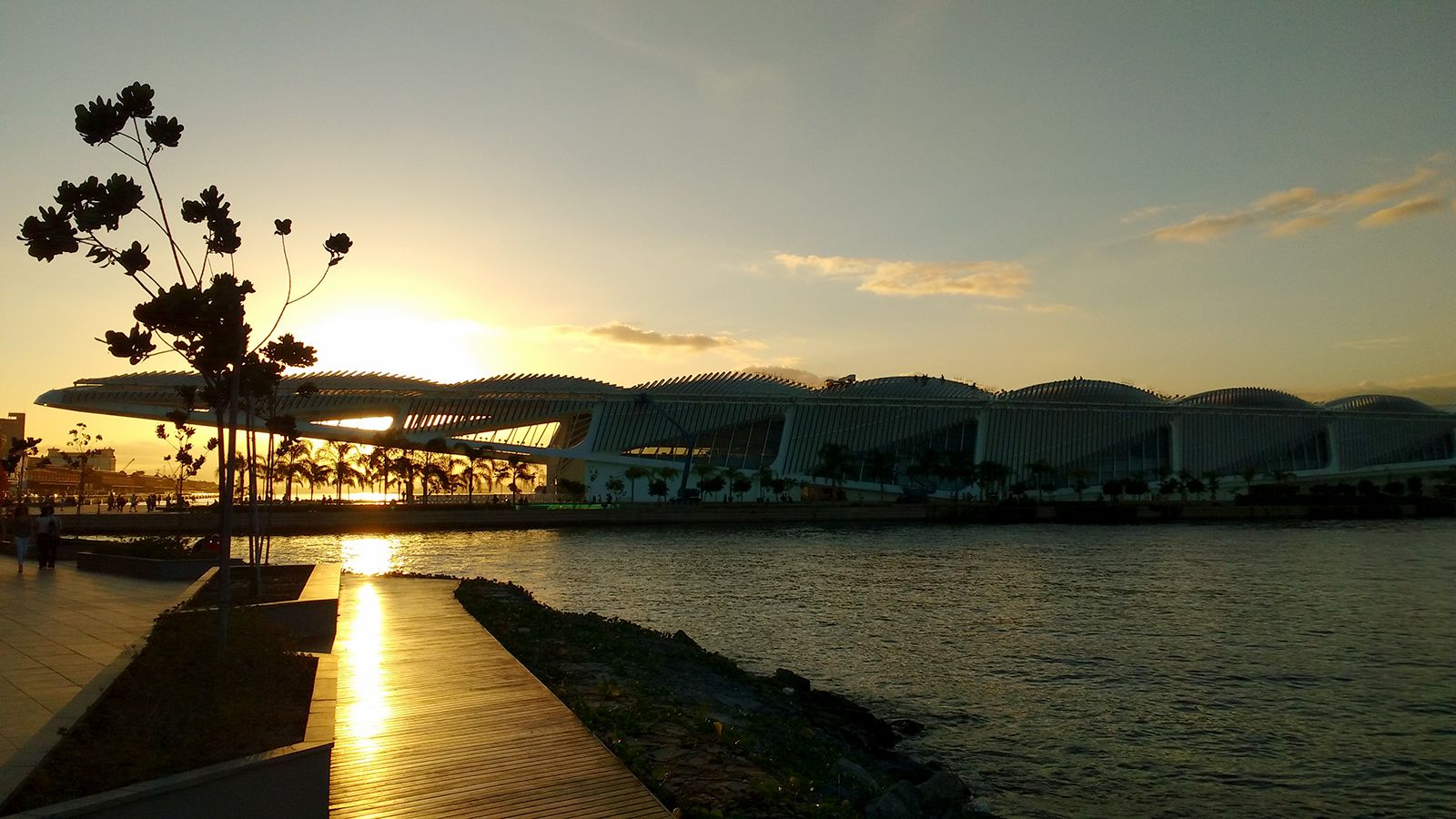
Santiago Calatrava designed the building, as documented by the museum's architecture archive. Its elongated white structure and waterfront position make the exterior part of the experience. Allow time to view it before or after the indoor visit instead of treating the approach as a sprint to the ticket scanner.
For a short architectural stop, start from Praça Mauá and choose an accessible public viewpoint that lets you see the building's form. You can appreciate the exterior without buying an exhibition ticket, subject to access restrictions or events affecting the public area. Do not interpret a view from the square as permission to enter controlled museum spaces.
If you are paying to enter, make the exhibition the priority. A photograph taken outside and a rushed circuit indoors are unlikely to give the same value as one deliberate visit. You can leave the exterior for afterwards if arrival timing is tight, unless weather makes the outdoor part the more urgent choice.
Respect the date and hourly window
The official ticket page gives a clear example: a reservation for 10:00 can be used from 10:00 to 10:59. This is an arrival window for that booked hour, not a general invitation to turn up at any point that day. Choose a session after allowing for transport, finding the entrance and the needs of your group.
Nor does that example mean the museum visit must last exactly one hour. Arrival conditions and time spent exploring are different questions. Follow the conditions on your actual ticket and the instructions from staff, particularly if a special programme has its own schedule.
Last admission at 17:00 leaves only the final operating hour before the advertised 18:00 closing. For a first visit, an earlier session usually gives more flexibility. Do not book late simply because the slot exists and then expect to explore every section at leisure.
The current advertised full price is R$40, with R$20 half-price requiring documentation. Free admission categories also require proof where applicable. Check the eligibility list and accepted evidence before selecting a concession. An age, student status or discount accepted elsewhere does not automatically establish eligibility here.
The visit-planning page also advertises a tenth-anniversary promotion on the tenth of the month. Treat promotions as conditional: verify whether your date is operating, which tickets are available and the final checkout price. Do not assume a campaign overrides a closure or continues indefinitely, and do not rely on historic claims of weekly free admission without current confirmation.
Follow the questions through the main exhibition
The official main-exhibition description presents five connected areas: Cosmos, Earth, Where Are We?, Tomorrows and Us. Some English descriptions also use Anthropocene for the human-impact section. These are stages in an argument about our place in the world, not five unrelated attractions to tick off.
Cosmos sets a broad scale before Earth draws attention to matter, life and thought. Later areas consider human influence, possible futures and choices. Rather than trying to absorb every screen, identify one question you want to pursue. Returning to it as you move through the exhibition gives the visit a clearer thread.
The museum lists experiences in Portuguese, Spanish and English. That is helpful for international visitors, but it should not be read as a guarantee that every live activity or audio segment uses your preferred language. For a guided programme, confirm its language separately.
Allow extra patience around any installation with a queue or a timed presentation. Ask staff about operation rather than assuming an unavailable element has disappeared permanently. If one section is busy, decide whether waiting matters to your visit or whether another available part can hold your attention first.
Check Cosmos and sensory needs before entering
Cosmos includes an immersive projection. The museum's exhibition page explains that the Cosmic Portal film is not subtitled during projection and links to a transcript; the official translation page provides English and Spanish text. Read that in advance if it will help you follow the experience.
An immersive presentation can be stimulating for one visitor and uncomfortable for another. Ask about light, sound and an alternative route if these affect someone in your group. You do not need to complete every audiovisual component to engage with the museum's subject.
The visitor policy treats Cosmos differently from other exhibition areas: photography and phone use are restricted there. Follow the signs and staff instructions. Elsewhere, ordinary photography is generally permitted, but flash and selfie sticks are not. Let the visual experience lead rather than trying to record an entire projection.
Choose your route to Praça Mauá
The museum's official transport guidance identifies VLT Line 1 and Parada dos Museus, approximately 200 m from the museum. Check the live route and payment instructions with the transport operator before travelling. This guide does not assume that an old card recommendation or fare remains valid.
The same museum guidance offers a walk from Uruguaiana metro station via Rua Acre, or via Avenida Presidente Vargas and Avenida Rio Branco. Choose the route according to current conditions, accessibility and where you are starting. A station-to-museum walk is only one part of the journey; include reaching the station from your accommodation.
The museum has no parking of its own. If using a car or taxi, establish a practical arrival and collection point rather than assuming you can stop directly at the doors. Keep the return plan simple when travelling with children or someone who will have limited energy after the visit.
Plan access, breaks and family time
The museum's accessibility page lists ramps, lifts, adapted toilets, tactile resources and a limited supply of wheelchairs. Contact the team about a specific requirement or adapted activity. A list of facilities does not guarantee that a particular wheelchair or programme will be available without checking.
Bring a light layer: the visitor policy recommends one because the interior can be cool. Food and drinks are not allowed in exhibition spaces or the auditorium. Plan a café break or a snack in an appropriate outdoor area rather than relying on eating while moving through displays.
Children under 12 must be accompanied by a parent or guardian. The museum specifically asks adults to watch children near the outdoor water features and gardens. Plan the outside part as actively as the indoor visit, especially when children have just spent time concentrating on screens.
For mixed ages, choose a modest goal: perhaps one idea about life on Earth and one question about the future to discuss afterwards. The most useful outcome is a conversation the family wants to continue, not proof that every interactive station was used.
Combine one nearby activity, then reassess
Praça Mauá and the waterfront can provide a natural change of pace after the museum. If another museum appeals, check the separate programme and admission arrangements of the Museu de Arte do Rio before adding it. Nearby does not mean interchangeable: an art exhibition and the Museum of Tomorrow ask different things of your attention.
For a longer stay, our flexible three-day Rio itinerary helps place this half-day alongside outdoor priorities. Keep it flexible enough to respond to weather and energy. Avoid combining several major paid attractions simply because a map makes their locations look manageable.
Before returning, take a final look at the building if conditions allow and check the next transport departure. A successful visit can include only the main exhibition, one break and the waterfront. Adding more is worthwhile when it deepens the day, not when it merely fills the remaining hours.
Cover photograph: Elongated Museum of Tomorrow beside the water at sunset in Rio — Photograph taken 16 May 2017; resized for display. CC BY 2.0. — Just a Brazilian man, CC BY 2.0.
Frequently Asked Questions
When is the Museum of Tomorrow closed?
The current schedule is Thursday–Tuesday, 10:00–18:00, with last admission at 17:00 and closure on Wednesdays. Check the official calendar for your date; older opening patterns remain online.
How much time should I allow?
About two hours inside is an editorial starting point, with roughly half a day for transport, the exterior and a break. Allow more if you enjoy reading, interactive material or a temporary exhibition.
Can I arrive any time with a ticket?
No. Tickets apply to the booked date and hourly window; the museum gives 10:00–10:59 as the window for a 10:00 reservation. Follow your ticket's actual conditions.
Is Portuguese necessary for the main exhibition?
The museum lists experiences in Portuguese, Spanish and English. Individual activities can differ, and the Cosmos projection is not subtitled; English and Spanish transcripts are available online.


Keep Exploring
MALBA Buenos Aires: Plan Your Museum Visit
Plan a MALBA visit with collection highlights, current exhibitions, opening days, ticket choices, accessibility and practical bag rules.
Asian Civilisations Museum: Plan Your Visit
Plan a focused Asian Civilisations Museum visit: choose galleries, understand ticket categories, and allow time for trade, faith or design.
Chapultepec Castle: Plan Your Museum Visit
Plan Chapultepec Castle around its history galleries, furnished Alcázar and hilltop setting, with current admission guidance and a realistic visit route.