
Todaiji Nara: Great Buddha Hall and Temple Grounds
Choose Todaiji’s Great Buddha Hall, museum or Nigatsudo hillside, with separate tickets, seasonal hours and the December 2026 museum closure.
Make the Great Buddha Hall your main Todaiji visit, then choose either the museum or the eastern hillside. The temple is a complex of gates, halls and paths, not a single attraction covered by one universal ticket. Walking through its outer grounds does not include entering the Great Buddha Hall, and the hall-and-museum combination does not admit you to every other paid building.
This distinction matters more than trying to see every named structure. A first visit can be satisfying with the approach through Nandaimon, time inside the Daibutsuden and one unhurried extension. Our Nara day-trip guide covers the wider journey from Kyoto and how the temple fits with the park; this guide concentrates on choices inside the Todaiji visit.
Choose the visit you actually want
| Option | What it adds | Ticket and time consideration |
|---|---|---|
| Great Buddha Hall | Monumental architecture and the seated Buddha | Paid entry; the main first-visit priority |
| Outer approach and Nandaimon | Gate architecture, guardian figures and temple setting | Does not include the hall interior |
| Hall plus Todaiji Museum | More context and religious art | Specific combination ticket; allow museum time |
| Nigatsudo hillside | A change of elevation and views over Nara | Extra walking and steps; respect worship |
| Hokkedo or Kaidando | A more focused sculpture and temple visit | Separate paid admissions |
Information was checked on 23 November 2026. Suggested visit durations below are editorial planning estimates, excluding the journey to Nara, queues and meals. Use the temple's admission page for current tariffs and seasonal hours.
Start with Nandaimon, not a dash to the ticket booth
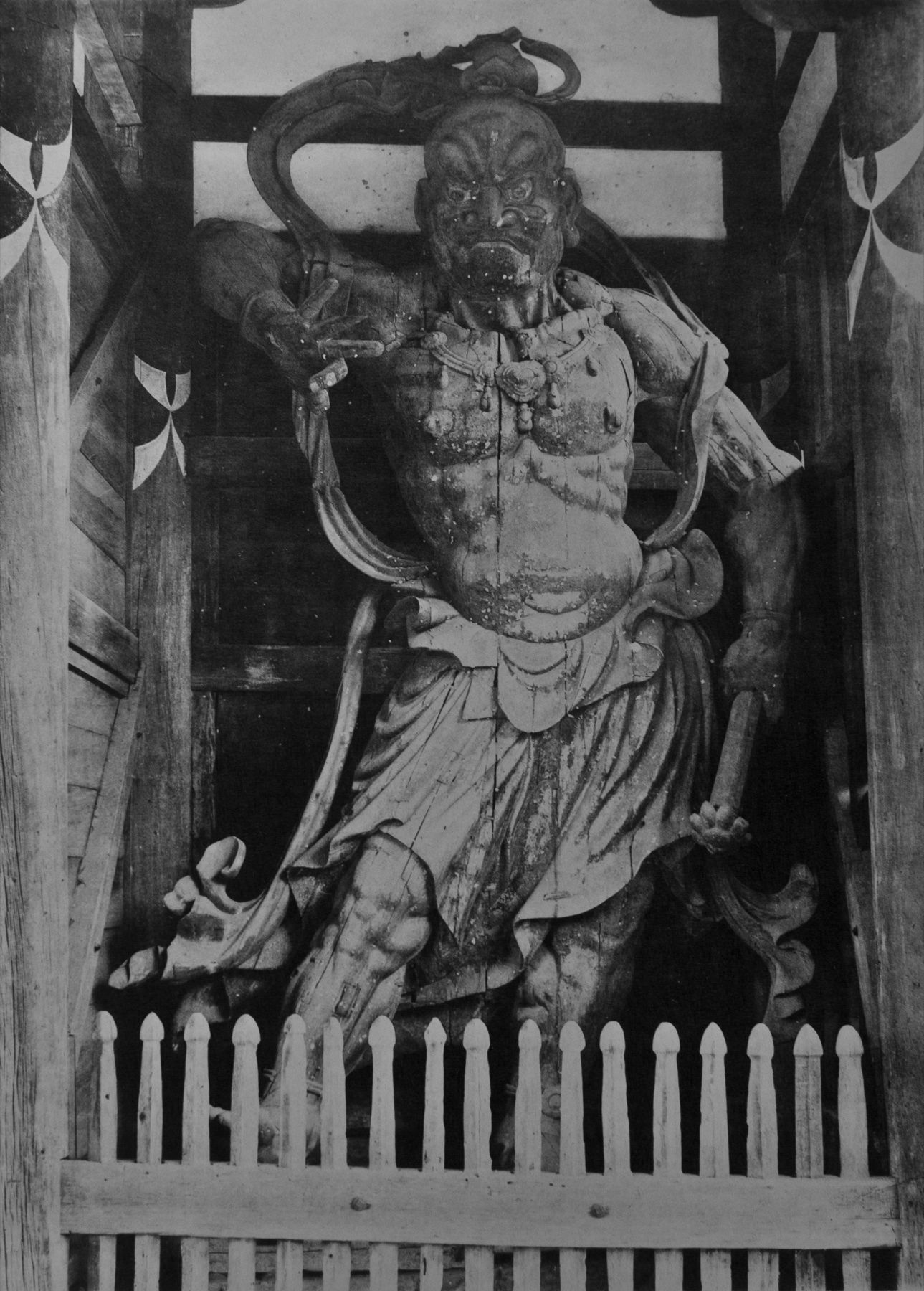
The Great South Gate is a worthwhile stop before you enter the paid hall enclosure. Look at its large supporting timbers, the scale of the roof and the two guardian figures on either side. These are part of the experience of approaching a major religious site, not merely background for the Great Buddha photograph.
The temple's Nandaimon history dates completion of the gate and its guardian statues to 1203. The surviving building represents a different phase of Todaiji's rebuilding from the present Great Buddha Hall. Noticing that difference makes the complex easier to read: its structures were not all built together and then left untouched.
Pause where you can look without obstructing people passing through. The approach is shared by worshippers, visiting groups and other travellers. If your party separates to take photographs, agree where to regroup before the ticket entrance. It is easier to enjoy the hall when nobody is searching for a missing companion among the arriving groups.
What the Great Buddha Hall ticket gives you
The Daibutsuden contains the monumental seated Vairocana Buddha. Its appeal is the relationship between sculpture and building: the size of the figure, the timber structure and the space around them. Walk through at a pace that lets you look beyond the first view from the entrance.
The temple's Great Buddha Hall page explains that the current hall is an Edo-period rebuilding after earlier fires. It is narrower than its predecessors, which is a useful corrective to imagining the present building as an unchanged survival from the temple's foundation. The bronze lantern outside provides another detail to notice rather than rushing straight back out.
Standard individual admission is ¥800 for adults and visitors aged 13 and over, and ¥400 for ages 6–12. These are ordinary individual rates; do not apply a school-group reduction to an independent family visit. An adult hall-and-museum combination costs ¥1,200, with a ¥600 combination for ages 6–12.
The combination makes sense when you genuinely want both visits. Buying it only because it sounds like a complete temple pass creates the wrong expectation: Hokkedo and Kaidando remain separately ticketed. Keep the ticket accessible and follow the admission staff's instructions about its use.
Hours: each building has its own deadline
The Great Buddha Hall normally opens 07:30–17:30 from April through October, and 08:00–17:00 from November through March. The museum opens later, at 09:30, and closes at 17:30 in April–October or 17:00 in November–March. Museum last entry is 17:00 or 16:30, respectively.
An early hall visit therefore cannot automatically continue into the museum immediately afterwards. Conversely, arriving near the hall's closing time does not leave a realistic museum visit. Work backwards from the last attraction you want to enter and allow a proper visit, not just enough time to reach the ticket desk.
There is a specific upcoming exception: the museum's official notice announces closure 24–27 December 2026 for an exhibition change. This is a museum closure, not an announcement that the entire temple is closed. For those dates, plan the hall and grounds and check whether another building suits your interests instead of buying around an unavailable museum stop.
Outside those dates, the museum still allows temporary closures for exhibition changes or inspections. Check its own page before making the combination ticket the basis of your day. A general statement that Todaiji is open year-round does not guarantee every room and collection is accessible.
Museum or hillside: the most useful choice after the hall
Choose Todaiji Museum if sculpture, conservation and the temple's history interest you. It is a way to look more closely after the overwhelming scale of the hall. The museum presents temple treasures and changing displays; do not assume a particular object mentioned in an old guide is always exhibited.
For planning, allow around 45–75 minutes for the museum in addition to the hall and approach. This is an editorial allowance, not an official tour duration. If you tend to read every label, leave longer. A wet day may make the museum attractive, but the walk between buildings remains outdoors.
Choose Nigatsudo if you would prefer an outdoor continuation and a view across Nara. The eastern hillside changes the character of the visit, away from the main arrival sequence. It also adds climbing and uneven walking; it should be a conscious choice for the party, not a small extra secretly attached to a supposedly easy outing.
The Nigatsudo page connects the hall with the Shuni-e ceremony and identifies the present building as a reconstruction of 1669. Treat it as an active religious space. A viewpoint does not make every interior available for casual sightseeing, and ceremony arrangements can affect movement.
If Buddhist sculpture is your strongest interest, consider a separately ticketed Hokkedo or Kaidando visit instead of extending the walk simply to collect a view. The better choice is the one you have attention left to appreciate. Adding all the options often produces less understanding, not more.
Two realistic ways to arrange the visit
For a compact first encounter, allow roughly 90 minutes–2 hours for the Nandaimon approach, Great Buddha Hall and a little time in the surrounding grounds. Start with the gate, enter the hall, then decide whether to stop for a break or continue. This gives the main experience room without assuming that every visitor wants a specialist museum.
For a deeper temple visit, plan approximately 3–4 hours including either the museum or an unhurried eastern hillside extension, with space for pauses. These allowances are not a promise about queues. Major ceremonies, school visits and busy travel periods can alter the pace substantially.
Avoid fixing a distant lunch reservation immediately after the hall. Give yourself an easy point at which to finish: return towards the park if your party has had enough, or continue east if everyone is still enjoying the walk. The most valuable flexibility happens after the essential visit, not before an increasingly complicated list of paid stops.
If Todaiji already fills much of the day, leave other major excursions for another date. Our Kyoto highlights guide helps keep the rest of a Kyoto-based stay balanced instead of combining Nara with another substantial temple visit across the region.
Getting to the entrance and managing the walking
Kintetsu-Nara is convenient for the approach on foot. The official prefectural travel guide gives about 19 minutes from that station to Todaiji. Treat this as an approximate access figure: station exits, photographs, crossings and the location of the actual ticket entrance add variability.
JR Nara is farther from the temple approach. Compare a walk with the day's local bus option rather than treating the two Nara stations as interchangeable. A bus can reduce the initial distance but does not remove walking within the precincts. Your useful endpoint is the building you intend to visit, not simply a map pin labelled Todaiji.
For mobility needs, ask the temple which entrance and route currently work for the Great Buddha Hall. The hillside route to Nigatsudo is a separate accessibility decision. Do not infer that a manageable hall visit means the whole complex offers an equally easy circuit. Allow rest and toilets before committing to the climb.
Photography and respectful visiting
Personal commemorative photography is permitted along the Great Buddha Hall visitor route, but the temple prohibits tripods and group photographs there. Its museum does not allow photography, and Nigatsudo has its own restrictions on photography inside the hall. Check the signs at each building rather than carrying one area's permission into another.
The temple also restricts commercial reuse of its images. Personal visitor permission is not a commercial photography licence. Smoking and drone photography are prohibited in the precincts. Keep worship areas and circulation routes clear, and do not turn a brief stop into an obstacle for others.
Cover photograph: Archival 1915 photograph of the Ungyo guardian at Todaiji’s Nandaimon gate — Archival photograph of a Nandaimon guardian at Todaiji, published in 1915; it does not show the sculpture’s current condition. Image adapted for publication. — Imperial Japanese Commission to the Panama-Pacific International Exposition; digitization by Maculosae tegmine lyncis, Public domain (PD-Japan-oldphoto; PD-1996).
Frequently Asked Questions
Can I see Todaiji without paying?
You can experience the outer approach and grounds without buying Great Buddha Hall admission, but entering the hall, museum and other paid buildings requires their relevant tickets.
Does one ticket cover the entire temple?
No. The ¥1,200 adult combination covers the Great Buddha Hall and Todaiji Museum. It does not include every other paid hall.
How long should I allow?
Plan roughly 90 minutes–2 hours for the main approach and hall, or 3–4 hours with a substantial museum or hillside extension. These are planning estimates, excluding travel and queues.
Is Todaiji Museum open every day?
It normally opens daily but has temporary closures. The current notice closes the museum 24–27 December 2026 for an exhibition change.
Is Nigatsudo part of the same visit?
It can be an eastern hillside extension, but adds walking and elevation. Its religious spaces and photography rules differ from those of the Great Buddha Hall.



Keep Exploring
To-ji Kyoto: Temple Grounds and Visiting Options
Choose between To-ji’s free precinct, sculpture halls, seasonal pagoda opening and evening illumination, with current autumn 2026 admission details.
Shitennoji Osaka: Temple, Garden and Admission
Plan Shitennoji in Osaka: free grounds, central precinct tickets, separate garden and museum access, hours and transport.
Gotokuji Temple: Cats, Hours and Tokyo Access
Plan Gotokuji in Tokyo: grounds versus office hours, Miyanosaka and Odakyu access, cat offerings, restricted halls and respectful photography.