
Old Treasury Building Melbourne: Museum or Tour?
Choose a free Old Treasury museum visit or monthly guided tour: gold vaults, family rooms, exhibitions, Saturday closure and accessible entry.
The Old Treasury Building is a useful Melbourne museum when you want to understand how gold, government and everyday work shaped the city. Its grand frontage is part of the story, but the contrast between the vaults, official rooms and a caretaker family's home makes the interior worth entering. Choose a free independent visit for the exhibitions or a separately booked monthly tour for additional parts of the building.
Allow 90 minutes to two hours for a selective museum visit, an editorial estimate rather than an official tour duration. The important calendar detail is that the museum closes on Saturdays. Use our Melbourne cultural guide to place this stop within a wider stay, then build the day around the actual opening schedule.
Fast facts
| Decision | Planning information |
|---|---|
| Address | 20 Spring Street, Melbourne |
| Regular opening | Sunday–Friday, 10:00–16:00; Saturday closed |
| Last admission | 15:45 |
| Independent museum visit | Free; donations welcome |
| Public guided tour | Last Sunday of the month at 11:00; advertised A$16 per person |
| Suggested museum time | 90 minutes–2 hours, editorial estimate |
| Step-free entry | Rear middle door, with staff assistance |
Details were checked on 26 November 2026. Consult the official visitor page for holiday changes. Last admission is a boundary, not a recommendation: arriving at 15:45 leaves little time to understand the exhibitions before the 16:00 closure.
Decide whether you want the museum or the tour
The independent visit suits someone who wants to follow the gold story, look at historical documents and choose among the current exhibitions. You can set your own pace and stop where a topic catches your attention. Free admission makes a focused visit reasonable; it does not require you to read every panel to obtain value from the outing.
The public tour is a distinct product. The published schedule is the last Sunday of each month at 11:00, with an advertised price of A$16 per person. The operator's linked booking page describes access to areas normally unavailable to general visitors, including the Executive Council Chamber. Choose it if the building's government function and otherwise restricted rooms are your main interest.
The current booking listing shows a one-hour session. Reconfirm the selected date, availability and final checkout total; the advertised rate is not a quotation for a particular booking. Do not arrive on an ordinary weekday expecting the same access, and do not interpret a monthly schedule as a guarantee that every future session will run.
Read the façade as a statement about power
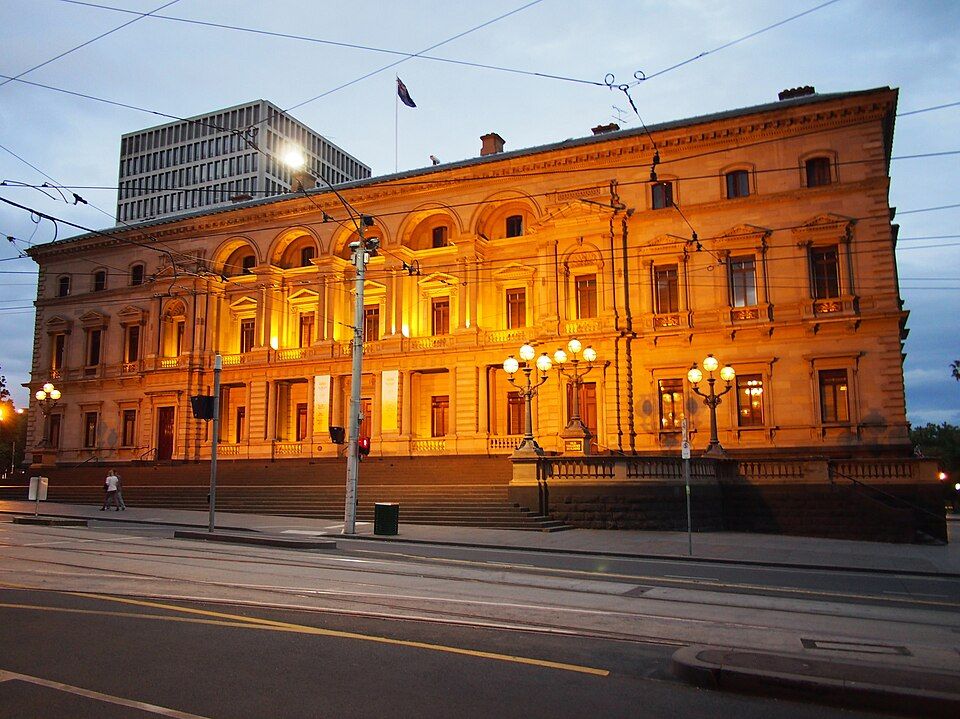
The museum's building history identifies John James Clark as the young designer whose first known contract drawings date from 1857. The Renaissance Revival design drew on the Italian palazzo. Rather than simply treating the building as an attractive backdrop, ask what its scale and ordered frontage were intended to communicate.
From a safe position away from tram tracks and road crossings, compare the central entrance with the repeated windows and upper storeys. The formal symmetry suggests administration and permanence. That interpretation becomes more interesting when you enter the basement and see the physical requirements of storing wealth, or encounter the domestic work that supported official life.
The institution acknowledges the unceded land of the Wurundjeri Woi-wurrung people of the Kulin Nation. Keep that context alongside the story of colonial prosperity. A building financed through rapid economic expansion can also be evidence of who controlled land, whose authority was recognised and whose losses were excluded from the public celebration.
Start with the gold vaults if the building is your priority
The Gold Vaults exhibition connects the discovery of gold in 1851 with migration, political conflict and its impact on Victoria's First Peoples. This is a more useful frame than expecting a room full of glittering treasure. The vaults explain the movement and consequences of wealth as well as the space designed to contain it.
Look first at the structure: enclosed rooms, thresholds and the difference in atmosphere from the formal frontage above. Then use the displays to ask how gold moved from a digging to an urban institution. Which people supplied labour, transport or security? Who had the authority to regulate the process? These questions turn a basement visit into an explanation of the city outside.
Do not attach an invented quantity of gold to the rooms. In its historical account of the Treasury, the museum explicitly says that the amount actually stored is unknown. The building was commissioned to hold bullion, but purpose and documented use are not interchangeable. That uncertainty is part of the history, not a gap that needs a dramatic guess.
Make room for the Maynard family's home
The Growing up in Old Treasury display changes the scale from government and gold to a household in the basement. John Maynard, his wife and eight children lived in a small group of rooms; his work involved security and maintenance, while she also prepared refreshments for official meetings. The display gives the building a domestic life alongside its institutional identity.
Compare the rooms with your impressions of the exterior. What does a prestigious workplace look like from the perspective of the people who keep it functioning? Which tasks continued before officials arrived or after they left? You need not invent a conversation between residents to see how paid work and family responsibilities occupied the same place.
This section can be particularly effective with children. Ask them to identify what a family would need for an ordinary morning, then compare that with the space available. Keep the discussion grounded in the interpretation, distinguishing reconstructed presentation from original objects. A room that looks lived in is still a museum display assembled to explain a particular past.
Choose one additional exhibition rather than every panel
The current exhibitions list includes Making Modern Melbourne, Protest Melbourne and Yarra: Stories of Melbourne's River. Pick the subject that best connects with your interests. Someone curious about civic life may choose protest; someone planning a riverside walk may get more from the river exhibition. This keeps the visit coherent without requiring an exhaustive circuit.
The Yarra exhibition treats Birrarung as a living landscape altered by settlement, industry and engineering. It can change how you read an apparently familiar urban river. Think about the relationship between water, land use and the city's location, rather than using the displays only as a collection of old photographs.
The temporary exhibition Swinging Sixties is currently listed through 5 September 2027. Treat that as a dated programme fact and recheck before making a later trip specifically for it. An online exhibition or an entry in the past-exhibitions archive does not mean the same display remains physically installed. The live current-exhibitions page is the better planning reference.
Use a simple route with room for a pause
At reception, establish which rooms are available and whether a group visit changes the suggested sequence. Start with your priority, then add one contrasting subject. Gold vaults followed by the Maynard rooms gives a clear contrast within the building; a river or protest exhibition can then broaden the discussion to Melbourne itself.
If your companion reads more quickly, agree where to regroup instead of continually pulling each other through the displays. Sit down when needed and choose a final section before concentration fades. A small museum can still demand attention, especially when much of the interpretation is textual. Completing every room is less useful than remembering a few well-supported ideas.
Finish by looking again at the exterior. The same façade should now suggest more than a photograph: bullion storage, public authority and the labour of maintaining an institution. This final comparison takes little extra time and gives the visit a clearer ending than drifting into the shop because you have run out of labels.
Plan the entrance and access you need
The detailed accessibility page describes the rear entrance for visitors avoiding stairs. Follow the right-hand side when facing the building from Spring Street, continue to the rear middle door and use the labelled button for staff assistance. Check arrangements ahead if an independent arrival or specific mobility equipment is essential.
A lift links the museum levels, and an accessible toilet is in the basement. The operator warns that some old paving can be uneven and that mobility-scooter dimensions may limit access to certain rooms. Discuss your equipment with staff rather than treating the existence of a lift as proof that every route will suit it.
The museum offers a sensory map and seats, but no dedicated quiet room. Download the map if lighting or sound affects your visit, then agree a manageable route. A quieter time can help but cannot guarantee an empty building. Ask about current group bookings if the presence of a school group would materially change your experience.
Arrival, bags and the next part of the day
Parliament station is the useful rail reference; the Collins Street exit is highlighted in the museum's access information. Use current transport information for the route from your accommodation. For trams, check the actual Free Tram Zone boundaries and the service you need rather than assuming every journey described as central is free.
There is no onsite parking. Large backpacks must be left at reception, and personal photography in exhibition spaces is allowed without flash. Food and drinks other than water are excluded from the galleries. Travel light and eat before or after the visit, particularly if you plan to read several exhibitions in detail.
For an outdoor contrast, our Fitzroy Gardens guide helps choose a manageable walk east of the centre. If you want a broader museum day instead, compare Melbourne Museum, including First Peoples and natural-history collections. The latter is a separate substantial visit, not an automatic extra stop. Choose the combination that leaves time to think about what you saw.
Cover photograph: Illuminated Old Treasury Building facade and tram wires on Spring Street in Melbourne — Archive photograph 2012 Image adapted for publication. — Nick-D, CC BY-SA 3.0.
Frequently Asked Questions
Is the Old Treasury Building free to visit?
The independent museum visit is free, with donations welcome. Guided tours have separate charges and booking arrangements; free general entry does not include the monthly public tour.
Is the museum open on Saturdays?
No. The regular schedule is Sunday–Friday, 10:00–16:00, with last admission at 15:45. Check the official visitor page for holiday exceptions.
What does the public guided tour add?
It includes interpretation and access to areas normally closed to general visitors, such as the Executive Council Chamber. The published schedule is the last Sunday of the month at 11:00, advertised at A$16 per person; verify the selected booking.
How much time should you allow?
Allow 90 minutes to two hours for a selective independent visit, as an editorial estimate. The current public-tour listing describes a one-hour session; allow extra time if you also want to browse exhibitions independently.
Can you enter without using the front steps?
Yes. The rear middle door provides a step-free entrance with staff assistance, and a lift connects museum levels. Consult the detailed access information for equipment dimensions, uneven basement paving and your particular needs.


Keep Exploring
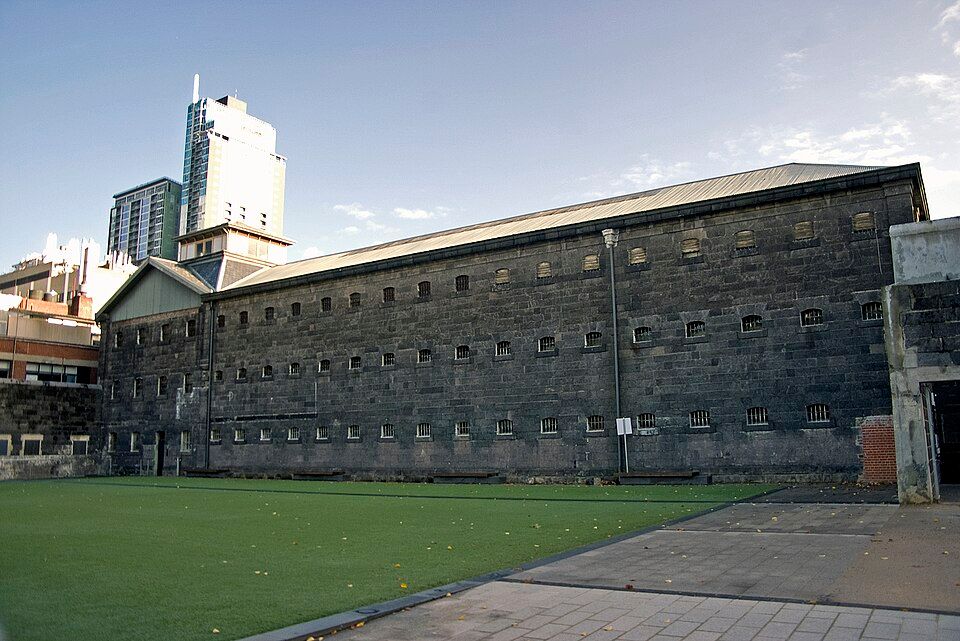
Old Melbourne Gaol: Day Visit or Night Tour?
Choose an Old Melbourne Gaol day visit or night tour: tickets, age limits, Women & Children exhibition, access and realistic arrival planning.
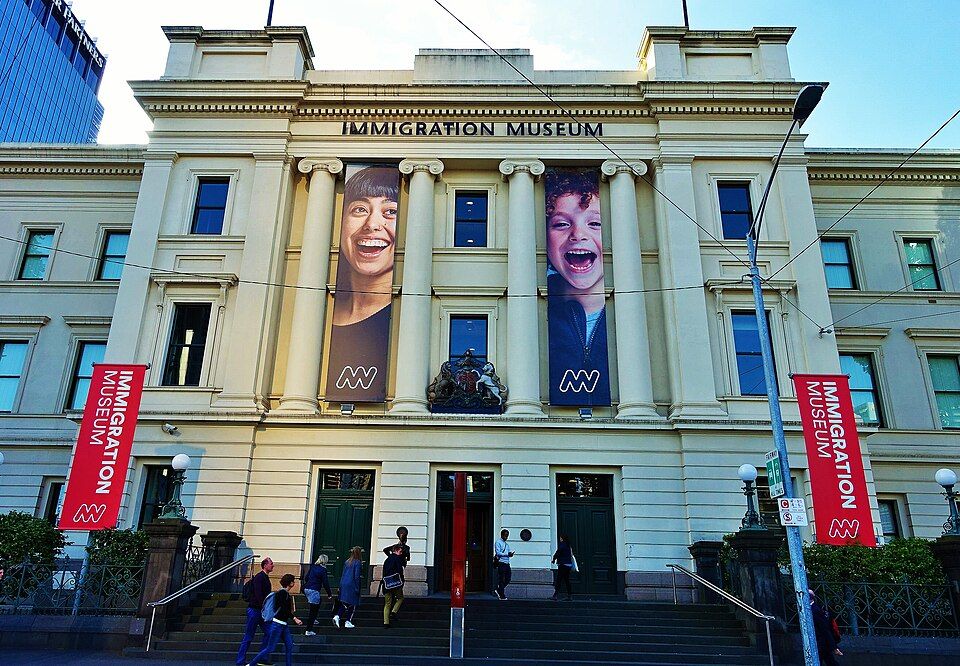
Immigration Museum Melbourne: Plan Your Visit
Choose Melbourne’s Immigration Museum galleries, current exhibitions or a guided tour, with ticket eligibility, access and a thoughtful visiting plan.
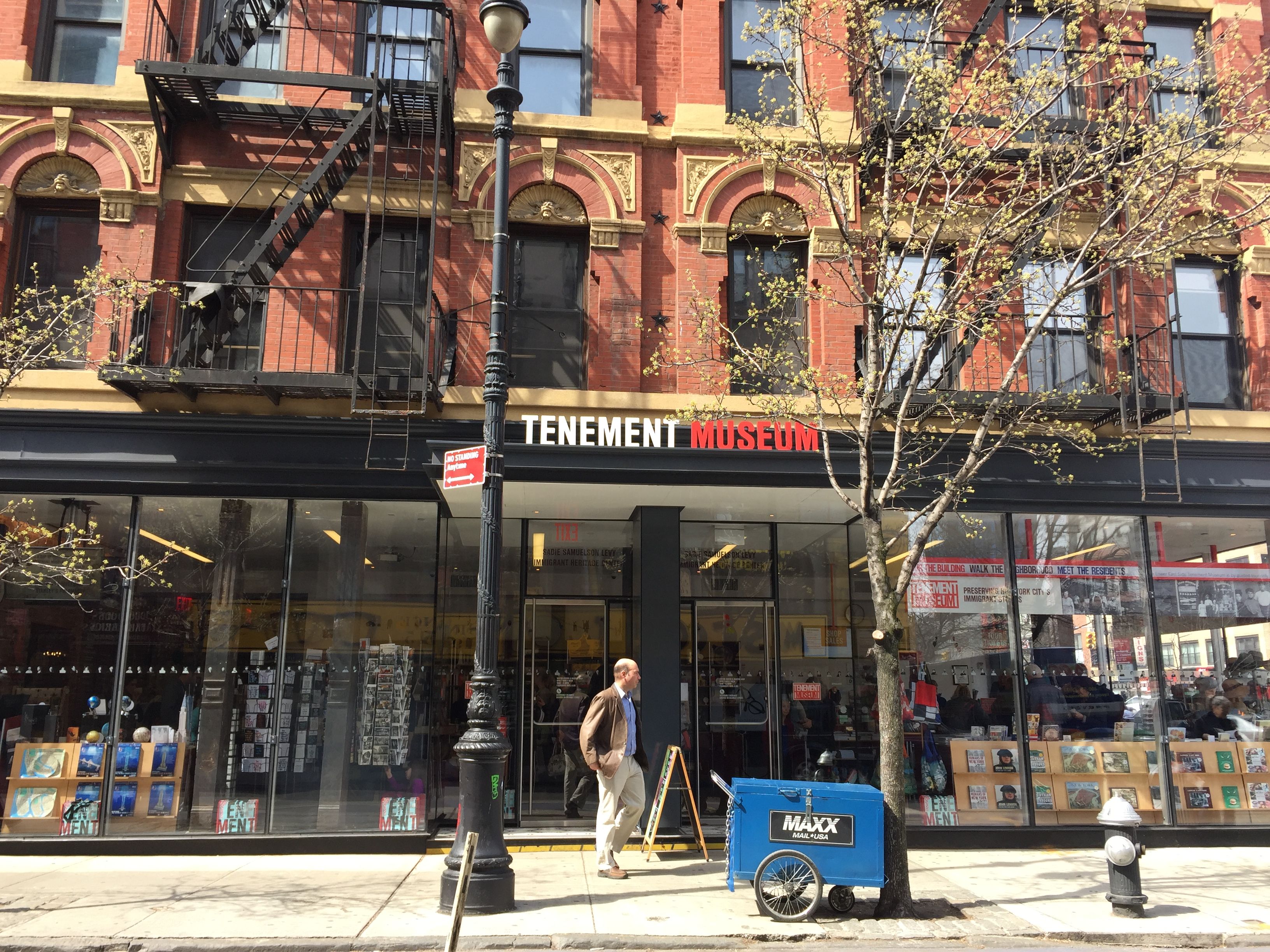
Tenement Museum New York: Choose Your Tour
Compare actual Tenement Museum tours by family story, age, stairs, wheelchair access and language support before reserving a time.