
Old Melbourne Gaol: Day Visit or Night Tour?
Choose an Old Melbourne Gaol day visit or night tour: tickets, age limits, Women & Children exhibition, access and realistic arrival planning.
Old Melbourne Gaol asks a different question from most city museums: do you want to study a former prison at your own pace, or take part in a deliberately atmospheric evening tour? The building is the same, but the experience, ticket and suitability are different. Choose the daytime visit for architecture and interpretation; consider the night programme only if dark spaces and disturbing stories are part of what you want.
The gaol stands at 377 Russell Street, near the northern part of Melbourne's centre. Our Melbourne cultural guide helps place it among other city experiences. For a standard daytime visit, the operator suggests 1½–2 hours. Add time for any separately booked activity and for a pause afterwards: this is a site of incarceration and execution, not simply an atmospheric stone building.
Fast facts
| Decision | Starting point |
|---|---|
| Daytime hours | Daily 10:00–17:00; closed Good Friday and Christmas Day |
| Adult general admission | A$38, plus booking fees where applicable, checked 25 November 2026 |
| General ticket includes | Self-guided gaol, audio guide and Women & Children exhibition |
| Evening tours | Separate ticket, selected dates, age 16+ |
| Current night-tour adult price | A$45 plus booking fees; check chosen session |
| Main access limitation | Three levels without lifts or ramps between floors |
| Arrival advice | Aim for 15:00 or earlier for a useful daytime visit |
Choose the daytime ticket for flexibility
The official tickets page lists general admission at A$38 for adults, A$30 concession/student and A$22 for children aged 5–15, with booking fees applying. Family and membership arrangements are also listed. Check the correct category before buying, and keep all amounts in Australian dollars when comparing options; a euro conversion is only a budgeting estimate.
The visitor information explains that general admission covers the self-guided gaol, an audio guide and the Women & Children of the Gaol exhibition. It also allows same-day re-entry, with non-transferable tickets. That can help if you need a break, but confirm the day's arrangements at reception rather than assuming an evening tour is included in a return visit.
The City Watch House, a guided gaol experience and Ned Kelly's Last Stand are listed as upgrades or separate experiences. Older online accounts can describe different inclusions. Buy according to the current product description, not an old review of an all-in package. In particular, do not assume the former Magistrates' Court is routinely part of general public admission: its opening is limited and separately arranged.
Leave enough daylight time
Regular opening is 10:00–17:00, with closures on Good Friday and Christmas Day. The operator's page contains two different late-arrival references: the introduction recommends arriving no later than 15:30, while its FAQ gives 15:00 as the last entry time. Plan to arrive by 15:00 or earlier, and confirm the selected date if a later arrival is unavoidable.
This is more useful than choosing the latest possible minute. You need time to orient yourself, read material and decide whether to continue upstairs. A person who moves slowly or spends longer with interpretation should arrive earlier still. Closing time does not change because the audio guide remains unfinished.
If the gaol is your main interest, visit it before a flexible meal or walk rather than between two timed appointments. The content can invite reflection or make someone want a break. A little room in the schedule lets the group respond without turning discomfort into a disagreement about missing the next booking.
Look beyond Ned Kelly
The official history traces the first cellblock to 1845, expansion during the gold-rush period and the gaol's changing roles. Ned Kelly's execution in 1880 is part of that story, but concentrating only on one famous prisoner gives a narrow account of the institution.
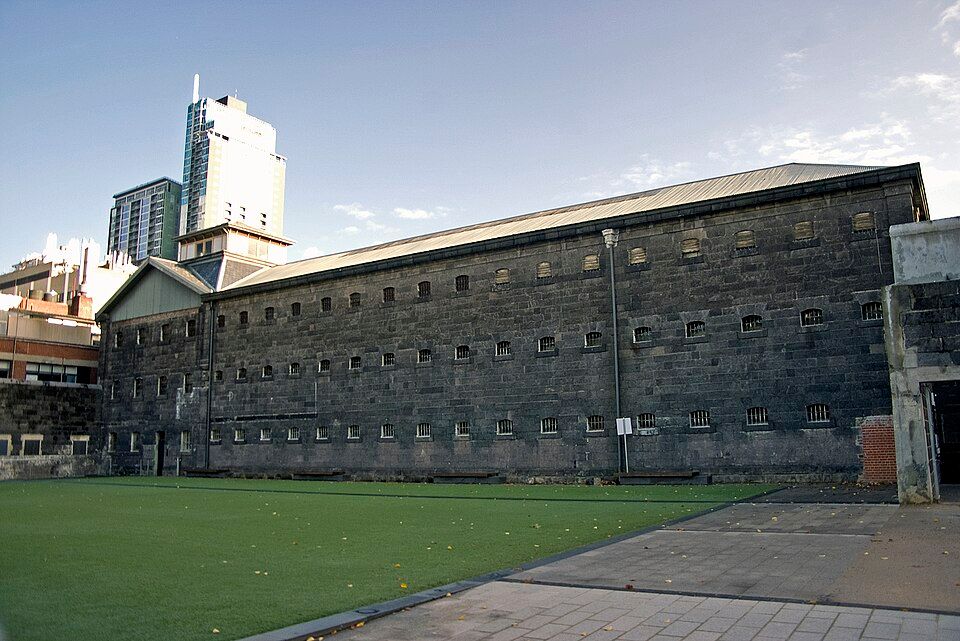
Start with the building's organisation. Look at the repeated cell doors, the vertical relationship between galleries and the positions from which prisoners could be observed. Ask what the architecture made easier for those controlling the space and what it restricted for those held there. This is an editorial way of examining the building; it does not require turning a cell into a playful photograph.
The history also reaches into colonial violence and the imprisonment of people whose circumstances differed greatly. Read the interpretive account critically and distinguish a documented event from later legend. The museum's marketing language about notoriety need not determine your entire approach to the visit.
Give women and children proper attention
The Women & Children of the Gaol exhibition adds perspectives that are easily lost when a prison is presented through famous male inmates. It is included with general admission and located in cells on the second floor. The display considers imprisonment alongside wider questions of social welfare.
Its position matters for planning: an included exhibition is not necessarily accessible to someone who cannot use stairs. Contact the gaol about alternative information before visiting if this is a central interest and upper-floor access is difficult. Do not assume “included” means “reachable by every visitor”.
When reading personal histories, leave time for more than a name and sentence. What circumstances brought someone into the institution? How did age or gender affect the experience? These questions turn the display into an account of a social system, rather than a collection of unusual anecdotes.
Understand what the evening tours offer
The Hangman's Night Tour and Ghosts! What Ghosts? are separately ticketed one-hour experiences on selected dates. At the current check, each lists A$45 adult admission, booking fees and a minimum age of 16. Check the actual booking calendar; an event page spanning several months does not mean a session operates every night.
Both describe dark conditions, confined spaces and potentially graphic stories. Their framing is deliberately theatrical and atmospheric. Ghost accounts should be understood as stories presented in that programme, not verified evidence of supernatural events. Choose this option for the style of guided experience, not because it promises a more complete survey of every daytime display.
The pages require arrival 15 minutes before the start and state that latecomers will not be admitted or refunded. Photography and filming are prohibited during the tour, with an opportunity for photographs afterwards. These are practical reasons to keep dinner nearby and allow a generous arrival buffer.
Do not buy a night ticket simply because the daytime slot is inconvenient. The format may be a poor substitute for someone who dislikes darkness, enclosed spaces or graphic material. Likewise, a day ticket does not grant access to the evening programme. Decide on the experience first, then select the ticket.
Assess suitability before bringing children
The daytime museum sells child tickets, but that does not make all its content suitable for every child. The operator warns about punishment equipment, death masks and execution areas. Parents and carers should consider individual sensitivity, not just whether a child meets a ticket age band.
Explain the nature of the place before arrival in language appropriate to the child. Agree that leaving a room is acceptable and avoid promising a light-hearted adventure if the displays may upset them. A short, carefully chosen daytime route can be more useful than insisting on every level. The age-16 rule for the two named night tours is a separate requirement and should not be confused with daytime admission.
Adults can also find the material confronting. There is no need to treat finishing the route as a challenge. Choosing another museum is a reasonable decision when the subject does not fit the group, even if the architecture or Ned Kelly story initially attracted you.
Plan a realistic accessible route
The gaol offers partial wheelchair access, with three levels and no lifts or ramps between them. The official visitor page states that much of the interpretation is on the ground floor, but some cell doorways are narrow. Tell the booking team your chair or mobility-device requirements and ask which specific areas can be reached.
Night tours may have additional route limitations. A general statement about ground-floor access should not be transferred automatically to an evening product. Ask about lighting, confined sections, stairs and whether the planned programme can accommodate your needs before paying.
The audio guide is offered in English and Mandarin, and the operator describes a text option. Check how to access it at reception. Bring a charged phone and suitable headphones if required by the current system, rather than assuming every device or language is supplied. A readable transcript can be useful without solving physical access to an upstairs display.
Keep transport and the next stop simple
The visitor page describes the gaol as a short walk from Melbourne Central and State Library stations and lists tram options on La Trobe Street. Check the current journey planner and stop location before travelling. There is no onsite visitor car park; driving adds parking arrangements to a central-city visit that may be straightforward by public transport.
There is no onsite café, and food and drink are not permitted inside the heritage buildings. Plan a meal before or after the visit rather than treating a snack as something to carry through the cells. Nearby central-city food options give flexibility, particularly if the group needs a longer break than expected.
Our State Library Victoria guide offers a different cultural continuation in the same broad area. Check its access and programme independently. Pairing two places works best when the second remains optional, leaving the gaol enough time without making the whole day revolve around imprisonment.
Cover photograph: Bluestone Old Melbourne Gaol cellblock beside a lawn and paved path — Archive photograph 2010 Image adapted for publication. — Bidgee, CC BY-SA 2.5 Australia.
Frequently Asked Questions
Does general admission include a night tour?
No. General admission covers the self-guided gaol, audio guide and Women & Children exhibition. The named night tours require separate tickets.
How much does the gaol cost?
At the 25 November 2026 check, adult general admission is A$38 and the two named night tours list A$45 for adults, with booking fees applying. Verify the selected product and concessions.
What is the minimum age for night tours?
Both Hangman's Night Tour and Ghosts! What Ghosts? specify ages 16 and over. Daytime child tickets follow different rules, and families should review the disturbing content beforehand.
Can wheelchair users see the whole museum?
No. Access is partial, the upper floors require stairs and some cell doors are narrow. Contact the team about the exact route and alternatives for the upstairs exhibition.
How late can I arrive during the day?
Plan for 15:00 or earlier. The official page has differing 15:00 and 15:30 references, so confirm any later arrival; regular closing is 17:00 and a useful visit takes around 1½–2 hours.


Keep Exploring
Immigration Museum Melbourne: Plan Your Visit
Choose Melbourne’s Immigration Museum galleries, current exhibitions or a guided tour, with ticket eligibility, access and a thoughtful visiting plan.
Rippon Lea Estate: Melbourne House and Garden Visit
Plan Rippon Lea Estate: garden admission versus mansion tours, seasonal hours, access limits, picnics and the journey from Melbourne.
Shrine of Remembrance Melbourne: Plan Your Visit
Visit Melbourne’s Shrine of Remembrance: free galleries, Sanctuary, Ray of Light, paid tours, Sunday Last Post and step-free routes.