
Shrine of Remembrance Melbourne: Plan Your Visit
Visit Melbourne’s Shrine of Remembrance: free galleries, Sanctuary, Ray of Light, paid tours, Sunday Last Post and step-free routes.
Visit Melbourne's Shrine of Remembrance for a thoughtful introduction to Australian wartime experience, with the Sanctuary, historical galleries and memorial landscape forming one visit. General admission is free, and you do not need to buy a guided tour to enter. Allow around two to three hours if you want the galleries as well as the memorial; a shorter visit requires choosing a smaller focus.
The Shrine is a working place of commemoration, not simply a lookout over Melbourne. Our Melbourne culture guide places it among the city's cultural choices. This guide explains the free visit, paid tours, the Ray of Light demonstration and the important difference between lift access to the main interiors and stairs to the balcony.
Fast facts
| Detail | Planning information |
|---|---|
| Location | Birdwood Avenue and St Kilda Road, Melbourne |
| General admission | Free; no ordinary entry ticket or booking required |
| Opening hours | Daily 10:00–17:00; last entry 16:30 |
| Exceptions | Closed Good Friday, Christmas Day and selected maintenance days |
| Suggested duration | Two–three hours for galleries and memorial spaces |
| Guided tour | Separate paid 45-minute tour; adult A$25 on the check date |
| Ray of Light | Demonstrations every half-hour from 10:30 |
| Balcony | Stairs only; the lift does not reach it |
| Sunday ceremony | Last Post Service at 16:45; check the current programme |
Information was checked on 18 November 2026. The official planning page gives current opening and arrival details. The two-to-three-hour allowance is our editorial estimate; the Shrine itself recommends at least 90 minutes for a full exploration of the galleries alone.
Understand why the memorial exists
The Shrine's history explains that it was created as a place for families to remember Victorians killed in the First World War, many buried far from home. It opened on 11 November 1934 and now commemorates Australian service and sacrifice across wars since Federation in 1901. That purpose helps explain why quiet reflection belongs alongside historical interpretation here.
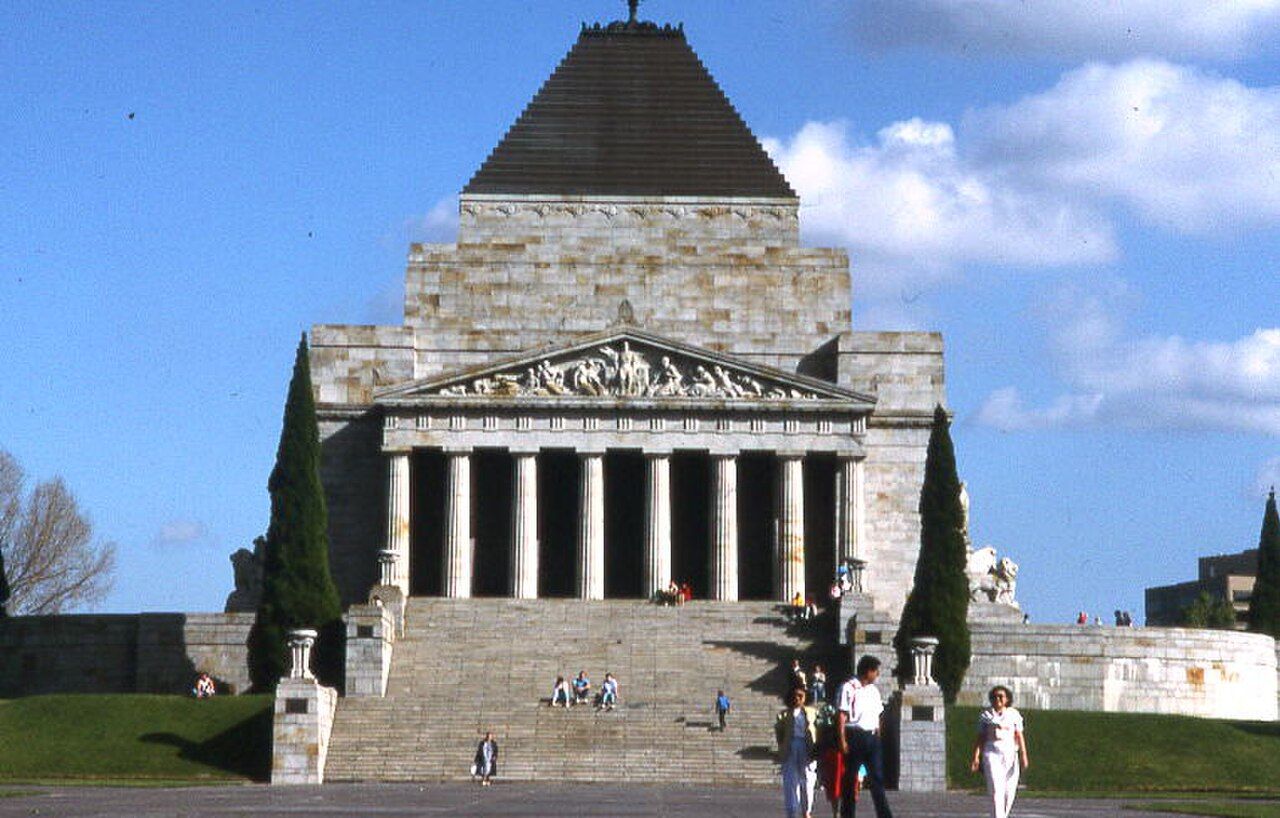
Architects Philip Hudson and James Wardrop, both returned servicemen, designed the winning competition entry. Its exterior drew inspiration from the Mausoleum at Halicarnassus. You do not need specialist architectural knowledge to notice how the raised monument, approach and internal spaces direct attention away from an ordinary city walk.
Begin by deciding what you want to understand: family remembrance, an aspect of Australian history, or the relationship between a public monument and the community around it. A specific question gives the galleries direction. Avoid treating the visit as a checklist of battles or a competition to see the largest number of objects.
Start at the Visitor Centre and protect gallery time
Use the Visitor Centre for orientation, a map and current information about ceremonies or access changes. The galleries lie within the monument below the Sanctuary, so a photograph of the steps does not reveal the whole visitor experience. Ask staff for a route matching your available time rather than assuming the most obvious staircase is the only way in.
The official highlights guide recommends at least an hour and a half to explore the Galleries of Remembrance fully. That is a useful corrective to planning a quick stop because admission is free. If you have only an hour, choose a limited gallery section and the Sanctuary instead of promising yourself a complete survey.
In the galleries, follow one personal story or object through its context. Read who used it, what happened around it and why it was preserved. This can make the larger history more intelligible than moving rapidly between dates. Leave room for a pause: histories of war, loss and service can be demanding even for visitors who usually enjoy long museum sessions.
Sanctuary, Stone and the Ray of Light
The Sanctuary is the memorial's central commemorative space. Its Stone of Remembrance symbolises a grave for Victorian service personnel buried overseas or without a marked grave. Approach it as a place where other visitors may have personal reasons to pause. Keep conversations and photography considerate of that setting and follow staff instructions during services.
The Ray of Light is often misunderstood in travel descriptions. On 11 November, a natural ray illuminates the word LOVE on the Stone at 11:00 Eastern Standard Time, according to the Shrine. On ordinary visiting days, the effect is demonstrated every half-hour from 10:30. The daily demonstration is not the same as claiming that sunlight naturally aligns that way throughout the year.
Ask on arrival when the next demonstration will take place and build your gallery route around it if it matters to you. Do not interrupt a service or rush across the Sanctuary to meet an assumed timetable. For an 11 November visit, use that year's published ceremony instructions and local clock times; the architectural explanation in standard time is not an event admission timetable.
Crypt, balcony and the outdoor memorials
The Crypt beneath the Stone commemorates First World War fighting units. Its Father and Son sculpture honours two generations of Victorians who served and died in the First and Second World Wars. Read the interpretation before moving on: the relationship between generations is more significant than simply recording another interior photograph.
The balcony provides views over the Shrine Reserve and Melbourne, but it is reached only by stairs from the Sanctuary. Make it an optional part of the visit according to your mobility, energy and conditions. The historical galleries and commemorative spaces remain substantial reasons to come even when the balcony does not suit you.
Outside, choose a few memorials rather than attempting every plaque. The Second World War forecourt and Eternal Flame, or a garden connected with a particular history, provide a focused continuation. The reserve covers 13 hectares, so allow time for walking if you want to explore beyond the building. Garden time and gallery time draw on the same afternoon; one should not silently consume the other.
Free entry and a paid tour are different choices
You can visit the Sanctuary, Crypt and Galleries of Remembrance without purchasing a tour. Donations are welcomed, but ordinary entry does not require a ticket or booking. This makes it possible to arrive with a flexible route, provided you respect opening hours and any notices for the day.
The guided-tour page lists a separate 45-minute English-language tour at A$25 for adults on the check date. Published departures are 10:10, 11:00, 12:00, 14:00, 15:00 and 16:00, with no 16:00 tour on Sundays. Use that detailed schedule and the booking calendar rather than the broader summary describing hourly tours.
Choose the tour if you want a guide to connect the architecture, commemorative spaces and stories. Choose a self-guided visit if you prefer to read at your own pace or concentrate on one subject. The tour description warns of multiple flights of stairs; contact the Shrine before booking if that matters. Free building access and suitability of the full guided route are separate questions.
Sunday Last Post and other commemorations
The Last Post Service is advertised every Sunday at 16:45 and is free to attend. The programme combines commemorative elements such as bugle calls, wreath-laying and flag lowering. Consult the current page for that Sunday's focus and any changes, and arrive with time to settle before it begins.
If you want the galleries and the service, visit the interiors first. Normal last entry is 16:30, before the ceremony begins, and the museum closes at 17:00. Arriving at 16:40 for Last Post does not leave a full gallery visit afterwards. This is an easy scheduling mistake when the ceremony and museum appear as separate items on a day plan.
Major commemorative dates have their own arrangements. Check the relevant year's information for Anzac Day or Remembrance Day rather than transferring ordinary visiting hours to a large ceremony. Being able to visit the memorial free on a normal afternoon does not establish where to stand or when to arrive for a specific service.
Getting there without overlooking the slope
The Shrine's current directions list tram routes 3, 5, 6, 16, 64, 67 and 72 to Stop 19, Shrine of Remembrance. They also list Anzac Station on the Cranbourne, Pakenham and Sunbury lines, using Domain Road Exit 4 and an uphill path through the reserve. Check current transport services for your date rather than relying on an old central-Melbourne map.
The approach matters as much as the station name. The Shrine warns that paths from tram Stops 19 and 20 are steep. It suggests Stop 17, Police Memorial, and entry from Anzac Avenue for a more gradual approach with ramps. That is useful guidance for visitors managing gradients, but assess it against your needs and the route's current condition.
The venue accessibility page confirms step-free Visitor and Education Centres and lift access to galleries, Crypt, Auditorium and Sanctuary. The balcony remains excluded. Accessible toilets and loan wheelchairs are described, with wheelchairs subject to availability. Check published lift dimensions or contact staff if your equipment needs a precise fit.
Children and a manageable second stop
The family guide offers activity cards for primary-school-age children and Explorer Kits borrowed from the Visitor Centre and returned after the visit. Ask what is available that day. A short activity can help children look closely, but it should not become a requirement to cover every part of a sensitive historical subject.
Explain the memorial's purpose in language suited to the child, let questions guide the pace and take a break when needed. A self-guided visit can be easier to adjust than a fixed tour, particularly with very young children. The paid tour is not recommended by the Shrine for children under six, even though its published under-six price is free.
For another cultural stop, our NGV Melbourne guide explains the difference between NGV International and NGV Australia. Choose a short art visit only if the group still has attention for it. A quiet walk or meal may fit better after the Shrine than immediately adding another substantial museum.
Cover photograph: Shrine of Remembrance facade and steps in Melbourne, photographed in 2008 — Sardaka, CC BY-SA 3.0.
Frequently Asked Questions
Is the Shrine of Remembrance free?
Yes. Ordinary entry to the Sanctuary, Crypt and Galleries of Remembrance is free, without a ticket or booking. Guided tours are a separate paid option; adult admission to the 45-minute tour was A$25 when checked.
Does the Ray of Light happen every day?
The effect is demonstrated every half-hour from 10:30 on ordinary visiting days. The natural alignment described by the Shrine occurs on 11 November at 11:00 Eastern Standard Time. Check annual ceremony arrangements separately.
Can wheelchair users reach the balcony?
No lift reaches the balcony; access is by stairs only. The Shrine describes lift access to the main galleries, Crypt, Auditorium and Sanctuary, with step-free Visitor and Education Centres.
How long should I allow?
Two to three hours is our suggested allowance for galleries and memorial spaces. The Shrine recommends at least 90 minutes for the galleries alone. On Sunday, visit indoors before the 16:45 Last Post Service because last entry is 16:30.


Keep Exploring
ACMI Melbourne: Plan a Screen Culture Visit
Plan ACMI at Fed Square: its free moving-image exhibition, interactive displays, the Lens, cinema tickets, access and a realistic visit with children.
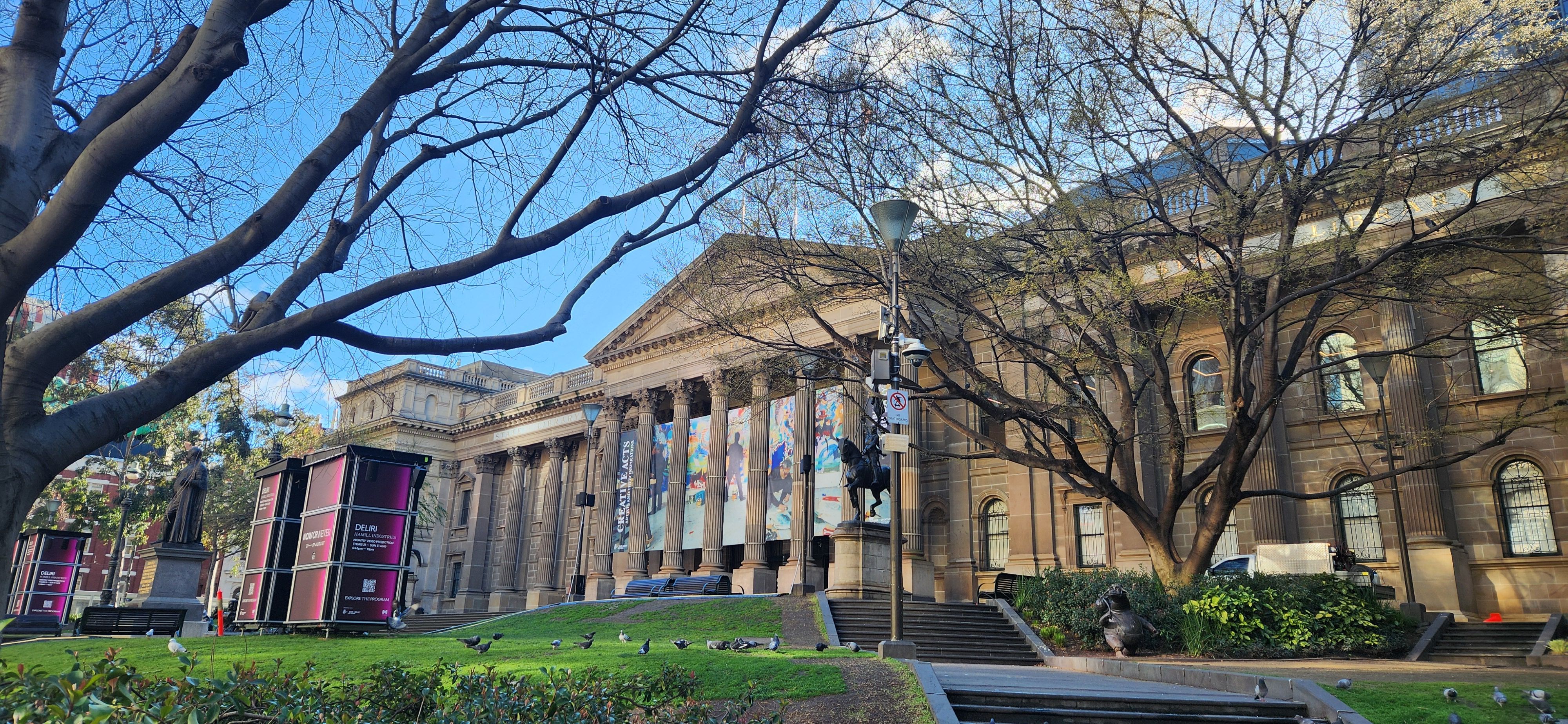
State Library Victoria: Plan Your Melbourne Visit
Plan a State Library Victoria visit around Queen’s Hall, the La Trobe Reading Room and books, with current Dome closures and tour booking advice.
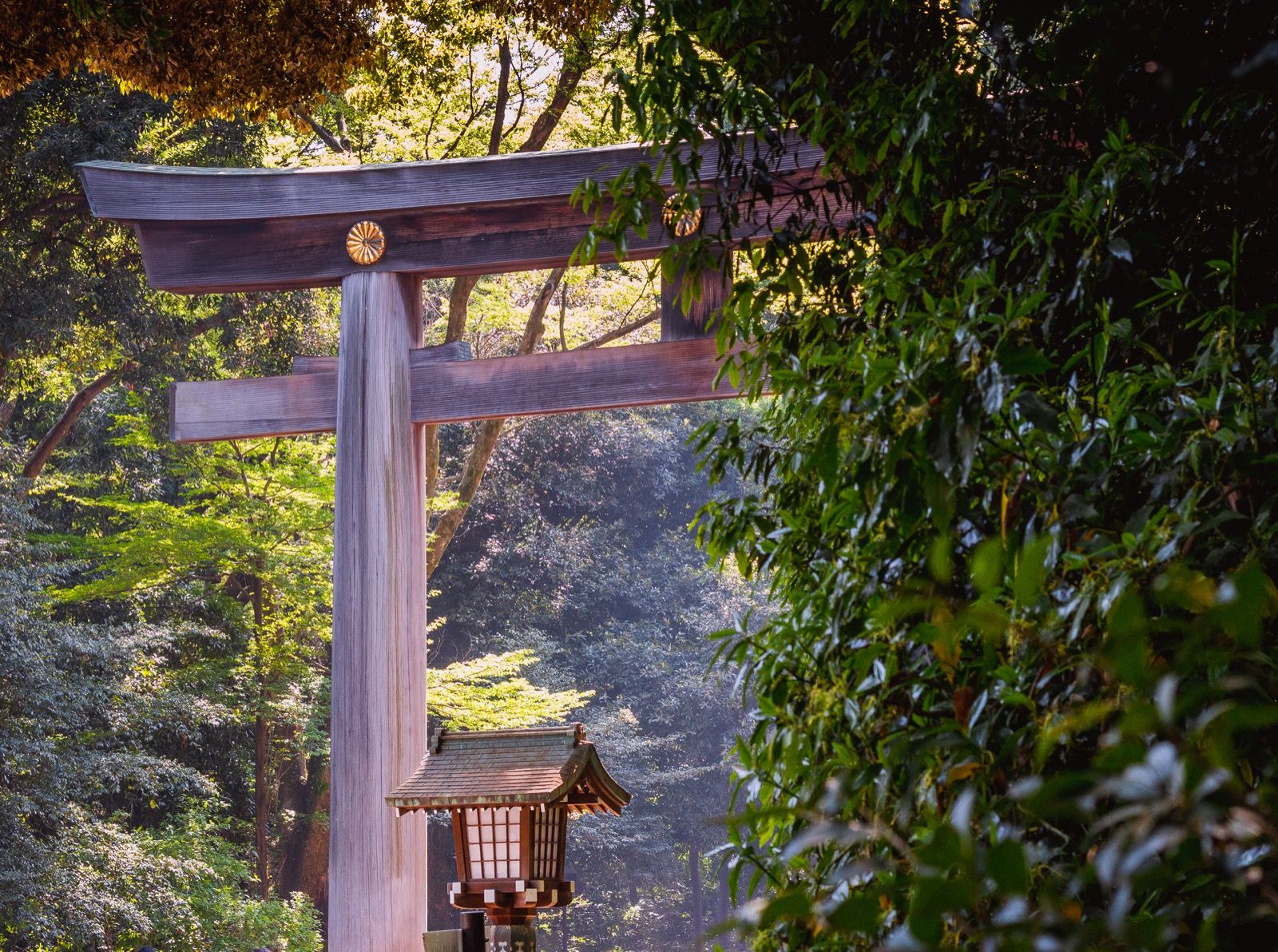
Meiji Jingu: Plan Your Tokyo Shrine Visit
Plan Meiji Jingu with seasonal gate hours, the forest approach, shrine etiquette, photography rules and optional garden or museum visits.