
ACMI Melbourne: Plan a Screen Culture Visit
Plan ACMI at Fed Square: its free moving-image exhibition, interactive displays, the Lens, cinema tickets, access and a realistic visit with children.
Choose ACMI for a Melbourne museum visit built around film, television, videogames and the way screens tell stories. Its free centrepiece, The Story of the Moving Image, gives you a useful starting point without committing to a paid exhibition or cinema ticket. Allow around two hours, and more if making, playing and experimenting are the main reason you are coming.
ACMI is at Fed Square, opposite Flinders Street Station. Our Melbourne culture guide compares it with the city's other cultural options. This guide helps you turn that choice into a practical visit, including the difference between free galleries, booked events and an evening screening.
Fast facts
| Detail | Planning information |
|---|---|
| Location | ACMI, Fed Square, central Melbourne |
| Museum hours | Daily 10:00–17:00 |
| Exceptions | Closed Christmas Day; ANZAC Day opening listed as 13:00–17:00 |
| Centrepiece exhibition | The Story of the Moving Image: free, no ticket required for an ordinary visit |
| Other programmes | Films and some exhibitions/events have separate tickets |
| Suggested duration | About two hours; longer for extensive interactive use |
| Access | Two entrances and lifts; check the route that suits your needs |
Details were checked on 17 November 2026 against ACMI's visit page. Museum, cinema, shop and café schedules are not interchangeable. A cinema session after 17:00 does not mean that you can start the free exhibition at that time.
Begin with the free exhibition
The Story of the Moving Image explores moving images across different periods, cultures and technologies. Its objects and interactive experiences bring together cinema, television, production processes and videogames. You can approach it as a viewer curious about familiar media, rather than as someone who already knows film history.
The museum's visual visitor guide confirms that an ordinary visit to this exhibition does not require a ticket. That removes a booking task, but it does not guarantee immediate access to every interactive station. Give popular activities time, and do something else if a queue would consume the part of your visit you most value.
Choose a question before entering: how are images made to move, how does sound change a scene, or how do games tell a story differently? Having one question helps you connect the displays without treating the exhibition as a sequence of buttons to press.
Watch an activity once before using it. Then try a deliberate change and notice the effect. This simple approach makes an interactive museum more rewarding than repeating the same action quickly and moving on. It also gives companions something to discuss while waiting for their turn.
Use the Lens to remember what caught your attention
The Lens is ACMI's free handheld tool for collecting objects, works and some experiences as you move through the museum. You can pick one up at the entrance to the centrepiece exhibition and revisit your collection online later. It is intended to reduce the need to write down every title while you are looking.
Take a moment to understand the collection points before rushing ahead. Ask staff if the first interaction is unclear. Save what actually interests you: an object, a technique or a film you might want to explore after the trip. Collecting everything can turn a useful memory aid into another completion task.
Keep the Lens after leaving if you want to use its code. ACMI distinguishes browsing a visit from accessing personally identifiable material created in experiences such as Foley or Flipbook, which involves an email address or phone number for security. Read its current instructions if you use those features rather than assuming all digital follow-up works identically.
For a family, agree whether to share or use individual Lenses. Different collections can prompt a useful conversation later: which object did each person save, and why? You can also enjoy the museum without making the online part a compulsory evening activity.
Give interactive displays time, but keep the visit varied
ACMI's exhibition description includes activities related to animation, editing and sound. A useful editorial sequence is to choose one making activity, one game-related stop and a section of objects or interpretation. This gives variety without requiring every visitor to remain at every screen for the same amount of time.
Sound is a particularly useful way to slow down. Listen to how it directs your attention before looking for a technical explanation. In an editing activity, notice how the same images can suggest a different relationship when their order changes. These are viewing questions, not a promise that every specific installation will be operating on your date.
If the group has different interests, choose a clear meeting point and time before separating. One person may want longer with games while another prefers costumes or production design. The fact that everything sits inside one exhibition does not mean the whole group needs an identical route.
For a shorter visit, keep one substantial activity and a small selection of displays. A hurried circuit of every zone can leave less understanding than an hour spent with a few coherent ideas. If you have a fixed lunch or onward journey, set an exit time before starting another activity.
Films and special exhibitions are separate decisions
Check ACMI's current programme for screenings, talks and exhibitions. Read the date, venue, duration, rating and ticket conditions of the exact event. Free entry to the museum is not a statement that every film or temporary exhibition is free.
A film can anchor an evening, but it changes the day. Leave time for food and the return journey, especially after a long gallery visit. If a screening is the main reason to come, choose your museum time around the actual start instead of assuming you can fit the full exhibition immediately beforehand.
On the checking date, ACMI advertised free Feng Mengbo: Long March Restart from 19 August 2026 to 16 May 2027. That is an example of a dated programme item, not a permanent promise. A specific event can be free and still have its own access or registration instructions.
Use official ticket links reached from the event page. A programme listing proves the event is advertised; only the booking process shows availability for your chosen session. Do not build a tightly timed evening around a seat you have not obtained.
Arrival: check the entrance and current diversion
ACMI has entrances on Flinders Street and in the Fed Square plaza. The visit page says the Flinders Street entrance normally operates 10:00–17:00, while the plaza entrance stays available until the final event or session finishes. Save the entrance relevant to your visit, especially for an evening cinema booking.
At the checking date, the museum warned that construction blocked the pedestrian crossing at the corner of Swanston and Flinders streets. It recommended the Russell Street crossing or the Swanston Street crossing outside Flinders Street Station. Check the current arrival advice again and follow on-site signs; a short map distance should not tempt you across a closed route.
Fed Square is within the Free Tram Zone, as ACMI's directions explain. That does not make every journey from your accommodation free. Check the full route and payment rules with the linked transport planner, particularly if you start beyond the zone or combine a tram with a train.
Travel lightly. Some exhibitions require large bags, backpacks or umbrellas to be cloaked. Allow time for that if you are arriving shortly before a booked event. The central location is convenient, but station crossings, orientation and checking bags still take time.
Accessibility, sensory needs and children
The accessibility guide describes a ramp at the Flinders Street entrance, lifts between levels, accessible toilets and wheelchairs available to borrow with identification. It also warns that the cobblestones of Fed Square can be difficult with mobility aids. Choose the approach for its surface and access, not just the closest-looking pin.
For cinema access, check the particular auditorium and equipment requirements before booking. ACMI notes a 290 kg lift limit, including an accompanying staff member, for the internal lift serving the upper section of Cinema 2. A general statement that the venue is accessible should not replace this specific check when it is relevant.
Use the visual stories and sensory information before visiting if predictability helps. Relaxed visits and Auslan tours have their own listings and arrangements. A family-friendly exhibition can still contain sound, moving images and busy activity areas; plan breaks and ask staff about a suitable route.
Children under 13 must be accompanied by a parent or guardian over 18. Strollers are generally welcome, although exceptionally busy exhibitions may require them to be left in the cloakroom. With younger children, choose a shorter visit and a break rather than measuring success by the number of galleries completed.
Pair ACMI with one nearby change of pace
A meal in the centre, a short laneway walk or time by the river can balance the exhibition. Keep the second activity flexible if interactive displays hold your attention. The museum does not need to become one item in an exhausting sequence of indoor visits.
If you are comparing screen culture with visual art, read our NGV Melbourne guide. NGV Australia is also at Fed Square, while NGV International is a separate venue. Their proximity makes a substitution convenient; it does not make two complete museum visits necessary in the same afternoon.
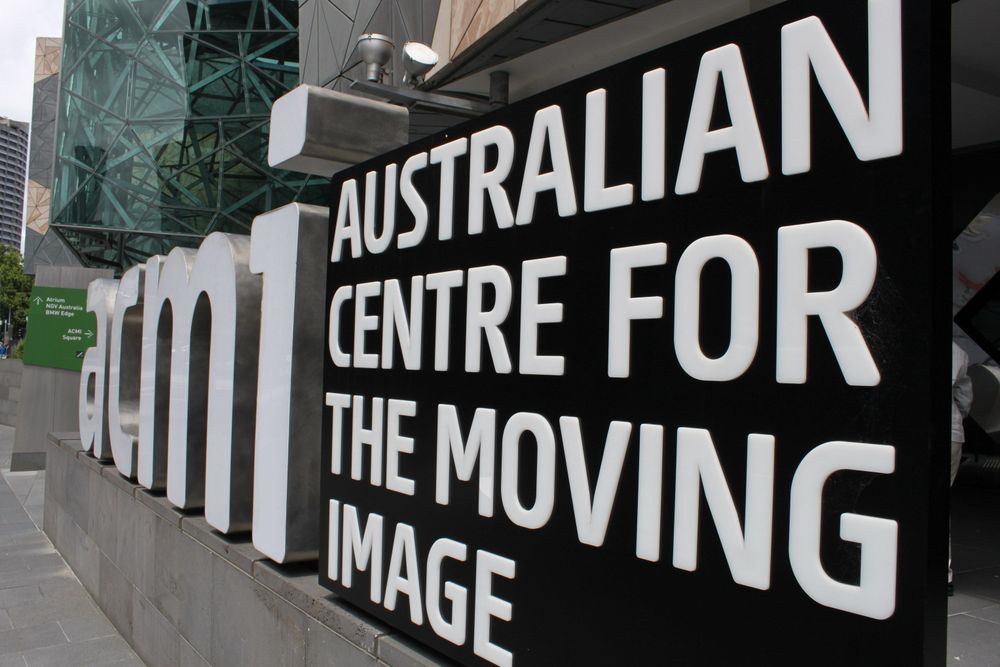
Cover photograph: ACMI exterior sign at Federation Square in Melbourne, photographed in 2011 — Archive photograph from 2011; branding and entrance arrangements have changed. Follow current visitor guidance. — Travis, CC BY 2.0.
Frequently Asked Questions
Do I need a ticket for ACMI?
The Story of the Moving Image is free and does not require a ticket for an ordinary visit. Other exhibitions, screenings and events have separate conditions; check the specific programme page.
How long should I spend at ACMI?
Around two hours is an editorial estimate for a varied exhibition visit. Allow longer if you want substantial time at interactive activities, or select a shorter route with children or a fixed departure.
Can I visit the exhibition after a late film?
Do not assume so. The museum's usual exhibition hours are 10:00–17:00, while cinema sessions follow their own timetable. Plan the exhibition separately from the screening.
Is ACMI accessible with a wheelchair?
ACMI lists ramps, lifts, accessible toilets and wheelchair borrowing. Check the preferred entrance, plaza surfaces and any auditorium-specific requirements, especially the internal Cinema 2 lift, before travelling.


Keep Exploring
Shrine of Remembrance Melbourne: Plan Your Visit
Visit Melbourne’s Shrine of Remembrance: free galleries, Sanctuary, Ray of Light, paid tours, Sunday Last Post and step-free routes.
State Library Victoria: Plan Your Melbourne Visit
Plan a State Library Victoria visit around Queen’s Hall, the La Trobe Reading Room and books, with current Dome closures and tour booking advice.
Museu de Arte do Rio: Plan Your MAR Visit
Choose MAR exhibitions, architecture and educational visits on Praça Mauá, with current opening days, tickets and the library’s separate calendar.