
Himeji Castle: Tickets, Stairs and a Well-Planned Visit
Plan Himeji Castle with current admission, steep interior stairs, access from the station and the choice of adding Koko-en Garden.
Visit Himeji Castle when you want to explore a historic wooden fortress, and leave enough time for the approach, queues and steep interior stairs. The castle is more than its white silhouette: the interest lies in how gates, walls, routes and timber buildings form a defensive complex. Add Koko-en Garden if you have time for a slower second visit rather than squeezing it into the last minutes before your train.
Himeji can be a dedicated excursion or a considered stop during a journey across western Japan. Our Japan in 14 days itinerary helps you decide what to replace to make room. Do not insert the castle into a transfer day simply because a train passes through the city: luggage, station access and the interior visit all need time.
Visitor information checked on 17 November 2026. Yen prices below are current advertised admission rates, not a dated booking quote. Suggested allowances beyond the castle's own estimate are editorial planning advice.
Fast facts
| Detail | Current planning information |
|---|---|
| Address | 68 Honmachi, Himeji |
| Standard opening | 09:00–17:00; last entry 16:00 |
| Scheduled closure | 29 and 30 December |
| General adult admission | ¥2,500, age 18 and over, subject to the youth exception |
| Castle and Koko-en combination | ¥2,600 |
| Youth admission | Free under 18, including the period until the first 31 March after turning 18 |
| From Himeji Station | About 20 minutes on foot, plus the onward castle approach |
| Inside the keep | Steep, narrow stairs; no lift |
| Castle visit allowance | Official estimate 1.5–2 hours; queues can add time |
The castle management's visitor information is the reference for these hours and fees. Check its notices shortly before travelling, particularly around holidays or poor weather.
Understand the 2026 ticket prices
The general adult castle admission is now ¥2,500. The ¥1,000 rate listed alongside it is for eligible Himeji residents, not the standard price for every visitor. Do not use an older travel budget based on the former general admission, and do not assume the lower resident rate applies merely because you are staying in the city.
The combined castle and Koko-en ticket is ¥2,600. Compared with the standard adult castle-only rate, that is a ¥100 difference. Koko-en's official fee-change notice records its own adult admission as ¥400 from 1 March 2026 and confirms the combined price. Buy the combination if you actually intend to visit both, after checking the garden's separate opening arrangements.
The youth exemption includes visitors under 18 and those who have turned 18 but have not yet reached the following first 31 March. Carry accepted proof of age and check the official purchase instructions for the relevant category. For any other concession, confirm eligibility rather than buying a general ticket and expecting an automatic refund at the gate.
Keep the budget in yen when comparing options. The amount ultimately charged in euros depends on your bank's conversion and fees. Rail travel, meals, lockers and any paid guiding are separate from castle admission.
Digital tickets do not remove every queue
The official castle FAQ says time-slot digital tickets can be purchased from 90 days before the planned visit. It also explains that visitors may still need to queue for the main keep when it is busy. Treat advance purchase as a way to organise admission, not a guarantee of immediate access to every interior.
Check the selected date, entry conditions and any instructions about displaying the ticket on your phone. Keep enough battery for both entry and the return journey. If buying for children or a concession category, read how eligibility must be shown; the cheapest visible button may require verification you cannot provide.
The management estimates 1.5–2 hours to look around the castle and notes that crowded periods can add around an hour of waiting. Build your train plans around that uncertainty. A late arrival followed by the 16:00 admission deadline is a poor foundation for an unhurried visit, even when you already have a ticket.
Walk from the station with the castle as the main event
The castle management gives roughly 20 minutes on foot from JR Himeji or Sanyo Himeji station. Use the station's north side and follow the approach towards the castle. That estimate does not mean that stepping off a train places you inside the main keep twenty minutes later: station circulation, the ticket area and the uphill route come afterwards.
A Shinki bus from the station's north exit to Otemon-mae is another option; the official directions still allow a walk from the stop. Compare the waiting time and your group's walking comfort rather than assuming that a short bus journey removes all pedestrian effort. Check the operator's current fare and timetable if using it.
For a transfer-day stop, settle luggage first. The castle's rules direct wheeled bags to paid lockers, but a mention of lockers is not a reservation or a guarantee that your suitcase will fit. Confirm storage arrangements before committing to a tight onward connection. Travelling with a small day bag makes the interior more manageable.
Read the fortress before entering the keep
The UNESCO listing for Himeji-jo describes an early seventeenth-century castle complex of 83 buildings, with developed defensive systems and timber construction unified by white plastered walls. That is a useful way to look at the site: the gates and walls are part of the subject, not merely obstacles before the famous tower.
As you follow the permitted visitor route, notice where the path changes direction, where walls constrain movement and how the buildings relate to one another. You do not need a detailed military-history background to ask what a visitor can see from each position and how the route controls access.
Take exterior photographs where you can stop without blocking circulation. Then put the camera away for a few minutes and look at the whole arrangement. A visit made entirely through a lens can miss the relationship between the smaller structures and the main keep that gives the castle its character.
Inside: the wooden building is the experience
Expect to spend part of the visit climbing and descending steep, narrow stairs. There is no lift in the keep or turrets. The physical movement is central to deciding whether the interior suits your group; enthusiasm for castles does not remove difficulty with balance, knees or confined stairways.
The castle's notice dated 1 November 2026 asks visitors to bring a shoe bag and thick socks or suitable indoor shoes. Outdoor shoes are not permitted inside the buildings. Do not use a carrying bag as a shoe cover: the management explicitly warns against this. Keep footwear and belongings organised so your hands remain available for the stairs.
Look at the timber, the scale of the spaces and the openings as you move through the building. Do not expect the value of the visit to depend on a sequence of furnished palace rooms. Give the architecture your attention, follow staff directions and let faster or slower visitors move safely when space allows.
Access needs and family decisions
The management states that wheelchairs cannot enter the main keep and turrets and that the grounds include steep slopes. Its current advice calls for several experienced carers for wheelchair access to the permitted grounds. This is a substantial limitation, not a minor step at the entrance. Contact the castle about the exact route and facilities before buying if mobility access is central to your visit.
The FAQ also says there is no wheelchair rental and directs visitors needing an accessible toilet to the west side of Sannomaru Square, outside the paid area. Do not rely on a generic tourism-directory accessibility icon in place of these detailed management instructions. Facilities, terrain and interior access are three different questions.
For families, consider whether children can manage the stairs and carry out instructions in a busy historic building. Pushchairs are generally not usable inside the castle. A shorter exterior-focused visit can be a sensible choice if the interior would make the group uncomfortable. Agree the plan before buying tickets rather than discovering the mismatch halfway up the approach.
Adding Koko-en without rushing it
The combination ticket offers a low additional admission cost for a general adult visitor, but the garden still requires time and energy. Allow roughly 45–75 minutes as an editorial estimate for a considered garden visit, then add the movement between entrances. Choose it for a change of setting after the castle, not merely to extract value from a ticket.
Check Koko-en's current visitor information for its opening hours and any separate events or paid services. A combined admission ticket should not be assumed to include a meal, tea service or every special programme. The garden's own notices govern those experiences independently of the castle ticket.
If the keep queue has consumed your spare time, decide whether the garden matters more than a long lunch or another city stop. Avoid keeping every original plan while shortening all of them. A castle visit and a garden visited attentively are a complete cultural outing; there is no need to add a distant attraction to justify the journey.
Fit Himeji into the trip you actually have
For a dedicated day, arrive early enough to make the castle the first substantial visit, add the garden if wanted and leave room for lunch before returning. For an onward-travel day, build a larger margin and decide in advance what to drop if the train or queue takes longer than expected.
If you are using Kyoto as a base, our Kyoto in 3 days guide helps identify the city time you would be trading away. Himeji should replace a meaningful block of the schedule, not quietly consume the rest period between two demanding temple days. Compare the actual train options for your departure station and date; no single advertised journey time describes every itinerary.
Finally, distinguish seeing the illuminated exterior from entering the castle. Evening lighting does not extend daytime interior admission. For the paid visit, respect the last-entry time, keep the approach and descent within the operating day and leave with enough margin to find your platform calmly.
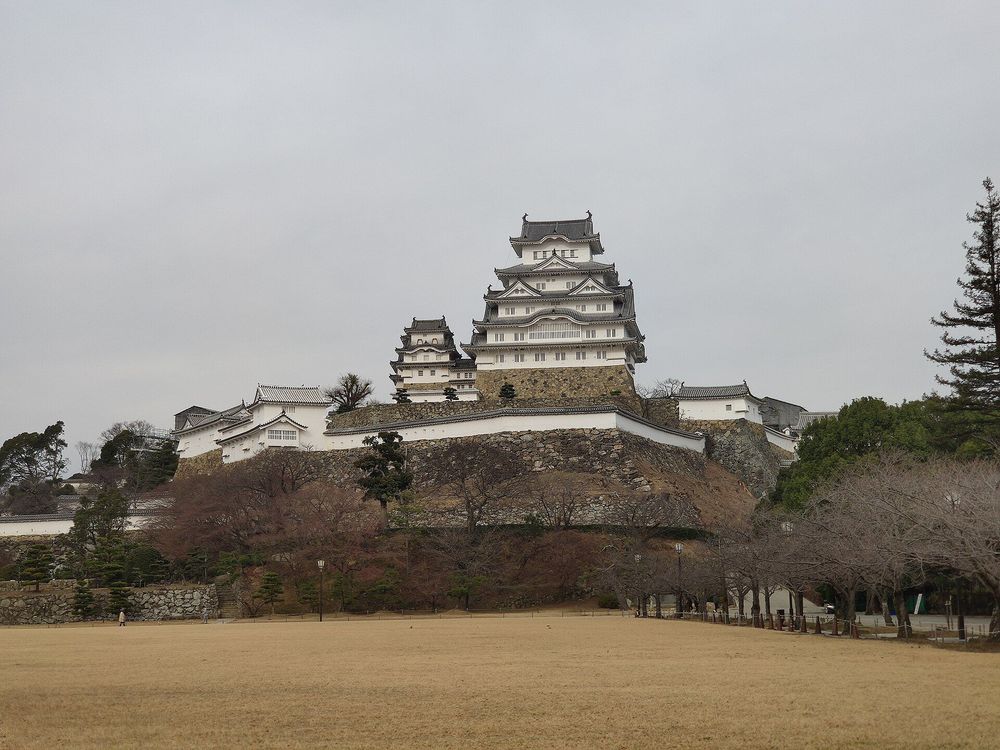
Cover photograph: White keep and stone ramparts of Himeji Castle seen from Sannomaru Square in 2020 — Drivephotographer, CC0.
Frequently Asked Questions
How much does Himeji Castle cost now?
On 17 November 2026 the official general adult rate was ¥2,500, with the castle and Koko-en combination at ¥2,600. The ¥1,000 rate is for eligible Himeji residents, not ordinary tourist admission.
How long should you allow for the castle?
The castle management estimates 1.5–2 hours and warns that crowded periods can add roughly an hour of queueing. Add travel from the station and separate time for Koko-en or a meal.
Are there lifts inside Himeji Castle?
No. The main keep and turrets have steep stairs and no lifts, and wheelchairs cannot enter those buildings. Check the permitted grounds route directly with management if you have mobility needs.
Can a digital ticket guarantee no waiting?
No. Time-slot digital admission is available, but the operator says visitors may still queue for the main keep. Leave a margin before any fixed onward train.


Keep Exploring
Mohammed VI Museum Rabat: Art, Tickets and Visit
Plan a visit to Rabat’s Mohammed VI art museum: opening hours, visitor tariffs, exhibition checks and time for the galleries.
Yagul from Oaxaca: Tickets, Transport and Visit
Plan Yagul from Oaxaca: current admission categories, the access-road walk, courtyards and ballcourt, and why the UNESCO caves need a separate plan.
Chellah Rabat: Tickets, Hours and Visit Planning
Plan Chellah in Rabat: compare entry and audioguides, understand the ruins, check Ramadan hours and choose a manageable route.