
Scenic Trains in Switzerland: Routes, Passes and Prices
Explore top Swiss scenic trains like Glacier Express and Bernina. Get 2026 prices, pass comparisons, reservation tips, and a sample 5-day itinerary.
Switzerland’s panoramic rail network is not an exclusive domain of luxury package tours; it is a highly accessible system for independent travelers who understand the distinction between base fares and compulsory seat reservations. While packaged "rail holidays" often inflate costs by bundling hotel transfers and guided commentary, independent travelers can access the same panoramic cars for a fraction of the price by leveraging the Swiss Travel Pass or Interrail/Eurail passes combined with direct, targeted reservations. The key to navigating this system without overpaying lies in recognizing that while your travel pass covers the ticket to board, the seat reservation fee is a separate, non-negotiable cost that must be booked directly with the operator, with reservations for the Glacier Express opening 93 days ahead (about three months) and peak summer seats selling out.
Fast Facts
| Detail | Info |
|---|---|
| Best time to visit | May–October for full panoramic service. The Glacier Express runs 02.05–10.10, while the Bernina Express operates year-round with peak reservation fees from 02.05–25.10. Autumn (Nov–Dec) and Winter (Jan–Apr) offer snow-capped views but limited seasonal services (e.g., Glacier Express suspension 11.10–04.12). |
| Getting there | Gateway cities include Zurich, Geneva, and Basel. Typical fares from major European hubs (e.g., Paris, London, Berlin) to Zurich range from €80–€150 one-way for standard class, depending on the operator and booking horizon. Arriving by night train from Paris or Munich is a cost-effective option for saving on accommodation. |
| Where to stay | Interlaken (hub for Jungfrau and GoldenPass), Zermatt (Glacier Express start), and St. Moritz (Glacier Express end/Bernina start). Price behavior: Interlaken and Zermatt are premium-priced (€150–€300/night for mid-range hotels); St. Moritz is luxury-focused (€250+). Lucerne and Montreux offer slightly lower accommodation costs (€100–€200). |
| Average daily budget | CHF 250–400 (approx. €260–420) for mid-range travel, excluding long-distance international flights. This covers accommodation, meals, and local transport/reservations. Scenic train reservations add CHF 20–54 per person per ride. |
| Don't miss | Glacier Express (Zermatt ↔ St. Moritz) for the 8-hour, 291-bridge epic. Bernina Express (Chur ↔ Tirano) for UNESCO-listed alpine crossings and the Brusio spiral. |
How Swiss Scenic Trains Work
To navigate Switzerland’s rail network efficiently, it is critical to distinguish between regular regional trains and premium panoramic services. Regular trains (SBB, RhB, etc.) operate on a standard fare structure where a ticket allows travel on any service on that route. Premium panoramic services—such as the Glacier Express, Bernina Express, and GoldenPass Express—operate as specific, timed services with reserved seating, often featuring large panoramic windows and onboard amenities.
The cost structure for these premium services is bifurcated:
- Base Fare: The cost of the ticket to travel from Point A to Point B. This is covered in full by the Swiss Travel Pass, Interrail/Eurail passes, and the Half Fare Card (50% discount).
- Seat Reservation: A mandatory or recommended fee to secure a specific seat on the panoramic service. This is never covered by travel passes. It must be paid separately, either online or at the station.
For independent travelers, the Swiss Travel Pass is the most comprehensive tool. It covers all public transport (trains, buses, boats, trams) and entry to over 500 museums. However, it does not cover the seat reservation fees for the major panoramic trains. Similarly, Interrail/Eurail pass holders cover their base fare but must pay the full reservation fee. For a broader context on how these passes interact across borders, our guide to Europe-by-train/Interrail pillar details the specific network coverage and pass types.
Booking horizons vary by operator. The Glacier Express opens reservations 93 days in advance, while the Bernina Express allows last-minute bookings from 6 days out. The GoldenPass Express allows bookings up to 2 months ahead. It is advisable to book reservations as soon as they open for summer travel (May–September), as these services sell out, particularly in first class and Excellence/Prestige categories. For travelers arriving in Switzerland by rail from Paris, Munich, or Milan, considering a night train can save on accommodation costs and offer a unique experience. Our guide to night trains in Europe provides details on sleeper options and booking tips.
Glacier Express: Zermatt to St. Moritz
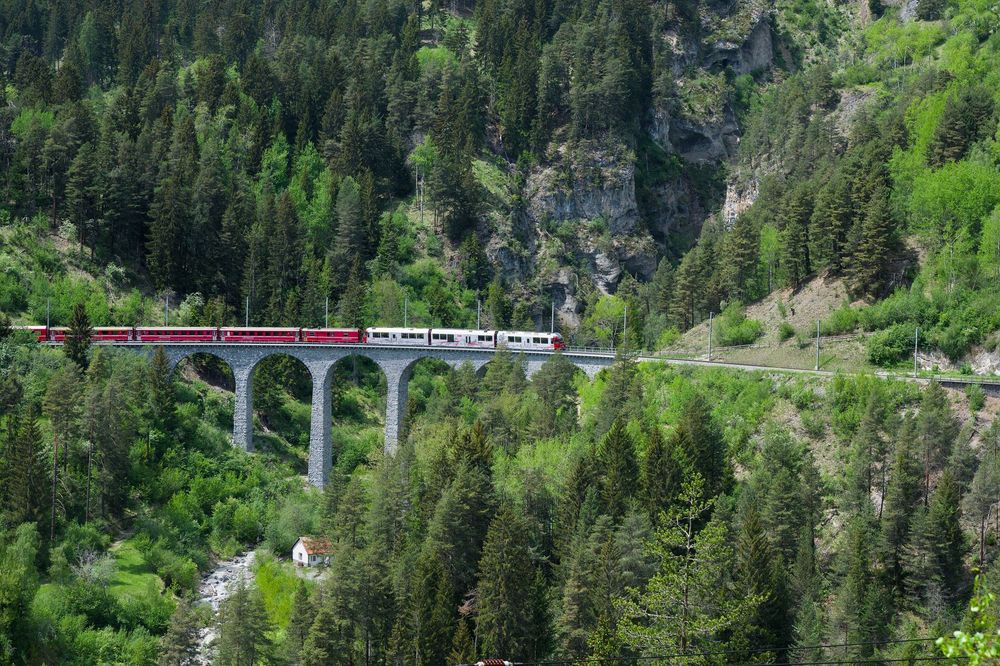
The Glacier Express is the crown jewel of Swiss panoramic rail, an 8-hour journey connecting the Matterhorn region of Zermatt to the high-altitude resort of St. Moritz. This route is not merely a train ride but a geological and architectural tour, crossing 291 bridges and 91 tunnels. The journey culminates at the Oberalp Pass (2,033 m) and traverses the UNESCO-listed Albula line, including the iconic Landwasser Viaduct.
2026 Pricing and Reservations (Prices checked September 2026):
- 2nd Class: CHF 159
- 1st Class: CHF 272
- Mandatory Seat Reservation: CHF 54 (Not covered by any pass)
- Excellence Class: CHF 540 reservation fee (includes a five-course menu; requires a 1st-class ticket)
Pass Coverage: The Swiss Travel Pass, Interrail/Eurail, and Half Fare Card cover the base ticket in full (or 50% for Half Fare). The CHF 54 reservation fee is always extra and must be paid by all passengers, regardless of pass status.
Season and Frequency: In 2026, the Glacier Express operates on a summer timetable from 02.05 to 10.10.2026. There is no service between 11.10 and 04.12.2026 (autumn break). During the operating season, there are up to four trains per day in summer, though not all run the full route.
Booking Details: Tickets can be purchased up to 180 days in advance, but reservations open 93 days ahead. Children under 6 travel free and ages 6–16 pay half fare. According to Glacier Express official pricing, the reservation is compulsory; without it, you cannot board the service.
Bernina Express: Chur to Tirano
The Bernina Express offers a more compact yet equally dramatic journey, running from Chur in the Swiss east to Tirano in Italy. The full route takes approximately 4 hours, while the popular segment from St. Moritz to Tirano takes about 2 hours and 15 minutes. This line is renowned for its engineering feats, including 196 bridges and 55 tunnels. Key highlights include the Landwasser Viaduct, the Brusio circular viaduct (a spiral that allows the train to gain height without reversing), and views of the Palü Glacier. The Albula and Bernina Lines have been UNESCO World Heritage Sites since July 2008, as noted in RhB’s official statement.
2026 Pricing and Reservations (Prices checked September 2026):
- Chur–Tirano: 2nd Class CHF 66 / 1st Class CHF 113
- St. Moritz–Tirano: 2nd Class CHF 33
- Mandatory Reservation:
- Peak Season (02.05–25.10.2026): CHF 44 (Full route) / CHF 32 (Short route)
- Low Season: CHF 40 (Full route) / CHF 32 (Short route)
Pass Coverage: Swiss Travel Pass, GA (General Abonnement), Half-Fare Card, and Eurail/Interrail passes cover the base fare. The reservation fee is paid in full by everyone.
Budget Tip: A clever strategy for budget-conscious travelers is to take the regular regional trains on the same UNESCO-listed line. These do not require a Bernina Express reservation (though an optional CHF 5 reservation can be made for seat selection). Alternatively, last-minute 2nd-class online fares from Chur to Tirano start from CHF 87, which includes the reservation if booked from 6 days out, as per RhB’s last-minute fare guide.
Season and Frequency: The Bernina Express runs year-round. Peak reservation fees apply from May 2 to October 25, 2026.
GoldenPass Express: Montreux to Interlaken
The GoldenPass Express connects the Lake Geneva region (Montreux) to the Bernese Oberland (Interlaken Ost) in 3 hours and 15 minutes. The route passes through Gstaad, Château-d’Oex, and Montbovon, offering views of vineyards and alpine lakes. A unique technical feature of this line is the use of variable-gauge bogies, which allow the train to switch between standard gauge and meter gauge at Zweisimmen without stopping.
2026 Pricing and Reservations (Prices checked September 2026):
- Base Fare: Quoted dynamically in the official shop; no flat price is published.
- Reservation (2nd/1st Class): CHF 20 (Recommended, not compulsory)
- Prestige Class: CHF 49 reservation (Mandatory; requires a 1st-class ticket). Prestige seats are raised 40 cm for better views.
Pass Coverage: The base fare is fully included in the Swiss Travel Pass and GA. The reservation fee is extra. Interrail/Eurail holders cover the base fare but must pay the CHF 20 reservation fee.
Season and Frequency: The service runs up to 4 times daily. Tickets can be booked up to 2 months in advance. According to GoldenPass Express fare details, while the reservation is recommended for 2nd and 1st class to guarantee a seat, it is not strictly compulsory, making this a flexible option for spontaneous travelers.
Gotthard Panorama Express: Lucerne to Lugano
The Gotthard Panorama Express is a combined boat and train journey, offering a unique perspective of the Swiss Alps. The trip begins with a paddle-steamer from Lucerne to Flüelen, followed by a 1st-class-only panoramic train from Flüelen to Lugano via the historic Gotthard mountain line. The total duration is approximately 5.5 hours.
2026 Pricing and Reservations (Prices checked September 2026):
- Full 1st-Class Ticket: CHF 164
- With Half Fare Card: CHF 82
- Mandatory Supplement: CHF 24 (For the panoramic train segment)
Pass Coverage:
- Swiss Travel Pass/GA: The ticket is covered, but the CHF 24 supplement is still due.
- Interrail/Eurail: Pass holders receive a 50% discount on the ticket, but must pay the full CHF 24 supplement.
Season and Frequency: In 2026, the service operates daily from 18.04 to 18.10.2026. This seasonal limitation means it is unavailable in winter. According to SBB’s Gotthard Panorama Express page, the supplement is mandatory for all passengers using the panoramic train segment.
Jungfraujoch: Top of Europe
While not a traditional "panoramic train" in the same vein as the Glacier or Bernina Express, the journey to Jungfraujoch is an essential Swiss rail experience. Located at 3,454 m, it is Europe’s highest station. From Grindelwald Terminal, the journey involves the Eiger Express gondola and a railway line, taking approximately 45 minutes to reach the summit.
2026 Pricing and Reservations (Prices checked September 2026):
- Return Ticket: From CHF 129.60
- Seat Reservation: CHF 10 (Mandatory from 01.05 to 31.10.2026)
Pass Coverage: The source does not specify a discount percentage for the Swiss Travel Pass. Travelers should verify current pass benefits directly with the operator. The CHF 10 reservation fee is mandatory during the summer season and is not covered by passes.
Planning Note: This is a full-day excursion. The weather at 3,454 m can change rapidly, and fog can obscure views. It is advisable to check weather forecasts before departing.
Passes, Costs and a Sample Itinerary
Choosing between point-to-point tickets and a pass depends on the number of scenic services and regional travel planned. The Swiss Travel Pass offers the best value for travelers using multiple panoramic trains and regional transport.
Swiss Travel Pass Prices (2026, Adult, Consecutive Days)
| Duration | 2nd Class (CHF) | 1st Class (CHF) |
|---|---|---|
| 3 Days | 254 | 405 |
| 4 Days | 309 | 492 |
| 6 Days | 399 | 634 |
| 8 Days | 439 | 697 |
| 15 Days | 499 | 778 |
Youth under 25 receive a 30% discount. Kids aged 6–15 travel free with a Swiss Family Card. The pass includes entry to 500+ museums and up to 50% off other mountain excursions, as detailed on Myswitzerland.com.
When Point-to-Point Beats a Pass
If you are only taking one or two scenic trains and staying in one city, point-to-point tickets with a Half Fare Card may be cheaper. For example, if you only take the Bernina Express (St. Moritz–Tirano) and local trains in Zurich, a 3-day Swiss Travel Pass (CHF 254) plus the CHF 32 reservation (CHF 286 total) is more expensive than a Half Fare Card plus the discounted fare. However, if you add the Glacier Express or GoldenPass Express, the pass quickly becomes the better value.
Sample 5-Day Itinerary: The Eastern Loop
This itinerary focuses on the eastern alpine routes, maximizing the use of the Swiss Travel Pass.
Day 1: Arrival in Zurich
- Fly into Zurich. Take the train to Chur (approx. 2.5 hours).
- Stay in Chur or St. Moritz.
- Cost: Swiss Travel Pass (6-day) + local train fare (covered).
Day 2: Bernina Express
- Take the Bernina Express from Chur to Tirano (4 hours).
- Explore Tirano in the morning, return to St. Moritz in the afternoon.
- Reservation: CHF 44 (peak season).
- Stay in St. Moritz.
Day 3: Glacier Express
- Take the Glacier Express from St. Moritz to Zermatt (8 hours).
- Reservation: CHF 54.
- Stay in Zermatt.
Day 4: Zermatt Exploration
- Explore Zermatt and the Matterhorn.
- Stay in Zermatt.
Day 5: Return to Zurich
- Take the train from Zermatt to Zurich (approx. 3.5 hours).
- Fly out of Zurich.
- Cost: Covered by Swiss Travel Pass.
Total Estimated Cost (per person, excluding flights/accommodation):
- Swiss Travel Pass (6-day, 2nd class): CHF 399
- Bernina Express Reservation: CHF 44
- Glacier Express Reservation: CHF 54
- Total: CHF 497.
A 7-day version of this itinerary offers a more relaxed pace.
Choosing a Bernina journey? Our Bernina Express versus regional train guide compares a day trip from Milan, an Italy–Switzerland transfer and a journey with stops. It also explains the optional CHF 5 regional reservation and the announced autumn 2026 diversion.
Frequently Asked Questions
Is the Glacier Express covered by Interrail or the Swiss Travel Pass?
Yes, the base ticket for the Glacier Express is fully covered by the Swiss Travel Pass and Interrail/Eurail passes. However, the CHF 54 mandatory seat reservation fee is not covered by any pass and must be paid separately by all passengers.
How much does the Bernina Express cost?
In 2026, the fare from Chur to Tirano is CHF 66 in 2nd class and CHF 113 in 1st class. The mandatory seat reservation is CHF 44 during peak season (May 2–Oct 25) and CHF 40 in low season. For the shorter St. Moritz–Tirano segment, the 2nd class fare is CHF 33, with a reservation fee of CHF 32.
Do you need seat reservations on Swiss scenic trains?
It depends on the service. The Glacier Express and Gotthard Panorama Express have mandatory seat reservations. The Bernina Express also has a mandatory reservation for the panoramic service. The GoldenPass Express reservation is recommended but not compulsory for 2nd and 1st class, though it is mandatory for Prestige class. Regular regional trains do not require reservations.
What is the most scenic train ride in Switzerland?
While subjective, the Glacier Express (Zermatt–St. Moritz) is widely considered the most epic due to its 8-hour duration, crossing 291 bridges and 91 tunnels. The Bernina Express is also highly regarded for its UNESCO-listed engineering and dramatic alpine scenery, particularly the Brusio spiral.
Is the Swiss Travel Pass worth it?
For most independent travelers taking multiple scenic trains and regional transport, yes. The pass covers all public transport, museums, and boats. You only pay the seat reservation fees for panoramic trains (CHF 20–54 per ride). If you are only taking one scenic train and staying in one city, a Half Fare Card may be cheaper. Calculate your planned trips: if the sum of individual tickets exceeds the pass price, the pass is the better value.

Keep Exploring
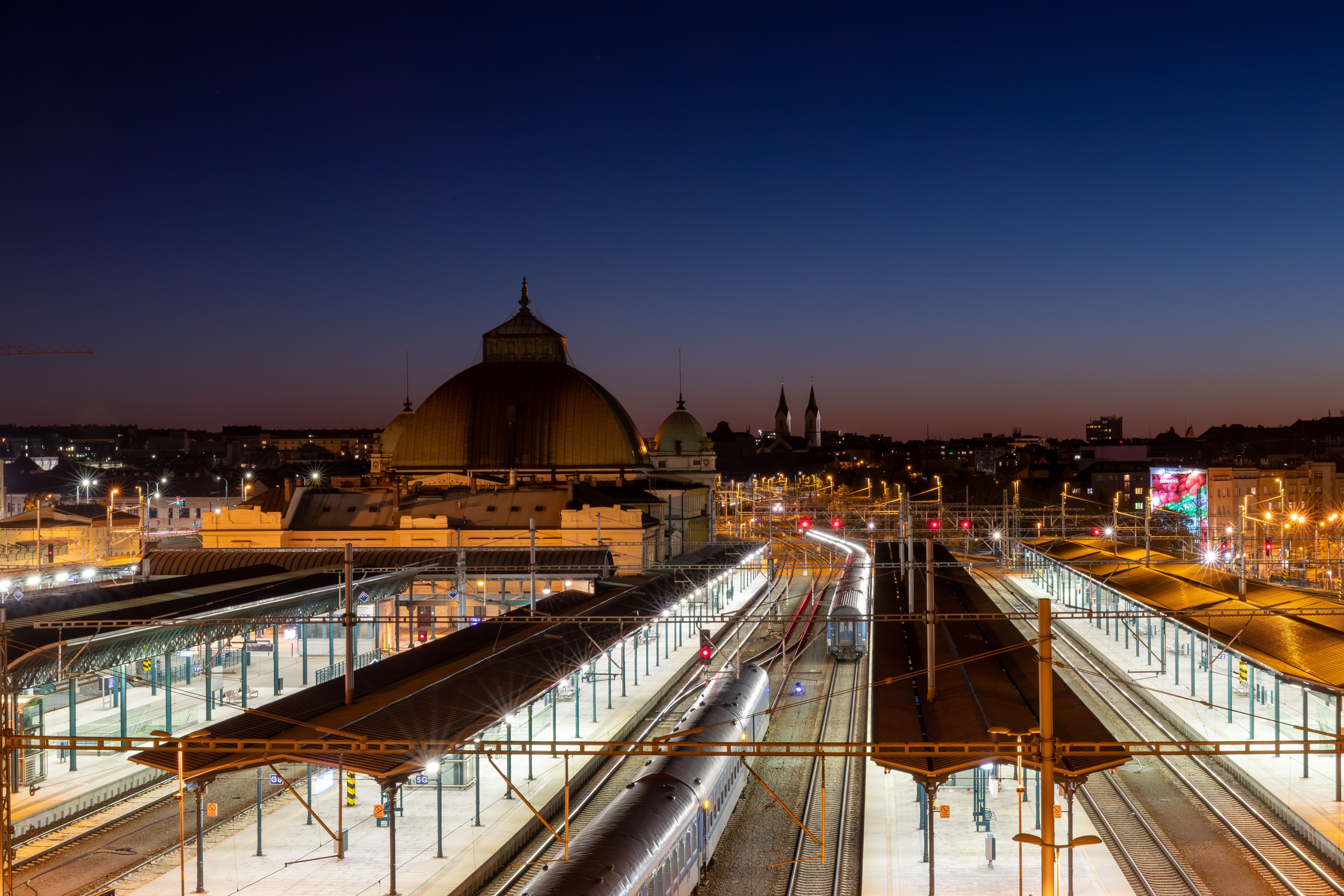
Night Trains in Europe 2026: Routes and Booking
Compare European night trains, cabins and booking rules. Updated Milan route, station changes and practical advice for connecting journeys.
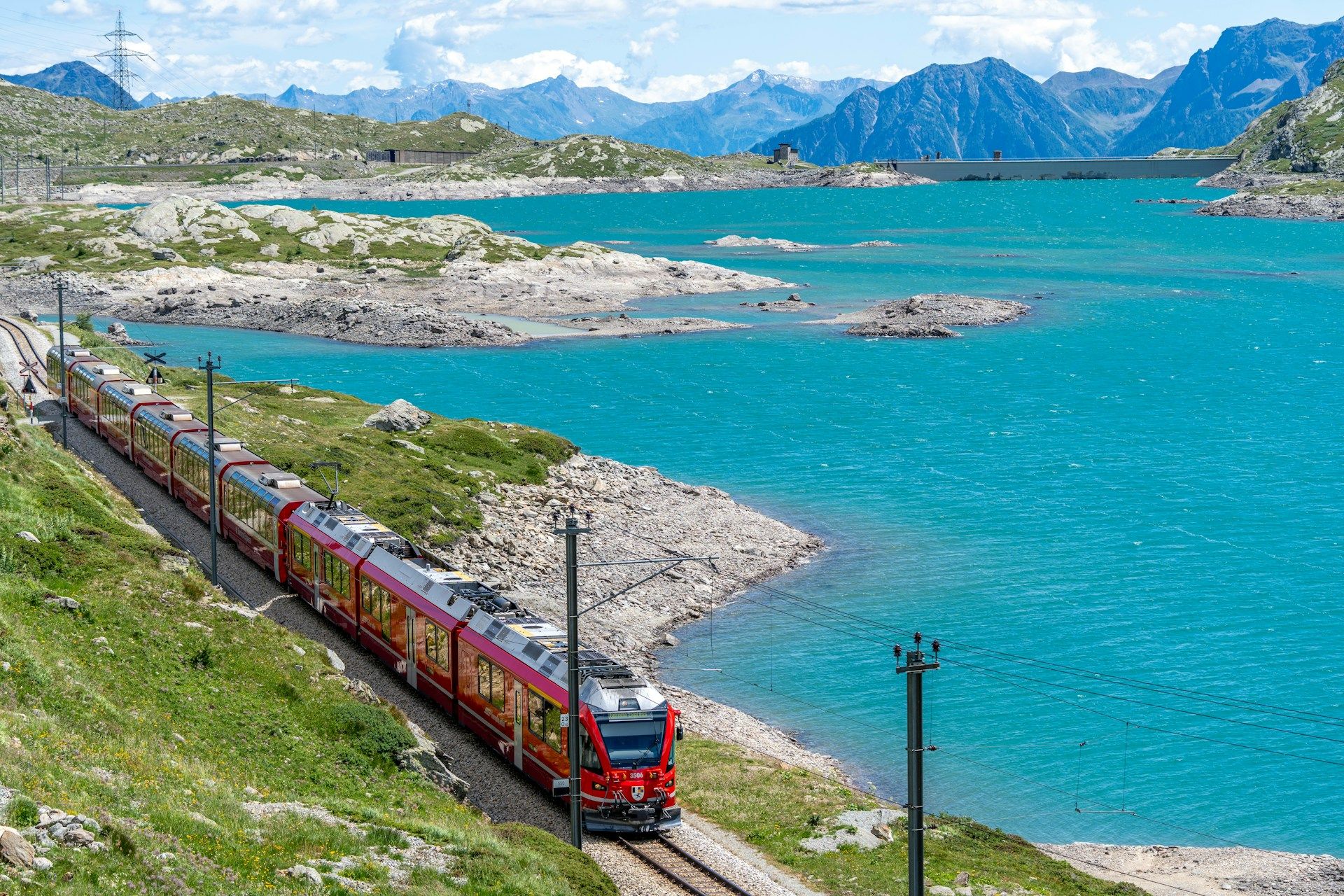
Bernina Express or regional: Milan trips and scenic stops
Choose the Bernina Express or regional trains for a Milan day trip, a Swiss transfer or stops at Alp Grüm and Poschiavo. Compare tickets, reservations and autumn diversions.
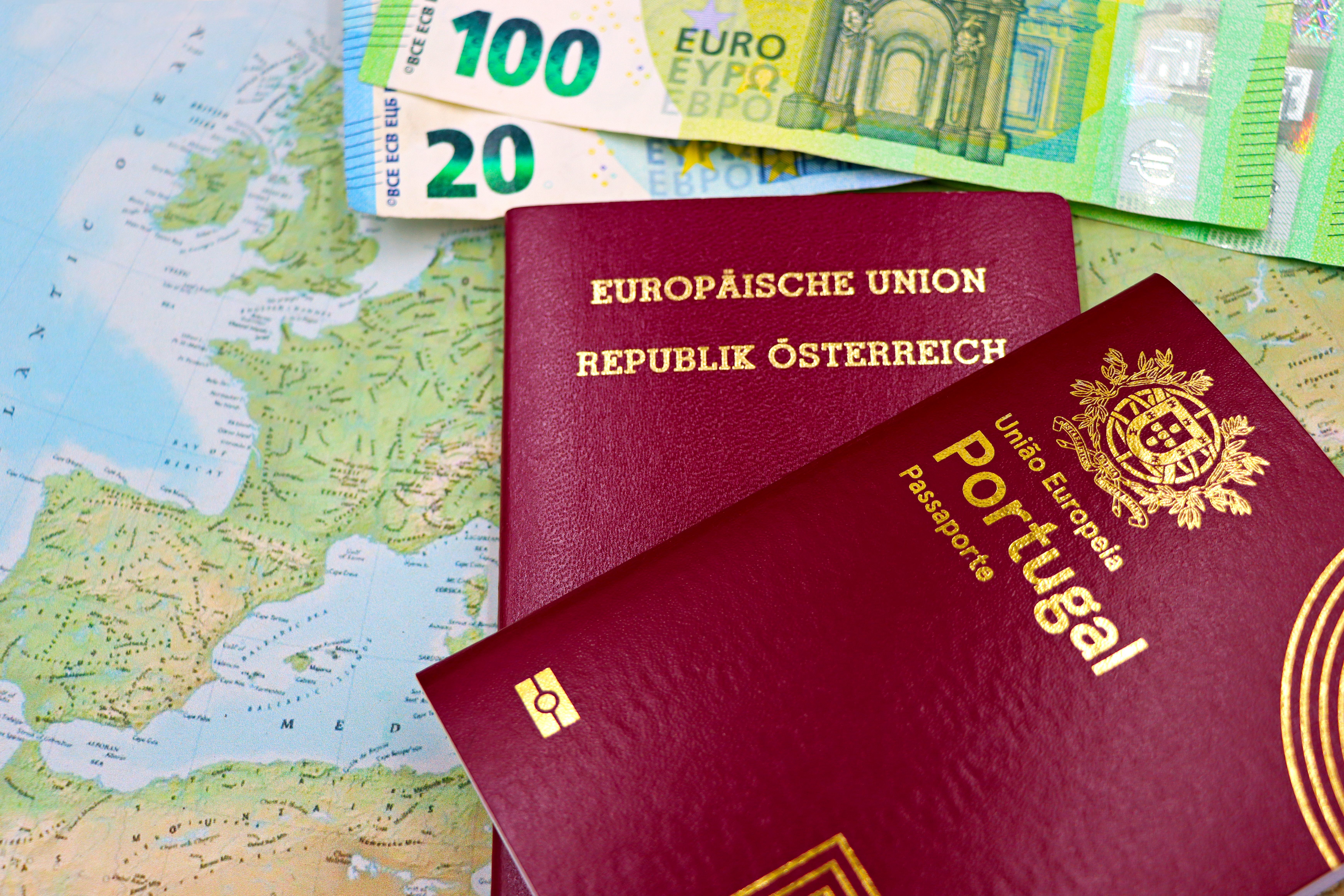
ETIAS & EES Explained: EU Travel Requirements Guide
EES biometric checks already run at Schengen borders, and the €20 ETIAS authorisation for visa-exempt travellers is expected in late 2026. What each system does and how to prepare.