
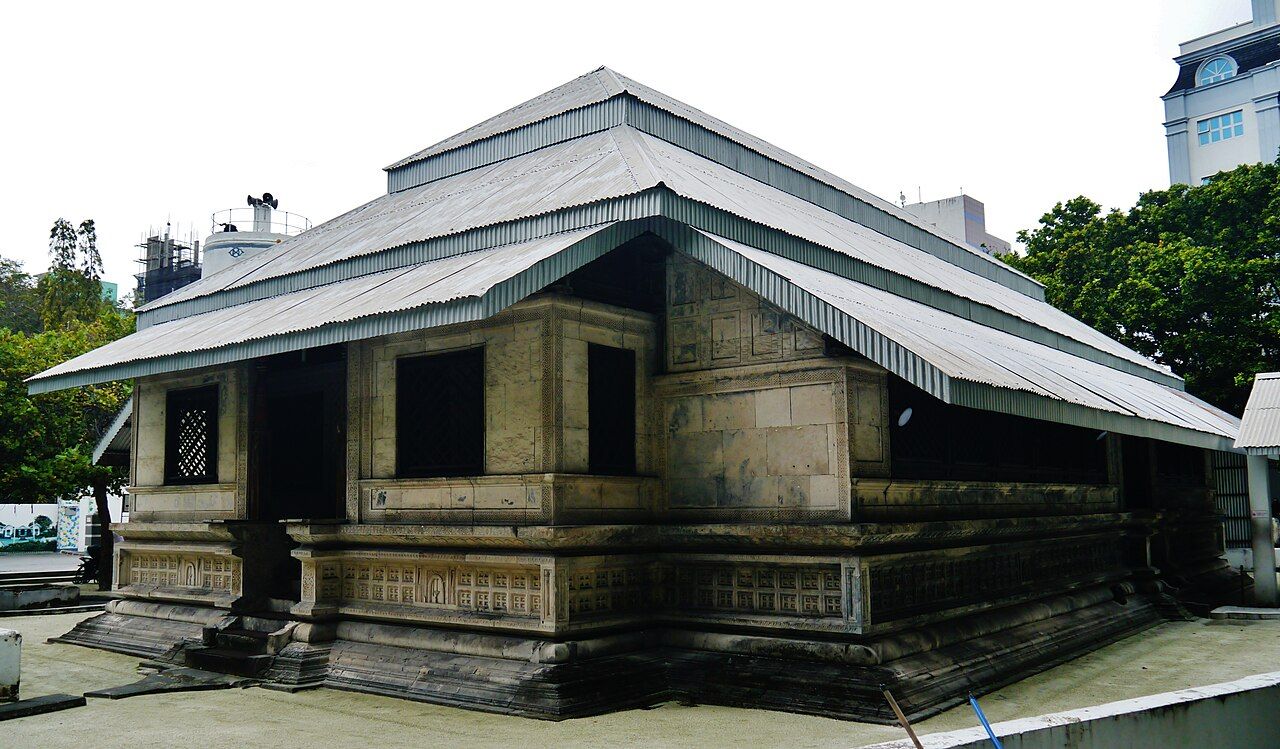
Plan Hukuru Miskiy in Malé: coral-stone details, the Munnaaru, respectful exterior visits, interior permission and the correct UNESCO status.
Visit Hukuru Miskiy for Malé's coral-stone craftsmanship, with an exterior-first plan that remains worthwhile if interior access is unavailable. The Old Friday Mosque, its separate minaret and its cemetery form a compact heritage ensemble in the capital's historic centre. This is a living religious place, so the most important planning decision is to separate what you can observe respectfully from public space from anything requiring permission.
Make it part of a deliberate city stay or a properly planned stopover. Our Malé stopover guide covers airport formalities and the return journey; the time between flights is not the time available beside the mosque. Here the focus is the building, the details worth understanding and how to avoid confusing it with Malé's larger modern mosques.
Fast facts: identify the right mosque
| Detail | Planning information |
|---|---|
| Name to use | Hukuru Miskiy, also written Hukuru Miskiiy or Hukuru Miskiyy; Old Friday Mosque, Malé |
| Historical building | Commissioned in 1656 and completed in 1658 |
| Separate minaret | Munnaaru, dated to 1675 by Visit Maldives |
| Main interest | Carved coral stone, timber craftsmanship and the surrounding funerary ensemble |
| Suggested time | 30–45 minutes for an unhurried exterior-focused stop, excluding travel |
| Interior | Do not assume visitor access; ask locally before entering |
| UNESCO position | Part of the Coral Stone Mosques tentative-list group, not an inscribed World Heritage property as checked on 25 November 2026 |
The duration is an editorial allowance, not an official tour length. No verified current visitor timetable or admission tariff was available from the primary pages consulted. Do not build a tight schedule around an advertised opening time copied from a general directory.
Hukuru Miskiy is not the modern Grand Friday Mosque
Tell a driver or guide Old Friday Mosque, Hukuru Miskiy. The name “Friday Mosque” alone can cause confusion with the Islamic Centre and its gold-domed mosque. The old building's interest is its low form, worked coral stone and relationship with the minaret and cemetery, rather than the scale of a modern monumental prayer hall.
The official Visit Maldives place page identifies the mosque and Munnaaru together. Use that name pair when checking your map. A photograph dominated by a large gold dome should prompt you to confirm which site you are being shown. Both belong to Malé's religious landscape, but they are different visits and should not share an interchangeable caption.
Start by locating the ensemble from the surrounding public streets. Look for the mosque building, the separate tower and the boundary of the cemetery. This first orientation helps you see how the elements relate without immediately seeking a way inside. Keep entrances, pavements and the movement of worshippers clear while you check your route or take a photograph.
Read the coral stone before looking for a grand façade
The most rewarding question here is how the building was made. The Maldives submission on UNESCO's tentative list explains the tradition of shaping coral stone into carefully joined architectural blocks. It places the mosques within Indian Ocean exchanges and a local craft tradition, rather than treating them as a smaller version of a monumental mosque elsewhere.
Look from permitted areas at the joints between blocks and the way carved ornament works with the wall surface. The material matters as much as the outline of the building. A wide photograph can explain the setting, but closer observation reveals why this ensemble deserves more than a quick stop for the minaret. Do not touch, rub or lean against historic surfaces to examine them.
This history also needs an environmental distinction. Understanding the use of coral in an old monument is not an endorsement of collecting coral today. The construction tradition belongs to a historical context; the visit should not become an excuse to buy or remove material from the site or reef. Treat every fragment and carved surface as part of the place, not a souvenir opportunity.
Understand what lies inside without demanding entry
The Maritime Asia Heritage Survey film hosted by Kyoto University dates the commission to Sultan Ibrahim Iskandar I in 1656 and completion to 1658. Its documented interior includes central and outer prayer halls, side verandahs, a stone-step pulpit and a carved mihrab panel. The account describes a panel rather than a recessed mihrab, a useful detail when comparing this building with other mosques.
The same survey records lacquered timber, a coffered ceiling and calligraphy on the beams. These are reasons to watch the research film before or after your walk, especially if access to the interior is not possible. An online record lets you learn about craftsmanship without pressuring a caretaker to interrupt worship or make an exception for a short tourist schedule.
If permission to enter is offered, ask what areas you may visit and whether photography is allowed. Permission to cross one threshold is not permission to wander through every room. Follow the instructions given on the day, remove footwear where directed and keep your phone silent. If entry is declined or nobody is available to clarify, continue with the exterior visit.
Give the Munnaaru and cemetery their own attention
Visit Maldives dates the separate Munnaaru to 1675, later than the mosque. Seeing the two elements together helps avoid the assumption that everything in the enclosure was built in one campaign. Look at the relationship between the tower, the low mosque and the surrounding street, while respecting whichever boundaries and access arrangements are in place.
The Maldives Heritage Association's site account describes coral-stone wells and changes to the building over time. This is a reminder that “historic” does not mean untouched. A roof, doorway or repaired surface may belong to a different period from the structure beneath it. Resist assigning a date to every visible feature unless an on-site interpretation or documented source supports it.
The cemetery deserves the same respectful attention as the mosque. Observe carved stones from permitted paths; do not stand on tombs, reposition anything or use graves as seating. Avoid close photographs of people visiting graves. If you are travelling with children, explain the purpose of the enclosure before entering any area where visitors are allowed, so they understand why this is not a play space.
Dress and timing: plan around worship
Choose clothing that covers shoulders and knees, and carry an additional scarf or layer if you hope to request access. Ask the caretaker about any further requirements instead of assuming one universal tourist rule. Modest clothing is a sensible baseline for this visit, but it does not create an entitlement to enter a prayer space.
Avoid arranging your sightseeing around a prayer gathering, particularly the main Friday congregation. Prayer times vary through the year; ask your accommodation or the site for the day's timing. Do not publish a fixed daily tourist window in your own plans based on a previous visitor's experience. A group arriving in the middle of worship should be ready to move on quietly.
In Ramadan, confirm your plans locally and be attentive to how the city is operating that day. The aim is not to collect rules from an old travel article, but to arrive with enough flexibility to follow current directions. A calm exterior stop at an appropriate time is better than a hurried attempt to secure interior access before a transfer departure.
Build a small heritage walk around the mosque
For a short city visit, make Hukuru Miskiy the principal heritage stop and keep the rest of the walk compact. Nearby landmarks such as Muleeage can help you understand the historic centre, but an exterior view does not imply public entry. Avoid adding a presidential building, mosque interior and museum as three guaranteed visits simply because the pins appear close together.
A museum stop, if its actual opening suits your date, can provide a different setting for learning about Maldivian history. Check that separately and leave space for a drink or a meal away from entrances and sacred areas. Our broader Maldives experiences guide helps balance this cultural stop with the islands and water activities that may dominate the rest of your trip.
Keep luggage out of the plan whenever possible. Narrow pavements, heat and repeated stops to look at details are much easier without a suitcase. Agree storage and your return transport before setting off. If the flight or boat schedule changes, shorten the walk rather than borrowing time from your departure margin.
Understand the UNESCO wording
As checked on 25 November 2026, UNESCO's Maldives country page lists no inscribed World Heritage properties and identifies the Coral Stone Mosques group on the tentative list. Hukuru Miskiy is therefore not accurately described as an already inscribed UNESCO World Heritage Site.
The tentative-list record is still useful: it explains the architectural tradition and why the country considers the ensemble important. Nomination, evaluation and inscription are different stages. A news report about progress or a tourism caption using “UNESCO” does not replace the formal list when you want to know the current designation.
That distinction does not diminish the visit. The carved material, historical continuity and religious setting are meaningful in their own right. Choose the stop because you want to understand those things, rather than because a badge promises a particular level of visitor infrastructure. Heritage significance does not guarantee a ticket desk, fixed guided tours or unrestricted access.
Cover photograph: Carved coral-stone exterior of Hukuru Miskiy in Malé — Archive photograph 2018 Image adapted for publication. — Zairon, CC BY-SA 4.0.
Frequently Asked Questions
Can non-Muslim visitors enter Hukuru Miskiy?
Do not assume access. Ask locally about permission and current arrangements before entering, and accept any restriction. This guide recommends an exterior-first visit that remains useful if interior access is unavailable.
Is Hukuru Miskiy the gold-domed mosque in Malé?
No. Hukuru Miskiy is the Old Friday Mosque, known for coral-stone construction and its separate Munnaaru. The gold-domed mosque at the Islamic Centre is a different building. Use the full name when arranging a visit.
How long should I allow?
Allow around 30–45 minutes for a thoughtful exterior-focused stop as an editorial suggestion. Travel, permission discussions and any wider city walk take additional time. Never treat this as an airport connection guarantee.
Is the mosque a UNESCO World Heritage Site?
Not as checked on 25 November 2026. It belongs to the Coral Stone Mosques tentative-list group. UNESCO's country page lists no inscribed Maldivian properties at that check date.
What should I wear and photograph?
Cover shoulders and knees and bring an extra layer if requesting entry. Follow the caretaker's directions. Ask before interior photography, keep worshippers and mourners out of intrusive images, and never touch or climb historic features for a better angle.


Keep Exploring
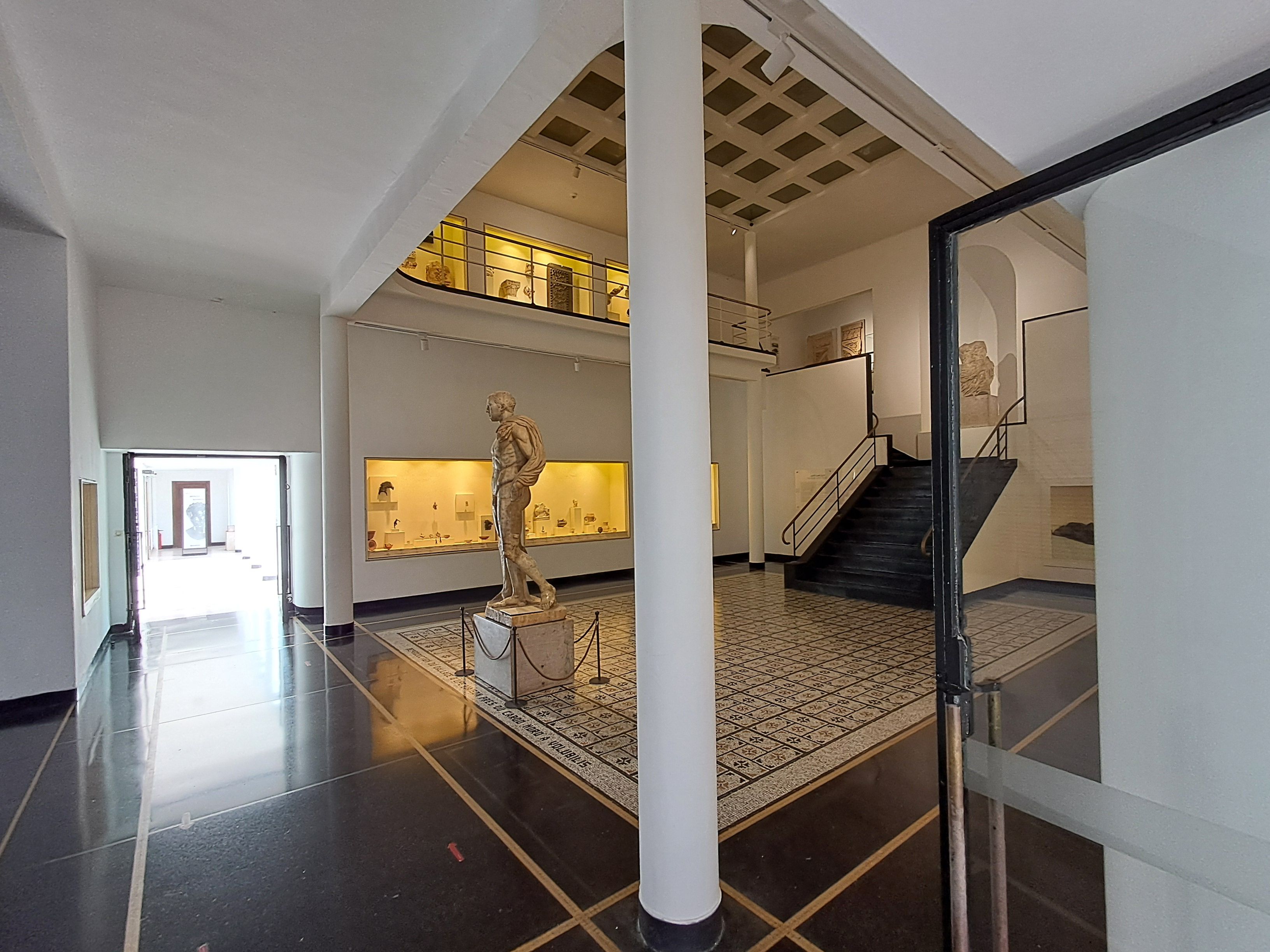
Rabat History and Civilizations Museum: Plan Your Visit
Plan Rabat’s archaeology museum: ancient bronzes, objects from Volubilis, opening days, admission and a focused route through the collection.
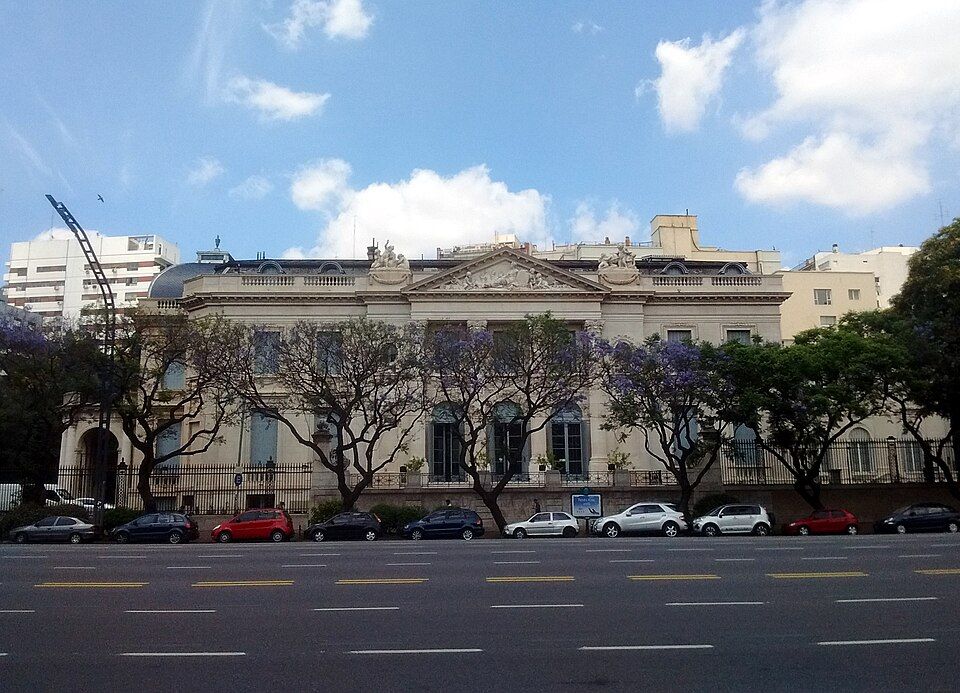
Buenos Aires Decorative Art Museum: Plan Your Visit
Plan Buenos Aires's Decorative Art Museum: free afternoon entry, palace rooms, the 16:00 tour and practical access at Palacio Errázuriz Alvear.
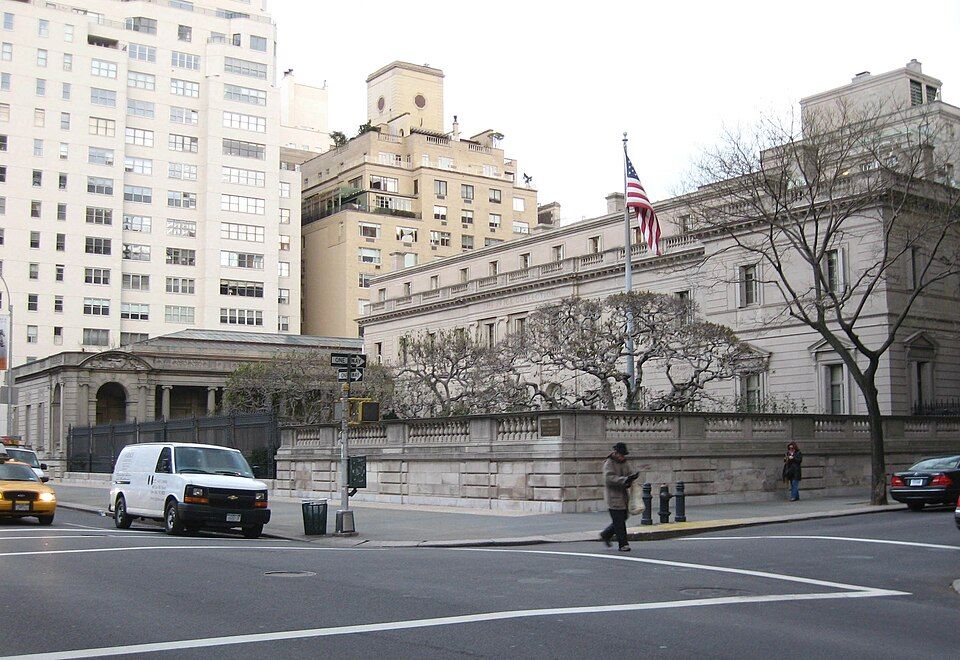
Frick Collection New York: Plan Your Art Visit
Plan the Frick Collection: age limits, timed tickets, Wednesday admission, gallery choices and practical access at the reopened New York mansion.