
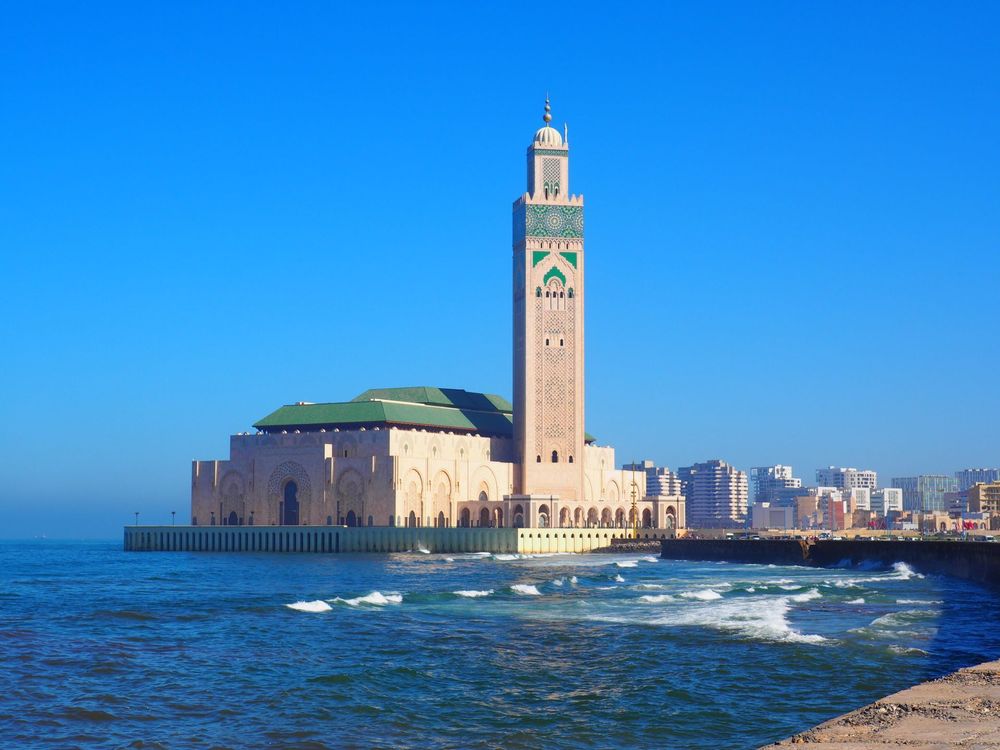
Hassan II Mosque: Plan Your Casablanca Visitor Tour
Plan a Hassan II Mosque tour with published prices, dress rules and route details. Confirm departure times because official schedules differ.
Plan a visitor tour of Hassan II Mosque around a confirmed departure, with enough time to understand the interior as well as see the Atlantic-facing exterior. The main planning difficulty is the timetable: official pages currently disagree. Check directly with the foundation before making a train, flight or cruise schedule depend on a particular tour.
The mosque is a working place of worship in Casablanca. A sightseeing visit follows the organised visitor route and its rules; seeing the exterior does not mean you can wander independently through the prayer hall. If Casablanca fits your arrival or departure, this can be a focused cultural stop. Our Morocco itinerary for seven days helps decide whether adding Casablanca strengthens your chosen route or simply adds another transfer.
Fast facts for the visitor tour
| Detail | Planning information |
|---|---|
| Location | Hassan II Mosque, Casablanca, on the Atlantic waterfront |
| Visit format | Organised guided visitor circuit |
| Published circuit | Prayer hall, minaret hall, ablutions hall |
| Foreign adult admission | 140 MAD on the current French tour page |
| Moroccan adults, residents, foreign students | 70 MAD on that page; confirm eligibility documents |
| Children 4–12 and Moroccan students | 30 MAD on that page |
| Children under 4 | Free when accompanied by parents |
| Departure times | Official pages conflict; confirm for the exact date |
| Editorial allowance | Around two hours for arrival, tour arrangements and exterior; not a guaranteed tour duration |
Information was checked on 17 November 2026 using the foundation's guided-visit page. Prices are advertised in Moroccan dirhams, not a dated booking quotation. Keep your budget in MAD rather than treating an approximate conversion into euros as the amount payable.
Resolve the timetable before choosing transport
The foundation's French guided-visit page divides departures into seasons and gives a different Friday pattern. However, the official homepage displays a different set of departures, while an English version also differs. The safe conclusion is that the website alone does not settle your exact tour time. This guide therefore does not reproduce one timetable as a confirmed operating promise.
Contact the foundation through its official contact page and ask for the departures on your date, the language of the tour, where to buy the ticket and how early to arrive. Mention Friday, Ramadan or a public holiday explicitly if relevant. A message asking only whether the mosque is open can produce an answer about worship rather than the sightseeing circuit.
Once the departure is confirmed, work backwards from it. Leave time to reach the correct visitor area, obtain your ticket and follow any instructions before the group enters. Arriving at the exterior at the advertised departure time is not the same as being ready to join. If you have a fixed onward journey, choose a visit with a substantial buffer rather than the last possible departure.
What the guided circuit includes
The published route names three stages: the prayer hall, the minaret hall and the ablutions hall. The phrase minaret hall does not mean a climb to a viewing platform. Do not buy a third-party excursion on the assumption that the standard visit includes access to the top of the minaret. Ask exactly what the advertised product contains.
The foundation's prayer-hall page provides background on the principal interior. During the visit, look at the relationship between the scale of the space and the detail of its surfaces. Instead of trying to photograph every corner, choose a few things to follow through the guide's explanation: carved wood, plaster decoration, tilework or the use of marble.
The ablutions area adds context to a building that is used for religious practice. Treat it as part of understanding the mosque rather than as another decorative room to collect. Stay with the guide and let the group move through each stage together. A published circuit describes the normal visit, while staff determine any restrictions on the day.
Look closely at Moroccan craftsmanship
The tour page identifies plaster, carved wood, zellige, marble, tadelakt and copper among the crafts represented. These materials reward different ways of looking. Stand back to see how patterns organise a large surface, then notice how the smaller elements create that effect. The contrast between repeated geometry and individual craft detail is a useful thread through the visit.
Ask the guide to identify a material when you are unsure. A polished wall, a carved panel and a tile mosaic can appear similar in a small photograph, yet involve different techniques. Learning a few distinctions is more useful than memorising a string of superlatives or competing claims about the building's size.
The exterior is valuable for understanding the mosque's relationship with the Atlantic, but the guided interior offers another scale of observation. Decide which matters most to you before allocating time. If your schedule permits only a photograph outside, describe that honestly as an exterior stop rather than counting it as a full mosque visit.
Dress and behaviour inside a working mosque
The foundation requires clothing covering shoulders and torso and reaching below the knees. Shorts and sleeveless clothing are prohibited. Choose your outfit before leaving your accommodation rather than relying on finding a suitable covering at the entrance. Bring layers that work both in the interior and beside the sea without needing to reorganise your bag at every stage.
Visitors must remove their shoes before entering and carry them; the foundation says bags are supplied at the entrance. Wear footwear that is easy to remove and put back on. If balancing, bending or managing shoes is difficult, ask in advance what assistance or arrangements are possible rather than assuming an accompanying guide can solve everything immediately.
Remain with the group, keep your voice low and respect barriers. The published rules prohibit smoking and consumption during the visit, and prohibit video cameras and sound equipment inside. Ask the guide about still photographs and the rules for your device; do not turn uncertainty about video into an assumption that every kind of photography is unrestricted.
Tickets, children and accessibility questions
Check the ticket category before paying. The current French page distinguishes foreign adults, Moroccan adults and residents, foreign students, Moroccan students and children. Carry relevant proof if claiming a reduced category and confirm which documents are accepted. Do not assume that an age-based discount or student benefit from another Moroccan attraction applies here.
For families, explain the visit beforehand: staying with a group, removing shoes and listening quietly are part of the experience. Choose a time that does not collide with a small child's meal or usual rest. The under-four free category does not remove the practical challenge of a structured tour, so allow the child's needs to shape the rest of the day.
The sources reviewed did not establish a complete step-free route or guarantee wheelchair availability for every part of the circuit. Ask the foundation about entrance surfaces, changes of level, the ablutions hall, seating and assistance for your particular needs. A large open esplanade is not evidence that the entire interior tour is accessible.
Fit Casablanca into a manageable day
Make the mosque the fixed point of your Casablanca stop, then build flexible activities around it. Do not place a precise restaurant reservation immediately after a tour whose departure or length has not been confirmed. A meal afterwards and time to look at the exterior provide a more forgiving structure than stacking several timed visits.
If travelling onward towards Rabat, compare that city with Casablanca rather than treating them as interchangeable. Our Kasbah of the Udayas guide covers a different kind of visit, centred on Rabat's historic quarter. It can inform the next stage of a route, but it is not a nearby walking extension of the mosque tour.
The foundation also operates other facilities, including a museum and hammams. Their hours, admission and notices are separate. A closure notice for the hammams does not automatically mean the mosque tour is closed, and a mosque ticket should not be assumed to include every facility. Check only the additional experience you actually intend to use.
For a tight airport connection, the best decision may be to keep the mosque for another stay. Your available time must cover the whole journey, ticket arrangements, the tour and a return buffer. No fixed visit allowance can guarantee a flight connection. A clear, unhurried stop is more rewarding than a rushed attempt to fit a landmark between two transport deadlines.
Cover photograph: Hassan II Mosque and its minaret beside the Atlantic in Casablanca — Yevgeny Popov, Pexels License.
Frequently Asked Questions
How much is the Hassan II Mosque visitor tour?
The current French foundation page lists 140 MAD for foreign adults, 70 MAD for Moroccan adults, residents and foreign students, and 30 MAD for children aged 4–12 and Moroccan students. Under-fours accompanied by parents are free. Confirm categories before paying.
What are the tour departure times?
Official pages currently disagree, so confirm directly with the foundation for your date. Friday, seasonal and Ramadan arrangements require particular attention. Do not plan a fixed connection around an unconfirmed online departure.
Does the tour include climbing the minaret?
The published circuit includes the prayer hall, minaret hall and ablutions hall. It does not describe a climb to a minaret viewing platform. Ask what is included before purchasing any additional excursion.
What should visitors wear?
Cover shoulders and torso and wear clothing reaching below the knees. Shorts and sleeveless clothes are prohibited. Shoes must be removed for entry and carried, and visitors should remain with the group and respect the guide's instructions.

Keep Exploring
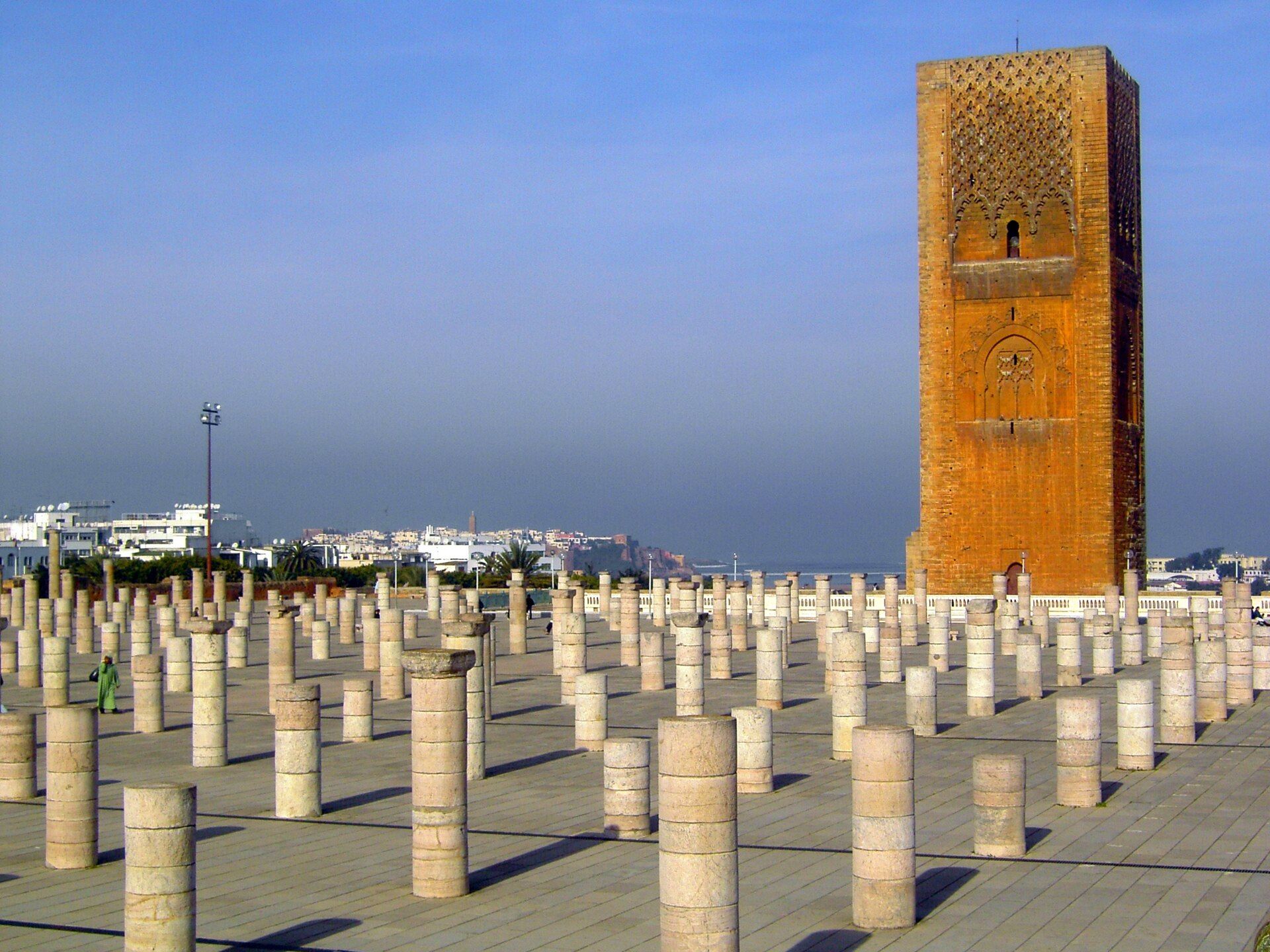
Hassan Tower and Mausoleum: Plan Your Rabat Visit
Plan Hassan Tower and the Mohammed V Mausoleum together, with published hours, a practical route and respectful visitor advice.
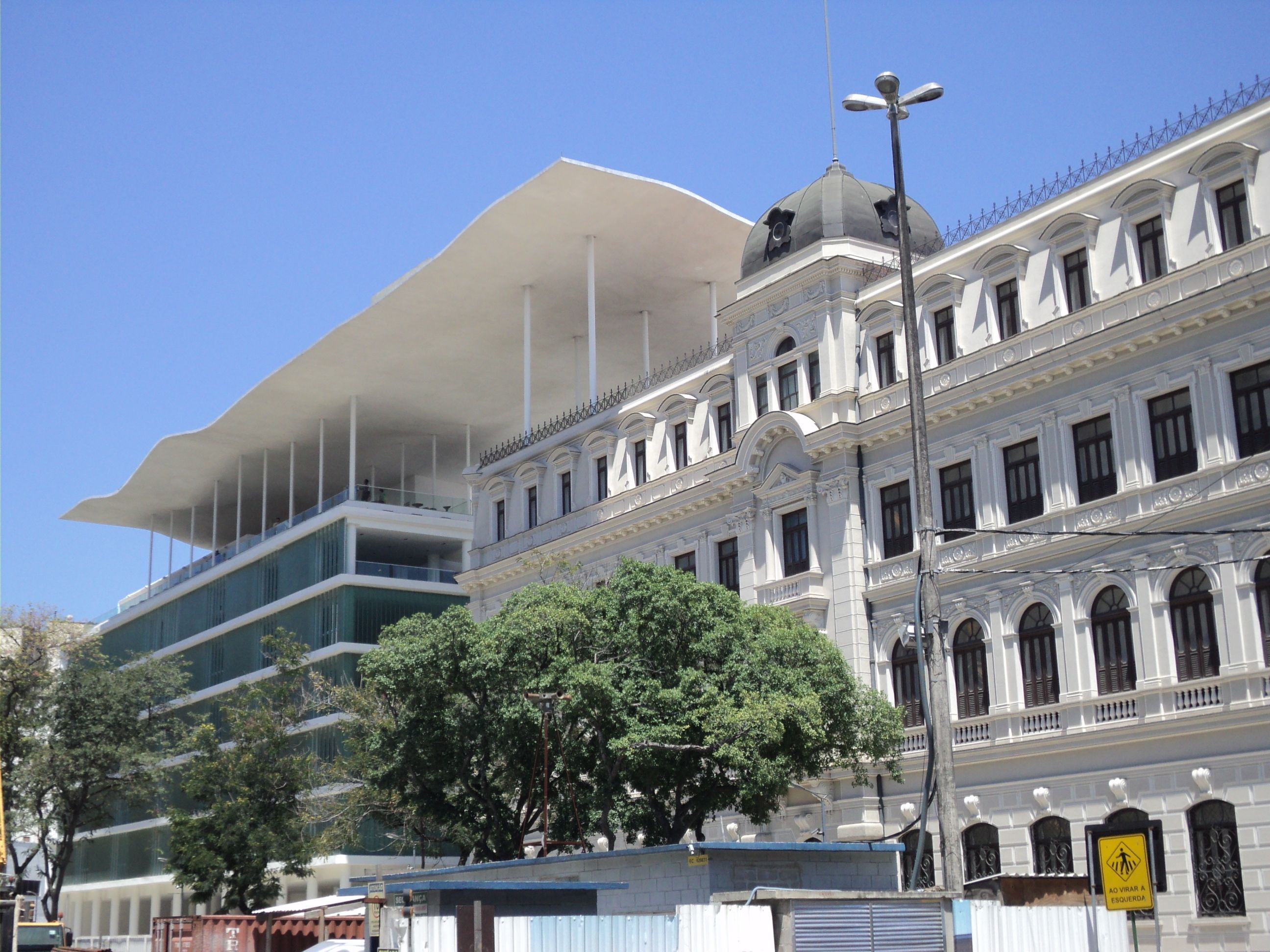
Museu de Arte do Rio: Plan Your MAR Visit
Choose MAR exhibitions, architecture and educational visits on Praça Mauá, with current opening days, tickets and the library’s separate calendar.
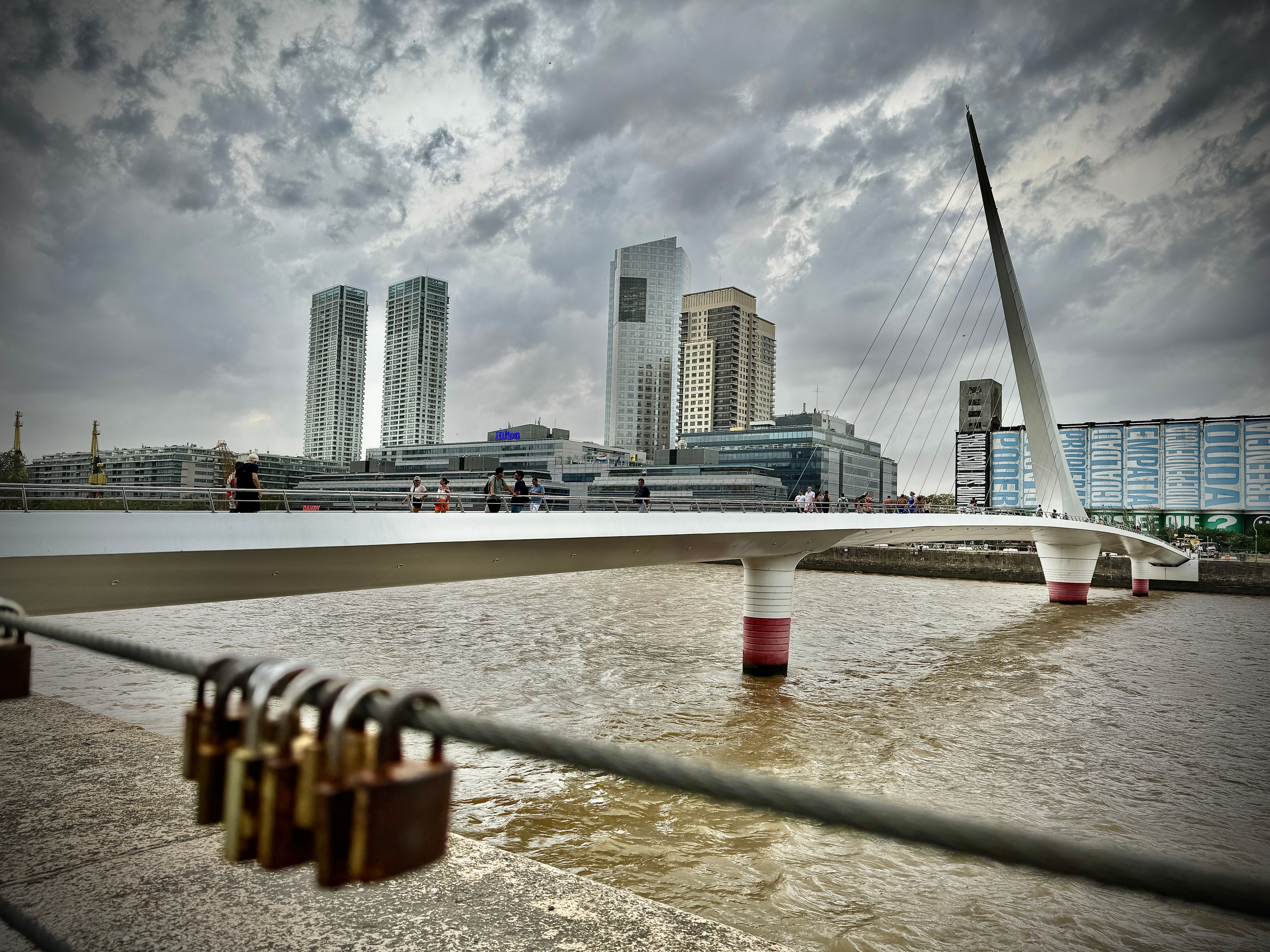
Puerto Madero: Plan a Waterfront Walk
Explore Puerto Madero’s historic docks, Puente de la Mujer and two museum ships, with a short walking plan and current boarding caveats.