
Cockatoo Island Sydney: Plan Your Harbour Visit
Choose a lower-island shipyard walk or convict-history route, with ferries, steep terrain and current November access restrictions.
Cockatoo Island / Wareamah offers a different harbour outing from Sydney's beaches and waterfront neighbourhoods. Here the ferry brings you to a former penal establishment and shipyard, where sandstone buildings, docks and industrial spaces explain how people reshaped the island. Choose it for history and the harbour setting together, rather than expecting a residential village with a shopping street.
The most useful decision is whether to concentrate on the lower island's maritime landscape or add the upper island's convict-era buildings. That choice affects walking effort, accessibility and the time you need ashore. Our Sydney attractions guide helps you compare this with the city's other cultural and coastal outings.
Information was checked on 10 November 2026. Filming restricts access to parts of the Historic Shipbuilding & Repair Facility from 9 to 13 November 2026. Check the official alerts before travelling, particularly if industrial heritage is the main reason for your visit. A ferry operating to the island does not establish that every area is open.
Choose a visit that fits your interests
| Your priority | Suggested focus | Main consideration |
|---|---|---|
| Shipbuilding and large industrial spaces | Lower island, docks and open shipyard areas | Current filming and conservation closures |
| Convict history | Upper historic precinct and Fitzroy Dock context | Stairs or a steep climb to the upper island |
| A manageable harbour half-day | One main heritage theme, ferry and a break | Return sailing and available time ashore |
| A visit with limited mobility | Confirmed lower-island route | Uneven surfaces and individual building entrances |
| More interpretation | A suitable guided or audio tour | Date, language, route and delivery arrangements |
| Overnight atmosphere | Booked campground or heritage accommodation | Separate reservation, equipment and access needs |
Island admission is free. Ferries, tours, food and overnight accommodation are separate decisions and costs. A free visit can still require careful planning, especially when your time ashore is bounded by a return ferry or an evening reservation in the city.
Understand the island before choosing the route
Wareamah has significance beyond the buildings left by colonial and industrial use. The Harbour Trust's First Nations history describes connections to the waterways and homelands of the Wallumedegal, Wangal, Cammeraygal and Gadigal peoples. Those connections continue; the island's history does not begin with the prison.
The surviving convict site belongs to the Australian Convict Sites World Heritage property. That listing concerns the evidence of transportation, imprisonment and forced labour, not simply picturesque old sandstone. Read the buildings in that context: who built them, who controlled them and how labour transformed the landscape.
The island later developed as an important shipbuilding and repair centre. The Australian Government heritage account explains the relationship between its convict remains and extensive maritime industrial heritage. These are connected layers, rather than two unrelated attractions placed on the same island.
An overnight visitor can book a historic house or apartment, but that does not turn the island into a residential neighbourhood for casual exploration. Respect accommodation boundaries and distinguish public heritage spaces from buildings occupied by guests. The interest of the visit lies in the island's history and setting, not access to every doorway you pass.
Plan the outward and return ferries together
The island's visitor information identifies public ferry services including F3 and F8, with journeys available from city and river wharves. Use Transport for NSW's ferry directory and trip planner for the precise departure point, service, direction and date. Do not assume every sailing on a named route stops at the island.
Choose your return before committing to the outward boat. You can remain flexible between suitable departures, but know the later options and what happens if one is missed. A short crossing on a map does not remove waiting time, boarding time or the journey between your accommodation and the first wharf.
As an editorial allowance, protect half a day including travel, with roughly two to three hours ashore for a focused first visit. Someone taking a guided tour, adding the upper island and stopping for lunch may want longer. Someone interested only in the ferry ride may prefer a different harbour outing with less time committed to heritage buildings.
If ferry access is essential for a wheelchair, mobility scooter or stroller, check the particular wharves and service through the transport operator. Accessibility at the island does not answer every question about the journey. Keep any later city booking loose enough that you are not relying on the last possible connection.
Start on the lower island with a clear theme
A lower-island visit can focus on the relationship between the water and the spaces used to build and repair ships. Docks, cranes and workshop buildings become more meaningful when you imagine the sequence of work, rather than viewing each as an isolated industrial photograph. Use the visitor map and the open paths to select a manageable circuit.
Fitzroy Dock connects maritime engineering with convict labour. Sutherland Dock and the large industrial spaces add a different sense of scale. You do not need to enter every building to understand that relationship. Where interpretation is available, stop long enough to connect the structures with the people and tasks behind them.
This is also the most practical starting point for visitors who may not continue uphill. Give it the status of a complete outing, not an inferior substitute for “doing the whole island”. A careful lower-island route, a pause by the water and the ferry journey can provide a substantial visit.
The site is not a playground made from old machinery. Keep children close around edges and equipment, and respect barriers even when a closed space looks attractive for photographs. Maintenance and operational vehicles may still be present. Follow the current route rather than relying on an image from a previous visitor.
Add the upper island for the penal history
The Harbour Trust's convict-era account dates the penal establishment to 1839–1869. Surviving structures include the Guardhouse, Mess Hall, solitary confinement cells and grain silos. These spaces help you move from a broad historical label to the physical organisation of confinement and work.
Choose a few buildings to examine properly. Compare the scale of an individual space with the larger landscape, and read the explanations of how the island was quarried and altered. The attractive harbour views can sit uneasily beside the history of imprisonment; allow both aspects to remain part of the experience.
The upper island requires stairs or a steep ascent. Make that decision before anyone has exhausted their energy on the lower circuit. If you do go up, plan how you will return to the departure wharf without hurrying. An appealing viewpoint is not a reason to take a route that does not suit the group.
Avoid turning the visit into a complete architectural inventory. One well-understood theme is more memorable than a hurried circuit of every named building. The map helps you choose and orient yourself; it does not create an obligation to cover everything shown.
Use a tour when interpretation matters
The official tour selection separates island highlights, convict history and shipyard subjects. The Shipyard Tales Tour is identified as accessible, while the Lower Island Tour is offered for private group bookings. Check the actual session and route; a listed tour title is not proof that it runs whenever your ferry arrives.
Guided interpretation is useful if you want the buildings connected into a story without doing all the reading yourself. An independent walk suits visitors who prefer selecting a few spaces and pausing at their own pace. Audio options are another possibility, but confirm the current purchase and access method for the particular product before relying on it.
The visitor centre aims to open 10:00–16:00, but the island warns that volunteer availability can prevent opening. Carry the map or information you need in advance. The centre's intended hours should not become the assumption on which your whole visit depends.
The planning notice specifically warns that the audio tour linked there is unavailable when the visitor centre is closed. Other audio products may use a different delivery method: confirm the arrangements for the one you choose rather than assuming access outside centre hours.
Language also matters. The accessibility information says guided and audio tours are currently in English. Confirm any specific language support rather than assuming it comes with admission or a tour ticket. Travelling companions can still enjoy an independent visual route if a sustained English commentary would not suit them.
Check the closures, not just island admission
On the check date, the island's official alerts listed three relevant restrictions. Filming affects parts of the Historic Shipbuilding & Repair Facility 9–13 November 2026. The southern entrance of Dog Leg Tunnel is closed for works, while the Eastern Apron entrance remains available for the interpretive displays. Part of Bolt Wharf is fenced off for conservation preparations.
The Bolt Wharf notice gives only an imprecise reference to reopening sometime in 2026. That does not establish that it has reopened by your date. Check the current notice and respect the barriers; do not plan a continuous route through a restricted section merely because an older map draws one.
If shipyard interiors are the main purpose of your journey during the filming period, consider another day after confirming access. If you are happy with the areas that remain open, adapt the route. Neither choice requires treating a partial closure as a closure of the whole island.
Match the terrain to the group
The detailed accessibility page describes the lower island as mostly accessible to wheelchairs, mobility scooters and strollers. The upper island involves stairs or the steep Burma Road slope, and some building entrances have steps. “Mostly accessible” is not a promise of an uninterrupted step-free circuit everywhere.
Use the map to identify toilets, drinking water and places to rest. Contact the island team when a particular route or facility is essential. Wear shoes suited to uneven surfaces and choose clothing for exposed harbour conditions. Shade and interiors can provide breaks, but they do not make the outing entirely protected from weather.
Bring water and decide whether you will carry food or use a café after checking its current hours. Do not build the return around a last-minute meal if missing the ferry would disrupt your evening. For families, choose a modest route and let the history, boat ride and open space provide variety without adding every available activity.
Day visit or overnight stay?
The island offers a campground and bookable heritage houses and apartments. Staying changes the experience, but requires a separate decision about bedding, facilities, access and meals. A photograph of a waterfront tent does not tell you what is included in the package you are considering.
For a first visit, a half-day is the simpler choice if you mainly want to understand the place. Choose overnight accommodation because you want time on the island beyond a daytime circuit, not because you assume it is the most convenient base for all of Sydney.
If you would prefer harbour scenery with a beach and headland walk, compare our Watsons Bay guide. Cockatoo Island gives the harbour an industrial and penal-history focus; Watsons Bay offers a different kind of time ashore. Choose the subject and terrain that suit your day.
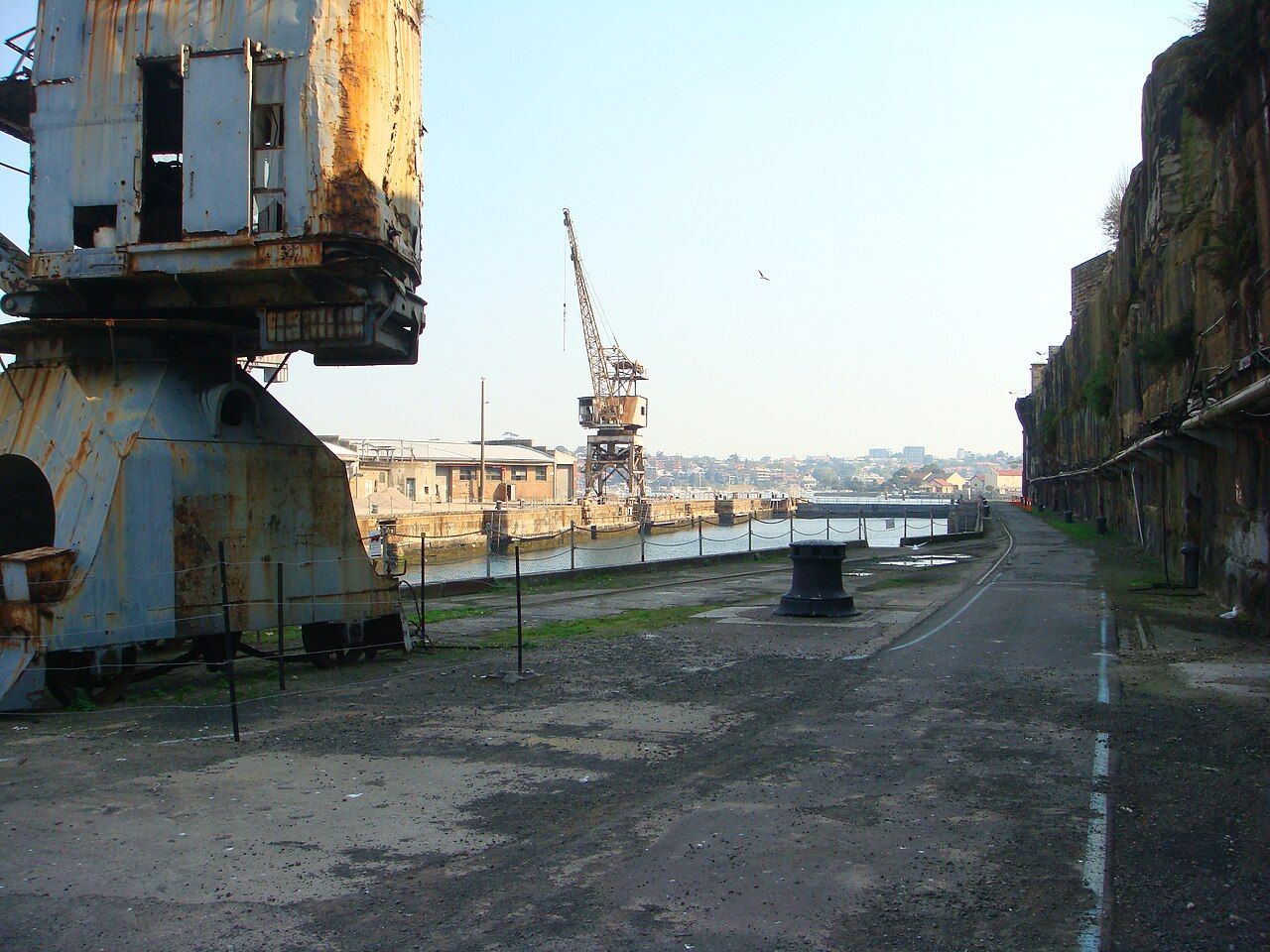
Cover photograph: Cranes, dock water and industrial structures at Sutherland Dock on Cockatoo Island — Photograph from 2009, resized by Wikimedia Commons; present access and conservation conditions may differ. — Inas (WT-shared / Wikivoyage), Public domain (author release).
Frequently Asked Questions
Is Cockatoo Island free to visit?
Island admission is free. Ferry travel, tours, food and overnight accommodation have separate arrangements and may involve charges.
Which ferry goes to Cockatoo Island?
The island lists F3 and F8 services. Check your specific departure, stopping pattern and return through Transport for NSW rather than assuming every sailing serves the island.
Can I explore the whole island without stairs?
Do not assume so. The lower island is mostly accessible, but the upper island requires stairs or a steep slope, and some buildings have stepped entrances. Plan a suitable route using the detailed access information.
Are all shipyard areas open in November 2026?
No. The official notice restricts parts of the Historic Shipbuilding & Repair Facility from 9 to 13 November for filming. Separate tunnel and Bolt Wharf restrictions also require checking before your visit.


Keep Exploring
Sydney Opera House: Tour, Show or Harbour Visit?
Choose an Opera House tour, performance or exterior walk: current prices, stairs, accessible options, arrival and what each ticket includes.
Sanjusangen-do Kyoto: Plan Your Temple Visit
Plan Sanjusangen-do in Kyoto: sculpture highlights, seasonal hours, admission, access and a sensible pairing with Kyoto National Museum.
teamLab Planets Tokyo: Plan Your Visit
Plan teamLab Planets in Toyosu with clear ticket choices, water and clothing advice, family logistics and artwork-specific accessibility checks.