
One Week in Northern Spain: Basque to Galicia
A seven-day road trip from Bilbao to Santiago de Compostela. Follow a coastal route through the Basque Country, Cantabria, Asturias and Galicia with food tips, sights and practical advice.
One Week in Northern Spain: Basque Country to Galicia
Northern Spain is a world apart from the sun-drenched image many have of the country. Here the Atlantic shapes a wild, green coastline; fishing villages, dramatic cliffs and ceremonial food culture reign. In seven days you can travel from Bilbao in the Basque Country to Santiago de Compostela in Galicia, sampling pintxos and txakoli, exploring cider houses, and standing beneath the Gothic spires of a cathedral that has drawn pilgrims for centuries.
Below is a compact, flexible one-week itinerary plus practical tips and local insights to help you plan a memorable trip.
Why choose Northern Spain for a week?
- Diverse scenery: dramatic cliffs, sandy beaches, rolling green hills and steep fishing ports.
- World-class food culture: from Basque pintxos to Galician seafood and Asturian cider.
- Compact driving distances: coastal roads are scenic and you’ll never be more than a few hours away from your next stop.
- Rich history and living traditions: from prehistoric cave art to the Camino de Santiago.
Quick planning essentials
- Best time to go: Late spring to early autumn (May–September). Summer is busiest but weather is mild compared with southern Spain. April and October can be quieter but wetter.
- Transport: A rental car is highly recommended for flexibility. Trains and buses connect major cities but many best stops are remote.
- Driving notes: Expect narrow coastal roads, occasional tolls (autopistas/AP), and variable parking in old towns. Drive‑time between highlighted stops is typically 1–3 hours.
- Languages: Spanish, Basque (Euskara) in the Basque Country, Galician (Galego) in Galicia. Basic Spanish works everywhere; locals appreciate attempts at regional greetings.
- Money: Cards are widely accepted but keep cash for small bars and rural shops.
The route at a glance (7 days)
- Day 1 – Bilbao: Guggenheim, pintxos and riverside walking
- Day 2 – San Sebastián: beaches, old town pintxos crawl
- Day 3 – Santander & Santillana del Mar or coastal Cantabria
- Day 4 – Llanes / Asturias coast: fishing villages and cliffs
- Day 5 – Cudillero & Oviedo or Picos detour
- Day 6 – Ribadeo / Playa de las Catedrales and into Galicia
- Day 7 – Santiago de Compostela: cathedral, old town and farewell
Day-by-day itinerary
Day 1 — Bilbao: contemporary art and hearty food
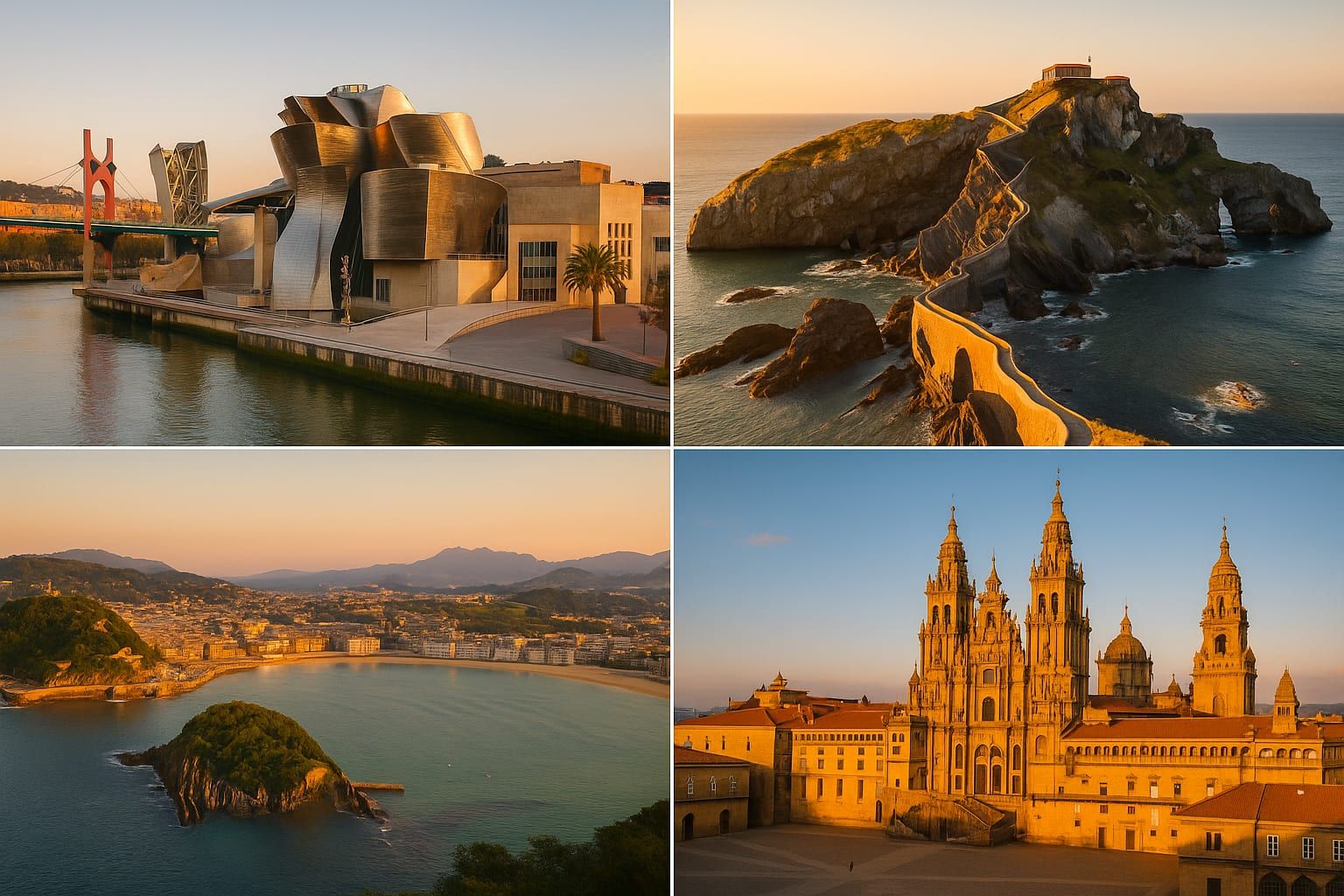
Start in Bilbao. The Guggenheim Museum is the modern face of this former industrial city—its titanium curves are worth the visit alone. Walk the riverside, browse the Old Town (Casco Viejo) and taste your first Northern Spain pintxos (the Basque equivalent of tapas) in a row of bars.
Must-do: try a txakoli (slightly sparkling local white wine) with fish dishes. For the Basque food scene, read more on regional specialties in our guide to Basque Country food.
Practical: parking near the Guggenheim can be busy—use public parking or walk from a nearby hotel. If you arrive late, an evening pintxos crawl in Plaza Nueva is a great intro.
Day 2 — San Sebastián: beach and gastronomic tradition
A short drive east (about 1 hour) brings you to San Sebastián (Donostia). La Concha beach is postcard-perfect; Monte Urgull offers short coastal hikes and city panoramas. The real draw is the culinary scene—old-school taverns and cutting-edge Michelin restaurants sit side by side.
Must-do: a pintxos crawl in Parte Vieja and, if your budget allows, a splurge at one of the city’s top restaurants.
Local tip: mid-afternoon is siesta time in some small bars—plan a late lunch and an evening food walk.
Day 3 — Santander & Santillana del Mar: elegant bays and medieval streets
Head west into Cantabria. Santander’s bay is elegant and pleasant for walking. Take a short detour inland to Santillana del Mar, one of Spain’s best-preserved medieval towns. Nearby is Altamira (replica cave), with prehistoric art that underlines the region’s long human story.
Must-do: stroll Santander’s Paseo de Pereda and try fresh anchovies or bonito at the fish markets.
Practical: Santillana is compact and best experienced on foot. Park outside the historic center during summer.
Day 4 — Asturias coast: Llanes, coves and dramatic cliffs
Cross into Asturias. The coastal road between Ribadesella and Llanes is scenically spectacular, dotted with tiny beaches and dramatic headlands. Llanes is a lively town with a handsome old port; consider a short boat tour to see the coastline from sea level.
Food note: Asturias is the land of cider (sidra). Visit a sidrería and learn the theatrical pouring method—sideros pour from height to aerate the cider.
Optional: if you love mountains, detour inland to the Picos de Europa for a dramatic day among limestone peaks.
Day 5 — Cudillero to Ribadeo: fishing villages and the first taste of Galicia
Drive west toward Galicia. Cudillero is a photogenic, amphitheatre-like fishing village that’s perfect for relaxed exploration and seafood. From there, work your way to Ribadeo (Galicia)—home to Playa de las Catedrales (Cathedrals Beach), a geological wonder best seen at low tide.
Practical: access to Playa de las Catedrales is restricted during peak season; reserve a timed ticket in advance. Tread carefully on the rock steps—the tide and waves can be powerful.
Day 6 — Galicia: Rías Altas, Albariño and coastal trails
Spend a day exploring the Rías (coastal inlets) and small towns along Galicia’s rugged coast. Try seafood platters of percebes (gooseneck barnacles) and fresh scallops. If you prefer inland, visit Lugo with its remarkably intact Roman walls.
Wine note: Galicia’s Albariño is a brilliant, crisp white that pairs superbly with seafood. If you head further south into Rías Baixas, consider tasting tours.
Optional cross-border tip: if you have time, Porto in Portugal is a short drive from southern Galicia—see our practical tips in the Porto weekend guide.
Day 7 — Santiago de Compostela: pilgrimage end and historic city
Finish in Santiago de Compostela. The Cathedral is the emotional heart of the Camino de Santiago, and the old town’s stone streets are perfect for strolling and one last feast. Don’t miss the Pilgrim’s Mass (times vary) and a chance to try pulpo a la gallega (octopus seasoned with paprika and olive oil).
Practical: Santiago’s old quarter is largely pedestrianized; choose a centrally located hotel and enjoy wandering without a car. If you must drive, park at a hotel or designated lots outside the core.
Food, drink and culinary tips
- Basque pintxos: Eat standing at the bar, order small plates, and follow local recommendations. Pintxos vary widely—go for variety.
- Txakoli: light, slightly sparkling whites from the Basque coast. Crisp with fried fish.
- Asturian cider: poured from height to oxygenate; local sidrerías often serve simple, hearty dishes (fabada asturiana is a classic bean stew).
- Galician seafood: Galicia serves some of Spain’s best seafood—mussels, scallops, and octopus are regional highlights. Try mariscadas (seafood feasts) in ports like A Coruña or Vilagarcía.
- Local markets: visit Mercado de la Ribera (Bilbao) or Mercado de la Bretxa (San Sebastián) for fresh produce and atmosphere.
Where to stay
- Bilbao & San Sebastián: boutique city hotels or well-located guesthouses.
- Cantabria & Asturias coast: seaside guesthouses and small paradores (state-run historic hotels) are atmospheric.
- Galicia: casas rurales (country homes) and small coastal hotels offer character; in Santiago choose a hotel within the old town for atmosphere.
Booking tip: in summer, book accommodation near beaches and key attractions several months ahead.
Practical travel tips and local insights
- Weather & packing: the Atlantic climate is temperate but changeable. Pack waterproofs, a warm layer for evenings, sturdy walking shoes, and a light umbrella.
- Drives & timings: roads are well-maintained but often twist along the coast—allow extra time and stop for photos. Use a local SIM or offline maps for rural navigation.
- Festivals: check local calendars. San Sebastián hosts a film festival in September and numerous food events year-round. Galicia celebrates Celtic-influenced festivals with music throughout summer.
- Respect mealtimes: Northern Spaniards often eat later—lunch around 2–3pm and dinner after 9pm in summer. Pintxos and bars are exceptions and operate earlier.
- Tipping: not obligatory but small rounding up or leaving 5–10% in restaurants is appreciated for good service.
- Safety & locals: northern Spain is safe. Locals can be reserved but hospitable; try a few words of local language (Euskara/Galego) for goodwill.
Alternatives & extensions
- If you prefer cities over coast, swap some coastal days for Oviedo and León to taste inland Asturian and Leónese cuisine.
- If hiking interests you, spend a day in the Picos de Europa or take coastal trails around Costa da Morte in Galicia.
- Cross into Portugal for a night in Porto and explore the Douro Valley wines—see the Porto weekend guide for ideas.
Final notes: slow travel and savouring the north
One week is a taste—enough to sample the highlights of the Basque Country, Cantabria, Asturias and Galicia but not to rush. The rhythm here is slower; let days unfold with long meals, shoreline walks and unhurried exploration of towns where history and food are central to everyday life.
If you have more time, extend inland to the Picos de Europa, linger on tiny beaches, or follow the Camino for a few days. Wherever you go, Northern Spain will reward you with dramatic landscapes, unforgettable cuisine, and welcoming local traditions.
Buen viaje — or, as they say in Galician, bo viaxe!
Related
Frequently Asked Questions
Is one week enough for a Northern Spain itinerary from the Basque Country to Galicia?
One week is enough for a taste of the highlights. This itinerary moves from Bilbao and San Sebastián in the Basque Country through Cantabria and the Asturias coast to Santiago de Compostela in Galicia over seven days. It samples the region rather than covering it in depth, so the pace stays relaxed with long meals and shoreline stops.
What is the day-by-day route for one week in Northern Spain?
Day 1 is Bilbao (Guggenheim and pintxos), Day 2 San Sebastián (La Concha beach and Parte Vieja pintxos), Day 3 Santander and Santillana del Mar, Day 4 the Asturias coast around Llanes, Day 5 Cudillero to Ribadeo, Day 6 the Galician rías, and Day 7 Santiago de Compostela.
Do I need a car for this Basque Country and Galicia road trip?
A rental car is highly recommended for flexibility, since many of the best stops are remote even though trains and buses connect the major cities. Drive times between highlighted stops are typically 1 to 3 hours along narrow, scenic coastal roads.
When is the best time to do this Northern Spain trip?
Late spring to early autumn (May to September) is best, with mild weather compared with southern Spain. Summer is busiest, while April and October can be quieter but wetter.
Do I need to book anything in advance for this route?
Yes. Access to Playa de las Catedrales near Ribadeo is restricted during peak season, so reserve a timed ticket in advance. In summer, also book accommodation near beaches and key attractions several months ahead.
Keep Exploring
Mexico City in 3 Days: A Neighborhood-Based Itinerary
A practical route through Centro Histórico, Chapultepec, Condesa and Coyoacán, with one main visit each day, flexible meals and clear choices when time runs short.

Singapore in 3 Days: A First-Timer’s Itinerary
A three-day Singapore itinerary balancing skyline sights, neighbourhood walks, gardens and food, with room for rain and a slower pace.

Los Angeles in 3 Days: Coast, Culture and City Views
A practical Los Angeles itinerary with one main area each day, selective Hollywood time, a coastal walking plan and clear alternatives for closures or short flight days.