
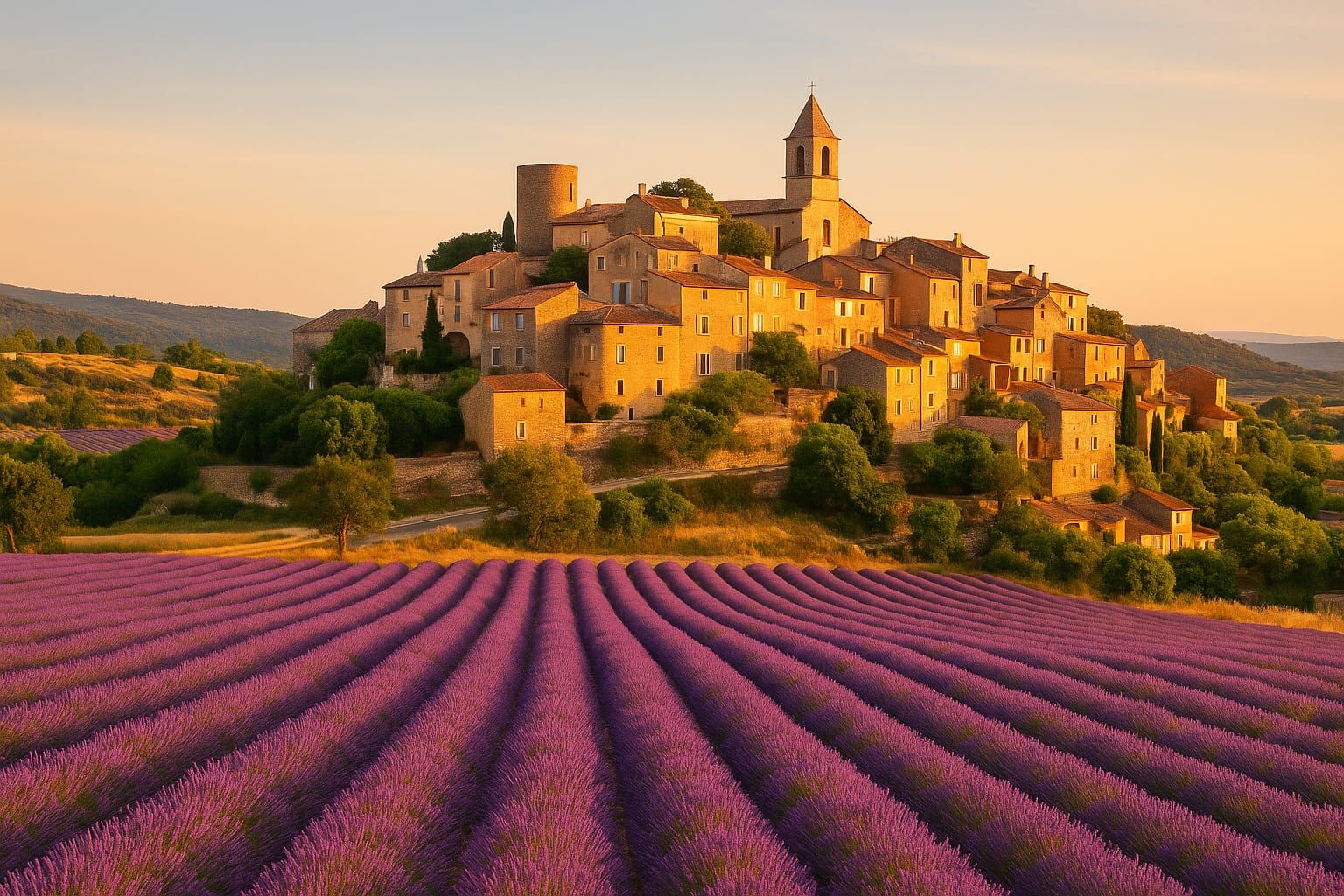
Cruise sunlit lanes from Aix to Valensole and Sault, chasing purple seas, hilltop villages and Provençal markets. Practical routes, timing tips and local insights for the perfect lavender road trip.
Provence Road Trip: Lavender Fields & Villages
There are few travel images as iconic as the rolling purple of Provençal lavender under a high-blue sky. A road trip through Provence at lavender season is part sensory holiday, part history lesson and entirely romantic: you'll pass hilltop villages clinging to limestone ridges, stone farmhouses perfuming the air, bustling markets overflowing with olives, cheese and rosé.
This guide walks you through routes, timing, photography spots, local customs and practical tips so you can plan a lavender-and-villages road trip that feels both curated and spontaneous.
Why Provence? The pull of lavender and villages
Lavender (lavandula angustifolia and the more pungent lavandins) is both an agricultural crop and a cultural symbol in Provence. Fields follow the contours of plateaus and valleys—most famously the Plateau de Valensole and around the village of Sault—offering dramatic vistas and fragrant, photogenic swathes that peak in summer.
Beyond the flowers are the villages: Gordes and Roussillon in the Luberon, L'Isle-sur-la-Sorgue with its waterwheels and antiques, and Aix-en-Provence, the elegant gateway with markets and Provençal cafés. Put together, they create a road trip that balances landscape, culture and cuisine.
Best time to go
- Late June to mid-July: Valensole plateau usually peaks early July. This is the classic “lavender season” with endless swathes in bloom.
- Mid-July to late July: Sault and higher-altitude fields bloom later—ideal if you miss the Valensole peak.
- Early August: Distilleries often harvest and distill around this time; some fields may be cut already. Expect fewer perfect full-bloom scenes.
Tip: Bloom times vary each year with rainfall and temperature. If your trip depends on seeing peak color, check local lavender tourism pages or local farm Facebook updates a week before you leave.
Suggested routes (3–7 days)
3-day weekend (quick hit)
- Day 1: Aix-en-Provence – markets, Cours Mirabeau, easy evening.
- Day 2: Drive to Valensole Plateau at sunrise, then L'Isle-sur-la-Sorgue and Gordes.
- Day 3: Sénanque Abbey for morning photos, return via Roussillon.
5-day classic loop (recommended)
- Day 1: Arrive Aix. Explore markets and old town. See our Aix guide for local highlights: /en/hidden-gems/aix-en-provence-elegant-heart-provence/
- Day 2: Drive to Valensole at dawn, then to Riez and overnight in Manosque or near Luberon.
- Day 3: Luberon villages — Gordes, Roussillon, Bonnieux, and lunch in a village bistro.
- Day 4: Sault and Mont Ventoux views; visit a distillery or lavender farm.
- Day 5: Back to Aix via L'Isle-sur-la-Sorgue (antique shops and river cafés).
7-day slow travel
Stretch the 5-day loop into a relaxed week with long lunches, extra market mornings, a vineyard visit, and time to explore the Verdon Gorge if you want to mix lakes and lavender.
If you're based in Marseille or Aix, our day-trip planning guide is handy: /en/itineraries/provence-day-trips-aix-marseille-guide/
Must-see lavender spots and villages
- Plateau de Valensole: The most famous, with long, agricultural fields that create the postcard purple ribbons.
- Sault: Higher altitude fields with a later bloom and spectacular views toward Mont Ventoux.
- Abbaye Notre-Dame de Sénanque: A Cistercian abbey surrounded by lavender (note: works to preserve crops and respect the site).
- Luberon villages: Gordes (dramatic terraces), Roussillon (ochre cliffs), Bonnieux, and Lourmarin — all perfect for slow wandering.
- L'Isle-sur-la-Sorgue: Antique markets, river canals and cafés to cool down after a day in the sun.
Local insight: Fields near villages are often farmed; most farmers welcome visitors but expect to pay for distillery tours or products. Always ask before entering fields and never trample or pick without permission.
Practical tips for the road trip
Driving & car hire
- Rent a small car: village streets are narrow and parking tight; a compact makes life easier.
- Manual vs automatic: manuals are cheaper in France. Request an automatic early if you need one.
- Fuel and tolls: many secondary roads are free; autoroutes have tolls. Fuel stations are frequent in towns; fill up before long rural stretches.
- Parking: park in designated lots. Hilltop villages have limited spaces—arrive early (before 10:00) or late afternoon.
Where to stay
- Base yourself in Aix-en-Provence for café life and day trips, or stay in a village (Gordes/Bonnieux/Sault) for atmosphere.
- Consider an Airbnb or small guesthouse on a farm to be close to lavender fields—some hosts are on or beside fields.
- For van travelers: there are campsites and a growing van-friendly network; watch local rules about overnight parking.
Photography & timing
- Sunrise and golden hour are best for low light and saturated colors. If you want people-free shots, aim for dawn.
- Drones: regulated in France. Don’t fly near crowds, heritage sites or above private property without permission. Check local drone rules and obtain necessary authorizations.
- Bring a polarizing filter and wide lens for sweeping landscapes.
What to pack
- Sun protection: wide-brim hat, sunscreen, sunglasses.
- Comfortable shoes for cobbled streets and uneven trails.
- Refillable water bottle (summer heat can be intense).
- Lightweight layers: mornings can be cool at higher altitudes.
Money & language
- Credit cards are widely accepted, but some small markets and farms prefer cash. Carry some euros.
- French is spoken widely; learning simple phrases (bonjour, merci, s'il vous plaît) goes a long way.
Local food, markets and wine
Provençal cuisine is a highlight: olive oil, tapenade, ratatouille, fresh tomatoes, anchovies, goat cheese and herbes de Provence. Don’t miss:
- Markets: Aix, L'Isle-sur-la-Sorgue and smaller village markets are great for picnic supplies. Market days vary—check local listings.
- Rosé wine: Provence makes excellent rosé; visit a Côtes de Provence or Ventoux winery for tastings.
- Calissons and pastries: Aix is famous for calissons (almond candies) and patisseries.
Local insight: Lunch in Provence can be leisurely. Many village restaurants offer fixed-price menus midday (prix fixe) that represent great value.
Respecting the land and communities
- Do not trample or pick lavender. Fields are working farms producing essential oils and food-grade products.
- Stick to public paths and asked-for access. Many farmers will happily invite you to view or photograph if you knock and ask politely.
- Keep noise low in villages, especially late at night. The pace of life here is gentle and locals appreciate it.
Lavender experiences: tours, distilleries & festivals
- Distillery visits: many small distilleries open for tours where you can learn about steam distillation and buy essential oil or hydrosol. They often explain the difference between true lavender and lavandin.
- Lavender museums: several small museums and interpretive centers explain history and harvesting—great for families.
- Festivals: towns like Sault and some local villages hold lavender festivals in July with markets, demonstrations and music. Check local tourism calendars.
Practical note: If you're shopping for lavender products, look for labels indicating the origin and whether the oil is 100% pure. Some inexpensive souvenirs are blended or synthetic.
Safety & health
- Heat: summer temperatures can exceed 30–35°C (86–95°F). Stay hydrated and avoid the hottest hours for strenuous activity.
- Bees: lavender attracts pollinators. Watch where you sit and avoid startling hives. If allergic, carry your medication.
- Driving: expect slow-moving farm vehicles in rural areas and cyclists on scenic routes.
Sample day-by-day (5 days)
Day 1 — Arrival in Aix-en-Provence: Market morning, Musée Granet or Cézanne sights, aperitif at a café.
Day 2 — Valensole & Riez: Pre-dawn drive to Valensole plateau for sunrise, then explore nearby villages and a distillery.
Day 3 — Gordes & Sénanque: Morning at Sénanque Abbey, afternoon in Gordes and Roussillon’s ochre trail.
Day 4 — Sault & Mont Ventoux: Higher views, later-blooming fields and optional climb/view of Mont Ventoux.
Day 5 — L'Isle-sur-la-Sorgue & Return: Antiques market (if it's market day), canal-side lunch and a slow drive back to Aix.
Final tips and local nuggets
- Early mornings reward you with cooler air, better light and quieter villages.
- Lavender honey and soaps make authentic gifts—ask vendors about provenance.
- If you want to avoid crowds, choose weekdays and less famous villages like Bonnieux or Ménerbes instead of the busiest hubs.
- Combine your lavender trip with nearby highlights: the Verdon Gorge, Avignon's papal palace or the Calanques if you have more time.
If Provence whets your appetite for more scenic driving, another memorable European road trip is our two-week Balkans road trip itinerary, winding from Slovenia to Montenegro.
Provence in lavender season is cinematic and soulful. Plan with flexibility, respect the land, and make time for slow lunches in sunlit squares—the perfume of the fields will follow you home.
Safe travels, and enjoy the purple roads.
Frequently Asked Questions
What is the best time to visit Provence for lavender?
The best time to see Provence lavender is late June to mid-July, when the Valensole plateau typically peaks in early July. Higher-altitude fields around Sault bloom mid-to-late July, ideal if you miss the Valensole peak. By early August distilleries often harvest, so some fields may already be cut. Bloom times vary yearly with rainfall and temperature.
How many days do you need for a Provence road trip?
Plan three to seven days for a Provence lavender road trip. A three-day weekend covers Aix, Valensole, and a few Luberon villages quickly. The recommended five-day classic loop adds Sault, Mont Ventoux, distilleries, and L'Isle-sur-la-Sorgue. A relaxed seven-day version stretches the loop with long lunches, a vineyard visit, and time to explore the Verdon Gorge.
Do you need a car to explore Provence's lavender fields?
Yes, a car is the practical way to reach Provence's lavender fields and hilltop villages. Rent a small, compact vehicle since village streets are narrow and parking is tight. Manuals are cheaper in France, so request an automatic early if needed. Many secondary roads are free, while autoroutes charge tolls, and you should fill up before long rural stretches.
Can you walk into the lavender fields in Provence?
Most Provence lavender fields are working farms producing essential oils and food-grade products, so you should never trample or pick lavender. Always ask before entering, as many farmers will happily invite you in if you knock and ask politely. Expect to pay for distillery tours or products, and stick to public paths and granted access.
What food is Provence known for?
Provence is known for olive oil, tapenade, ratatouille, fresh tomatoes, anchovies, goat cheese, and herbes de Provence. Excellent rosé wine comes from Côtes de Provence and Ventoux wineries, while Aix-en-Provence is famous for calissons, its almond candies. Markets in Aix and L'Isle-sur-la-Sorgue are great for picnic supplies, and many village restaurants offer good-value midday prix fixe menus.
Keep Exploring
A Complete Guide to Iberian Road Trips
Three concrete Iberian road trips with exact roads, distances, driving times and EUR costs: Northern Spain coast, Portugal north-to-south, and Andalusia's white villages.
7-Day Portugal: Porto, Douro & Lisbon Road Trip
A week-long Portugal itinerary linking Porto, the Douro Valley and Lisbon. Day-by-day plans, wine and food tips, transport advice and local insights for a seamless trip.

Mexico City in 3 Days: A Neighborhood-Based Itinerary
A practical route through Centro Histórico, Chapultepec, Condesa and Coyoacán, with one main visit each day, flexible meals and clear choices when time runs short.