
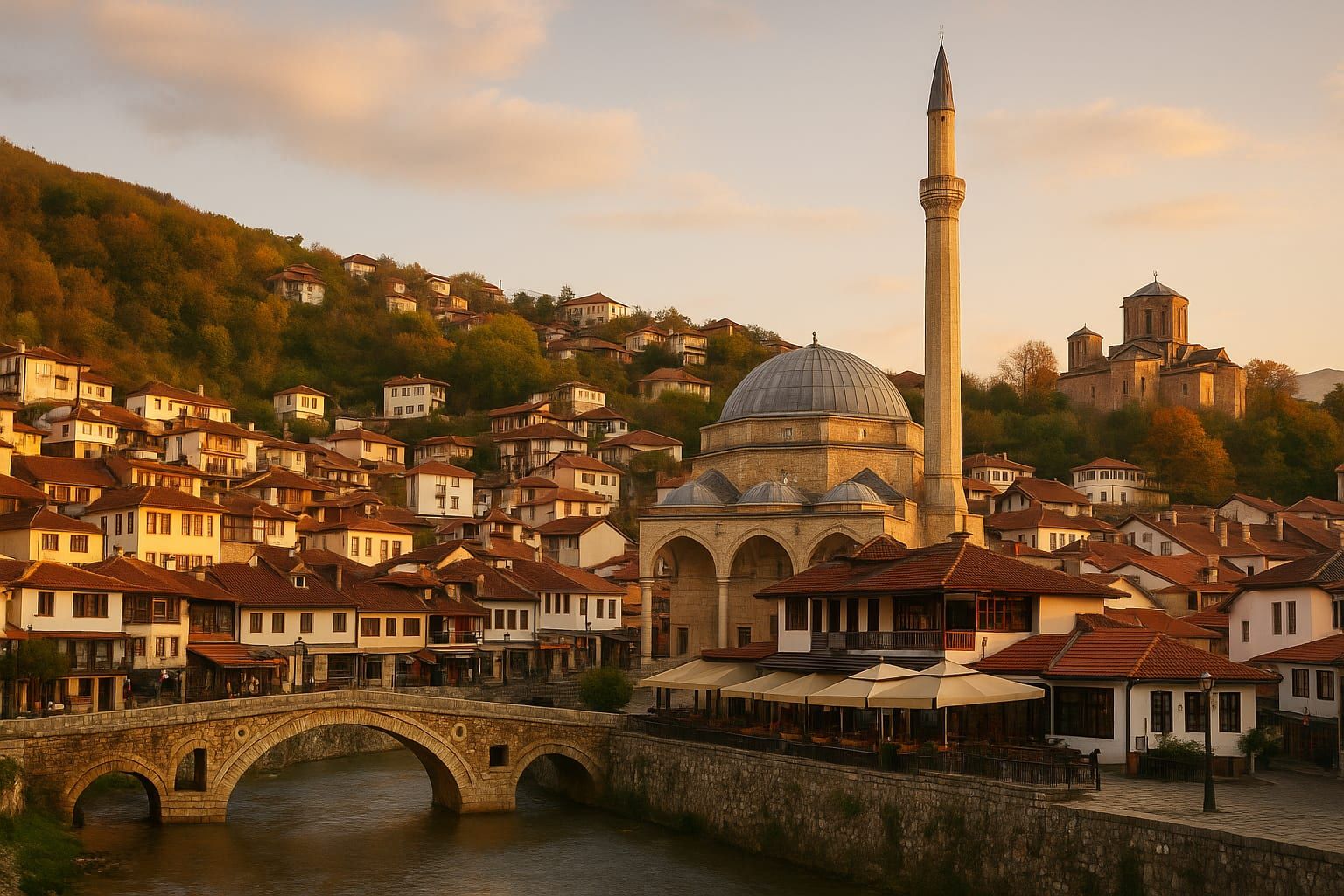
Discover Prizren, Kosovo — a compact, atmospheric city where Ottoman mosques, cobbled lanes, Byzantine churches and lively kafanas blend into a timeless Balkan experience.
Prizren: The Ottoman Jewel of the Balkans
Tucked into the Šar Mountains in southern Kosovo, Prizren feels like a city that time decided to pamper. Narrow cobbled streets, terraced Ottoman houses, and minarets rising above a green river create a scene that is as cinematic as it is authentic. This is a place where layers of history — Byzantine, Serbian medieval, Ottoman, Austro-Hungarian and modern Albanian — are visible on a single stroll.
This guide is written for curious travelers: history lovers, photographers, food hunters and festival-goers. Below you'll find the must-sees, local tips, practical advice and two itineraries to help you make the most of Prizren.
Why Prizren matters
Prizren's compact old town is one of the best-preserved examples of Ottoman urban life in the Balkans. Unlike larger capital cities that have been heavily modernized, Prizren retains the proportions and rhythms of an older era — stone bridges, a central square (Shadervan), tea gardens, and the cadence of daily life under the watch of a hilltop fortress.
Two historical notes make Prizren particularly significant:
- The League of Prizren (1878) — an important political and cultural movement for Albanian national identity — met here. The League's building is now a small museum and a reminder of the city’s role in shaping regional history.
- The Church of Our Lady of Ljeviš, a 14th-century Serbian Orthodox church, is a UNESCO World Heritage site. It stands among mosques and Ottoman houses as a tangible symbol of the region’s layered identity.
If you want deeper context before visiting the region, see our primer on the Balkans:
What to see: Highlights and hidden corners
Shadervan Square & the Old Bazaar
Start where locals do: Shadervan, the small square with its ornate fountain, cafes and pastry shops. The adjoining bazaar is a maze of artisan shops selling filigree silver, carpets, hand-painted icons and wooden wares. Cafes spill onto the street — perfect for people-watching with a strong Turkish coffee and a piece of baklava.
Sinan Pasha Mosque and the Halveti Tekke
The Sinan Pasha Mosque (built 1615) is an elegant example of classical Ottoman architecture — a broad dome, clean lines and a wood-decorated interior. The Halveti Tekke, a Sufi lodge nearby, is active and sometimes holds zikr (devotional) ceremonies. If you're respectful and curious, you may be welcomed to observe — but ask first and avoid photographing rituals.
Prizren Fortress (Kalaja)
A short uphill walk brings you to the fortress overlooking the town and river. The walls are partly medieval and partly Ottoman; the views at sunset are unforgettable. Bring water and good shoes — the trail is steep in places but accessible for most visitors.
Church of Our Lady of Ljeviš
This 14th-century church, with its frescoes and unique blend of Byzantine and local styles, was added to UNESCO’s list for its historical and artistic value. It's a quiet, solemn stop in the middle of a lively town.
The River Bistrica and Ottoman bridges
The Bistrica winds through the city, crossed by small Ottoman-era bridges with carved stone. Walking along the riverbanks gives a different perspective of Prizren’s houses and daily life.
Museum of the League of Prizren
This small but well-curated museum explains the 19th-century Albanian movement that used Prizren as its political center. It’s essential for understanding modern Albanian identity and Kosovo’s history.
Off the beaten path
Wander up side streets away from the main tourist loop to find quiet tea houses, local bakeries, and old courtyard houses where time moves slowly. If you’re a photographer, the pastel facades, wooden balconies and laundry-draped alleys are endlessly rewarding.
Eat, drink and mingle: Local flavors
Prizren’s food scene blends Albanian, Turkish and Balkan traditions. Street food and family-run restaurants excel in hearty, home-style dishes.
Local dishes to try:
- Flija: a layered pancake baked in a circular oven—rich and satisfying.
- Cevapi (ćevapčići): grilled minced meat sausages, often served with onions, kaymak and flatbread.
- Burek: flaky pastry with cheese, meat or spinach.
- Baklava and kadaif: sweet pastries influenced by Ottoman desserts.
- Turkish coffee and çay (tea): the social glue of cafes.
Where to stop:
- Try a riverside kafana (traditional café) for afternoon coffee.
- Visit small bakeries for burek and fresh bread.
- For a special evening, look for family-run konaks (guesthouses) that serve multi-course local dinners.
Tipping: Not mandatory but appreciated. Rounding up the bill or leaving 5–10% for good service is common.
Festivals and culture: Time your visit
Prizren comes alive in summer. The biggest draw is Dokufest, an international documentary and short film festival held every August that attracts filmmakers and cinephiles from across the region. Street screenings, panels and lively after-parties make it a vibrant time to visit.
Religious observances, weddings and local celebrations also animate the city year-round. If you attend a public religious event, dress modestly and follow local customs.
Practical travel tips and local insights
Getting there and around
- From Pristina: Prizren is approximately a 1.5–2 hour drive from Pristina by car or bus. Buses run regularly; taxis are also available.
- From neighboring countries: Buses connect Prizren with Skopje, Tirana and cities across the region, but schedules change seasonally — check ahead.
- Walking: Prizren’s old town is compact and best explored on foot. Wear comfortable shoes for cobbles and steep lanes.
Currency and money
- Currency: Euro (€). Kosovo unilaterally adopted the euro; you won’t need local currency exchange in most cases.
- ATMs: Available in the city center, but small vendors may prefer cash. Carry some cash for markets and small cafés.
Safety and respect
- Prizren is generally safe for travelers. Use common-sense precautions like you would in any city.
- Dress modestly when entering mosques and churches. Shoulders and knees covered are safest. Remove shoes when entering mosques.
- Photography: Be respectful when photographing people, religious sites and private property. Ask permission, especially during services.
Language and people
- Albanian is the dominant language; Serbian is also spoken. Many younger people speak English. A few Turkish words and influences remain from Ottoman times.
- Locals are often warm and hospitable. Small gestures — learning a greeting in Albanian, complimenting a meal — go a long way.
Internet and connectivity
Cafes and guesthouses often provide Wi-Fi. Mobile data works well in urban areas; consider a local SIM if you plan to explore remote mountain routes.
When to go
- Best time: Late spring through early autumn (May–October) for pleasant weather and festivals.
- Summer (July–August): Livelier with festivals and outdoor dining, but can be hot and busier.
- Shoulder seasons (May–June, September–October): Offer comfortable weather and fewer crowds.
Suggested itineraries
One-day highlights
Morning:
- Start at Shadervan Square with coffee and pastry.
- Walk the bazaar and shop for souvenirs.
Midday:
- Visit Sinan Pasha Mosque and the Halveti Tekke.
- Lunch of cevapi or flija at a local konak.
Afternoon:
- Climb to Prizren Fortress for panoramic views.
- Stop by the Church of Our Lady of Ljeviš and the League of Prizren museum.
Evening:
- Dinner by the river, then enjoy a stroll under the lit-up bridges.
48–72 hours (relaxed)
Day 1: Follow the one-day plan. In the evening, find a live music venue or café.
Day 2:
- Explore side streets and artisan workshops.
- Take a short drive or taxi to nearby villages for rural views and traditional lunches.
- If visiting in August, plan for Dokufest screenings and events.
Day 3 (optional):
- Use Prizren as a base for a day trip into the Šar Mountains for hiking, nature or to visit a neighbouring town.
If you’re road-tripping the region, Prizren is a natural stop on this route:
- Ultimate Balkans Road Trip — 2-Week Itinerary — include Prizren as a cultural highlight between Kosovo and Montenegro or Albania.
Where to stay: neighborhoods and tips
- Old Town / Riverfront: Best for atmosphere and walking access to attractions. Expect guesthouses, boutique hotels and a few mid-range options.
- Near the fortress: Quieter, with great views but steeper walks into the center.
- Practical tip: Look for konaks (traditional guesthouses) for a more intimate, locally flavored stay.
Book in advance during Dokufest and summer weekends. Many smaller guesthouses offer homemade breakfasts and personalized tips from hosts.
Responsible travel and local customs
- Support local artisans by buying directly from vendors and workshops.
- Respect religious spaces and community events.
- Be mindful of conservation: stick to marked paths when hiking, and leave no trace.
Prizren’s future depends on sustainable tourism — a respectful visit helps preserve the city’s charm and economy.
Final thoughts
Prizren rewards slow travel. It’s not a city of blockbuster museums or skyscrapers, but of lived history — a place where Ottoman domes, Byzantine frescoes and Balkan kafanas share the same skyline. Whether you’re passing through on a regional road trip, timing your visit for Dokufest, or simply looking for a compact city with unforgettable character, Prizren is one of the Balkans’ most beguiling discoveries.
Ready to explore more of the Balkans? Prizren pairs beautifully with nearby cultural gems and mountain escapes — plan a route that lets you linger.
Written by
Léa Brunet
Léa hunts down the places that aren't yet on the lists — quiet villages, overlooked neighbourhoods, side-streets that locals keep to themselves. She's drawn to anywhere a guidebook gives less than half a page.
Keep Exploring
Ultimate Balkans Road Trip: Slovenia to Montenegro
Explore the Balkans by road: Ljubljana, Lake Bled, Plitvice, Mostar and Durmitor. A 12-day itinerary with tips on driving, where to stay, must-see hikes and local eats.

Discover Montenegro: Coast, Canyons & Towns
From the turquoise fjord-like bay of Kotor to the soaring peaks and canyons inland, Montenegro packs dramatic scenery, medieval towns and outdoor adventure into a compact, unforgettable trip.
A Week in the Balkans: Lakes, Mountains & Towns
A practical 7-day Balkans guide blending lakes, mountains and medieval towns—itinerary, transport tips, budgets and local insights for a memorable week-long trip.