
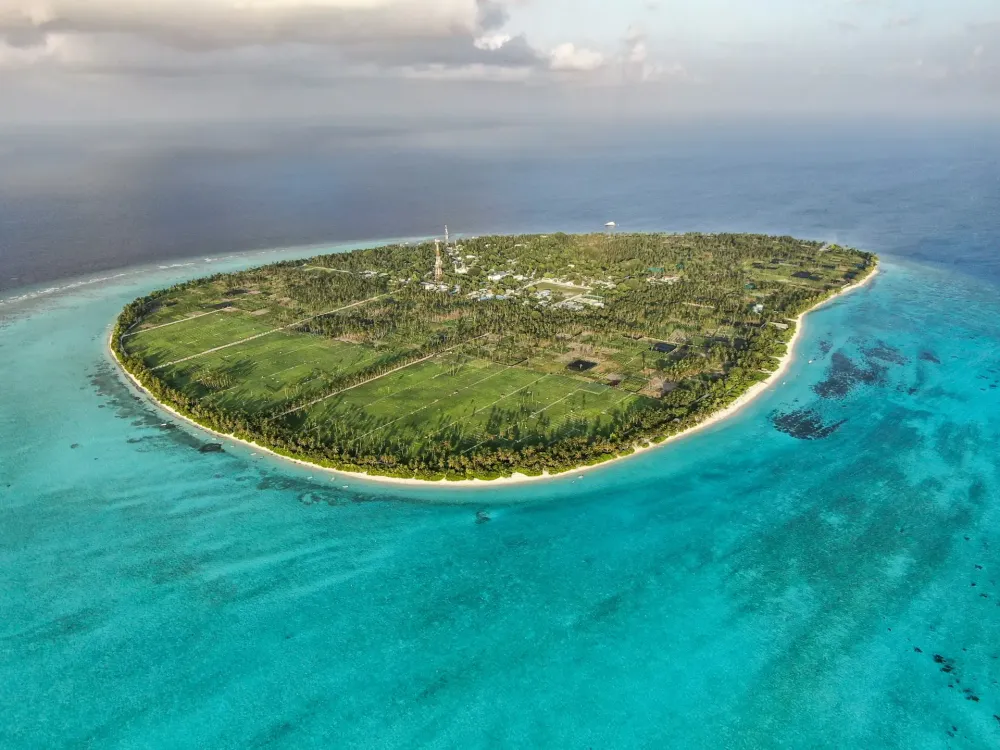
Choose Thoddoo for a local-island stay combining beaches, cultivated land and village life. Compare transfer options and room locations before booking.
Choose Thoddoo when you want beach days with a village and working farmland around them, and are happy to organise your stay around a boat transfer. Its agricultural character gives time on land a purpose beyond walking between your room and the sea. That is the strongest reason to consider it, rather than assuming every Maldivian guesthouse island offers the same holiday.
The useful decision is whether the daily pattern suits you: breakfast at a guesthouse, a walk or bicycle ride towards a designated tourist beach, time in the water when conditions suit, and dinner back in the village. A private resort has different expectations around beaches, service and evenings. Neither setting is automatically right for every traveller.
For a wider view of possible activities, our things to do in the Maldives guide helps you separate shore time, excursions and local-island experiences. Here, the focus is making a Thoddoo stay work from arrival to departure.
Thoddoo planning facts
Operator information was checked on 21 October 2026. Boat times, beach arrangements and accommodation services require reconfirmation for your dates. Suggested stay lengths are editorial judgments, not operator requirements.
| Decision | What to establish |
|---|---|
| Setting | An inhabited island in Alif Alif, also called North Ari Atoll |
| Main appeal | Beach time, agricultural landscape and guesthouse life |
| Beach choice | Designated visitor areas on the west and north-east sides; confirm current boundaries locally |
| Common arrival choice | Scheduled shared speedboat serving Malé, the airport and Thoddoo |
| Published crossing indication | Relax Ferry lists 80 minutes for its Malé–Thoddoo route, excluding airport formalities and waiting |
| First-stay suggestion | 4–5 nights if flight connections work comfortably |
| Main booking question | Which beach can you reach from the room, by which actual route? |
Decide whether the farming island is your kind of base
Thoddoo's farming identity is more than a hotel slogan. The tourism board's Ari Atoll food guide describes the island's watermelons, papaya and vegetable growing. That creates a different landscape from a property that occupies an entire resort island.
Choose Thoddoo if seeing cultivated land, asking about produce and moving through a residential village sound like part of the holiday. If your ideal is stepping from a villa directly onto a serviced beach and staying within one property, compare that expectation carefully with the guesthouse you are considering. “Island hotel” does not describe the distance to the usable beach or the services waiting there.
Do not choose it solely for a promise of seeing a particular marine animal. A good stay should still feel worthwhile after several ordinary beach days. Wildlife excursions can add to the trip, but cannot make an unsuitable base suitable.
Four or five nights is our suggested starting point for a first stay: enough to discover your preferred beach, arrange one considered outing and repeat the parts you enjoy. With only two nights, the value depends heavily on flight and boat connections. Compare usable time on the island, not just nights paid for.
Confirm the boat before committing to the room
The Relax Ferry schedule identifies a Malé–Thoddoo route serving Malé, Airport and Thoddoo, with a published journey indication of 80 minutes. Its checked page displays Malé departures at 10:00 and 16:00. Those are published route times, not a confirmed airport boarding slot or a date-specific seat reservation.
This distinction matters after an international flight. You still need time for arrival procedures, baggage and meeting the boat representative. Ask the accommodation or operator to confirm the exact airport meeting point, boarding time, check-in deadline and what happens if the flight is delayed. Do not turn the route's advertised crossing into an airport-to-room promise.
The operator's site distinguishes local, tourist and expatriate traveller categories. Use the appropriate category when requesting a fare; a default price in local currency is not sufficient evidence of your tourist fare. Get a written total for both directions, including any booking or handling charge, rather than copying a figure from an undated travel account.
Ask for the return arrangement at the same time. Give the departure flight's time and date, and request the actual planned boat, airport arrival and contingency if sea conditions change. For an early flight or a connection that leaves little margin, investigate an airport-area night. Our Hulhumalé stopover guide helps you compare that option.
Shared speedboat, public ferry or private transfer?
A shared speedboat is the practical starting comparison for most short stays because it provides a scheduled service without hiring the whole vessel. You still need a seat confirmed for your date. A timetable on a website is not proof that space remains or that every holiday follows the usual pattern.
The local travel operator Atolliva's Thoddoo guide also describes a public ferry on set days. Treat it as a possibility to investigate if your dates are flexible, rather than a guaranteed everyday airport connection. Obtain the current route, departure terminal, operating day and complete duration before using it to justify a non-refundable room.
A private speedboat may be worth pricing for a group or awkward flight timing. Ask whether the quote is for the vessel or per person, which landing point it uses, and how changes are handled. Private does not mean independent of weather or unlimited operation at any hour.
For all three options, compare the full cost of the travel day. A cheaper crossing that requires an additional hotel night may not save money; a convenient departure may be worth paying for on a short holiday. Do not assume that reaching another nearby island on the map establishes a usable onward connection to Thoddoo.
Choose between the two visitor beach areas
Atolliva describes two designated bikini beaches, one on the west side and another towards the north-east. It presents the western side as a sunset choice and the north-eastern beach as quieter. These are useful orientation points, not a permanent guarantee about crowds, wind or the shape of the sand.
On arrival, ask your host to mark both current access paths and designated boundaries. Names on travel maps are not always consistent. Ask which beach they recommend for the day's conditions, where you can enter and leave the water, and whether equipment or shade is available where you intend to sit.
Try both areas before deciding which suits you. One might work better for a longer beach afternoon, while the other fits a short visit from your room. Do not spend the holiday crossing the island repeatedly merely because an online description calls one side the best.
Keep a cover-up or clothes for the journey through the village and farms. Swimwear belongs in the designated visitor beach areas, not along every stretch of coastline. Follow current signs and your host's advice rather than extending a bikini-beach label to neighbouring residential spaces.
Select accommodation by the walk you will repeat
The most useful room-location question is: “Can you show me the actual walking route to the beach I will use?” Ask for a map pin for the entrance as well as the accommodation. A straight line to the coastline can conceal a longer walk to a designated access point.
Decide whether you prefer being closer to village meals or towards agricultural land. As a concrete example of the latter positioning, Ahola Thoddoo describes its location on the island's outskirts near fruit farms and visitor beaches. That demonstrates a type of setting to compare, not an independently tested recommendation or a guarantee about every room's outlook.
Ask whether bicycles are included, rented separately or unsuitable for someone in your group. If a bicycle is essential to your plan, confirm availability and fit rather than assuming every property provides one. Consider the walk in heat and after dinner as well as in a bright marketing photograph.
Also establish air-conditioning, drinking-water arrangements, meal times and the room's actual bed configuration. For families or reduced mobility, ask about steps, sand on access routes and the bathroom. “Compact island” does not establish that every route is comfortable or accessible for every visitor.
Make the farms part of the stay respectfully
A walk near cultivated land can be rewarding without turning someone else's workplace into an attraction you can enter freely. Ask which paths are public and whether a farmer-led visit can be arranged. Permission to pass a field is not permission to pick fruit or enter it for photographs.
If the agricultural side particularly interests you, arrange a short visit with explanation. Ask what is being grown now, how the crop is used and whether there is produce available to buy. This is a better starting point than expecting watermelon harvesting to be taking place on any date.
Bring that interest to meals. Ask your host what local produce is available and how it is prepared. The tourism board highlights Fundi Havaadhu, a Thoddoo curry paste, as one local food connection. Ask about it rather than expecting every restaurant to serve the same dish; discuss dietary requirements before ordering or choosing a meal plan.
A breakfast-only room gives you flexibility to explore food options. Half board can simplify evenings if you prefer returning to the guesthouse. Compare actual menus and meal timing, especially around an excursion, rather than treating either arrangement as universally better value.
Add water activities without overbooking
Start by checking the shore conditions and your own comfort in the water. A photograph of clear water does not identify a safe reef entry, current strength or a suitable route for a beginner. Ask for local guidance, equipment and a guided introduction if needed.
For a boat outing, compare the proposed site, time travelling, time in the water, group size and cancellation conditions. An excursion labelled “snorkeling” can describe very different days. Tell the operator your swimming experience and ask how they adapt the outing to the group.
Do not plan the entire stay around a turtle or manta sighting. Choose a trip you would value for the setting and guided experience, even without the hoped-for animal. Our Maldives snorkeling guide sets out the questions that separate shore access from boat-based snorkeling.
A useful rhythm is an orientation day, one main excursion early enough to allow rescheduling, and unallocated beach time. That is a planning suggestion, not a fixed itinerary. On a farming island with two beach areas to compare, repeating a pleasant local routine can be more satisfying than paying for a new departure every morning.
Set expectations before booking
Plan for a local-island evening rather than resort nightlife. Atolliva states that alcohol is not sold or served on Thoddoo and advises modest dress in village and farm areas. If those arrangements conflict with what you want from the trip, resolve the accommodation choice now instead of expecting the island to operate like a resort.
Before paying, confirm your two boat journeys, room location, meal arrangement and preferred beach route in one exchange with the host. Ask for the full stay total and cancellation terms. Those answers do more to predict a good Thoddoo holiday than an aerial image or a list of excursions you may never take.
Cover photograph: Thoddoo, Maldives. Photo: Adam Juman / Unsplash. Source · License.
Frequently Asked Questions
What makes Thoddoo different from other guesthouse islands?
Its working agricultural landscape adds farms and local produce to the beach-and-village stay. Choose it when that time on land appeals, not just because of a general Maldives beach photograph.
How long does the boat to Thoddoo take?
Relax Ferry publishes 80 minutes for its Malé–Thoddoo route. This excludes airport procedures and waiting; confirm the exact airport boarding and return arrangements for your dates.
Can I wear a bikini everywhere on Thoddoo?
Use the designated visitor beach areas, described on the west and north-east sides, and follow current local signs. Cover up for village streets and farm paths.
How many nights should I stay?
Our editorial starting suggestion is 4–5 nights, provided flight and boat connections work comfortably. A shorter visit needs especially careful comparison of usable island time and transfer cost.

Keep Exploring
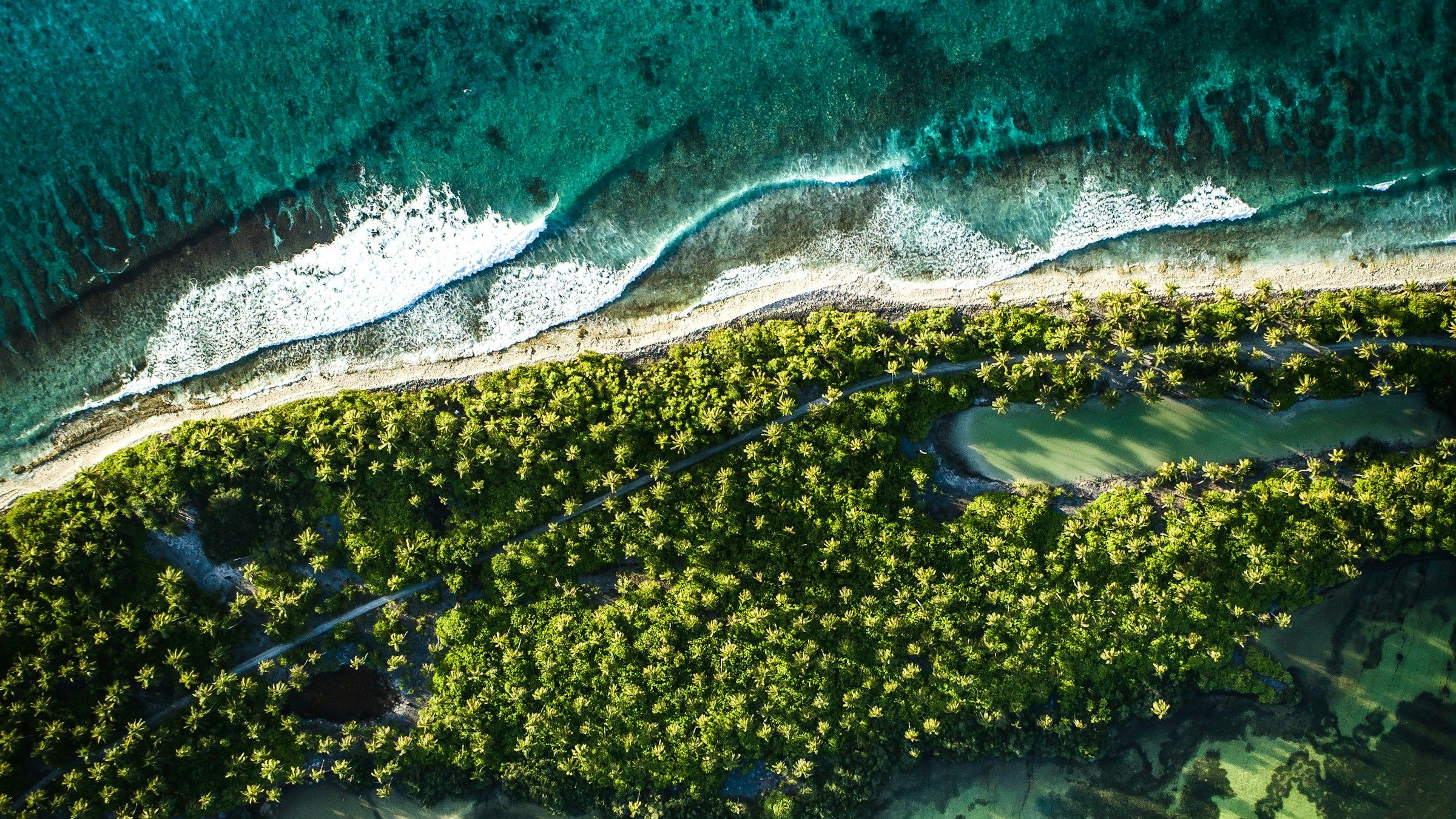
Maafushi: Plan a Stay on a Local Island
Choose where to sleep and how to spend your days on Maafushi, from Bikini Beach to snorkeling trips, without confusing a guesthouse island with a private resort.
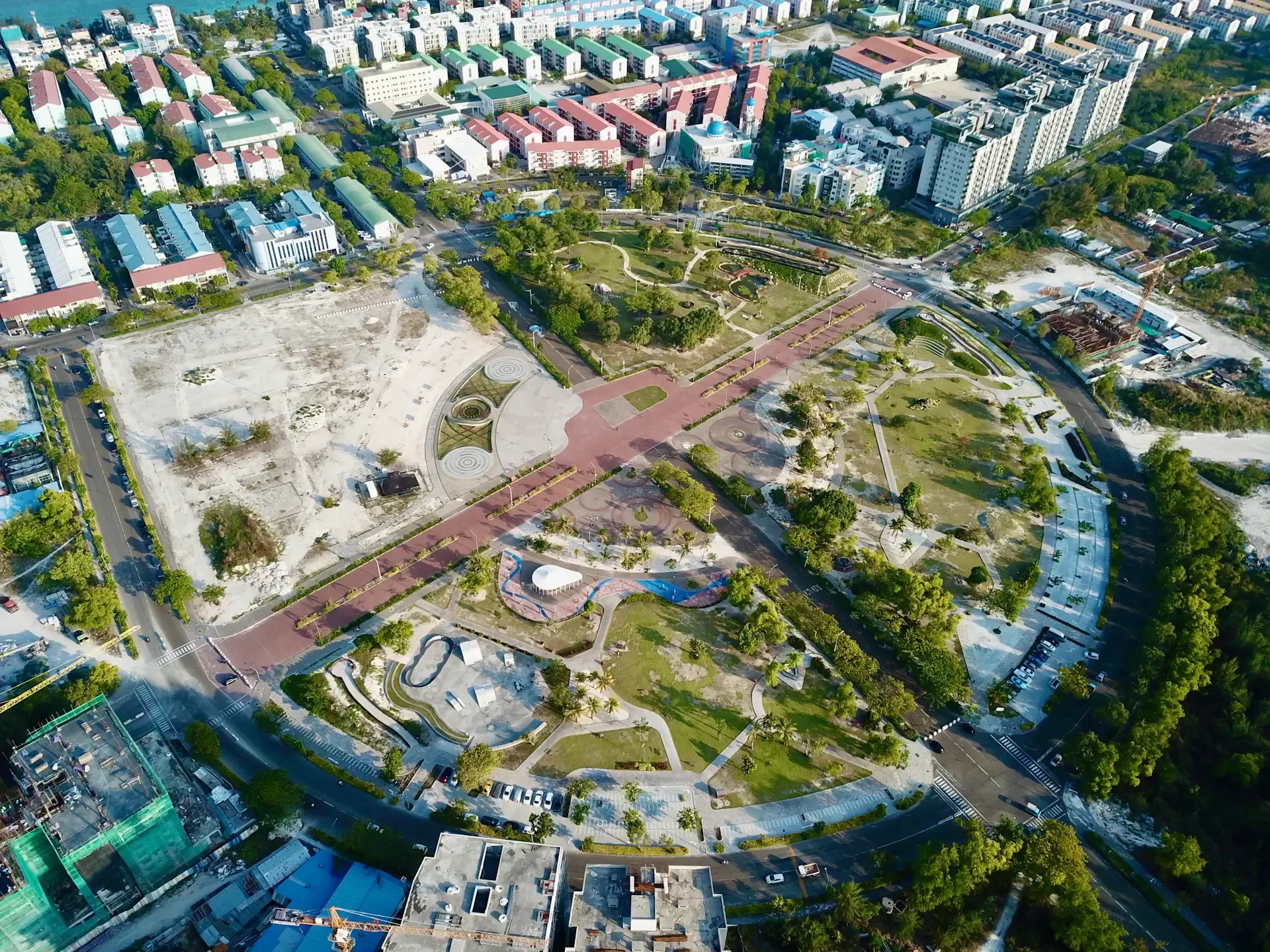
Hulhumalé: Plan an Airport Stopover
Plan a Hulhumalé stopover with a beach walk, cafés and a comfortable overnight stay. Compare airport access, hotel locations and onward transfers.

Teotihuacan from Mexico City: Plan Your Visit
Plan a day among Teotihuacan's plazas, pyramids and museums, with a route that works without a summit climb and a clear separation between ground visits and balloon packages.