
Roosevelt Island: Tram, Walk and Park Planning
Choose a Roosevelt Island crossing and southern walk, with current subway lines, separate ferry fares, park hours and practical return options.
Roosevelt Island works best as a small outdoor outing with a clear destination: take the tram for the crossing, walk south for Four Freedoms Park, and choose a sensible way back. It is a residential island with everyday transport, not an observation deck with a compulsory round-trip package. You can enjoy the ride without committing to a long walk, or skip the tram queue and still have a rewarding waterfront visit.
Two details can change your plan. Four Freedoms Park closes on Tuesdays, even though transport to the island continues, and the subway is no longer simply an all-day F-train instruction. Our New York highlights guide helps you choose whether this river-level perspective adds something different from a museum, a skyscraper viewpoint or Brooklyn's waterfront.
Choose the outing before the transport
| Your priority | Sensible choice | Main compromise |
|---|---|---|
| Tram experience only | Cross once, take a short waterfront look, return by available transit | Queues can take longer than expected |
| Memorial and skyline | Tram or subway, then Southpoint and Four Freedoms Park | Park calendar and weather matter |
| A longer walk | Add more of the island only after the southern visit | Extra walking and a later return |
| Avoid another tram queue | Use the subway for the return | Check the service operating at that time |
| More time on the water | Consider NYC Ferry's Astoria route | Separate ticket and departure schedule |
Allow 2–3 hours for a relaxed southern outing including the crossing, walking and stops, but excluding travel to the Manhattan terminal. This is an editorial planning estimate, not an operator duration or queue prediction. A ride-only visit can be shorter; a full exploration of the island needs more time. Information was checked on 20 November 2026.
The tram is useful transport with a good view
The Manhattan terminal is at East 60th Street and Second Avenue. The official RIOC tram page lists service Sunday–Thursday 06:00–02:00 and Friday–Saturday 06:00–03:30. These long operating hours do not mean every island attraction stays open late. Check service notices before leaving, particularly if the tram itself is the reason for your trip.
Arrive with your payment method ready and allow space for residents commuting, people with mobility devices and families boarding with strollers. A position next to the window is pleasant, but it is not worth pushing through the cabin or blocking the doors. The crossing changes your perspective on the streets and river even when you do not get the photograph you imagined.
If the queue would consume the time you intended for the park, decide which experience matters more. You can take the subway to the island and reconsider the tram on the return, or leave the ride for another day. A scenic transport leg should not quietly turn into the whole afternoon unless that is what you wanted.
Avoid treating a return ride as automatically included. Each direction is a transit journey, subject to the applicable fare and transfer rules. Stay flexible about the return mode instead of waiting for a second cabin simply because you arrived in the first one.
Separate the tram fare, subway fare and ferry ticket
RIOC states that the tram accepts standard MTA fares and OMNY tap-to-pay. The MTA fare page lists the standard subway and local-bus fare at US$3. Use a contactless card, supported device or OMNY card; check the current tram payment information if you depend on a particular pass or concession.
Using the same payment method consistently matters for applicable MTA transfers and fare caps. However, accepting OMNY does not by itself prove that every tram journey contributes to every MTA cap or that an immediate tram round trip is free. Budget conservatively for your selected journeys and check the specific conditions rather than constructing an outing around an assumed discount.
NYC Ferry is separate. The dated NYCEDC fare announcement sets the ordinary one-way fare at US$5 from 19 October 2026. This supersedes an older US$4.50 figure still visible on a general ferry ticket page when checked. Confirm the fare shown in the official purchase channel before buying; do not expect an OMNY subway payment to buy your ferry journey.
A free park and paid transport can still make a modest-cost outing, but they are different budget lines. Our free New York activities guide helps separate genuinely free access from resident concessions, paid extras and the cost of reaching a place.
Use the correct subway service for the time of day
The MTA's F/M route change took effect on 8 December 2025. Roosevelt Island is served by the M on weekdays from approximately 06:00 to 21:30, with the F at night and on weekends, subject to service changes. The park's current visitor information also spells out this distinction.
This matters most when your outward and return journeys fall in different service periods. Do not save an old “take the F” instruction and assume it remains correct throughout the week. Check the station, destination and current service in the MTA journey planner shortly before travelling. Planned engineering work can change the ordinary pattern.
The subway is particularly useful when the tram queue is long or your next destination already lies along the rail route. If step-free travel is essential, check lift status as well as train service. A route that serves the correct station is not enough if the lift you need is unavailable.
Walk south with a purpose
From the tram arrival area, make the southern end your first destination if Four Freedoms Park is the priority. Follow the available pedestrian route towards Southpoint Park and continue to the memorial when open. The point of this outing is the changing relationship between the river and the city: stop to compare the views rather than walking as quickly as possible to the far end.
Southpoint gives the walk a useful intermediate destination. It is also the place to think about facilities before entering the memorial. The Conservancy's accessibility information locates accessible toilets at Southpoint and states that Four Freedoms Park itself has no public toilets. Plan that stop before a child urgently needs it or before settling in for a long look at the view.
Give Four Freedoms Park time as a designed space, not just a photo background. Notice the approach and the way the memorial frames the water and skyline. You need not identify every distant tower to enjoy that relationship. If architecture interests you, leave room to look back along the route rather than taking the same forward-facing photograph throughout.
For the first visit, returning from the southern end can be enough. Do not add the northern half automatically because the island looks narrow on a map. The return journey, wind exposure and everyone's energy count more than completing a perimeter.
The Conservancy’s account of the design identifies Louis Kahn as the architect. His use of the triangular site directs attention towards the memorial’s outdoor room. Looking at that sequence gives an architecture-focused visitor a more specific reason to come than simply seeking another skyline photograph. On an extended island walk, the RIOC landmark overview identifies the Smallpox Hospital ruin, Blackwell House, the lighthouse and the Girl Puzzle monument. Choose one additional subject that interests you; listed landmarks do not imply that their interiors are open.
The memorial's calendar is separate from the island
The current Four Freedoms Park visitor page lists 09:00–17:00, closed Tuesdays, on the check date. Verify the calendar for your actual season rather than applying November's hours to a summer visit. A late tram ride does not grant late admission to the memorial.
On a Tuesday, choose deliberately between a tram-and-waterfront outing and moving the whole visit to another day. If the memorial is the main attraction, moving the day is the stronger choice. If the ride and fresh air are enough, the island can still serve that purpose, subject to local access and weather.
For sunset, work backwards from the park's closing time and the light on your date. The label “sunset walk” should not imply you can remain inside after closing. If you want an evening waterfront view, decide where you will be able to walk legally and how you will return before daylight fades.
Shorten the walk with the Red Bus, or return by ferry
RIOC's Red Bus information confirms a free island circulator, including stops at the subway, tram area and Southpoint. This can help shorten an outing, although it is not a sightseeing tour or a promise of an immediate departure. Check the direction and current stop information before boarding.
NYC Ferry's Astoria route provides another way to include Roosevelt Island. Choose it if the route serves where you actually want to go next and you welcome additional time on the water. Check direction, departures and service alerts first. A ferry icon on the map does not mean a boat will arrive as soon as you finish walking.
For a short first visit, one scenic crossing is often enough. Tram out and subway back is a coherent plan; tram out and ferry back can also work when the timetable aligns. There is no need to use every available transport mode to make the excursion count.
Match the outing to weather and mobility
Choose comfortable footwear and clothing for exposed riverside walking. A bright day can still be windy; rain makes a long outdoor plan less appealing even when transport operates normally. Decide on a shorter version before you arrive: the tram and a nearby look at the waterfront, for example, with the southern walk reserved for better conditions.
RIOC describes tram cabins as accessible for mobility devices. The park lists a platform lift at the Grand Stairs. Confirm current operation when needed and assess the complete journey, including the walk between transport and the memorial. These individual features do not remove every distance or possible service interruption.
For children, give the trip one simple focus: the cabin crossing, boats on the river or the memorial's shapes. Keep a snack and toilet plan without assuming every facility will be open whenever the tram runs. For mixed walking abilities, agree on a turning point and an alternative return before anyone becomes tired.
A successful Roosevelt Island visit is not measured by how much of the island you cover. It is the crossing you wanted, a stretch of waterfront you enjoyed and a return that fits the rest of your day. Preserve that simplicity when deciding whether to add another park, another ride or a meal elsewhere.
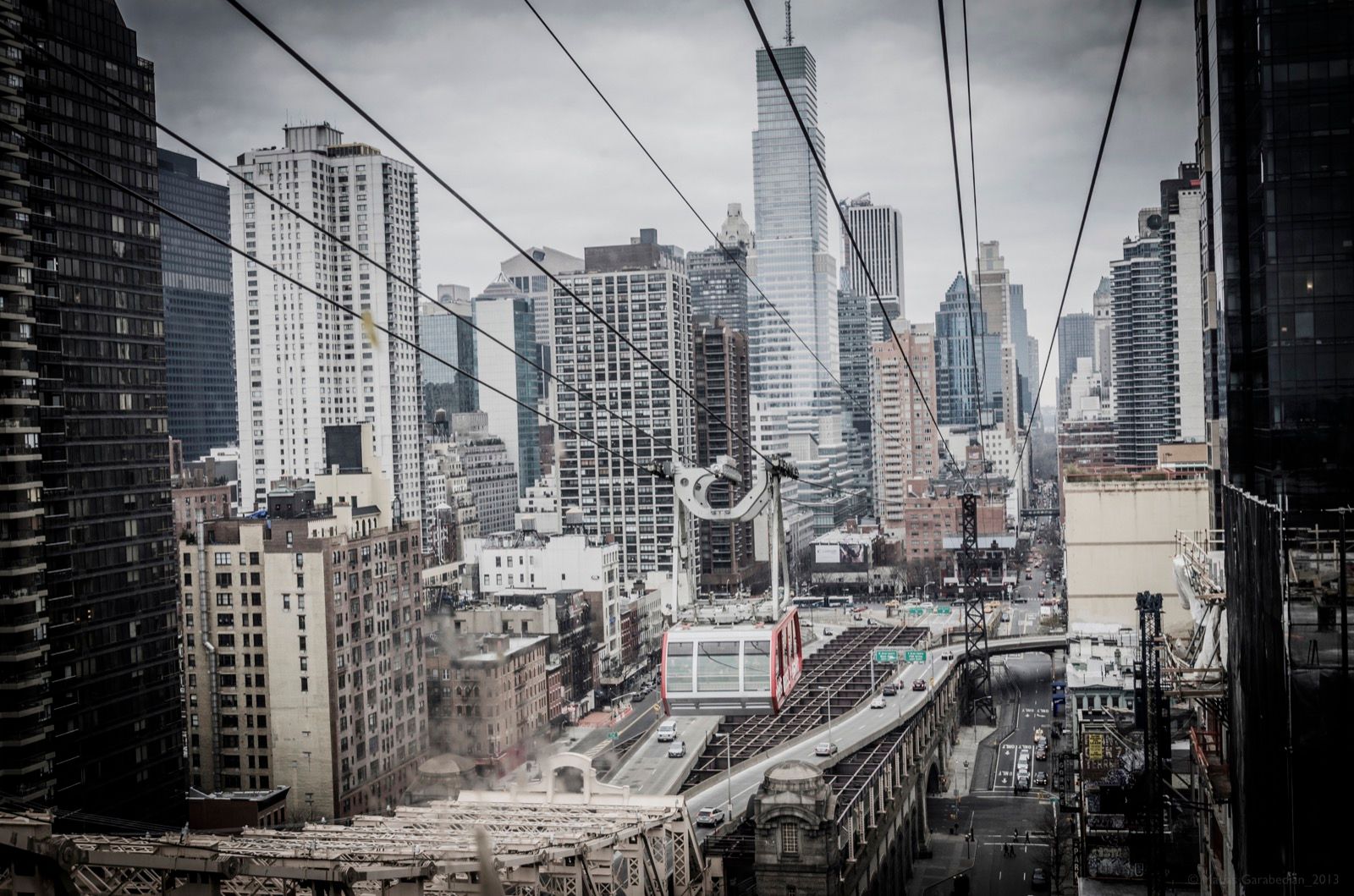
Cover photograph: Roosevelt Island tram cabin and cables above a Manhattan approach — Archive photograph from 2013; present-day access and surroundings may differ. — Matias Garabedian, CC BY-SA 2.0.
Frequently Asked Questions
Is the Roosevelt Island tram free?
No. RIOC says it accepts standard MTA fares and OMNY; the current standard transit fare is US$3. Check the conditions of your payment method, transfers and concessions. NYC Ferry uses a separate ticket.
Which subway train serves Roosevelt Island?
Ordinarily the M serves it on weekdays approximately 06:00–21:30, and the F serves it at night and on weekends. Check current MTA service changes before travelling.
Can I visit Four Freedoms Park on Tuesday?
The park's published schedule closes it on Tuesdays. The island and its transport have separate arrangements, so a tram-and-waterfront outing may still work, but it will not include entry to the memorial.
How long should I plan for the outing?
Allow about 2–3 hours for the crossing, a southern walk and stops, excluding travel to the Manhattan terminal. This is an editorial estimate; queues, weather and a ferry departure can change it.


Keep Exploring
Fort Canning Park: Choose a History and Garden Walk
Choose a focused Fort Canning walk through historical gardens or military landmarks, with MRT choices, gallery hours and practical advice for the hill.
Central Park: Choose a Walk That Fits Your Day
Plan a manageable Central Park walk with named landmarks, sensible exits and alternatives for closures, limited mobility or changing weather.

Rikugien Tokyo: Garden Walk or Evening Illumination?
Choose Rikugien by day or at night: pond views, garden paths, 2026 autumn tickets, gate rules and a realistic visit plan.