
Hama-rikyu Gardens: Plan Your Tokyo Visit
Plan a tidal-pond walk, optional tea stop and the right entrance, with riverboat checks and current garden notices.
Choose Hama-rikyu for a deliberate garden walk around a tidal pond, with a possible tea stop and Tokyo's towers beyond the trees. It fits well when you want a quieter change of pace near Shiodome or after a Tsukiji food visit. Give it room to be a garden visit rather than a quick photograph squeezed between distant attractions.
The main decision is simple: arrive on foot for flexibility, or make an available riverboat sailing part of the outing. Then decide whether the pond alone is enough or whether you want time for the historic landscape and tea. Our Tokyo highlights guide helps compare this choice with a shrine, museum or larger garden elsewhere in the city.
The practical facts
The Tokyo Metropolitan Park Association's current garden page gives the ordinary hours and admission below. Special events can change access or service arrangements, so use the notices for your actual date.
| Detail | Ordinary arrangement | Planning implication |
|---|---|---|
| Garden opening | 09:00–17:00 | Plan the walk within the daytime window |
| Last entry | 16:30 | This is a cutoff, not a comfortable arrival target |
| General admission | ¥300 | Tea and transport are separate decisions |
| Year-end closure | 29 December–1 January | Avoid building a holiday-day plan around entry |
| Suggested garden visit | 90–120 minutes | Editorial allowance, excluding queues and transport |
A shorter visit can focus on the pond and its changing viewpoints. Allow more time if tea, photography or historical interpretation matters to you. The suggested duration is not a measured route or an official recommendation; the point is to avoid arriving at last admission and expecting a leisurely experience.
Hama-rikyu is a managed heritage garden. It is not an unrestricted public lawn or a late-night waterfront promenade. That distinction matters if you are choosing a place for children to run, an evening picnic or a stop after shops close.
Choose the gate before choosing the station exit
The garden has two principal land entrances: Otemon and Naka-no-gomon. Otemon is a sensible option when approaching from the Tsukiji side or Shimbashi; Naka-no-gomon often suits the Shiodome side. Compare the actual final walk before choosing one, rather than navigating to the middle of the garden on your phone.
The operator lists Tsukijishijo, Shiodome and Shimbashi among the approaches to Otemon, and Shiodome or Hamamatsucho for Naka-no-gomon. Station exits, underground passages and road crossings affect the route. Use the gate name as your destination and allow for finding the entrance, particularly if you are arriving close to closing time.
For a wheelchair or stroller, consult the surface-route guidance and accessible map linked from the garden page. A short route on a general map may involve a different level or an inconvenient crossing. Ask staff which paths and bridges suit your needs before committing to a loop around the pond.
Choose the exit with your next stop in mind. You do not have to return to the same gate merely because you entered there. Equally, do not cross the grounds again just to save a small amount of travel outside: a simple route that leaves energy for the rest of the day is usually preferable.
Start with the pond, not a checklist
The pond is the feature that makes Hama-rikyu distinctive. Tokyo's official tourism guide explains that seawater enters from Tokyo Bay and the pond changes with the tide. It is a designed landscape connected to the coast, rather than an isolated ornamental pool.
Take the current garden map at the entrance and identify the pond, Nakajima teahouse and your intended exit. Walk towards the water, then follow the open paths around part of its edge. Stop at different angles: the relationship between water, bridges, trees and surrounding buildings is more interesting than finding one supposedly correct photograph.
The skyline is part of the modern setting. You can frame it prominently or concentrate on nearer garden details, but do not arrive expecting complete visual separation from the city. This contrast is one reason to choose Hama-rikyu instead of another green space whose attraction is a more enclosed woodland atmosphere.
Continue only as far as your interest and energy justify. A family might spend longer watching reflections and fish from a permitted path; a photographer may want to revisit a viewpoint after walking around. Neither needs to complete every outer section to have seen the garden meaningfully. Remain on open routes and let signs or staff guidance override an old map.
Read the landscape's history as you walk
Tokyo Metropolitan Government's heritage account connects the site with the shogunate, its tidal pond and former duck-hunting grounds. That history adds a different layer to the visit: the garden was a place of elite recreation before becoming a public landscape.
Look for the distinction between the open pond scenery and the more enclosed former hunting areas. These features explain different uses of the grounds, not simply different decorative styles. Reading a few interpretive signs is more useful than trying to memorise every historical name before arrival.
The broad pine known as the Three-Hundred-Year Pine is another useful focal point. Its low, supported branches invite you to look at the structure of a single tree, rather than hurry between distant sights. Treat its name as the garden feature's established label, not as a precise age calculation for your visit year.
The teahouses also require that distinction between history and surviving fabric. Reconstructed buildings help explain earlier garden life; a historic site does not mean every structure has survived unchanged. If interiors are important, check the specific guided-access arrangements rather than assuming all the buildings visible from the path are open for independent entry.
Nakajima teahouse: make it an optional pause
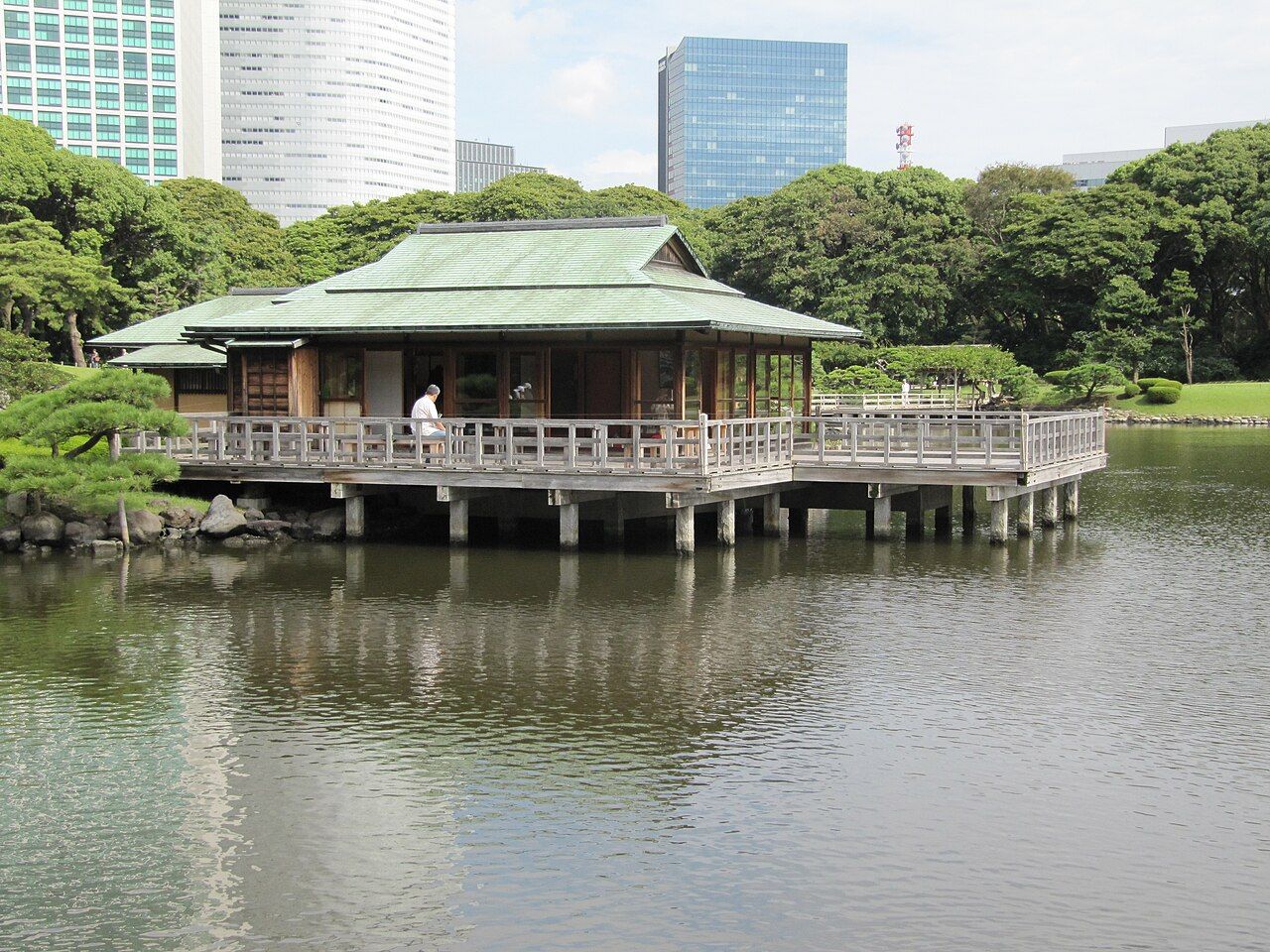
Nakajima teahouse sits on an island in the pond, reached by bridges. Tea can turn the walk into a more settled visit, but it should not become a promise that the whole day depends on. Seating, queues, weather and special events can affect the experience.
The official facilities page lists ordinary service from 09:00 to 16:45, with last orders at 16:30. These are the teahouse's regular hours, distinct from the garden's admission cutoff. Check the current notice and menu before joining the queue; tea is an additional purchase, not something to infer from the garden ticket.
If this is your priority, reach the pond early enough to leave options. A late arrival can force a choice between tea and the rest of the walk. If the teahouse is busy, decide whether waiting is worth more to you than continuing around the water; there is no need to treat missing tea as missing the garden.
A tea stop is also different from a reserved formal tea ceremony. Do not assume that a normal purchase includes a lesson or access to other historic interiors. Follow the seating and footwear instructions you are given, and keep bridges and doorways clear while people pass.
The riverboat option: check the actual sailing
Arriving from Asakusa by water can make the journey part of the attraction. However, a pier on a map is not a guarantee of frequent service or an equivalent return route. Tokyo Cruise's operating-status page is the practical place to check the services actually listed for the day.
Look for Hamarikyu as the destination, rather than assuming every boat from Asakusa calls there. Confirm the boarding location, departure, ticket inclusions and garden admission arrangements with the operator. Different boats and destinations appear in the same timetable, so the vessel's appearance is less important than whether its route fits your plan.
Plan to continue from the garden on foot unless you have specifically confirmed a departing service. Do not promise yourself an afternoon boat back simply because an older pier page lists destination links. If the sailing you want is unavailable, arriving by rail and walking is a complete alternative, not a failed version of the visit.
For a first Tokyo trip, choose the boat when the river journey itself appeals and the timing leaves enough garden time. Choose land access when you want to eat at your own pace, respond to the weather or avoid building the whole outing around a departure.
Pair it with Tsukiji, without rushing either stop
Tsukiji Outer Market and Hama-rikyu make a useful food-and-garden combination. Give the market a purpose—perhaps a meal and browsing a few shops—then let the garden provide the slower second part. Our Tsukiji food-visit guide explains shop-day checks and the difference between the Outer Market and the relocated wholesale market.
Do not assume the market will still offer the same choices after a late garden visit. Individual businesses set their own hours, so check the places you actually want before deciding the order. Conversely, a lengthy food queue can consume the time intended for the garden; keep a simpler meal option if Hama-rikyu is the priority.
You can also leave the garden as the only substantial activity. Shiodome or Shimbashi may simply provide your onward transport and a meal. Adding Ginza, a river cruise and another distant attraction is optional, not the price of making this part of Tokyo worthwhile.
Seasonal expectations and current notices
Flowers and autumn colour are reasons to check current garden updates, not guarantees tied to a travel month. A seasonal photograph may show a short peak that does not coincide with your dates. Visit for the pond, trees and designed views, and treat a good display as an additional reason to linger.
Information was checked on 30 October 2026. The operator's works notice describes installations and removal work for an arts programme from 20 October 2026 to 31 January 2027. Equipment, temporary structures and work noise may affect the daytime setting. This is not a notice that the whole garden is closed.
Special-event notices can also change evening access, usable gates and daytime teahouse service. Check them if your visit coincides with an event; ordinary daytime admission does not establish access to every future evening programme.
Finally, follow the garden's visitor rules. Picnic sheets are restricted to designated open spaces, and bicycles and ball games are not part of this garden visit. Keep the outing centred on walking and looking, with weather-appropriate clothing and enough time to reach the exit calmly.
Cover photograph: Nakajima-no-ochaya teahouse beside the pond in Hama-rikyu Gardens — Photograph taken in 2011. — Ulf Klingström, CC0 1.0.
Frequently Asked Questions
How long should I spend at Hama-rikyu?
Allow roughly an hour and a half to two hours for a garden walk, with extra time for tea or queues. This is an editorial planning estimate, excluding transport. A pond-focused visit can be shorter.
Is tea included in the garden ticket?
Do not assume so. Tea is a separate purchase at the teahouse, subject to its menu and service arrangements. Special events may change normal daytime operation.
Can I use a riverboat in both directions?
Only plan the sailings the operator currently confirms. An arrival at Hamarikyu does not establish a return departure. Keep a walking and rail route available for onward travel.
Is Hama-rikyu suitable for a picnic or children's games?
It is a heritage garden with specific rules. Picnic sheets are allowed only in designated spaces, while ball games and bicycles are not permitted. Choose it for a manageable garden walk rather than unrestricted play.


Keep Exploring
Singapore Botanic Gardens: Plan Your Visit
Choose your entrance, orchid visit or family route at Singapore Botanic Gardens, with current access rules and practical ways to plan a shorter outing.
Sugarloaf Mountain: Plan Your Cable-Car Visit
Plan the two-stage Sugarloaf cable-car visit, compare standard and priority tickets, and understand why walking to Morro da Urca is a different outing.
Taronga Zoo Sydney: Ferry, Tickets and Visit Plan
Choose an upper- or lower-entrance route at Taronga Zoo Sydney, plan the ferry and focus on selected habitats. Includes the current Sky Safari closure and ticket distinctions.