
Barangaroo Reserve Sydney: Plan a Harbour Walk
Choose a waterfront walk, Stargazer Lawn or an Aboriginal Cultural Tour, with park access, transport and the separate dining precinct explained.
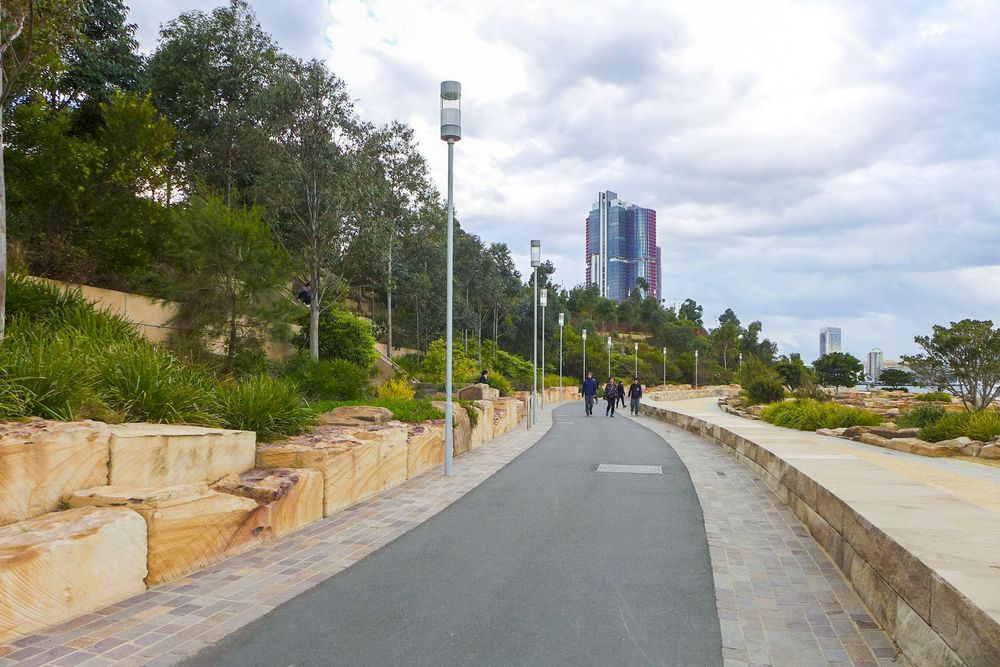
Cover photograph: Wulugul Walk with sandstone walls and native planting in Barangaroo Reserve — Archive photograph taken in August 2017. — Wikipedia user - Wpcpey, CC BY-SA 4.0.
Barangaroo Reserve is the Sydney harbour walk to choose when you want a landscaped headland, room to pause by the water and the option of Aboriginal cultural interpretation. It is the park at the northern end of Barangaroo, not simply another name for the restaurants and towers farther south. Make that distinction before choosing your arrival point or booking a meal.
For a first visit, follow the lower waterfront, then decide whether to add the upper lawn or a guided experience. You do not need to cover the whole precinct to have a worthwhile visit. Our wider Sydney guide helps place this walk among the city's harbour, museum and coast options.
Choose your Barangaroo visit
| Visit | Best for | Suggested allowance | Main consideration |
|---|---|---|---|
| Lower waterfront walk | Harbour views and a flexible pace | 45–60 minutes | Stop and turn back where it suits you |
| Waterfront plus Stargazer Lawn | Comparing shore-level and elevated views | 90 minutes | Choose a route that matches your mobility |
| Aboriginal Cultural Tour | Guided interpretation of Country and plants | Advertised 90-minute tour, plus arrival time | Book an actual available session |
| Reserve and a meal farther south | A longer harbour outing | 2–3 hours | Restaurants and park are separate destinations |
| Reserve followed by Walsh Bay | Continuing along the northern waterfront | Half a day with breaks or another visit | Check your endpoint and onward transport |
Except for the operator's tour duration, these are editorial planning allowances, not timed walking routes. The official reserve page lists a six-hectare park and 24-hour opening, checked on 20 November 2026. Events and temporary works can affect particular areas; a general opening statement does not guarantee every facility or path is available throughout the night.
Understand the park before starting south
A map search for Barangaroo can lead you to a restaurant, a ferry wharf, a metro station or the reserve. These are useful connections but different meeting places. If you are coming for landscape and a walk, put Barangaroo Reserve or a named entrance into your route. If you have booked a tour, use the meeting point on the confirmation.
The park's value is its relationship to the harbour edge. The NSW Government description explains the transformation of a former container-terminal site and identifies Wulugul Walk and Stargazer Lawn. This is a designed urban landscape, not an untouched patch of bush. Look at how paths, planted slopes and sandstone edges organise the changing views.
Start by deciding whether you want to remain close to the water or spend time higher up. From the lower route, the harbour occupies most of your attention; on the lawn, the planted headland becomes part of the view. Both approaches are worthwhile. The upper level is an option, not a compulsory finishing point that makes the lower walk incomplete.
A simple route without a rigid circuit
Begin at the entrance that fits your journey, then find the waterfront path. If arriving from the commercial precinct to the south, allow time to get to the reserve before counting the park visit itself. Starting from the north around Towns Place makes more sense if you have already been in Walsh Bay. A linear walk can save retracing your steps, provided you have planned the exit.
Use Wulugul Walk as the backbone. Walk until you find a view you want to spend time with, rather than treating every bend as another photo appointment. Watch the relation between the water and the sandstone, the movement of boats and the changing foreground of native planting. Staying on the designated path gives you plenty to look at without scrambling onto shoreline rocks.
At a comfortable point, choose one of three endings: return along the lower path, add the upper lawn using a suitable connection, or continue toward your next waterfront destination. Do not commit everyone to a long onward walk simply because the first section felt easy. The distance back to transport is part of the day's walking, especially in heat or with children.
A useful short visit has a beginning and an exit, but does not need a prescribed number of viewpoints. If you only have an hour, spend it in the reserve instead of dividing it between a hurried park circuit and a meal queue farther south. If you have longer, a seated break can add more to the experience than another detour.
Add cultural interpretation deliberately
A self-guided walk shows you the landscape; it cannot reproduce the experience of listening to an educator explain connections to Country. The official Aboriginal Cultural Tours listing advertises a 90-minute session at 10:30, meeting at Munn Street, with an adult price of A$36.30 when checked on 20 November 2026. Confirm your dated session through its booking link.
Choose the tour if understanding the harbour's Aboriginal significance is one of your main reasons for coming. Give it a proper place in the day rather than squeezing it between timed attractions. Leave space afterwards to return to a part of the reserve that the discussion has made more meaningful, or simply to sit and reflect.
The programme discusses the importance of this place to Gadigal people and the relationship between native plants and cultural knowledge. Let the guide define what is shared. Plant identification does not give visitors permission to pick, taste or use what they see, and an introductory tour is not a complete account of Aboriginal Sydney.
Ask before making recordings. The operator welcomes photography but requires prior consent for filming or audio recording. Listening without trying to capture every moment can also make the visit more attentive. If your main goal is cultural learning, check session availability before selecting the rest of the morning; ordinary park access does not reserve a tour place.
Plan access around the route you need
The official accessibility information identifies entrances at Towns Place, Hickson Road, Munn Street Reserve and Merriman Street. It describes the lower Wulugul Walk as relatively level and a stair-free connection to the upper terraces and lawn at the northern end. Read the current information and map rather than assuming the nearest-looking stairway is the only route.
For a wheelchair, mobility aid or pushchair, plan the whole journey: arrival point, path, gradients, toilets and exit. “Stair-free” and “effortless” are different descriptions. Ask the precinct team about your requirements and any temporary diversions if a particular connection is essential. Construction notices on the wider precinct's pages may cover different locations and periods; check what applies to your intended route.
If travelling by car, distinguish park access from parking hours. The reserve car-park page lists opening from 06:00 to midnight and a lift serving several reserve levels. Those are car-park arrangements, not the park's 24-hour timetable. Verify lift availability and your collection plan before relying on them late in the day.
The official arrival guide places Barangaroo Metro Station beneath northern Hickson Road, with access via Nawi Cove. That is a useful arrival for the reserve’s southern side. Barangaroo Wharf is farther south; arrive there for a waterfront approach north toward the park. Wynyard Walk leads into the retail and dining precinct, so do not mistake arrival at the towers for arrival at the reserve. Check live services, then select the entrance or tour meeting point for the final walking leg.
Lunch, shade and the optional swim
Bring water and decide whether the walk ends with a picnic or a meal. For a picnic, keep the setup modest and check current park rules and any event restrictions. For a restaurant, select the establishment and allow for the walk to it. A booking described as “Barangaroo” is not necessarily beside your intended park exit.
There is little benefit in carrying a full picnic and also committing to a substantial lunch shortly afterwards. Choose the format that suits the group, then leave the other as an alternative. With children, a planned seated pause can be more useful than another viewpoint. Keep them close around waterfront edges and leave enough energy for the return to transport.
Sun, wind and rain change the comfort of an exposed harbour walk. On a hot day, shorten the route and use shade when available; do not assume all parts of the path offer continuous shelter. After rain, pay attention to wet surfaces. If the weather makes lingering unpleasant, a brief park visit followed by an indoor activity may be the better balance.
Marrinawi Cove is a separate swimming decision, not an automatic part of this walking plan. Check current site notices, water-quality advice and local safety information before considering entering the water. A photograph of people swimming on another day does not establish conditions for your visit. You can enjoy the reserve fully while staying on shore.
Barangaroo or the Royal Botanic Garden?
Choose Barangaroo when you want a compact headland outing on the western side of the central harbour, particularly if Walsh Bay or the Barangaroo dining area already fits your day. Choose the Royal Botanic Garden when a broader garden visit, plant collections or the Opera House side of the harbour is your priority. Our Royal Botanic Garden walking guide explains those route choices in detail.
This is a choice about the shape of your day, not a contest for the better park. Visiting both can be worthwhile on a longer stay, but doing so simply to complete two names can turn a relaxed outing into a lengthy transfer. If you book a cultural tour at either place, protect that session first and make the surrounding walk flexible.
Similarly, a commercial Barangaroo lunch and a reserve walk offer different experiences even when combined. Give each enough time or choose one deliberately. The reserve works particularly well as a place to slow the pace after a morning of interiors, provided you have checked the weather and selected a sensible exit.
Before leaving, confirm the tour meeting point if relevant, the route suitable for your group and the transport home. Then keep the rest open. A careful walk with time to listen, look and sit is a complete Barangaroo visit.
Frequently Asked Questions
Is Barangaroo Reserve the same as the dining precinct?
No. The reserve is the landscaped headland park at the northern end of Barangaroo. Restaurants, the ferry wharf and other precinct destinations are separate locations. Choose an exact meeting point and allow for the walk between them.
What are Barangaroo Reserve's opening hours?
The official reserve page lists 24-hour opening. The underground car park has different hours, 06:00 to midnight. Events, works and individual facilities can have separate access arrangements, so check current notices for your visit.
Can I visit without climbing stairs?
The official access information describes a relatively level lower waterfront route and a stair-free connection to the upper areas at the northern end. Check the current map, gradients and any diversions against your particular needs before choosing an entrance.
Do I need to book an Aboriginal Cultural Tour?
Use the official booking link to select an available dated session. The advertised tour lasts 90 minutes, and its meeting point is Munn Street. Ordinary access to the reserve does not include a place on the tour.


Keep Exploring
Costanera Sur Ecological Reserve: Plan Your Walk
Choose a short wetland walk or a longer river outing at Costanera Sur, with entrance advice, opening-hour checks and practical preparation.
Labrador Nature Reserve: Coast Walk and Closures
Plan a Labrador coastal walk around the Berlayar Creek closure, with maritime landmarks, reserve hours and practical access choices.
Bukit Timah Nature Reserve: Choose Your Forest Walk
Choose a Bukit Timah route with official distances, summit access, Hindhede alternatives, opening hours and practical advice for the forest.