
San Ildefonso Mexico City: Murals and Visit Planning
Choose San Ildefonso for murals in their school setting, with amphitheatre access checks, admission, guided visits and practical museum comparisons.
San Ildefonso is the Mexico City art visit to choose when the setting matters as much as the paintings. The murals belong to the corridors, staircases and meeting spaces of a former school: looking at them means reading a building, rather than moving through a neutral sequence of galleries. It makes a focused addition to a Centro Histórico day, especially if you want to understand the beginnings of Mexican muralism.
Start with a practical distinction. The college's general opening hours do not guarantee uninterrupted access to every room, and a temporary exhibition is not the same thing as the permanent mural collection. If Diego Rivera's La creación is your main reason for coming, ask specifically about the Anfiteatro Simón Bolívar before paying. Use our Mexico City highlights guide to decide whether this art-focused visit deserves the place you might otherwise give to archaeology or a larger museum.
The decisions that matter
| Question | Planning answer |
|---|---|
| Where do you enter? | Justo Sierra 16, Centro Histórico |
| Ordinary opening | Tuesday–Sunday, 11:00–18:00; ticket sales end at 17:30 |
| General admission | MXN 50; ordinary Sunday admission is free |
| How long? | Allow 90 minutes–2 hours for a selective visit; this is an editorial estimate |
| Main reason to choose it | Murals in their architectural setting, with courtyards and the former school's history |
| Essential access check | Amphitheatre availability, current exhibitions and any route restrictions |
Visitor arrangements were checked on 20 November 2026. The college's visitor page is the reference for ordinary hours and admission; individual activities can have different conditions. Monday is outside the ordinary visiting schedule. A holiday or special event should be checked separately before you build the day around it.
Choose San Ildefonso for a particular kind of art encounter
This is a good choice if you want to connect mural painting with public education and the spaces where people actually encountered it. The official collection introduction places the project within the post-revolutionary educational programme associated with José Vasconcelos. That context changes the questions worth asking: who was supposed to see these images, what did their position in a school allow, and how did scale make them different from an easel painting?
You do not need specialist knowledge to get something from the visit. Choose a small number of works, notice their relationship to doors and stairs, and look first without reading a long explanation. Then use a label or the college's interpretation to test what you thought you saw. A repeated figure, a grouping of bodies or a change in colour may be easier to remember than a list of artists and dates.
San Ildefonso is less suitable if your only available time is a hurried gap before another booking. The point is not to run through the courtyards collecting photographs. Give yourself enough time to return to a mural after seeing the surrounding architecture. If you mainly want a broad survey of Mexican cultures or archaeological objects, the Anthropology Museum answers a different question and may be the better single museum choice.
Begin with the building, then choose the murals
On arrival, ask which parts of the normal route are open and whether the amphitheatre can be visited that day. This makes the rest of the route easier to order. An accessible room now may not be accessible later if an activity is about to begin; equally, staff may ask visitors to return after a rehearsal or other use. Follow their instructions rather than treating the building as a fixed circuit.
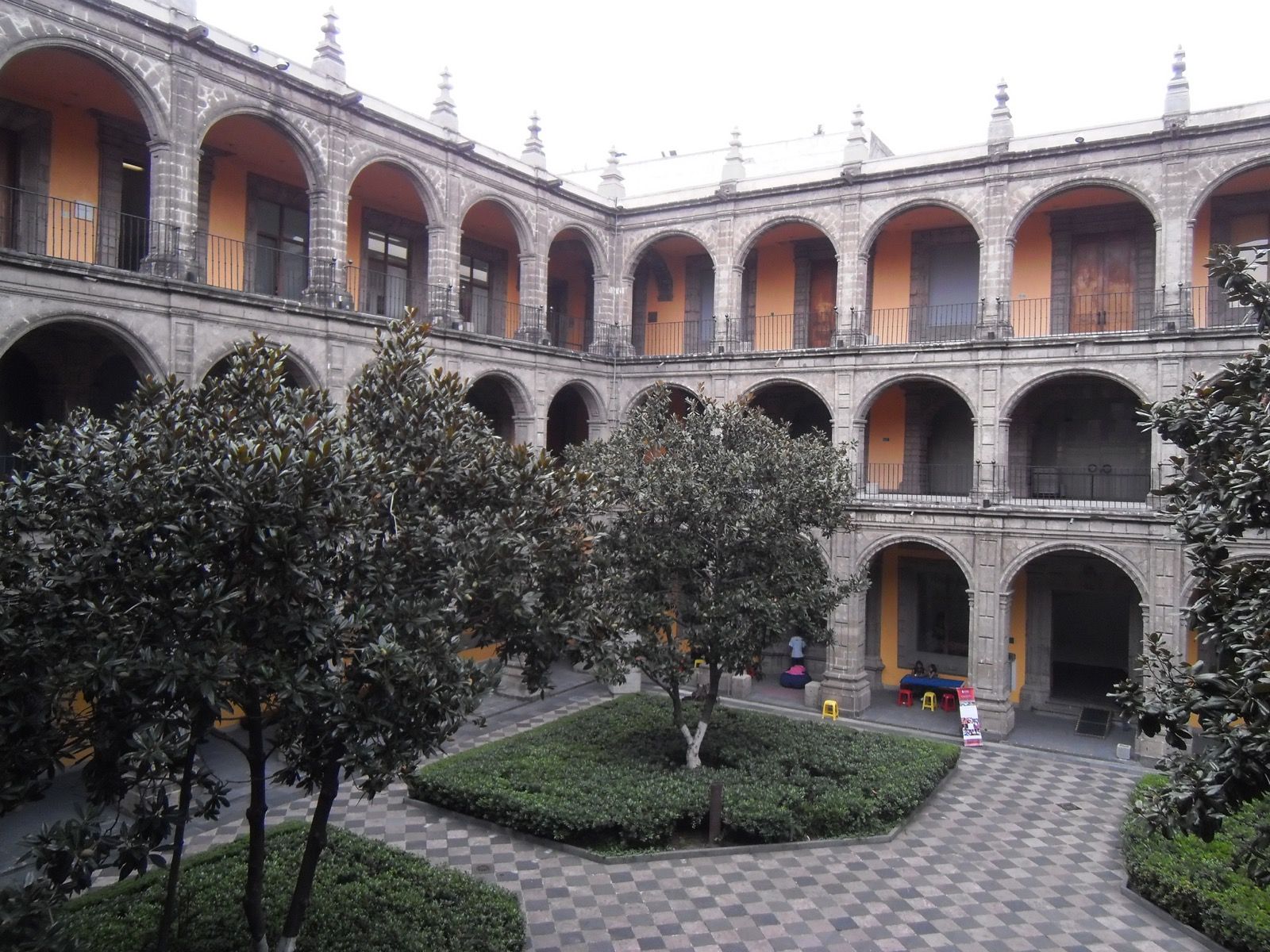
Begin in a courtyard and take in the stacked arcades, sightlines and circulation. Look at where the paintings sit in relation to people crossing the space. A mural beside a staircase cannot be approached like a small picture hung at eye level, and a sequence spread along a corridor asks you to move. Let that movement become part of how you look.
The collection includes work by José Clemente Orozco and other artists associated with the early mural project. Use the college's collection material to identify what you are seeing instead of attributing every large wall painting to Rivera. This is a particularly worthwhile place to slow down and compare visual languages: the guide's aim is attentive looking, not an unsupported ranking of the “best” mural.
For a first visit, make a deliberately small selection. Study one work closely, look at another from different positions, and leave time for a courtyard pause. If you are with someone less interested in art, agree on that scope at the beginning. You can share a satisfying building visit without requiring everyone to read every label.
Treat La creación as an access-dependent highlight
Rivera painted La creación in 1922 in the Anfiteatro Simón Bolívar. The college's amphitheatre page explains both the work and the room's continuing cultural use. Admission to the space is included with the college ticket, but visitor access is subject to availability and staff instructions. A ticket is therefore not a guarantee that you can enter at any moment you choose.
If the room is open, first look at the relationship between the mural and the stage area. The painting's placement is central to the experience. Move on to individual figures after you have understood the composition as a whole; the official interpretation can help you distinguish the allegorical subjects without needing to identify them from memory.
If the room is unavailable, decide whether the other murals and architecture are enough for your interests. For most visitors exploring muralism broadly, they can still justify a visit. For someone travelling specifically to see Rivera's first mural, confirmation before entry is more important than a general promise that San Ildefonso is open. Do not buy an unrelated event ticket on the assumption that it will provide the art-viewing access you want.
Decide whether a guided visit improves your day
The visitor page currently lists guided visits covering murals, the building and the Memorial Octavio Paz at 11:30, 13:30 and 16:00, Tuesday–Sunday, with schedules subject to change without notice. Ask about availability, language, duration and meeting point on the day. The published times are a planning starting point, not a reserved place or a guarantee of an English-language tour.
A guided visit is especially useful if you want the historical connections explained and are comfortable following the group's pace. An independent visit gives you more freedom to linger over a few works or concentrate on architecture. Neither format requires you to add every temporary exhibition as well.
If you choose the 16:00 option, avoid arriving at the last possible minute: you still need to enter and find the group. If you choose an earlier tour, keep lunch flexible until you know its actual duration. Visitors who prefer another language should ask ahead rather than assuming an explanation can be translated spontaneously for the whole group.
Add an exhibition only when the programme interests you
Check the current exhibition listings before your visit. An exhibition can make a return to San Ildefonso worthwhile, but an old poster or search result does not establish that it is still running. Verify the displayed dates and any separate admission or booking instructions attached to the actual programme.
For an exhibition-led visit, reverse the usual priorities: allow the exhibition enough attention, then add a small mural selection. For a mural-led visit, treat the temporary rooms as optional. This is more useful than assuming that all accessible spaces must be completed because they belong to the same institution.
Do not make the visit depend on a headline exhibition you have not checked. The permanent attraction is the relationship between art and the college. A current programme should refine that choice, rather than becoming an accidental promise in a months-old itinerary.
Compare it with Bellas Artes and nearby archaeology
Choose San Ildefonso when you want the school setting and early muralism to be central. Choose the museum at Bellas Artes when its particular mural collection, current exhibitions or the larger palace setting better matches your interests. Our Palacio de Bellas Artes guide also separates museum admission from performance tickets, a distinction that matters if your evening plan includes a show.
Both can fit a day devoted to art, but this should be a deliberate comparison. Give each a different purpose and leave room for a meal and the walk between them. If you have only one substantial museum slot, choose the subject you care about most rather than visiting two institutions superficially.
Templo Mayor offers a stronger contrast: archaeology and the layers of the historic centre, instead of another mural collection. Pair it with San Ildefonso only if you have the appetite for two substantial cultural visits. An exterior walk around the Zócalo may be enough after an attentive art visit. Geographic proximity does not remove the fatigue of another hour of reading and looking.
Practical comfort, access and a realistic finish
The college advises visitors to avoid bulky luggage and heavy backpacks. Travel light enough that you can look up, turn and pause comfortably. Check photography restrictions for each space, particularly temporary exhibitions; ordinary museum entry should not be read as permission for flash, tripods or a professional shoot.
Anyone who needs a step-free route should ask the college about the exact spaces they want to see. Historic-building access and access to a particular mural are separate questions. Explain whether stairs, prolonged standing or a lift outage would affect the visit; do not rely on the presence of a courtyard to establish access throughout the complex.
Sunday's free entry is useful if cost is the deciding factor, but it does not guarantee a quiet visit. A weekday may fit your route better. For concessions, check the required identification: the published student and teacher rate is MXN 25, and specific free-entry categories have their own conditions. Avoid converting these prices into a fixed euro figure; your payment provider's exchange rate will differ.
Finish while you still have attention left. A good San Ildefonso visit might mean remembering the architectural setting, understanding one mural more clearly and seeing the amphitheatre if access permits. That is a better measure than the number of rooms entered. Leave your next stop flexible enough to accommodate either a longer conversation about the art or a simple meal nearby.
Cover photograph: Courtyard and stone arcades at San Ildefonso College, Mexico City — Archive photograph 2012 — Patricia Alzuarte Díaz, CC BY-SA 3.0.
Frequently Asked Questions
Is San Ildefonso free to visit?
Ordinary Sunday admission is free. General admission is MXN 50 on other ordinary opening days, with concessions and specific free-entry categories listed by the college. Check special activities separately.
Can I always see Diego Rivera's La creación?
No. The amphitheatre is included with the college ticket, but access depends on the room's availability and staff instructions. Ask specifically before entry if this mural is your main reason for visiting.
How much time should I allow?
Allow about 90 minutes–2 hours for a selective building-and-murals visit. This is an editorial estimate, excluding transport, queues and any longer guided visit or temporary exhibition.
Is San Ildefonso open on Mondays?
The ordinary schedule is Tuesday–Sunday, 11:00–18:00, with ticket sales ending at 17:30. Check the official visitor information for special arrangements or closures.


Keep Exploring
Museo Kaluz: Choose Your Mexico City Art Visit
Plan Museo Kaluz with current Mucha and Mexican Art Nouveau exhibitions, ticket choices, collection expectations and separate terrace arrangements.
Biblioteca Vasconcelos: Plan Your Mexico City Visit
Visit Biblioteca Vasconcelos for architecture and books. Check hours, photography rules, group tours and the difference between entry and library services.
Basilica of Guadalupe: Plan Your Mexico City Visit
Choose the new and old basilicas, museum or Tepeyac hill, with respectful visiting advice and separate opening and guided-tour arrangements.