
Getty Center or Getty Villa: Which Should You Visit?
Compare the Getty Center's paintings and hilltop gardens with the Villa's ancient art and Roman setting, then plan the right visit for your dates.
Choose the Getty Center for European paintings, photography, modern architecture and hilltop views across Los Angeles. Choose the Getty Villa Museum for Greek, Roman and Etruscan antiquities displayed in a recreated Roman setting. Both combine galleries and gardens, but they are separate destinations with different reservations, arrival arrangements and weekly closures.
Your travel date can settle the decision before artistic preference does. The Center is preparing for a major closure, while the Villa is open under its current visitor schedule. For a first visit, give one site a substantial part of the day instead of treating both as short stops on a cross-city itinerary.
| What matters most | Choose | Build the visit around |
|---|---|---|
| European painting and changing photography displays | Getty Center | Available galleries, then the Central Garden |
| Ancient Mediterranean cultures | Getty Villa | Greek and Etruscan galleries, Roman galleries and courtyards |
| Modern architecture and city panoramas | Getty Center | Richard Meier's campus and outdoor terraces |
| Roman-inspired architecture and garden details | Getty Villa | Peristyles, reflecting pool and Herb Garden |
| A Monday visit | Getty Villa, if available | Its own reservation and holiday calendar |
| A Tuesday visit | Getty Center, if available | Current gallery and campus closures |
Information was checked on 26 October 2026. Suggested visit durations are editorial allowances, excluding travel from your accommodation. For the wider geographic choices, use our Los Angeles guide by area.
Check the Center's renovation dates first
Getty's modernization notice announces that the Center will close to the public from 15 March 2027, with reopening planned for spring 2028. North Pavilion, South Pavilion and the East Pavilion's plaza-level galleries are already listed as closed. A normal weekly opening schedule does not override these restrictions.
Before that full closure, you can still plan a visit around the galleries available, the architecture and gardens. If a particular collection is your main reason for going, check its display status rather than assuming its usual pavilion is accessible. During the full closure, choose the Villa if its ancient-art focus appeals, or select a different museum elsewhere in Los Angeles.
The Villa's current visitor page lists free timed admission and regular opening from 10:00–17:00, with Tuesdays closed. Its operating schedule means older accounts of the Palisades Fire closure should not be used as the current visiting plan. Check your precise date for holiday exceptions and available reservations.
Getty Center: paintings, photography and a hilltop campus
The Center's collection is the better match when you want paintings rather than antiquities. Its art-on-view guide identifies the West Pavilion with paintings including Van Gogh's Irises, Cézanne's Still Life with Apples and Manet's Jeanne (Spring), alongside changing drawings and photography displays. Confirm individual works are on view for your date; collection ownership does not guarantee permanent display.
Use that West Pavilion focus to make a manageable visit during the renovations. Begin with the paintings that interest you, then give a separate block to a current exhibition. You do not need to walk every gallery to understand the difference between this museum and the Villa. If photography is the main attraction, read the exhibition description before choosing a slot, since rotating displays can change the character of the visit.
The architecture guide explains Richard Meier's hilltop design, its travertine surfaces and the tram connecting street-level arrival with the campus. That ascent is part of getting to the museum: reaching the driveway is not the beginning of gallery time. Leave a margin for parking or drop-off, the ascent and finding your first gallery.
Once on the hill, the open spaces allow a useful alternation between focused viewing and looking across the city. Make the architecture a deliberate part of the visit: compare the curved building forms with the stone grid, then return indoors when you want more art. Visibility depends on conditions, so choose the Center for the whole experience rather than a guaranteed distant skyline photograph.
The gardens offer different experiences
At the Center, Robert Irwin's Central Garden follows a descending path across a stream towards bougainvillea structures, a waterfall and the azalea maze within a pool. The planting changes, making the route more interesting than a single photo point. The Cactus Garden between the East and West Pavilions offers another outdoor focus, while sculpture terraces connect art with the setting.
Allow an editorial 45–60 minutes for a garden-and-terrace circuit if you enjoy plants and outdoor looking. That can be longer with breaks or shorter if your priority is the galleries. Keep some daylight for it even on a late-opening day: a museum closing time is not a promise of daylight in the garden.
The Villa's gardens are more closely tied to the recreated ancient house. The Outer Peristyle frames a long reflecting pool and reproduction bronzes; the Inner Peristyle provides a columned courtyard beside the galleries. In the Herb Garden, labelled Mediterranean plants connect ornament with the practical ingredients of a household garden.
Choose the Villa if you want the garden to deepen the ancient-world theme. The pool, sculpture, herbs and architecture form a shared story. Choose the Center if you prefer a contemporary landscape composition and broad terraces. Neither garden requires an interest in every gallery, but both museums still require their respective entry reservation.
Getty Villa: follow the ancient collection through the house
The Villa collection guide gives the visit a clear structure: Greek and Etruscan art on the first floor, followed by Roman material on the second. Sculpture, jewellery, glass and mummy portraits offer different ways into ancient life. Start with a subject that catches your attention, then compare how materials and representations change through the galleries.
A useful first visit pairs the Greek and Etruscan rooms with a focused Roman section, leaving time for the peristyles afterwards. For children interested in ancient history, objects and the house setting can make a more concrete visit than a broad painting survey. That is an editorial fit, not an age rule: a child fascinated by colour and painting may prefer the Center.
The building is a modern recreation, not an excavated Roman ruin. Getty's architecture explanation identifies the Villa dei Papiri at Herculaneum as its main model, with details drawn from other ancient houses. Looking at the painted surfaces, columns and room-to-courtyard relationships is therefore part of understanding how the museum presents antiquity.
As an editorial allowance, reserve 3–4 hours for galleries, gardens and a food break at the Villa. At the Center, 4–5 hours is a useful allowance for paintings, an exhibition and outdoor time. Shorten either by dropping a component, rather than planning the same programme at double speed.
Free admission still needs a reservation and transport budget
The Center visitor page requires a free timed-entry reservation. Its current regular hours are 10:00–18:30 Tuesday–Friday and Sunday, and 10:00–21:00 Saturday; Mondays are closed. The Villa needs its own timed reservation. Verify the museum name on the confirmation before saving the address or booking transport.
At the Center, standard parking is US$25 per car or motorcycle, US$15 after 15:00 and US$10 after 18:00; on Saturdays after 18:00 it is free. Payment is cashless. The late rate is useful only if the remaining opening time supports the visit you want. A Saturday evening can offer more museum time than an equally late arrival on another open day.
At the Villa, parking and arrival guidance lists US$25 per car or motorcycle and US$15 after 15:00, with US$10 after 18:00 for evening events. That event rate does not mean ordinary galleries stay open in the evening. Payment is also cashless.
Budget separately for food, transport and any specially ticketed programme. The required museum reservation is free; a commercial transport or guided package is a different purchase. Use Getty's own booking route if all you need is ordinary admission.
Arrival details that can change your choice
For the Center, Getty directs drivers to the public entrance at North Sepulveda Boulevard and Getty Center Drive. Its transport guidance identifies Metro bus 761 at the entrance and a designated passenger drop-off outside the parking structure. Check the route and current road conditions for your departure point, then include the campus ascent in your arrival plan.
The Villa is on Pacific Coast Highway in Pacific Palisades. Drivers must approach the entrance from the northbound right-hand lane; Getty prohibits a left turn across the highway from the southbound lanes and entry via Coastline Drive. A navigation instruction that overlooks this can send you to an unusable approach.
The Villa also has a specific pedestrian rule: walk-in visitors are not admitted unless arriving by public bus. Its guidance lists Metro bus 134 at Pacific Coast Highway and Coastline Drive. For a taxi or ride-hailing arrival, the driver should enter the gate and follow staff directions to the designated drop-off after tickets are checked. Being dropped outside the entrance is not the recommended shortcut.
Compare the complete journey from your base, not simply the museums' distance from each other. The Villa is the more natural candidate for a coastal outing; the Center is a hilltop destination in Brentwood. Neither should be treated as a quick walk between attractions.
Should you try both on the same day?
For most first visits, choose one. Both have enough material to fill the allowances above, and transferring means leaving, travelling, arriving and orienting yourself again. A second reservation can turn a garden break into a deadline.
If both collections are the purpose of the day, Getty offers same-day parking at both sites for one fee. Secure reservations for both, then request the second-site parking coupon at the first museum's Information Desk after staff verify your booking. The offer is unavailable Mondays and Tuesdays. It saves a parking payment, not the transfer time, and depends on both sites being open.
Prepare the free GettyGuide app before arriving and bring earphones. Its audio highlights are available in English, Italian, French and Spanish, among other languages. Use it to build a small group of works or a garden tour into the visit. Downloading ahead is useful because Getty warns that connectivity varies across the sites.
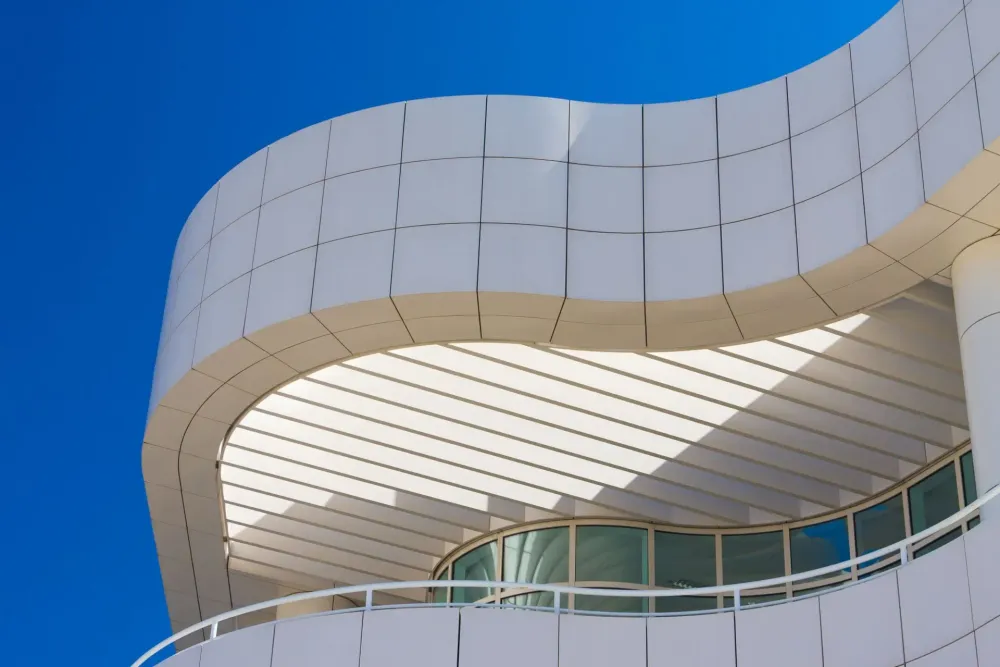
Cover photograph: Curved white facade of the Getty Center in Los Angeles. Photo: Jerome Dominici / Pexels.
Frequently Asked Questions
Which Getty is better for a first visit?
Choose the Center for paintings, photography, modern architecture and city views, subject to renovation access. Choose the Villa for ancient Mediterranean art and its Roman-inspired house and gardens. Your preferred collection and travel date are more useful than a universal ranking.
Is the Getty Center closing for renovation?
Yes. Its announced public closure begins on 15 March 2027, with reopening planned for spring 2028. Some galleries are already closed. Check the official modernization notice for your date before reserving travel around the Center.
Are both Getty museums free?
Ordinary admission is free at both, with a required timed reservation for the specific site. Parking, transport, food and separately ticketed programmes can still cost money. A reservation for one museum does not book the other.
Can I arrive at the Getty Villa on foot?
The Villa does not admit walk-in visitors unless they arrive by public bus. Taxi and ride-hailing drivers should enter the gate and use the designated drop-off after the ticket check. Follow the Villa's own arrival instructions rather than asking to be left outside.

Keep Exploring
NGV Melbourne: Which Gallery Should You Visit?
Choose between NGV International and NGV Australia, with free-entry details, exhibition planning, access advice and realistic visit times.
Little India Singapore: A Neighbourhood Visit
Plan a compact Little India visit with Tekka Centre, the Indian Heritage Centre, Tan Teng Niah's former house and temples, leaving time for a meal.
Griffith Observatory: Plan Your Visit
Choose between a free viewpoint visit and a fuller astronomy outing, with practical advice on planetarium tickets, getting uphill and returning after dark.