
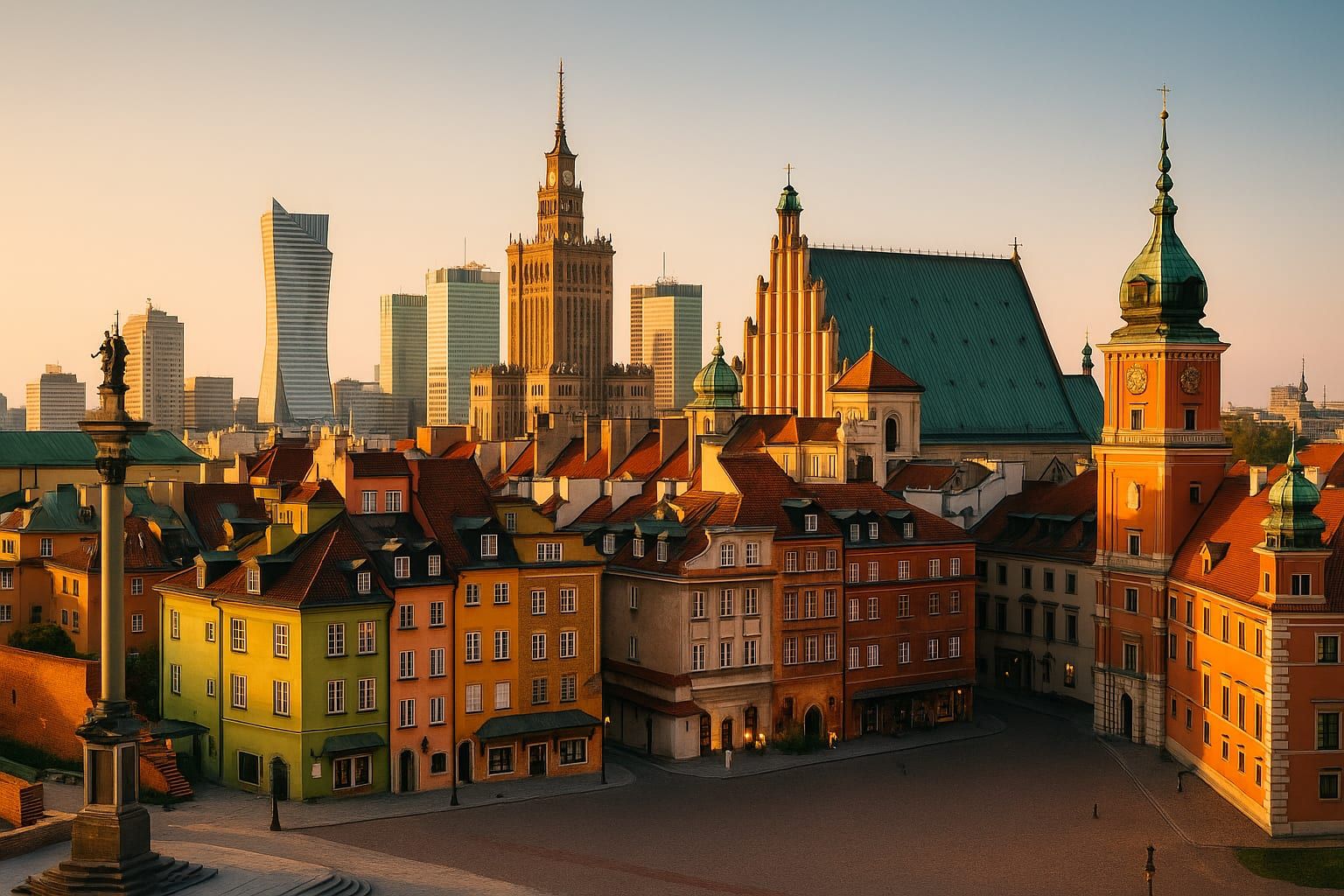
48 Hours in Warsaw: Phoenix City Rising
Two days to explore Warsaw’s resilient heart: reconstructed Old Town, world-class museums, parks, riverbanks and a buzzing food scene — practical tips and a paced 48‑hour itinerary.
Warsaw wears its history on its sleeve. Once largely destroyed in World War II, the Polish capital rebuilt itself with tenacity and imagination — earning the nickname the "Phoenix City." In 48 hours you can feel that resilience: wander painstakingly reconstructed streets, explore museums that refuse to forget, stroll leafy parks and sample modern Polish cuisine that’s as inventive as the city itself.
This guide gives a paced, practical 48‑hour itinerary plus local tips, neighbourhoods worth exploring and how to make the most of your short stay.
Quick orientation: what to expect
- Language: Polish is the official language. English is widely spoken in hotels, museums and restaurants.
- Currency: Polish złoty (PLN). Cards are accepted almost everywhere; carry small cash for small neighbourhood cafés or market stalls.
- Getting around: Warsaw’s public transport (buses, trams, metro) is efficient. Buy a 24/48‑hour ZTM pass for unlimited rides. Veturilo bike sharing is handy in summer.
- Best time to visit: late spring to early autumn for warm riverbank life and outdoor cafés; winter has festive lights and museums but is cold.
- Safety: Warsaw is generally safe — usual precautions apply. Watch for tram tracks if you’re looking at your phone while crossing.
Day 1 — Old Town, Royal route and Łazienki Park
Morning: Historic centre and Royal Castle
Start in the Old Town (Stare Miasto), the heart of Warsaw’s rebirth. The narrow cobbled streets, pastel façades and the Market Square were meticulously reconstructed after the war; the rebuilt Royal Castle contains period rooms and sweeping views over the Vistula. Take time to watch craftsmen and artists on the square and step into a café for breakfast — try a warm pastry and a strong Polish coffee.
Why it matters: the Historic Centre of Warsaw was one of the first UNESCO World Heritage reconstructions, recognised for the extraordinary post‑war restoration effort.
Late morning: Krakowskie Przedmieście and the University quarter
Walk the Royal Route south along Krakowskie Przedmieście, a boulevard of baroque churches, 19th‑century palaces and bookshops. Pop into the University of Warsaw’s courtyard, or detour to the Fryderyk Chopin Museum if you’re a music fan — an immersive modern museum celebrating Poland’s most famous composer.
Lunch: try a milk bar or modern Polish cuisine
For an authentic affordable experience, find a milk bar (bar mleczny) where classic pierogi, żurek and kotlet schabowy are homestyle and cheap. If you want to splurge, book ahead at Atelier Amaro — Poland’s first Michelin‑starred modern restaurant that helped redefine high‑end Polish cooking.
Afternoon: Łazienki Park and Chopin
Spend a relaxed afternoon in Łazienki Królewskie (Royal Baths Park). Stroll the tree‑lined paths, watch squirrels near the Chopin Monument, and visit the palace on the water (Pałac Na Wodzie). In summer there are regular open‑air Chopin concerts on weekends — an atmospheric way to enjoy Polish culture.
Evening: Powiśle and Vistula riverbanks
Head down to the Vistula riverbanks for evening drinks. In warm months locals gather on the grassy slopes and terraces by the river — beer tents, pop‑up bars and food stalls make for lively alfresco evenings. For something more polished, Hala Koszyki is a restored market hall with a range of restaurants and bars.
Practical tip: riverbank life peaks in late afternoon and early evening. Bring a light blanket if you plan a riverside picnic.
Day 2 — Museums, Praga and modern Warsaw
Morning: Warsaw Uprising Museum
Devote your morning to the Warsaw Uprising Museum. Its multimedia displays and personal stories tell the city’s 1944 resistance and its aftermath — essential context for understanding why Warsaw became a phoenix. Allocate at least two hours.
Alternative: If your interests lean more to Jewish history, the POLIN Museum of the History of Polish Jews is a powerful, award‑winning institution with an outstanding permanent exhibition.
Late morning: Palace of Culture & Science and city views
Ride or walk to the Palace of Culture and Science (Pałac Kultury i Nauki), Stalin‑era monumentalism that dominates Warsaw’s skyline. Take the elevator to the observation deck for panoramic views of the modern skyline — a striking contrast to the Old Town.
Lunch: Powiśle or Nowy Świat
Powiśle and Nowy Świat streets are both great for lunch. Choose a bistro offering modern Polish plates or sample street food at market halls. Try zapiekanka (a popular open‑faced baguette snack) or local craft beer.
Afternoon: Cross the river to Praga
Cross to the east bank and explore Praga — once industrial, now a creative quarter. Visit the Neon Museum to see a vibrant collection of Cold War neon signs, and wander art galleries, antique shops and street murals. Praga has an edgier, more local feel than the polished centre.
Local insight: Praga’s best cafés and bars often hide down side streets. Take time to explore — you’ll find intimate cocktail bars and creative cafés that locals prize.
Evening: Dinner and nightlife
For dinner, consider a tasting menu at a contemporary Polish restaurant, or linger over hearty regional dishes in a cosy cellar. Warsaw’s nightlife ranges from polished cocktail bars and clubs to casual beer pubs and late‑night milk bars. Areas to check out: Nowy Świat for bustling bars, and the hipter-friendly areas of Praga and Powiśle.
Practical tip: if you’re into live music, check listings for jazz clubs and late evening concerts — Warsaw has a lively live music scene.
Where to stay: neighbourhood guide
- Śródmieście (city centre): best for first‑time visitors — close to the Royal Route, museums and transport links.
- Powiśle & Powiśle/Nowy Świat: trendy, close to the river and food halls.
- Praga: more affordable, creative and lively at night; great for boutique stays.
Book early for summer weekends and Chopin concert dates.
Food & drink — what to try
- Pierogi: stuffed dumplings in many styles (meat, cheese & potato, wild mushroom, seasonal fruits).
- Żurek: sour rye soup often served with sausage and egg.
- Bigos: hunter’s stew made from cabbage and meat — warming and flavorful.
- Milk bars: traditional inexpensive cafeterias offering classic Polish comfort food.
- Modern Polish: many chefs reinvent tradition with new techniques — reserve in advance for Michelin or popular spots.
Coffee culture: Warsaw is a great city for speciality coffee. Cafés concentrate around Nowy Świat, Śródmieście and Praga.
Practical travel tips & local insights
- Transport ticketing: buy a 24‑ or 48‑hour ZTM ticket for unlimited travel (metro, trams, buses). Validate your ticket when boarding.
- Airport transfers: Warsaw Chopin Airport (WAW) is the main airport — roughly 20–30 minutes to the centre by taxi or S‑train. Modlin Airport serves some low‑cost carriers but is further out.
- Tipping: 10% in restaurants is appreciated but not mandatory. Round up taxi fares.
- Cash vs card: cards are widely accepted, but carry small banknotes for local markets and some milk bars.
- Walking shoes: cobbles and park paths mean comfortable shoes are essential.
- Museum bookings: book Warsaw Uprising Museum and popular exhibitions in advance to skip lines.
- Language tips: a few Polish words go a long way — dzień dobry (good day), proszę (please/here you go), dziękuję (thank you).
Safety & etiquette
- Warsaw is generally safe for solo travellers and families. Usual city awareness applies.
- Photography: OK in public spaces, but check museum rules for flash and tripods.
Day‑by‑day checklist (compact)
Day 1
- Morning: Old Town & Royal Castle
- Late morning: Royal Route & Chopin Museum
- Lunch: milk bar or contemporary restaurant
- Afternoon: Łazienki Park & Chopin Monument
- Evening: Vistula riverbanks or Hala Koszyki
Day 2
- Morning: Warsaw Uprising Museum (or POLIN)
- Late morning: Palace of Culture & Science view
- Lunch: Powiśle/Nowy Świat
- Afternoon: Praga & Neon Museum
- Evening: dinner and live music or cocktail bar
Extend your trip
If you have more time, Poland’s compact cities are within easy reach by train. Combine Warsaw with Kraków for medieval charm or head north to Gdańsk on the Baltic coast.
For travellers making a longer Central European loop, pairing Warsaw with nearby capitals is easy — consider adding a stop like Berlin. If you like city‑break comparisons, our 48‑hour Brussels guide offers a different European taste: /en/itineraries/48-hours-brussels-chocolate-beer-art-nouveau. For a longer overland itinerary including history and nightlife, see: /en/itineraries/3-days-in-berlin-history-art-nightlife. Food lovers might also enjoy regional food perspectives in our Budapest guide: /en/food-drink/budapest-food-guide-europe-authentic-food-city.
Final thoughts
Warsaw’s story is visible at street level: scars of history mix with bold contemporary culture, creative restaurants and a thriving nightlife. In 48 hours you’ll touch on the city’s past and present — enough to understand why locals are proud of their phoenix city, and to leave wanting to return.
Travel tip: slow down where locals do — a long coffee on Plac Zbawiciela, an evening on the Vistula bank, a lazy afternoon in Łazienki — and Warsaw’s resilient charm will reveal itself.
Frequently Asked Questions
Planning more European escapes? Compare the best European city breaks for a weekend to pick your next trip.
Frequently Asked Questions
Can you see Warsaw in 48 hours?
Yes. This guide lays out a paced two-day itinerary that covers the city's highlights: Day 1 focuses on the Old Town, the Royal Route along Krakowskie Przedmieście and Łazienki Park, while Day 2 covers the Warsaw Uprising Museum, the Palace of Culture and Science, and the Praga district.
What are the must-see things to do in Warsaw in 2 days?
Start in the reconstructed Old Town (Stare Miasto) and Royal Castle, walk the Royal Route, and relax in Łazienki Królewskie park with its Chopin Monument and palace on the water. On Day 2, visit the Warsaw Uprising Museum (or POLIN Museum of the History of Polish Jews), go up the Palace of Culture and Science for skyline views, and cross the Vistula to explore Praga and its Neon Museum.
How do you get around Warsaw?
Warsaw's public transport (buses, trams and metro) is efficient. Buy a 24- or 48-hour ZTM pass for unlimited rides and remember to validate your ticket when boarding. In summer, Veturilo bike sharing is handy.
What should I eat in Warsaw?
Try a milk bar (bar mleczny) for affordable homestyle pierogi, żurek and kotlet schabowy. Other classics include bigos (hunter's stew) and zapiekanka (an open-faced baguette snack). For a splurge, book ahead at Atelier Amaro, Poland's first Michelin-starred modern restaurant.
When is the best time to visit Warsaw?
Late spring to early autumn is best for warm riverbank life and outdoor cafés, plus weekend open-air Chopin concerts in Łazienki Park during summer. Winter brings festive lights and museums but is cold.
Keep Exploring
Porto Hidden Gems: Local Guide to the City
Discover Porto beyond the postcards: neighborhoods, food, secret viewpoints, local tips and sample itineraries to experience the city like a Porto resident.
48 Hours in Dubrovnik: Beyond the Walls
A practical, local-led 48-hour guide to Dubrovnik that goes beyond the Old Town walls — beaches, islands, mountaintop views, food, and tips to beat the crowds.
48 Hours in Nice: French Riviera Essentials
A practical, two-day guide to Nice: where to eat, what to see, how to get around, and local tips—from Old Town markets and pebble beaches to day trips along the Riviera.