
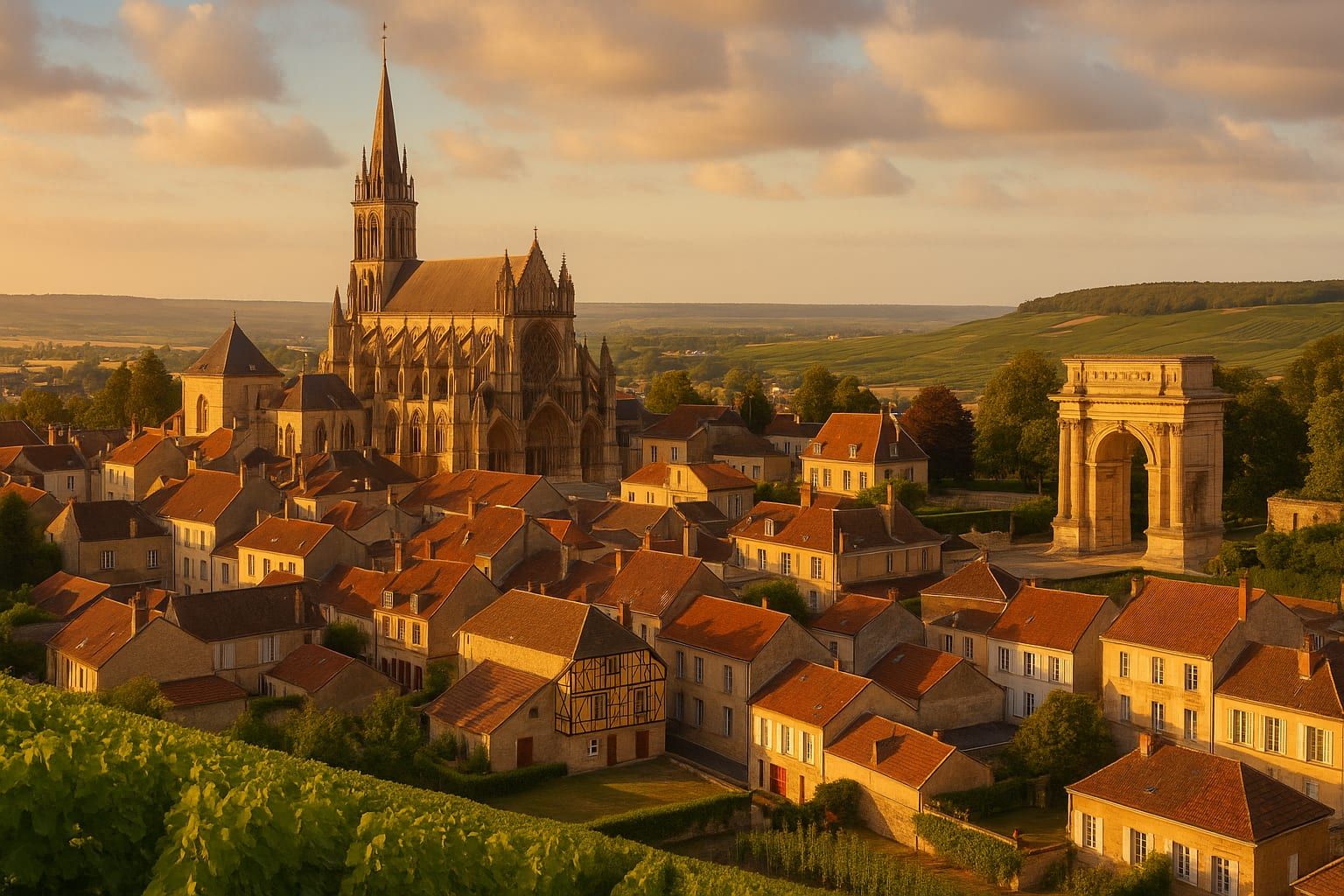
Explore Champagne beyond tastings: chalky vineyards, cellar caverns, village life in Reims and Épernay, hands-on blending, harvest rituals, gastronomy, and practical travel tips.
Champagne, France: Beyond the Bubbles
When people think of Champagne they picture crystal flutes, celebrations and famous houses. But the Champagne region—stretching from Reims and Épernay to the Côte des Bar—is much more than fizzy prestige. It’s a landscape of chalky slopes, hidden cellars, village life, culinary traditions and passionate winemakers. This guide takes you beyond the tasting counter to show how to experience Champagne like a curious traveler: on foot through vineyards, under the ground in UNESCO-listed crayères, and around a table with local food and stories.
Why Champagne is more than sparkling wine
Champagne’s identity is inseparable from its geology, history and people. The region’s signature chalk soils give the wines their mineral backbone and helped early winemakers develop the champagne method by providing cool cellars to age the wines. Add centuries of royal pageantry (note the cathedral at Reims where French kings were crowned), the rise of ambitious maisons and a network of small growers who keep traditional craft alive, and you have a region that rewards time and curiosity.
The three territories worth visiting
- Montagne de Reims: Rolling vineyards, forested hills and the historic city of Reims. Look for grand cru villages like Verzenay and Verzy.
- Vallée de la Marne: Meunier-friendly slopes following the Marne river, dotted with villages and intimate estates.
- Côte des Blancs & Côte des Bars (Aube): Côte des Blancs is the heartland of Chardonnay; the Aube is a wild, southern frontier with a more rustic vibe.
Towns, landmarks and cellar caverns
Reims: history and grand façades
Reims is the ceremonial capital—its cathedral is a masterpiece of Gothic sculpture and a living part of France’s story. Beyond the cathedral, stroll boulevards lined with Art Deco and Belle Époque architecture. Reims is also home to major houses with dramatic chalk cellars (crayères) carved into the chalk—some are UNESCO-listed and offer immersive tours.
Épernay: Avenue de Champagne and tasting houses
Épernay’s Avenue de Champagne feels like a wine-driven boulevard of palaces: Moët & Chandon, Mercier and many other maisons line this famous street. Here, tastings often come with theatrical tours of their cellars and histories.
Villages to linger in
Hautvillers: A postcard-perfect village and the final resting place of Dom Pérignon. Wander its quiet lanes and vineyard views. Verzenay: Visit the lighthouse and the small Champagne museum—an eccentric but memorable stop.
What to do beyond tastings
Blend your own bottle: blending workshops
Many producers offer hands-on blending workshops where you taste base wines (pinot noir, pinot meunier, chardonnay), learn about dosage and create a personal cuvée. It’s an unforgettable way to understand how subtle choices shape Champagne’s style.
Harvest and vintage experiences
If you can visit during the vendange (late September–October), join grape-picking operations or book a harvest tour. It’s noisy, fragrant and human—an intimate glimpse into the season that defines the year’s wines.
Cellar adventures: crayères and tunnels
Go underground. The chalk cellars keep a steady cool temperature and hold the region’s memory: old bottles, riddling racks and centuries of savoir-faire. Look for guided tours that include banned light photography (some maisons limit photos) and allow time to linger over vertical tastings.
Bike, hike and balloon over the vines
Explore the slow routes: cycle between villages, walk vineyard trails in the Parc Naturel Régional de la Montagne de Reims, or splurge on a hot-air balloon ride at sunrise for a rare aerial view of the vines.
Meet the growers
Seek out grower-Champagne (look for RM on the label—Récoltant-Manipulant). These smaller, family-run producers often open their cellars for intimate visits where the winemaker explains farming practices, yields and their relationship with the land.
Tasting talk: labels, styles and tips for choosing bottles
Understanding labels helps you get more from tastings and shops.
- Champagne types: Brut (dry), Extra Brut (very dry), Demi-Sec (sweeter), Blanc de Blancs (100% Chardonnay), Blanc de Noirs (Pinot-based), Rosé, Vintage (from one exceptional year), and Non-Vintage (blend of years).
- Appellations and codes: "Premier Cru" and "Grand Cru" refer to village classifications. "RM" means grower-producer; "NM" is a large house or négociant; "CM" indicates a cooperative.
- Disgorgement and dosage: ask about disgorgement date (when the spent yeast was removed) and dosage (sugar added afterwards). Wines aged longer on lees often feel richer.
Practical tasting tips:
- Smell first, then taste. Champagne’s aromatics evolve quickly.
- Try surprising pairings: oysters, fried chicken, potato chips and soft cheeses all work wonderfully.
- Ask to taste older vintages or different disgorgement years if available—cellar-aged Champagne reveals layers many visitors miss.
Food, markets and local specialties
Champagne’s food scene balances rustic and refined.
- Local bites: biscuit rose de Reims (pink biscuits) are iconic; ham from Reims and regional charcuterie are common in bistros.
- Pairings: Champagne is famously versatile—pair with seafood (oysters, smoked salmon), local cheeses (creamy, not overly pungent), and even hearty, fried dishes.
- Markets: Visit a morning market in Reims or Épernay to sample local produce, charcuterie and artisanal goods—perfect for a picnic among the vines.
For wine travelers planning longer wine-focused trips, Champagne’s detailed lessons in terroir and technique make a great pairing with other regions—see our guides to broader wine travel, like Wine Tasting in Bordeaux or a scenic Douro Valley itinerary for contrasts in style and landscape.
Practical travel tips and logistics
Getting there and getting around
- From Paris: High-speed trains (TGV) run from Paris Gare de l’Est to Reims in roughly 45 minutes to 1 hour; Épernay is easily reached by regional trains. Renting a car gives the most freedom for vineyard routes, though many small producers are accessible by bike or short taxi rides.
- Driving: Roads are generally good but can be narrow among vineyard lanes—drive slowly and be respectful of working farmland.
- When to visit: Harvest (Sept–Oct) for energy and festival atmosphere; spring for green vines and milder crowds; winter for quieter visits and holiday events (Epernay’s "Habits de Lumière" is a festive highlight in December).
Booking and etiquette
- Book tastings and cellar tours in advance—major houses and small growers alike often require reservations, especially in high season.
- Language: English is widely spoken at major houses; smaller growers may be French-only—bring a translation app or learn a few wine terms in French.
- Costs: Tastings range from complimentary (rare) to premium for vertical tastings or exclusive cuvées. Workshops and blending sessions cost more but are often well worth the price.
Safety and customs
- Champagne is lovely for walkers and cyclists—wear comfortable shoes and appropriate weather gear. Sun on the slopes can be strong; bring sunscreen and water.
- Bringing bottles home: Check airline allowances for liquids and consider shipping options many houses offer for international visitors.
A sample 2-day Champagne itinerary
Day 1 — Reims & Grande Maisons
- Morning: Arrive in Reims; visit Notre-Dame de Reims and a local market.
- Midday: Lunch at a bistro, sample biscuit rose and charcuterie.
- Afternoon: Tour a major house (Taittinger or Veuve Clicquot) and explore the chalk cellars.
- Evening: Dinner in Reims; try local pairing suggestions and finish with a tasting of a vintage Champagne.
Day 2 — Épernay, Hautvillers & the Côte des Blancs
- Morning: Drive or train to Épernay and walk Avenue de Champagne; tour Moët & Chandon or another house.
- Midday: Head to Hautvillers for vineyard views and a village lunch.
- Afternoon: Visit a grower-producer for a private tasting or a blending workshop.
- Sunset: If time allows, bicycle a vineyard loop or take a short balloon flight.
Local insights from winemakers and guides
- Small is not secondary: Many of the region’s most interesting wines come from small families farming tiny plots. Don’t skip the grower Champagne producers—often they show a clearer expression of a village or hillside.
- Respect the land: Sustainable and organic practices are increasingly common. Ask about farming—cover crops, yield limits and hand-harvesting make a tangible difference.
- Taste contextually: A Champagne tasted at a cellar door may show differently at a restaurant or at home months later. Take notes and buy a bottle that sparks curiosity.
Events and seasonal highlights
- Harvest season (vendange): September–October. Book early for participatory events.
- Habits de Lumière (Épernay): A December highlight—lights, special tastings and local celebrations.
- Local fêtes and marchés: Check village notices—many small fêtes bring seasonal food and meet-the-producer opportunities.
Sustainable travel and responsible tasting
Respect vineyard etiquette: stay on marked paths, avoid trampling young vines and follow instructions when visiting working farms. Drink responsibly—split tastings, use spit buckets, and arrange safe transport if you plan to taste frequently.
Final thoughts: Champagne for the curious traveler
Champagne can be as much about place as it is about party. Walk the chalk paths, listen to cellars breathe, meet a grower over a shared bottle and you’ll understand why this region inspires such devotion. Whether you’re a wine novice or a seasoned taster, aim to balance the marquee maisons with small producers, pair tastings with local food, and leave room in your itinerary for slow discovery.
For comparisons and tips on planning extended wine travel—whether moving west to Bordeaux or south to the Douro—see our practical guides on Wine Tasting in Bordeaux and the Douro Valley.
Practical checklist before you go:
- Reserve cellar tours and blending workshops in advance.
- Time your visit: harvest for energy; spring for quiet beauty.
- Bring layers and good walking shoes—cellars are cool and vineyards can be windy.
- Learn a few wine-related French phrases or download an offline translator.
- Consider shipping bottles home if you want more than you can carry.
Champagne rewards curiosity. Beyond the bubbles you’ll find landscape, history, small-scale craft and a culinary culture built to celebrate. Raise a glass—or better yet, stay a few days—and taste Champagne with time on your side.
Related
Keep Exploring
Best Wine Tours in Europe — Where to Book
A complete guide to Europe’s top wine-tour destinations, how to book the right tour, local tips, and trusted providers for tastings from Bordeaux to the Douro.
Wine Bars in Porto: Beyond the Port Houses
Discover Porto’s buzzing wine-bar scene beyond the port lodges: where to drink, what to taste, and local tips for exploring natural wines, Douro reds and Vinho Verde.
Tuscany Wine Guide: Chianti, Brunello & Super Tuscans
A practical, insider’s guide to the wines of Tuscany—Chianti, Brunello di Montalcino and the iconic Super Tuscans—with tasting notes, where to visit and local travel tips.