
Where to Stay in Mexico City: Neighborhood Guide
Choose a Mexico City base around the places you will return to each day. Compare five neighbourhoods, then check the exact address, room noise and access.
Where to stay in Mexico City depends as much on where you want to end the day as on your sightseeing list. A room near the Zócalo makes sense for repeated historic-centre walks. A base in Roma or Condesa can be more useful when dinner and time around your hotel matter every evening. Coyoacán rewards a trip focused on the south, but becomes a different proposition if you keep crossing the city.
Start by choosing the district that supports your daily routine, then compare individual addresses. The recommendations below are editorial judgments based on official area guides checked on 3 October 2026. They are not hotel inspections, safety ratings or promises about journey times.
Compare the bases first
| Base | A strong fit when… | Address to investigate | Main trade-off |
|---|---|---|---|
| Centro Histórico | History dominates your visit | Your actual route to the Zócalo or Alameda | Dinner elsewhere may mean another return journey |
| Roma | Restaurants and neighbourhood evenings are priorities | Your chosen streets in Roma Norte or Roma Sur | Major historic sights still require a separate outing |
| Condesa / Hipódromo | Park walks and breaks near your room matter | Walking route to Parque México or Parque España | A park-facing room is not automatically quiet |
| Polanco | Western museums, shopping or nearby appointments dominate | Masaryk/Chapultepec side versus the Soumaya/Jumex area | “Polanco” can describe different accommodation locations |
| Coyoacán | You want repeated time around its historic centre | Del Carmen or the central squares, using the exact pin | Less convenient for repeated journeys to Centro and Polanco |
There is no neighbourhood that makes every destination local. Compare the journeys you will repeat, rather than awarding the hotel a point for every attraction somewhere in the same broad area.
Centro Histórico: make history your doorstep activity
Centro is a logical starting point when your visit revolves around the Zócalo, Templo Mayor and the surrounding historic streets. The city's Zócalo and Templo Mayor walking guide shows this cluster clearly. Staying close to your chosen part of it can turn a return for a rest or a forgotten item into a manageable walk.
Be precise about which part of Centro you mean. A hotel selected for the Zócalo is not the same location as one selected for Alameda Central and Bellas Artes. Pin the entrance, your main daytime destination and your likely dinner address. A broad “historic centre” label does not explain the route between them.
Centro particularly suits a short, history-led stay with meals nearby. It is a weaker match if your plan is to spend every evening in Roma, return to the room before dinner and then go out again. In that case, the hotel can add an extra cross-city leg precisely when you want an easy evening.
Ask the property where vehicles can actually stop, especially if the advertised address opens onto a pedestrian street. For rooms overlooking an active square, request details about glazing, amplified events and the room's orientation. These are questions about the specific building and dates, not assumptions that every central hotel is noisy.
Roma: choose the streets behind your food plans
Roma is useful when meals, cafés and galleries shape the trip, with sightseeing excursions fitted around them. The official Roma and Condesa area guide establishes the two as adjoining areas, but that does not make every accommodation listing interchangeable.
Use your actual plans to distinguish Roma Norte from Roma Sur. If your saved addresses cluster around Plaza Río de Janeiro, look at the walk from each candidate property to those places. If Mercado Medellín is your daily reference point, investigate accommodation around that part of Roma instead. The city's modern neighbourhoods guide identifies the plaza in Roma and the market in Roma Sur.
A Roma base works especially well for the pattern “day out, hotel break, dinner nearby”. It offers less advantage when you intend to leave early and return only to sleep after full days elsewhere. In that situation, compare the room and transport access with alternatives rather than paying for a neighbourhood routine you will barely use.
For a light sleeper, a photogenic balcony above a restaurant can be less useful than a modest room away from its terrace. Ask whether the assigned room faces a bar, kitchen extraction, a courtyard used for dining or a rooftop venue. “Interior room” is not a complete answer if the interior space is also a social area.
Condesa and Hipódromo: build the stay around a park
Choose this area when the part of the trip between booked activities matters: breakfast, a short walk, a rest and dinner without another major expedition. Parque México is a practical reference point; its official address is in Hipódromo, although visitors commonly encounter it within the broader Condesa label.
That distinction matters when searching. An accommodation title containing “Condesa” does not tell you how close it is to the park, and a Hipódromo address may be exactly the location you had in mind. Trace the walk to Parque México or Parque España, including the crossings, rather than treating the neighbourhood name as a distance measurement.
Compared with Roma, make Condesa your first shortlist when a regular park loop is the priority. Start with Roma when you already have a concentration of dinner and gallery addresses there. Neither decision requires treating the other neighbourhood as inaccessible; the point is to make your most repeated walk convenient.
Families should check whether the room works for afternoon breaks, not just whether the map shows green space. Ask about lift access from the street, blackout curtains, room layout and any stairs between reception and the lift. A park view is an amenity, but request a quieter orientation if sleep matters more than the view.
Polanco: separate the museum addresses before booking
Polanco makes sense when your plans concentrate on the western side of the city, or when shopping and appointments there are central to the visit. The city's Miguel Hidalgo guide distinguishes the Polanco and Nuevo Polanco corridors and places the major Chapultepec museums in the wider borough.
Do not read “near the museums” as one location. A stay selected for Presidente Masaryk and the Chapultepec side should be compared separately with a property selected for Soumaya and Jumex around Ampliación Granada. Put the museum you actually intend to visit into your map search, rather than the general word “Polanco”.
The same distinction applies to a work trip. Choose around the meeting address and the places where you will eat afterwards. A hotel that reduces a repeated work journey can be a stronger choice than one nearer an attraction you will visit once. Conversely, a Polanco address offers little automatic benefit for days dominated by Centro and Coyoacán.
Compare practical features directly: staffed arrival, luggage storage, lift access and the room configuration you need. Do not infer service standards from the district or the word “luxury”. For a room facing an avenue, ask about sealed windows, ventilation and whether you can request a different orientation without changing the booked category.
Coyoacán: choose it for a southern routine
Coyoacán is the most deliberate choice in this shortlist. It works when you want repeated time in its historic core, rather than a single visit followed by days elsewhere. The official southern area guide places Casa Azul and the market in Del Carmen, and Plaza Hidalgo in Villa Coyoacán.
Use those addresses to define the stay you want. “Coyoacán” also names a much broader borough; a listing carrying that name is not necessarily beside the squares or Casa Azul. Check the final walk from the accommodation, not just the district displayed by a booking platform.
A good daily pattern here is breakfast nearby, a local outing and a return to the same area for dinner. A poor fit is choosing it only because you have one museum booking, then travelling repeatedly to Polanco, Roma and Centro. Staying here also does not remove the need to plan a separate journey to Xochimilco's specific launch point.
Before choosing a smaller property, confirm reception arrangements and the exact entrance you will use after dinner. Ask about steps, courtyard noise and how luggage is handled before check-in or after check-out. The appeal of a house-style stay does not tell you whether those services are available.
When Reforma deserves a place on the shortlist
If none of the five bases matches neatly, investigate an exact address along or near Paseo de la Reforma. The city's Reforma neighbourhood guide treats the avenue as a corridor through multiple areas. It should not be read as one compact hotel district.
This can suit a mixed work-and-leisure visit when a particular hotel has the services you need and a useful position between your appointments. Compare its nearest crossing and transport stop with your daily destinations. An address on a prominent avenue is not automatically easier for walking, and a room facing that avenue deserves its own noise check.
Test the daily journey, then the actual room
For each finalist, map a realistic day: leave for your main destination, return if you expect an afternoon break, go to dinner and come back. Compare this whole pattern across hotels. A property that looks well placed for the morning may be awkward for the extra journeys your routine creates.
If using public transport, the city's Metro overview is a starting point for network orientation. Check the current service and the walk to the actual entrance before relying on a route. A nearby station does not establish step-free access, a direct journey or an easy trip with luggage. Avoid assigning a fixed cross-city travel time to an entire neighbourhood.
Then send a short, specific enquiry to the property: which room category has the quietest orientation; whether windows open and what ventilation is provided; whether there are steps anywhere from pavement to room; and whether late arrival is staffed. If accessibility is essential, request measurements and photographs relevant to your needs instead of accepting “accessible” as a complete description.
Compare the final payable total for the same dates, occupancy, cancellation terms and inclusions. This guide does not quote nightly ranges: without those booking conditions, a neighbourhood price comparison would imply more certainty than it deserves. For a short stay, moving hotels usually adds a packing and luggage-storage problem; split the stay only when distinct parts of the trip justify it.
Plan the next part of your trip
Use these related guides to compare where to stay, what to visit or another destination in the same region. Each guide covers a separate decision; this is not a combined itinerary.
- Things to Do in Mexico City: Choose Your Highlights
- Things to Do in Oaxaca: Culture, Food and Day Trips
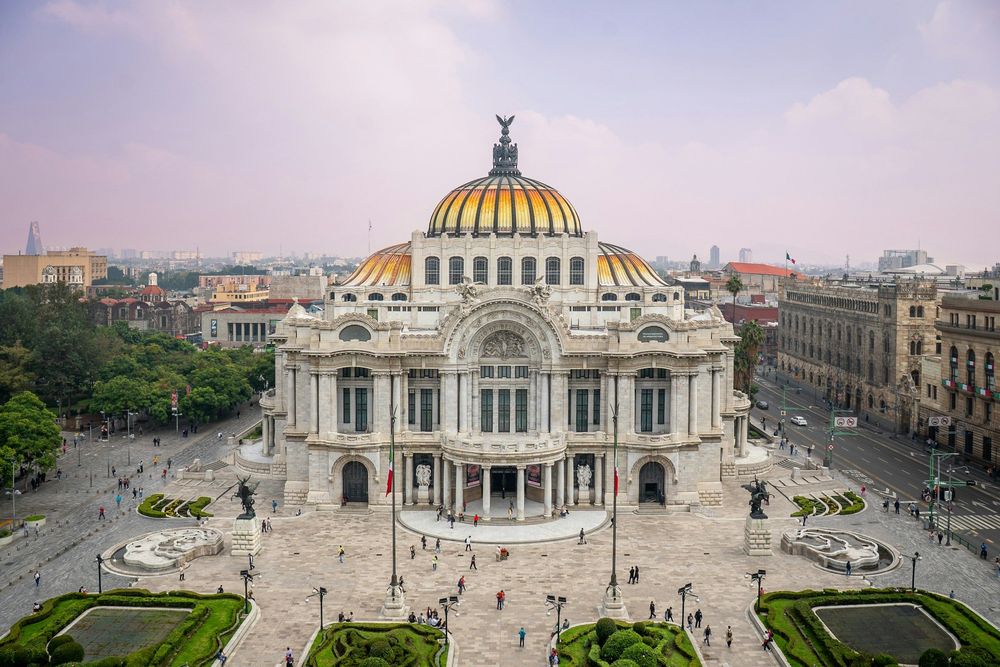
Cover photograph: Palacio de Bellas Artes and its forecourt in Mexico City. Photo by Alexandra Tran on Unsplash. (Unsplash).
Frequently Asked Questions
Where should I stay on a first visit to Mexico City?
Start with Centro if repeated historic-centre visits dominate, Roma for a routine built around nearby meals, or Condesa for park walks and breaks near your room. Choose using the places you expect to return to each evening.
Is Roma or Condesa a better base?
Choose Roma if your restaurant and gallery addresses cluster there. Choose Condesa or Hipódromo if Parque México is central to your daily routine. The exact accommodation entrance and room orientation matter more than a broad ranking.
Is Coyoacán convenient for the whole city?
It is a purposeful base for time in the south, but less convenient when you plan repeated trips to Centro and Polanco. Check whether the property is near the historic core: the borough name alone does not establish that.
Does a Polanco hotel put me beside every major museum?
No. Compare the Chapultepec side separately from the Soumaya and Jumex area around Ampliación Granada. Map the specific museums you intend to visit before deciding which address helps most.
How can I choose a quieter room?
Ask about the room's orientation, glazing, nearby terraces, courtyard use and rooftop events. Request the answer for your room category and dates. A park view, an interior room or a neighbourhood reputation does not guarantee quiet.

Keep Exploring

Where to Stay in Rio de Janeiro: Neighborhood Guide
Choose between Copacabana, Ipanema, Leblon, Botafogo, Flamengo, Santa Teresa and Barra by the journeys you will make each day.
Where to Stay in Buenos Aires: Neighborhood Guide
Choose a Buenos Aires base around the evenings you want, the sights you will revisit and the routes you will actually use. Compare neighborhoods and inspect the exact address before booking.

Where to Stay in New York: Neighborhood Guide
Choose a New York base by the journeys you will repeat. Compare specific station areas, waterfront trade-offs, family needs and the total accommodation cost.