
Great Ocean Road: Day Trip or Overnight from Melbourne?
Choose a focused day trip or an overnight Great Ocean Road journey, with practical stop choices and current Twelve Apostles visitor arrangements.
A Great Ocean Road day trip from Melbourne works if your priority is the Twelve Apostles and a limited selection of coastal stops. Stay overnight if you want time in seaside towns, a substantial Otways visit, or the Apostles near the beginning or end of the day. The extra night changes where you can linger; it does not make every detour fit.
For a first visit with only a single available day, an organised tour is often the more practical choice. For a self-drive journey, an overnight stay gives you more control over both sightseeing and rest. Choose the overnight town according to the section of coast you most want to experience.
| Your priority | Best fit | What to leave out |
|---|---|---|
| Apostles plus a taste of the coastal road | Full-day tour or tightly edited self-drive | Long walks and multiple inland detours |
| Towns and the Lorne–Apollo Bay coast | Overnight in Apollo Bay | An Apostles sunset on the first evening |
| Apostles in changing light | Overnight around Port Campbell | A leisurely stop in every eastern town |
| Waterfalls, rainforest and coastal landmarks | More time beyond a single overnight | A complete region-wide checklist in a short break |
Visitor arrangements were checked on 26 October 2026. The visit durations suggested below are editorial allowances, not guaranteed drive times. This excursion replaces a city day in our Melbourne itinerary; it cannot be added after an ordinary afternoon in town.
Understand the route before choosing a duration
The coastal journey proceeds through the Surf Coast towns, Lorne and Apollo Bay, then turns inland through the Otways before reaching the limestone formations around the Twelve Apostles and Port Campbell. A map pin for the Apostles does not represent the entire coastal drive.
The regional tourism board's multi-day route separates the Surf Coast, Apollo Bay and the Otways, the Apostles area, and an inland return into different days. That is useful evidence of the trip's scale, even if you intend to travel faster. Torquay's esplanade, Split Point Lighthouse at Aireys Inlet and Lorne's pier are destinations where you can stop, rather than landmarks to count through a window.
For a return journey, compare a coastal outbound route with an inland return through the Colac area. Use current navigation for your actual accommodation addresses and chosen stops. A quoted road-only journey excludes parking, meals, photographs, roadworks and the time spent entering attractions. Do not use a single headline driving estimate as the day's total duration.
A late start is a reason to reduce the geographic ambition. Spending the day around the Surf Coast and Lorne can be satisfying without reaching the Apostles. Decide that before setting off, rather than discovering halfway along the coast that the landmark visit will consume the return evening.
What a day trip can reasonably contain
Build the day around the Apostles as the main visit, a meal stop and a small number of coastal viewpoints. If driving west along the coast, a stop at Lorne or Apollo Bay gives you a chance to leave the car and experience a town. Choose which one gets the longer break before adding further walks.
At Lorne, a foreshore stroll or the pier suits a short stop. Apollo Bay makes more sense for a longer meal when you are continuing through the Otways. Treat a lighthouse tour, waterfall walk or wildlife excursion as a substitution for another substantial stop. They require departure from the main journey and time at the destination.
Reserve roughly 1–2 hours for the Apostles precinct, including the visitor experience and lookouts. This agrees with the relaxed-visit allowance on the official Twelve Apostles website. A brief viewpoint photograph uses less time, but it is a poor basis for a plan that also promises the new visitor centre, food and unhurried viewing.
Afterwards, add a nearby cliff-top stop only if the remaining daylight and return plan support it. Leave an evening booking in Melbourne off the day's commitments. The return is part of the excursion, and your hotel arrival is not the same as the time a coach reaches its first city drop-off.
The Apostles now need advance planning
The current official visitor information says bookings are essential. It lists the Keerray Woorroong Visitor Centre at 08:00–20:00, with last arrival at 19:00, and the car park at 06:00–21:00, with vehicles able to exit at any time. Follow the official booking link for your travel date and check the ticket and parking conditions before finalising your route.
The regional tourism board also identifies advance reservations from October 2026. Older advice to arrive without arranging anything should therefore not determine your trip. If joining a tour, establish whether the operator handles the booking and what its price includes.
The authority confirms that bookings are free until April 2027, when a fee is due to begin. Reserve even during the free period; check the price for later dates rather than assuming free access continues.
Keep the visitor centre's hours separate from your plan for early or late light. A car park opening time does not mean every interior facility is operating. For a sunrise visit, confirm the access arrangements and your reservation, then plan breakfast separately. For an evening visit, check sunset for your date against the admission window rather than assuming they always align.
The official visitor page lists wheelchair-accessible trails and viewing platforms, accessible parking and toilets, a Changing Places facility and a sensory room. Those facilities make the main precinct a more useful planning anchor than a beach descent for visitors who need step-free access. Confirm your particular route and equipment needs before choosing accommodation solely around another coastal attraction.
Nearby beaches are separate access decisions
Gibson Steps and Loch Ard Gorge should not be treated as interchangeable additions. The Parks Victoria marine-park guide describes 86 steps down at Gibson Steps. A beach-level view of the cliffs involves both the descent and the climb back, with access dependent on current conditions. The lookout experience at the Apostles does not require that staircase.
At Loch Ard Gorge, the authority's reopening update explains the rockfall and staircase problems behind the beach closure. Its proposed October reopening is subject to planning approval; that target is not confirmation that the stairs have reopened. Check the latest access position and use open cliff-top viewpoints if the beach remains unavailable.
Do not reserve your only spare hour for a promised beach photograph. The coastal rock formations remain the reason to visit this area, and a viewpoint stop can still serve that purpose when a descent is closed. Respect barriers and follow the signed routes rather than interpreting a photograph in an older itinerary as access permission.
Overnight in Apollo Bay: favour the journey
Apollo Bay is the stronger choice when the first day's attraction is the coast itself. Travel through the Surf Coast, give Lorne a meaningful stop and continue along the coastal section to Apollo Bay. Stay for dinner and a walk by the foreshore instead of pushing onwards simply to reach the next famous pin.
On the following day, continue through the Otways towards the Apostles. Give one forest or other inland attraction its own time allowance and booking check if you want to include it. Cape Otway Lightstation, a rainforest walk and an organised wildlife experience are alternative ways to use that block; including them all would change the trip's length.
This option splits the scenic journey naturally, but it does not place you beside the Apostles. If your principal goal is an early landmark visit, Apollo Bay leaves a further transfer that morning. Likewise, an Apostles sunset followed by a return to Apollo Bay involves retracing part of the route. Select it for the coastal-town evening, not simply because its name appears midway through an itinerary.
Overnight around Port Campbell: favour the landmarks
Port Campbell is a better base when you want more than one viewing opportunity around the limestone coast. You can arrange the Apostles visit for the afternoon or the following morning according to your booking, weather and available daylight, while keeping your accommodation in the same part of the region.
Getting there on the first day still requires choices. Either travel along the coast with fewer stops, or approach inland and reserve coastal exploration for the return. Do not pair a leisurely Surf Coast morning, a long Apollo Bay lunch and several Otways detours with an assumed early arrival at Port Campbell.
For the next morning, allow an editorial 2–3 hours for a focused selection of accessible coastal viewpoints, rather than treating every named formation as essential. London Bridge or the Grotto can replace another stop when their current access suits you. Then leave a proper block for the return to Melbourne. If you want both a full coastal drive and extended inland walking, add another night instead of stretching the last day indefinitely.
Tour or self-drive: compare the complete commitment
An organised excursion removes the driving and parking tasks, but gives you a fixed stop sequence. Before paying, compare the actual pickup point, return window, meal arrangements, Apostles admission inclusion and time spent at the main precinct. A reverse-direction itinerary may suit a particular programme; it is not a guarantee of empty viewpoints.
For step-free travel, establish both vehicle boarding arrangements and what happens at stops with stairs. For children, check the operator's age and restraint policies directly. A short attraction list with realistic time on foot can be more useful than a long list containing drive-by stops.
Self-drive suits travellers who want to choose a meal town, stop for photography and stay overnight. Count vehicle collection and return, fuel, parking and accommodation in the comparison. If your rental pickup opens later than your intended departure, collect it beforehand or change the first day's route. Also check whether returning it after the coast trip fits the depot's actual hours.
Before departure, check current road and emergency updates linked by the regional tourism board, then review the attraction bookings. Wet or windy weather can make a long list of outdoor stops less appealing; shorten the walking programme and keep the accommodation plan workable. Allow the driver proper breaks, and avoid making a late Melbourne arrival the prerequisite for a flight or other fixed onward connection.
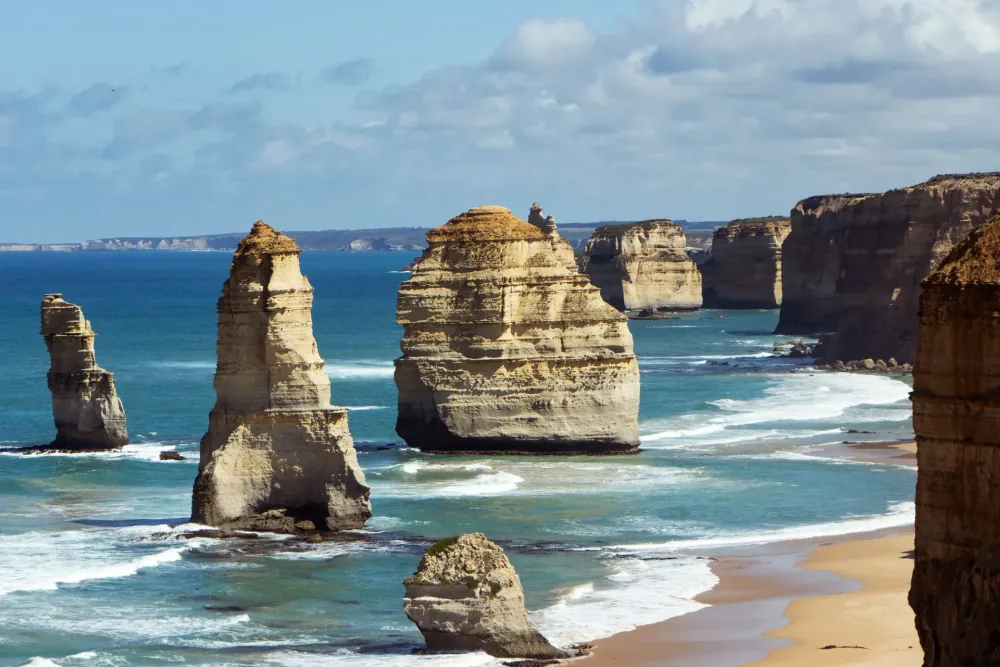
Cover photograph: Limestone stacks of the Twelve Apostles on the Great Ocean Road. Photo: Eclipse Chasers / Pexels.
Frequently Asked Questions
Can I visit the Great Ocean Road in a day from Melbourne?
Yes, as a focused full-day excursion with the Apostles and a limited number of stops. An organised tour is practical when you have no extra night and do not want the driving commitment. A day does not provide unhurried time across the whole region.
Should I stay in Apollo Bay or Port Campbell?
Choose Apollo Bay for a coastal-town evening and time along the Lorne–Apollo Bay section. Choose Port Campbell for a base near the limestone coast and more flexibility around an early or late Apostles visit. Both still require a planned return journey.
Do I need to book the Twelve Apostles?
The official visitor site checked on 26 October 2026 says bookings are essential. Use its booking process for your date and review the entry and parking terms. Tour passengers should confirm what their operator arranges and includes.
Can I go down to the beach at Loch Ard Gorge?
Check the current access notice before planning a descent. The authority's update describes a closure and a conditional reopening target, which is not proof of reopening. Keep open cliff-top viewpoints as the alternative and respect any barriers.

Keep Exploring

Ait Ben Haddou from Marrakech: Day Trip or Overnight?
A practical choice between a long day from Marrakech and a night near the ksar, with architectural highlights, access limits and realistic time tradeoffs.
Essaouira from Marrakech: Day Trip or Overnight?
Choose how much time Essaouira deserves, what to visit on a short trip and what an overnight adds, with practical transport and accommodation choices.
Kamakura from Tokyo: Choose a Day Trip Route
A Kamakura day trip works best with one main area. Compare the eastern shrine and bamboo garden with Hase's Great Buddha, Hasedera and an optional coastal walk.