
A first Tijuca Forest visit starts with choosing the right sector and level of walking. Compare a short forest outing with a properly planned hike.
For a first visit to Tijuca Forest, start with the Floresta sector at Praça Afonso Viseu, Alto da Boa Vista. Choose Cascatinha Taunay and the visitor centre for a relatively light introduction; choose a named trail and, when useful, a privately arranged guide for a hiking day. These are different commitments, not a short and long version of the same compulsory route.
Tijuca National Park also includes Corcovado and other mountain areas. A booking described simply as a “Tijuca tour” may therefore cover very different places. Confirm the sector and actual stops before paying. Our Rio experiences guide helps decide whether your main interest is the forest, Christ the Redeemer or another city outing.
Choose the visit you actually want
| Your priority | Suitable plan | What to check |
|---|---|---|
| Forest scenery without a summit goal | Cascatinha Taunay and visitor centre in the Floresta sector | Walking between stops, surfaces and return transport |
| A manageable first trail | A specific short route confirmed with park staff or your guide | Current condition, distance, ascent and turnaround |
| Mountain hiking | A named summit route such as Pico da Tijuca | Fitness, terrain, weather, trail entry cutoff and descent |
| Christ the Redeemer | Separate Corcovado plan in Serra da Carioca | Correct transport and monument admission |
| Limited walking tolerance | A tailored visit with confirmed drop-off and access | Do not interpret “easy” as wheelchair accessible |
| Time allowance | Half a day for a light forest outing; a separate day for a substantial hike | Editorial estimates including flexibility, not transport guarantees |
Information checked 21 October 2026. Weather, closures and individual access needs can change the plan. The allowances above are editorial estimates; a tour operator's actual itinerary and your starting neighbourhood determine the commitment.
Understand the sectors before choosing transport
“Parque Nacional da Tijuca” is an administrative name covering several areas, not a single entrance beside all the famous sights. The Floresta sector is the focus here. It contains Cascatinha Taunay, the visitor centre and hiking access toward Pico da Tijuca. Corcovado belongs to Serra da Carioca, while Pedra Bonita and Pedra da Gávea are another visiting sector.
Use the park's own overview to understand those differences. Do not assume a forest gate is the train departure for Christ the Redeemer, or that a car can move freely between every viewpoint shown on a map. Roads and sectors have distinct restrictions.
For the Floresta entrance, give your driver or route planner Praça Afonso Viseu, Alto da Boa Vista. Confirm whether your arranged transport stops at the gate, continues to an agreed interior stop when permitted, or includes a guide walking with you. “Hotel pickup” describes the start of a service; it does not explain the day's walking or where you will be collected afterwards.
Start with Cascatinha Taunay for the lighter option
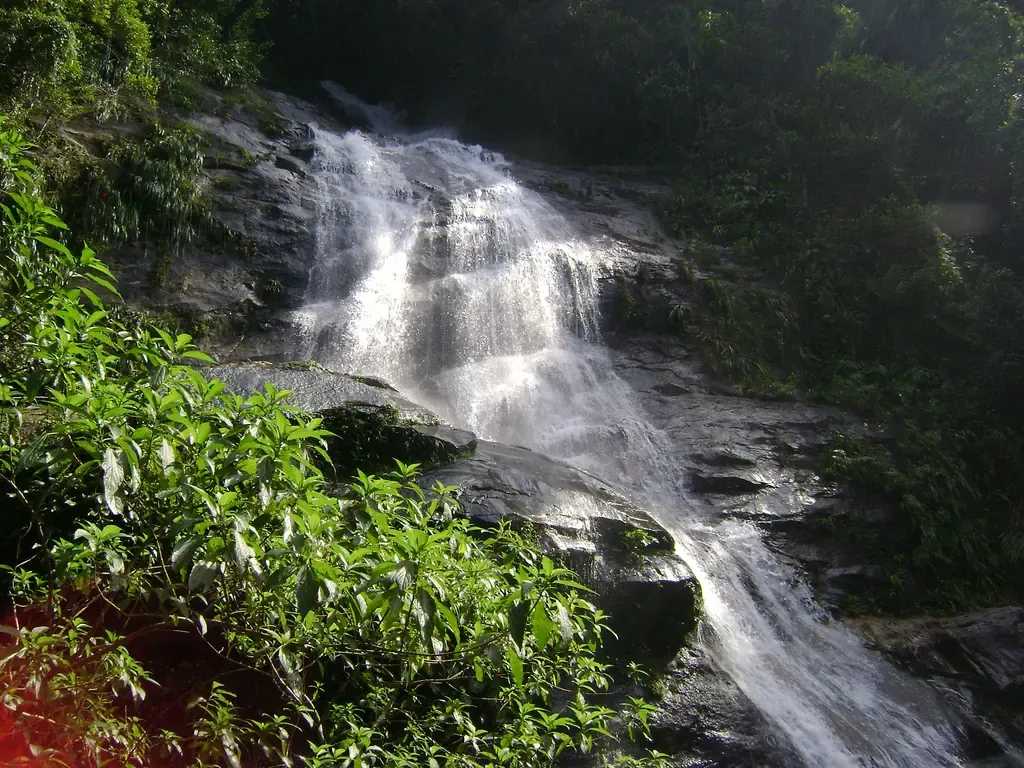
The park's Cascatinha Taunay page places the waterfall a short distance inside the main Floresta gate. This makes it a useful first stop when you want to see the forest without committing immediately to a mountain trail. The stone bridge and vegetation give the visit a clear focus even if you decide not to go farther.
Viewing the waterfall and bathing are separate activities. Bathing beneath the waterfall itself is prohibited. The park identifies the Job de Alcântara pool below the stone bridge as the designated bathing location, but permission is not a guarantee of suitable conditions. Follow current signs and staff advice; this guide's light visit is built around looking, not entering the water.
Wet stone and uneven ground still matter during a short visit. Wear footwear with grip, stay on permitted approaches and avoid stepping beyond barriers for a photograph. If mobility is limited, ask the park about the exact drop-off, distance and surface before travelling. A waterfall described as close to the gate is not automatically a verified step-free attraction.
Add the visitor centre for context
The visitor centre presents the forest's history through its permanent exhibition, including the relationship between original woodland, human intervention and the national park. It is a useful complement to the waterfall because it explains the place rather than simply adding another viewpoint.
Ask about the practical connection between the stops. The entrance gate and visitor centre are not interchangeable meeting points. If your group is avoiding a substantial walk, agree the transport and walking portions explicitly rather than letting “waterfall plus visitor centre” sound like two adjacent doors.
This is also a sensible point to review a proposed short trail. Ask which route suits today's conditions and your group's experience, and where it starts and ends. Choose the path because its effort fits the group. You do not need a summit to make the forest visit worthwhile: vegetation, water and the history of the landscape can carry the outing.
Use the current hours, including the earlier trail cutoff
The park website contains older pages showing a general 08:00–17:00 schedule. For the Floresta sector, the more specific updated visiting-rules notice and 2026 visitor protocol distinguish admission from departure. Pedestrians and cyclists may enter 06:00–17:00; vehicles 08:00–17:00; everyone must leave by 18:00. Vehicle capacity is limited.
The 2026 protocol lists the visitor centre and support facilities at 08:00–17:00 and entry to trails accessed through Bom Retiro at 07:00–15:00. An open entrance does not mean every trail can be started until that entrance closes.
There is also a discrepancy worth planning around: the individual Pico da Tijuca page still states a 14:00 latest trail start. Confirm your selected route's current cutoff with staff, start well before either published limit, and leave enough time for descent. Do not use the later general time as permission to begin a summit hike late. Severe weather can alter opening arrangements.
Choose a hike by route, not by the word “easy”
For a hiking visit, identify one route before booking transport. Ask for total walking distance, ascent, surfaces, exposed sections, start point and expected return time. A description such as “suitable for beginners” can mean very different things to someone who walks hills regularly and someone who has only planned a city stroll.
Pico da Tijuca is a mountain objective, listed by the park at 1,022 metres elevation. That elevation is not the amount you climb from the trailhead. It also does not tell you how difficult the final approach will feel. Discuss the actual route and your comfort with steep or exposed terrain instead of judging the outing from the summit number alone.
A named trail to one summit is different from the full Circuito dos Picos. The park describes that circuit as 19 kilometres, linking several summits, and suggests 2–3 days, which can be walked separately. Do not accidentally buy or attempt the full circuit because you recognised the name of one peak in its description.
Set a turnaround point before starting. If the group is slower than expected, the surface deteriorates or the weather changes, shorten the walk while you still have a comfortable return. Completing a particular summit should not determine whether the day feels successful.
Decide whether a guide solves your actual needs
The 2026 protocol does not make a guide compulsory for ordinary visits. However, a guide can be useful when you want route selection, interpretation, a managed pace or help with the practical arrangements. The park FAQ states that the park does not provide a guiding service: arrange one privately and arrive accompanied if you need that support.
Ask what is included before comparing prices. A vehicle excursion with short stops is not the same service as a guided hike. Confirm the language, group size, walking demands, pickup and return locations, and what happens if the selected trail closes. A clear alternative route is more useful than a vague promise to “see everything”.
Guided does not mean effortless, and independent does not mean unprepared. Choose the arrangement that matches your confidence and needs. No tour description should promise personal safety or a clear summit view in all conditions.
Plan the return and keep the forest visit self-contained
Mobile reception can be weak, as the park's visitor guidance notes. Save the route information before leaving, carry sufficient water and food for the chosen walk, and agree the return meeting point and time in advance. Do not make the only exit plan dependent on summoning a vehicle from an uncertain signal deep inside the forest.
Respect official trails, keep your distance from wildlife, do not feed animals and carry out your rubbish, including food scraps. These are practical ways to protect the forest and avoid turning a wildlife encounter into a problem. Check the park's latest notices on the day rather than interpreting an old reopening announcement as a permanent all-clear.
Entry to the Floresta sector is free under the park's published admission policy; guides and transport are separate costs. Corcovado has its own paid arrangements. Our free Rio guide helps compare other outings without admission charges, while preserving the distinction between free entry and a cost-free day.
Keep a light visit to one sector, or give a substantial hike its own day. Combining distant summits, the forest and a tightly timed evening booking creates pressure without improving the landscape. Choose the experience, confirm the route and leave room to adapt.
Cover photograph: A waterfall flowing over rocks in Tijuca Forest. Photo: Beth Castelo / Wikimedia Commons. Historical photograph, converted to WebP; current access and water conditions may differ. Source · License.
Frequently Asked Questions
Is Tijuca Forest the same visit as Christ the Redeemer?
No. Both belong to the national park, but this forest visit uses the Floresta sector at Alto da Boa Vista. Corcovado is in Serra da Carioca and requires its own transport and admission plan.
Do I need a guide to visit Tijuca Forest?
A guide is not generally compulsory under the 2026 protocol. Arrange one privately if you want route support or interpretation; the park does not provide a general guiding service.
Can I swim beneath Cascatinha Taunay?
No. Bathing beneath the waterfall is prohibited. The designated Job de Alcântara pool is a different location, and any water activity depends on current signs and conditions.
What are the Floresta sector's visiting hours?
Pedestrian and cyclist entry is 06:00–17:00, vehicle entry 08:00–17:00 and departure by 18:00. Facilities operate 08:00–17:00. Trail cutoffs are earlier and route-specific; confirm them before hiking.
Is a waterfall visit wheelchair accessible?
Proximity to the entrance does not establish a continuous step-free route. Ask the park about the precise approach, surface, drop-off and facilities for your needs before travelling.


Keep Exploring
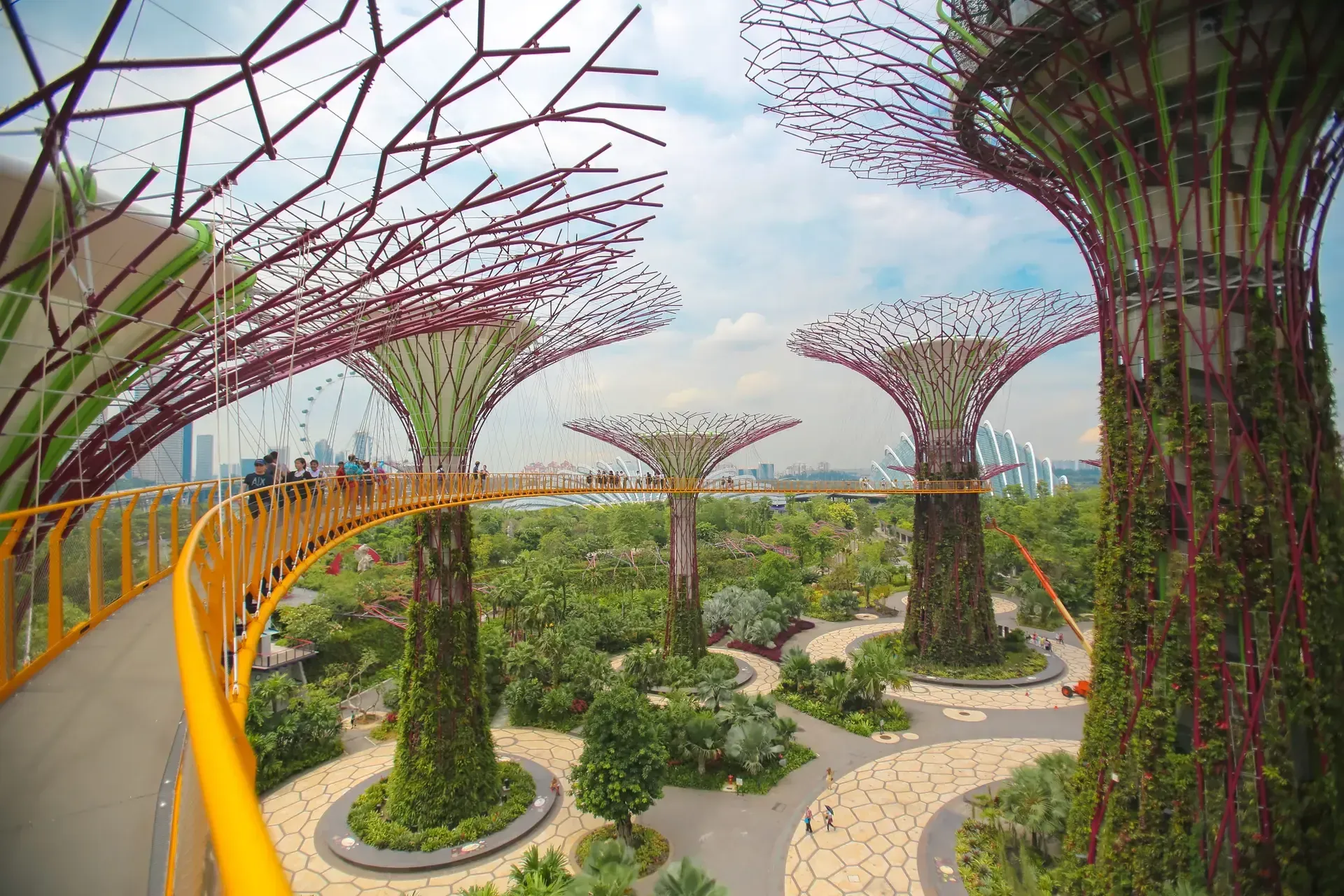
Gardens by the Bay: Choose Your Visit
Plan Gardens by the Bay around the experience you want: compare the conservatories and aerial views, choose an arrival point and leave time for the evening show.

Chapultepec Park: Choose Your Day Out
Plan Chapultepec by geography: choose a castle-and-lake route, a museum day along Reforma or an outing farther west, without confusing park access with attraction tickets.
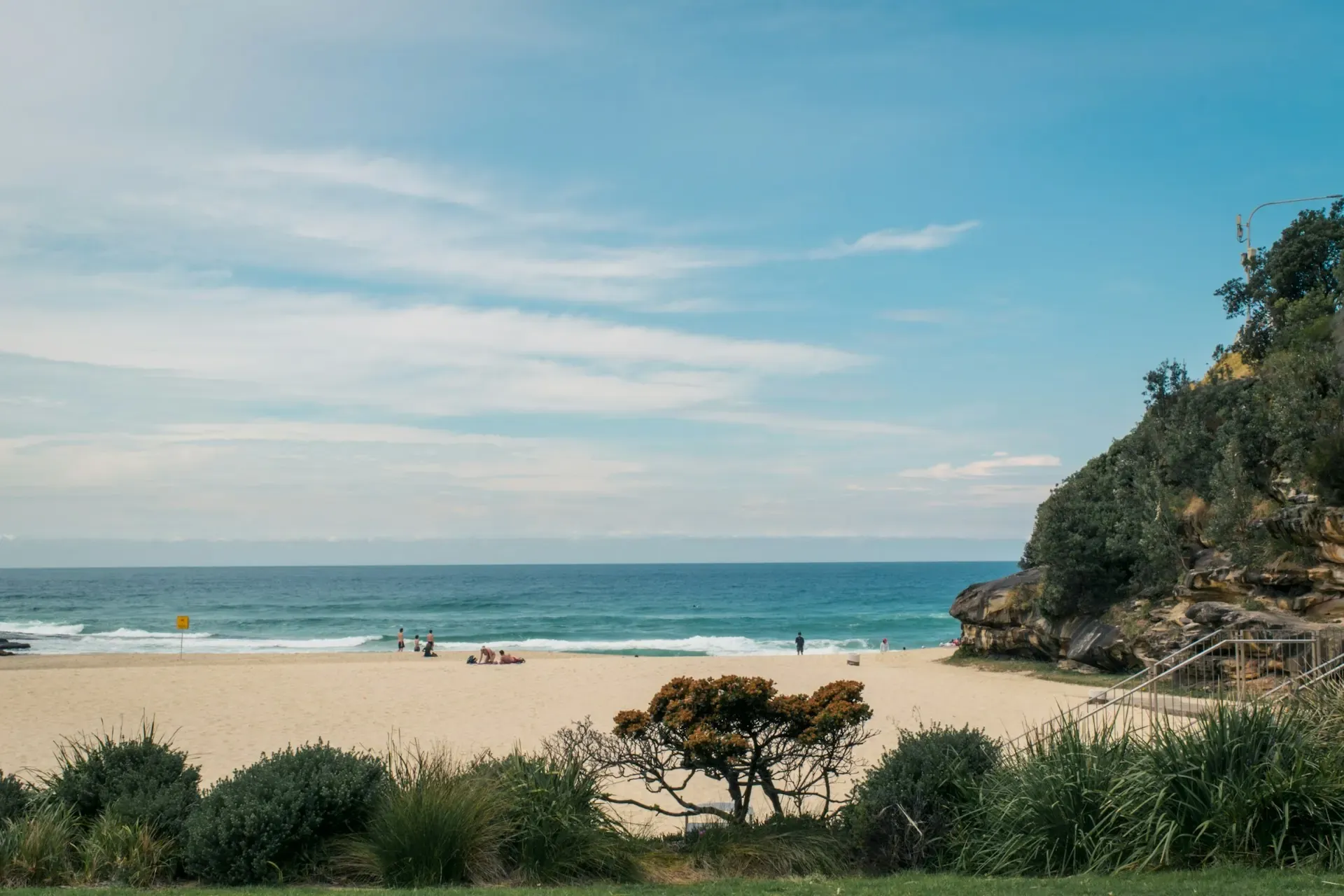
Bondi to Coogee: Plan Your Coastal Walk
Choose a full coastal outing or a shorter section between Bondi, Tamarama, Bronte and Coogee, accounting for closures, steps and your return journey.