
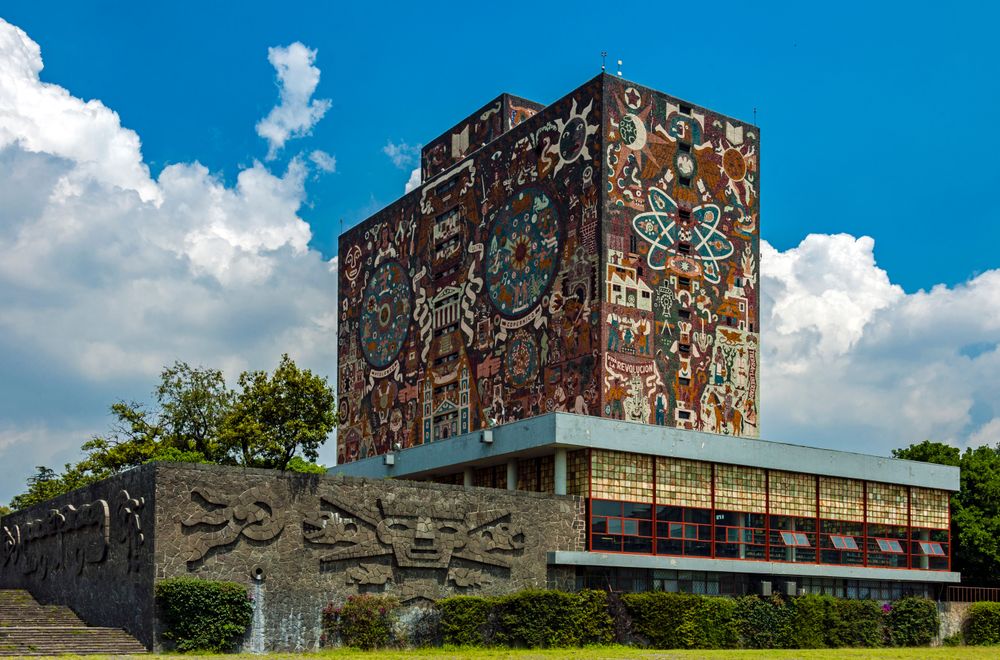
Plan a UNAM campus visit around the Central Library and Rectoría, with transport, stadium mural checks and an optional MUAC visit.
UNAM's Ciudad Universitaria is best approached as an outdoor architecture and mural visit, with a museum as an optional second activity. Start around the Biblioteca Central and Rectoría, look at how art fits the buildings, and resist treating the entire university as one walkable attraction. The southern cultural centre is a separate destination within the much larger campus.
Choose this outing if you enjoy public art, modern architecture and places still doing the work they were built for. It differs from a conventional museum: students, staff and university operations shape access. Our Mexico City cultural guide helps place it among the city's other options; this guide concentrates on making one campus visit coherent.
Decide which campus visit you want
Checked on 5 November 2026. Suggested durations are editorial allowances, excluding cross-city travel and queues.
| Option | Main purpose | Allowance | Important distinction |
|---|---|---|---|
| Central campus | Library exterior, Rectoría and open spaces | 2–3 hours | Outdoor visit; building interiors have their own rules |
| Central campus plus stadium exterior | Add Rivera's work and sporting architecture | Around half a day with breaks | Stadium access and mural visibility require checking |
| Central campus plus MUAC | Historic murals and contemporary exhibitions | A substantial day | Separate transfer, museum ticket and opening hours |
| MUAC alone | Current contemporary-art programme | 2–3 hours plus travel | Head to Centro Cultural Universitario, not just “UNAM” |
The UNESCO listing recognises the central campus, inscribed in 2007, as an integration of architecture, urban planning, art and landscape. That is a useful lens for the visit: look at the relationship between buildings and public space, not only at individual mural photographs.
Start with the Biblioteca Central
Make the library your orientation point. Before moving close to the mosaic, stand back and notice the decorated upper volume above its lower base. The contrast between the building's overall geometry and the density of the imagery is easier to understand from a little distance.
Juan O'Gorman's stone mosaics cover four sides. The city's official library guide introduces the building and its murals. If you only stop at the first visible face, you miss the way the work changes as you move around it. Follow open pedestrian paths and view additional sides where access permits, without assuming every edge is accessible on the day.
For a simple reading key, the north side concerns the pre-Hispanic past, the south the colonial period, the east the contemporary world and the west the university. These orientations are explained in El Colegio de México's campus interpretation. Use them to compare themes rather than trying to decode every figure without context.
Pick one motif or visual contrast and follow it through your viewing. How does a large circular form organise a wall? Which figures remain legible from across the open space? How does the texture of stone change the impression compared with a painted mural? This approach gives a first-time visitor something to do beyond taking the familiar photograph.
The library is a working academic building. Looking at the exterior does not require treating the reading rooms as a sightseeing route. If you want to enter for a specific purpose, check the library's own access conditions; do not assume that exterior public access creates a right to roam through study areas.
Continue to Rectoría and the central open spaces
From the library, continue toward the Torre de Rectoría and its public surroundings. INAH's campus account identifies the Rectoría murals with David Alfaro Siqueiros and the library's with O'Gorman. That gives you a concrete comparison between two artists within the same architectural project.
Look at the way each work relates to its support. The library wraps imagery around a large block; Rectoría offers a different encounter between art, wall and tower. Observe from permitted paths, allowing space for people entering or leaving university buildings. You can appreciate the contrast without gaining access to offices or upper floors.
Then give time to the open spaces commonly called Las Islas. The pause matters because the heritage ensemble includes the spaces between buildings. Walk a manageable section, look back toward the library and compare the long view with the details you examined nearby. This is also a sensible point to decide whether you have the energy for an extension.
Keep the core route simple: library exterior, Rectoría surroundings, then a short open-space loop and a return toward your chosen transport point. Two or three hours allows careful looking and a break. It is an estimate, not a claim that every visitor needs the same time or that the university offers a fixed tourist circuit.
Treat the Olympic Stadium as an optional extension
The Estadio Olímpico Universitario adds a sporting and architectural dimension, with Diego Rivera's relief on its eastern facade. It is not simply another gallery on the same pedestrian loop: plan the route across the Insurgentes corridor using designated crossings and check the actual access arrangement.
There is a current reason to avoid promising an uninterrupted view. UNAM announced a conservation partnership in September 2026, beginning with Rivera's stadium work. This confirms a conservation programme; it does not establish which barriers, scaffolding or access restrictions you will encounter on a particular date.
If this mural is your main reason for coming, ask about present visibility before travelling. For a general first visit, make the central campus worthwhile in its own right and regard the stadium as an addition if conditions suit. An exterior stop does not include a stadium tour or a match ticket. Event days may also change the practical journey, so check the calendar before choosing this extension.
Get to the right part of UNAM
“UNAM” is too broad a destination for a driver or journey planner. Save the Biblioteca Central for the mural walk, or MUAC at Centro Cultural Universitario for the contemporary-art museum. A journey that reaches the campus boundary can still leave a substantial onward leg.
For Metro travel, the city's Universidad station guide identifies it as the Line 3 terminus. From there, plan the onward campus connection instead of expecting to step out beside the library. Check current service notices before setting off; a network description is not a live disruption report.
UNAM's Pumabús information describes a free internal bus service available to visitors as well as the university community and provides its route map. Match the route to your actual destination and check service for your date, particularly around weekends or academic breaks. Do not rely on an unverified fixed frequency or assume every route operates identically throughout the week.
If using a taxi or ride service, choose a permitted meeting point rather than asking the driver to stop wherever the map pin falls. For the return, identify that point before you begin walking. This is especially useful if you change plans and finish at the cultural centre instead of the central campus.
Add MUAC only if its programme interests you
The Museo Universitario Arte Contemporáneo is in Centro Cultural Universitario, at Insurgentes Sur 3000. It offers a different experience from the historic mural ensemble. Add it for its current exhibitions, not because the university name makes it seem immediately next door.
The official MUAC visit page lists Monday closure and different hours by day. It also gives the Centro Cultural Universitario Metrobús stop and the connection from Metro Universidad using Pumabús route 3. Reconfirm those directions and operating conditions for your visit.
General admission is listed at 60 MXN; the page distinguishes ticket-counter concessions from online tickets, where discounts are not offered. Do not assume that a concession available at the counter applies to your online purchase. Check the museum's current categories and take any required proof. Ticket sales finish 30 minutes before closing.
For a full art day, do the central outdoor route while your energy is fresh, take a proper break, then travel to MUAC. Reverse the order if an exhibition event or confirmed arrangement makes that more practical. If the transfer or walking would make the day rushed, choose one area and give it your attention.
Comfort, access and pairing with Coyoacán
Bring water and protection appropriate to the day's weather, and use footwear suited to prolonged walking. A campus map can make lawns and buildings look close together while hiding the practical length of the paths. Select a shorter route before you are tired, rather than discovering at the end that your return point is far away.
For mobility needs, ask about the exact approach and facilities you plan to use. Pumabús publishes a contact for disability transport requests, but that is not a guarantee of immediate availability. Confirm the arrangement directly. Open-air access, museum accessibility and access to an academic building are separate questions.
Respect classes, study and work. Avoid entering restricted rooms, blocking doorways for photographs or treating people on campus as part of an exhibit. Follow local instructions if a section is closed; the remainder of the route may still offer a worthwhile visit.
If you want to continue to central Coyoacán, treat it as another transfer and protect time for food and travel. Our Coyoacán and Frida Kahlo guide helps distinguish a flexible neighbourhood visit from a timed Casa Azul reservation. Avoid attaching an inflexible museum slot immediately after an ambitious campus route. A quieter meal and squares walk may be the better second half of the day.
Cover photograph: Stone mosaic facades and base pavilion of UNAM Central Library — Archive photograph; no edits to the downloaded file — Daniel Case, CC BY-SA 3.0.
Frequently Asked Questions
Can I visit UNAM without being a student?
The central campus includes public outdoor areas that visitors can explore, subject to local access instructions. Academic interiors, museums and sporting venues have separate rules; public paths do not imply unrestricted building access.
How long should I allow for the main campus murals?
Plan around two to three hours for the library exterior, Rectoría surroundings and a modest open-space walk, excluding travel. Allow more for a guided explanation or an optional stadium extension.
Is MUAC next to the Biblioteca Central?
Treat MUAC at Centro Cultural Universitario as a separate campus destination requiring its own journey plan. Choose its current exhibitions deliberately rather than adding it as a quick extra.
Can I count on seeing the stadium mural unobstructed?
No. UNAM announced a conservation programme beginning with Rivera's work in September 2026. Confirm current visibility and access if the mural is essential; this guide does not claim that specific barriers are present or absent.


Keep Exploring
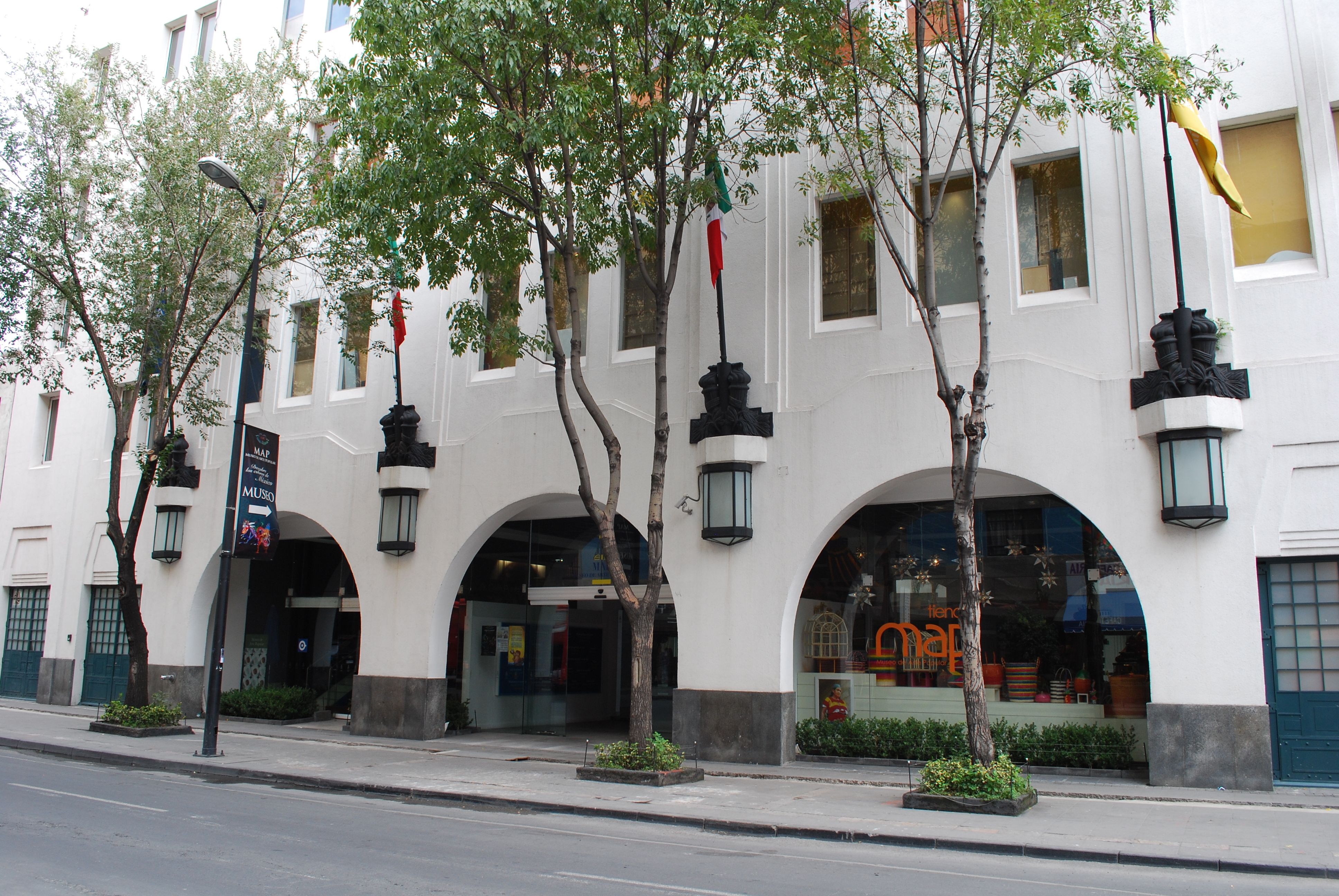
Museo de Arte Popular: Plan Your Mexico City Visit
Plan Mexico City’s Museo de Arte Popular: craft collections, admission, Sunday access and a focused visit near the Alameda.
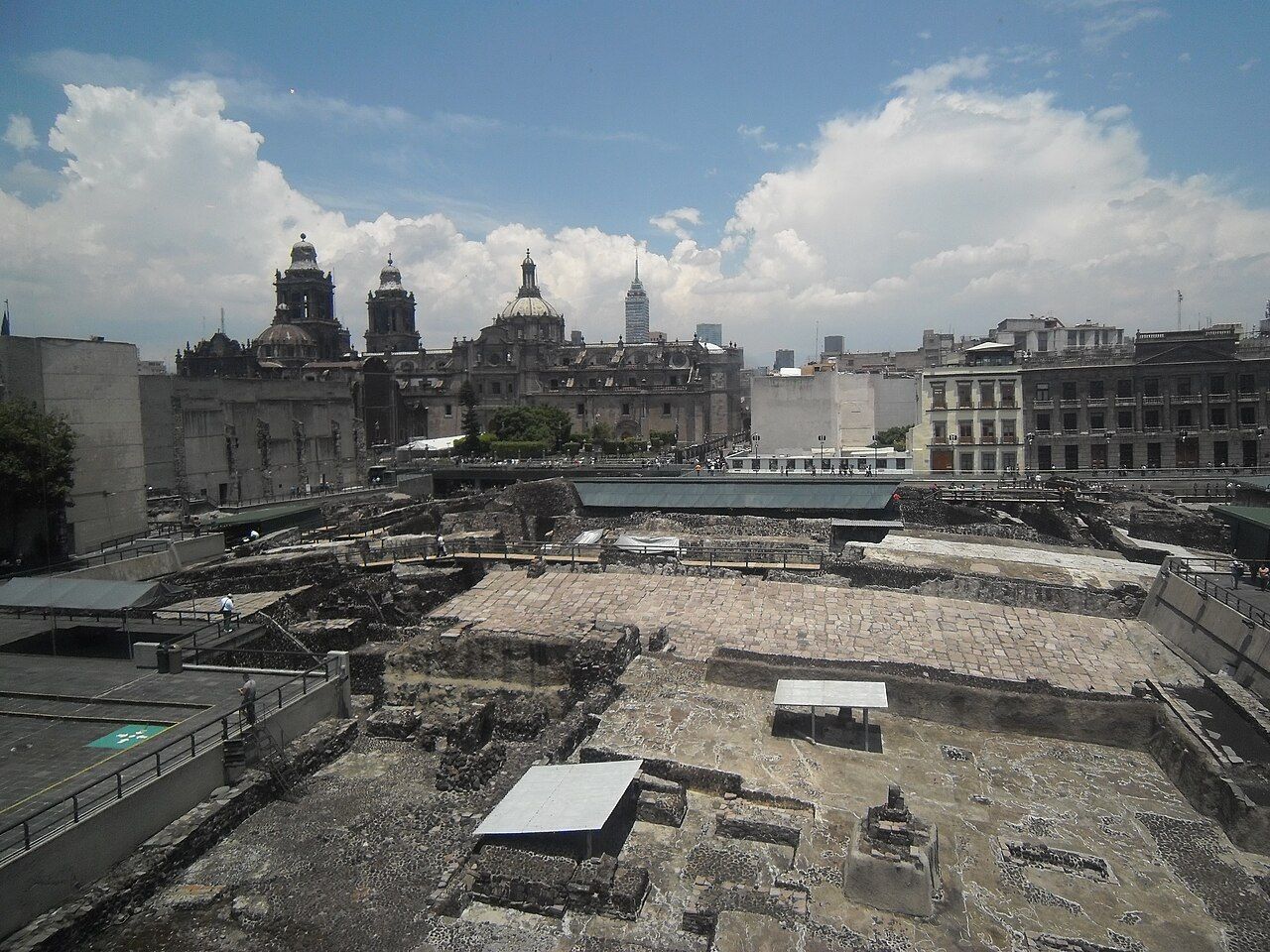
Templo Mayor: Plan Your Mexico City Museum Visit
Plan Templo Mayor with current admission categories, the archaeological remains, museum highlights and clear limits on special access.
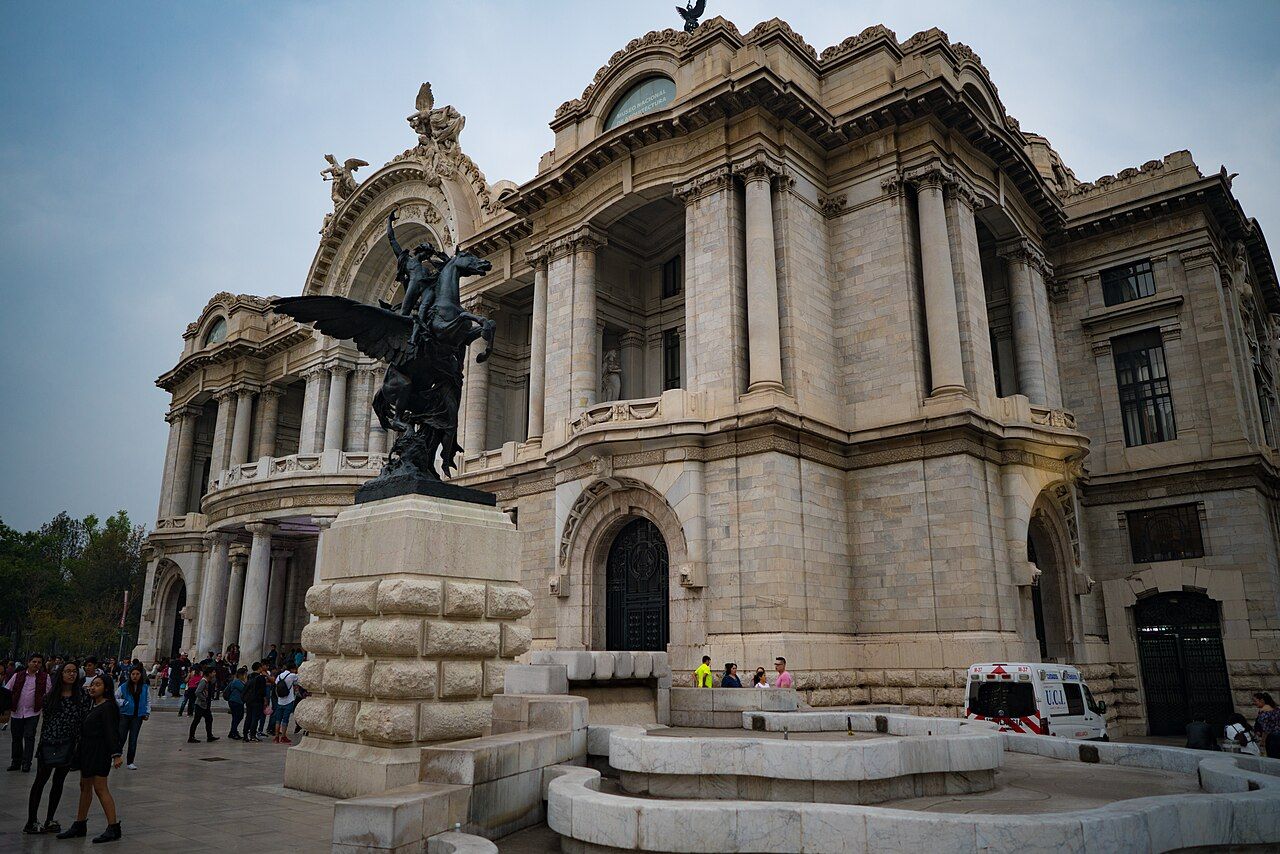
Palacio de Bellas Artes: Plan Your Mexico City Visit
Choose murals, architecture or a performance at Bellas Artes. Plan museum admission, Sunday access, time, tickets and the historic-centre visit.