
Tiong Bahru Singapore: A Neighbourhood Walk
Walk Tiong Bahru through its market, Streamline Moderne flats and small garden, with a focused route and clear limits on air-raid shelter access.
Walk Tiong Bahru for its combination of a working market, distinctive housing and small neighbourhood spaces. Start at the market, trace the curved blocks around Moh Guan Terrace and finish with the streets around Tiong Poh Road. The pleasure is in comparing buildings and everyday uses of space, rather than moving between a series of ticketed attractions.
Allow about two to three hours with a meal, as an editorial planning estimate. A shorter architecture circuit can take roughly 60–90 minutes, depending on how often you stop. Neither estimate includes your journey to the estate. This guide selects a compact portion of the neighbourhood; it does not require completing every marker on the official heritage trail.
For the broader choice between neighbourhoods, gardens and museums, see our Singapore attractions guide. Tiong Bahru suits a morning when food and urban history sound more appealing than another major attraction. It is particularly useful if you want to look closely at housing rather than photograph a skyline.
The walk at a glance
| Decision | Practical choice |
|---|---|
| Starting landmark | Tiong Bahru Market at Seng Poh Road and Lim Liak Street |
| Core circuit | Market, Seng Poh Garden, Moh Guan Terrace, Guan Chuan Street, Tiong Poh Road |
| Suggested allowance | Two to three hours including a meal; editorial estimate |
| Admission | No ticket for the public-street circuit; food and shopping separate |
| Main historical feature | Pre-war housing with Streamline Moderne forms |
| Important limitation | The air-raid shelter is not assumed to be open |
| Shortened version | Market, garden and Block 78, then leave |
Research checked on 4 November 2026. Individual stalls and shops set their own hours. This article does not promise that a named business or an interior will be open when you arrive.
Start at the market, not at an imaginary old town gate
Use Tiong Bahru Market as your first destination when planning the journey. The neighbourhood name covers more ground than this small circuit, and arriving somewhere along Tiong Bahru Road is not the same as reaching the market. Check your route to the actual building rather than simply selecting the first result with the district's name.
The National Heritage Board's self-guided trail also begins at the market. Its wider route includes ten heritage points, so it is a useful map if you want to extend this outing. Download or open it before walking. Our selection prioritises the market and housing core; the graves and Outram-side stops belong to a longer version.
Begin by orienting yourself between Seng Poh Road and Lim Liak Street. Notice the market's relationship to the surrounding flats: this is a food-shopping and eating hub within a residential estate. A few minutes understanding that setting makes the later architecture stops more meaningful than a sequence of unrelated façade photographs.
Choose a market meal before adding a café
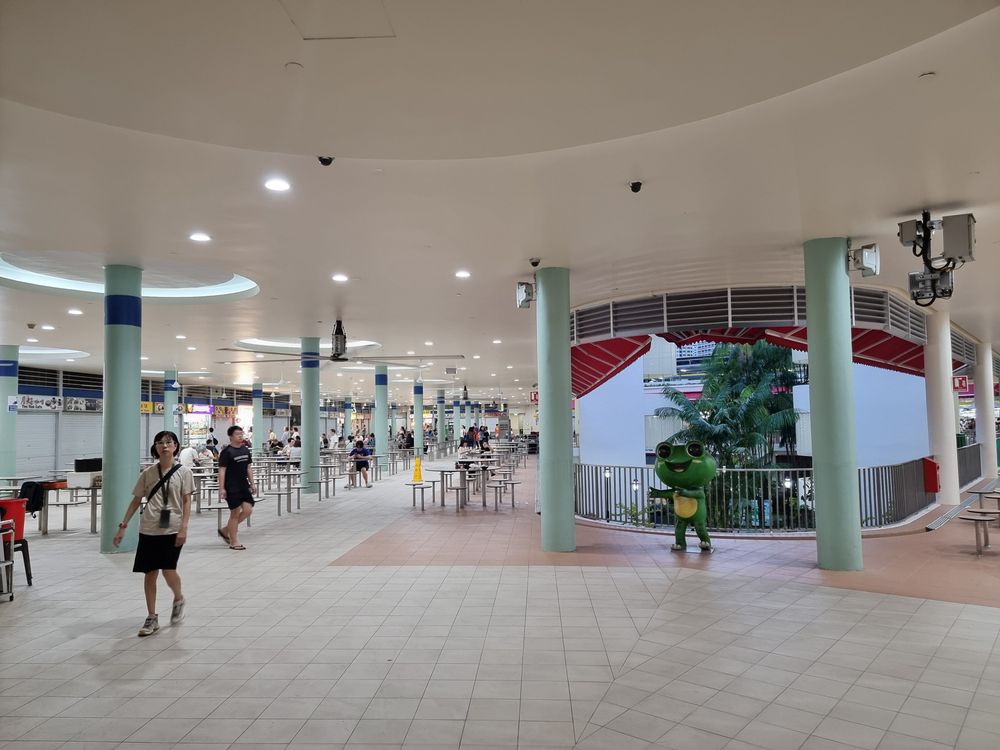
The official market history explains the transition from Seng Poh Road Market, opened in 1951, to the replacement building constructed during 2004–2006. The present building is not a surviving 1950s market hall. Its arrangement separates the market below from the cooked-food area above, around a central courtyard.
Take a brief look at the available stalls before committing to a queue. Decide whether you want a full meal or a small breakfast, then read the displayed menu, portion and price. A famous stall with a long queue is only worthwhile if its dish is what you wanted; the purpose of this stop is to eat, not to complete a ranking.
Keep the meal flexible. The building's existence does not guarantee a particular vendor's opening day, and this guide does not assign a universal closing time to the centre. If one stall is essential to your visit, check its current information directly. Otherwise, choose from what is visibly operating when you arrive.
A market meal followed by a café can be enjoyable, but they serve different purposes. Eat here if the hawker setting is part of your interest; choose a later café for a longer seated break. Buying both automatically can leave less time and appetite than you intended. Keep aisles clear when choosing, carrying food or photographing the courtyard.
Seng Poh Garden: a small stop with a clear subject
From the market area, continue along Seng Poh Road towards its junction with Moh Guan Terrace. The garden gives the walk a change of scale: instead of another building to frame, there is a small shared outdoor space to understand. It is a neighbourhood pause, not an extensive botanical attraction.
The National Heritage Board's garden account identifies the Dancing Girl sculpture as work by Lim Nang Seng, associated with the garden's creation in 1972. Look at the abstract form before reading the title, then look again. Recognising how a simple shape suggests movement is more rewarding than merely ticking off a sculpture on a map.
Allow enough room for people using the space. A nearby seat or path is not a staging area for rearranging a photograph. If the garden is busy, a short look from the accessible path is sufficient. You do not need an empty view to understand why a shared garden matters in an estate planned around housing.
Moh Guan Terrace and the Horse-Shoe Block
Continue towards Block 78 at Moh Guan Terrace and Guan Chuan Street. The official Horse-Shoe Block entry describes its curved form and the unusual fact that one block spans both streets. This makes it a particularly useful place to understand the estate in three dimensions rather than as a flat collection of frontages.
Look first at the overall turn of the building, then at the relationship between upper homes and ground-floor uses. Change your position from a public pavement when possible, letting the curve reveal itself as you walk. The block does not need to fit into one photograph for you to appreciate its shape.
This is also where the shelter story belongs. A purpose-built air-raid shelter was incorporated into the building. That historical fact does not establish regular visitor access today. The National Heritage Board has described special openings in the past; an old account of an open day is not a current booking offer.
Treat the shelter as an exterior history stop unless a responsible organiser explicitly confirms access for your date. Do not test residential doors, enter service areas or wander into a car park to search for an unmarked entrance. Anyone specifically interested in wartime interiors should verify an advertised visit before travelling for that purpose.
Read the architecture around Tiong Poh Road
Continue through the public streets towards Tiong Poh Road, using the heritage map to locate the architecture marker near Eng Watt Street and Sit Wah Road. Rather than collecting every building number, choose two or three façades and compare their details. The purpose is to learn what makes this estate visually distinctive.
The National Heritage Board's architecture guide identifies Alfred G. Church's pre-war designs with Streamline Moderne, a late development of Art Deco. Curved corners, horizontal lines and functional forms make a more precise description than calling every old-looking building “colonial”. The guide also notes patterned balcony brickwork at Blocks 57, 82 and 76.
Use those features as prompts rather than a compulsory scavenger hunt. Where a balcony is visible from a public pavement, compare its material with the smooth surfaces elsewhere. Look at how shade elements and curves alter the façade. Then step back and see whether the detail still shapes the building's overall appearance.
Avoid treating all low-rise buildings as the same period. The official trail distinguishes pre-war housing from later blocks around Lim Liak Road and Seng Poh Road. Returning towards the market gives you an opportunity to compare forms without needing a specialist architectural vocabulary or entering any residential staircase.
Add one side street, or stop while the walk still feels good
If you want a longer outing, explore the public stretches around Yong Siak Street before returning towards your chosen departure point. Make this a browsing extension rather than a promise of particular shops: small businesses change, and this guide does not reproduce an old list as if every tenant were still operating.
Choose a café from its current menu, seating and opening notice. If your interest is design, spend the remaining time looking at the transitions between homes, shopfronts and street corners. If you have already enjoyed the market and curved blocks, ending the walk is a perfectly coherent choice.
For a more temple-focused neighbourhood on another outing, our Chinatown walking guide offers a different combination of streets, religious sites and food. It is a useful comparison before allocating a second morning, rather than a compulsory continuation after Tiong Bahru.
Three versions of the same outing
For food first: start with the market meal, then visit Seng Poh Garden and Block 78. Finish after the curve-and-shelter history stop if you have had enough walking. This gives the outing a clear sequence without making lunch depend on finishing every heritage marker.
For architecture first: begin with a brief market orientation, continue to the garden and Horse-Shoe Block, then spend most of your time around Tiong Poh Road and the architecture marker. Return via the market area to compare the later housing. Keep a meal optional if building details are your main interest.
For a shorter visit: keep only the market, garden and Block 78. Do not add distant heritage points simply to make the route look complete. The National Heritage Board trail remains available for a separate, longer walk when those stories interest you.
These are editorial route choices, not guided-tour itineraries or measured accessibility assessments. For step-free requirements, check the actual market entrance, lift availability and your pavement route on arrival; public streets and a two-storey building do not automatically provide one uninterrupted accessible circuit.
Cover photograph: Tables and food stalls around the courtyard of Tiong Bahru Market — Archive photograph; no edits to the downloaded file — Kbseah, CC BY-SA 4.0.
Frequently Asked Questions
How long should I allow for Tiong Bahru?
About two to three hours including a meal is a useful editorial allowance. For a shorter outing, visit the market, Seng Poh Garden and Block 78 without completing the wider heritage trail.
Can I enter the Tiong Bahru air-raid shelter?
Do not assume regular access. The shelter is a historical feature of Block 78; visit its interior only when an authorised organiser confirms an opening for your date.
Is there a ticket for this neighbourhood walk?
The proposed public-street circuit has no attraction admission ticket. Meals, shopping and any separately organised tour are additional purchases with their own terms.
Should I choose Tiong Bahru or Chinatown?
Choose Tiong Bahru for housing design, the market and a compact residential walk. Choose Chinatown when temple visits and a broader food-and-streets outing are your main interest.


Keep Exploring
San Ángel Mexico City: Art and a Neighbourhood Walk
Plan San Ángel around Plaza San Jacinto, Saturday crafts and one museum, with El Carmen timetable warnings and the separate Rivera–Kahlo studio.
Yanaka: A Neighbourhood Walk in Tokyo
Build a relaxed Yanaka walk around the shopping street, temple lanes and one optional art stop, with practical choices for closures, steps and onward travel.
Palermo Buenos Aires: Choose Your Neighbourhood Walk
Choose between Palermo Soho, Hollywood and the parks, with practical walking plans, transport checks and room for a proper café stop.