
Tetouan Medina: Plan a First Cultural Visit
Plan Tetouan’s medina with Bab El Oqla, Dar El Oddi, craft streets and realistic museum choices, including weekly closures and visitor etiquette.
Give Tetouan's medina a half-day with one museum, rather than treating it as a quick market stop. Its interest lies in the relationship between lanes, domestic architecture, craft and the city's Andalusian connections. A short walk can show you white walls and shopfronts; a little context helps you understand why this particular medina matters.
A useful first plan links the Bab El Oqla area with the commercial lanes around Guersa El Kebira and a chosen exit towards the Mellah and Royal Palace area. Treat these as orientation points, not a turn-by-turn promise: lane names, access and the path suggested by a phone can be confusing. Add one cultural interior according to the day of the week, then leave time for a break.
Tetouan belongs naturally to a northern Morocco itinerary. Our Morocco route guide helps avoid attaching it to an already crowded week in Marrakech or the desert simply because all the destinations appear on the same country map.
Plan around your interest and the weekly closures
| Priority | Best starting point | Practical trade-off |
|---|---|---|
| Local life, dress and craft | Bab El Oqla Museum, then medina lanes | Museum closed Tuesdays |
| A cultural house and quiet pause | Dar El Oddi | Closed Mondays; terrace access involves the building layout |
| Earlier regional history | Tetouan Archaeological Museum | Outside the core lane walk; closed Tuesdays |
| Shopping and observation | Guersa El Kebira and surrounding commercial streets | Workshop access and demonstrations are not guaranteed |
| A manageable first walk | One gate, one cultural stop and a clear exit | Fewer interiors, more time to understand the streets |
Information was checked on 23 November 2026. Allowing 3–4 hours for a selective medina walk, one cultural stop and a pause is our planning suggestion, not an operator tour duration. Transport to Tetouan and a long lunch come on top.
What makes this medina distinctive?
UNESCO's World Heritage description explains Tetouan's role as a connection between Morocco and Andalusia and the influence of refugees who rebuilt the town after their expulsion from Spain. That history gives more substance to the comparison with Andalusian architecture than simply describing the streets as picturesque.
Look for changes in scale: public commercial routes, smaller passages and entrances that lead into private domestic space. A narrow lane is not automatically an invitation to explore every doorway. The historic layout still supports everyday life, so a good visit leaves room for residents carrying purchases, deliveries and ordinary errands.
Morocco's official medina guide identifies Guersa El Kebira with textile sellers and describes the Mellah, the historic Jewish quarter, as part of the medina's cultural geography. Use these named places to give your walk a purpose. You do not need a story attached to every wall to notice how homes, shops and public spaces fit together.
Start at Bab El Oqla if cultural context comes first
Bab El Oqla, also spelled Bab el Okla, is a useful first anchor because the ethnographic museum gives you a focused introduction before the lanes become the main event. The museum is not simply a building to photograph at the gate: its displays connect objects with the city's social and cultural life.
The Fondation Nationale des Musées listing describes textiles, wedding dress and jewellery, decorated architectural elements and material associated with Arab-Andalusian music. These are useful things to look for later in shops and buildings. Museum objects should not, however, be treated as evidence that every similar item for sale is locally handmade or old.
The operator currently lists 10:00–18:00, closed Tuesday, at 68 Rue Skala. Its published tariff is 20 DH for adults, 10 DH for ages 12–18 and 5 DH for children under 12. These are the rates shown by the museum operator at the check date, not a promise that every online directory agrees. Confirm current admission at the desk, particularly around holidays or a changed programme.
Allow roughly 45–60 minutes as a first-visit estimate. If you enjoy textiles and domestic culture, this may be the most worthwhile paid stop of the outing. On Tuesday, keep the medina walk but choose another available interior rather than arriving at a closed door and trying to improvise an entire museum circuit.
Build a short walk around commercial streets
From your starting gate, use the main commercial lanes towards Guersa El Kebira as the core of the walk. Ask for that destination by name when you need orientation. A single clear question is often more effective than showing a complicated route that turns through several tiny passages.
The national tourist office's craft and shopping page highlights zellige and painted wood among Tetouan's traditions. Let this guide what you notice: the relationship between geometric ceramic pieces, wooden surfaces and the larger architecture. You are looking at living production and trade, not a museum where every worker is performing for visitors.
Before entering a workshop, ask permission. If someone offers a demonstration, establish whether it is a paid activity, part of a shop visit or simply a short conversation. Do not presume that photographing a working artisan is included in buying a small item. Ask before close portraits and accept a refusal without negotiating it.
When shopping, ask what the object is made of, where it was produced and whether it is a finished piece or a sample. Judge the item itself rather than relying on words such as traditional or authentic. Agree the final price and packing before paying; delicate ceramics and painted surfaces need a realistic plan for the journey home.
Dar El Oddi: choose it as a separate cultural stop
Dar El Oddi offers a cultural-house setting inside the medina, with a café, shop and panoramic terrace described by its operator. It can provide a change of pace after busy commercial lanes. Choose it because an interior visit and a quiet pause appeal, not because every rooftop image guarantees unrestricted terrace access at all times.
The official visiting page currently gives Tuesday–Sunday, 10:00–18:30, with Monday closure and an admission rate of 30 DH. These hours differ from Bab El Oqla's weekly closure. That is useful when planning, but it does not mean the two institutions share a ticket or operate as coordinated substitutes.
If stairs are difficult, contact the venue before relying on the terrace or upper rooms. A café on the ground floor does not establish step-free access to the whole house. Likewise, allow separate spending for drinks or purchases rather than assuming they are included in the admission figure.
When the Archaeological Museum is the better choice
Choose the Archaeological Museum if your main interest is the region before the medina's later urban history. The FNM museum page describes material from northern Moroccan sites including Tamuda and Lixus, with mosaics, ceramics and other archaeological collections.
The listed address is 2 Avenue Ben Hssain, with 10:00–18:00 opening and Tuesday closure. The operator currently shows 10 DH for adults and 3 DH for children, without a child age band on that listing. Do not infer an age threshold from another museum's tariff. Confirm the category and current conditions when purchasing.
This is an alternative cultural focus, not an automatic third museum to squeeze into the same half-day. If you choose it, shorten the shopping circuit or plan a longer stay. A visit to a collection containing objects from Tamuda is also distinct from travelling to the archaeological site itself outside the city.
Finish with a clear exit and a break
The Mellah and Royal Palace area offer orientation for concluding the medina walk, but do not plan on entering the palace. Public streets and views of an exterior are different from an advertised interior visit. Follow any local access instructions and avoid photographing guarded positions when signs or staff prohibit it.
Having an agreed exit is especially useful if your group wants different things from the shops. Choose a place to meet outside a doorway or narrow passage, and keep time for a drink or meal before returning to transport. The visit should not end with a hurried search for the same lane where a driver dropped you earlier.
For a second northern Moroccan cultural outing, our Tangier Kasbah guide offers a comparison of museums and neighbourhood walking. Tetouan and Tangier can complement each other over a stay; that does not require squeezing both full museum programmes into one day.
Independent walk or local guide?
An independent visit works if you are comfortable with occasional backtracking and want control over shopping and pauses. Download a map, mark the gate, selected museum and exit, and accept that GPS may be imprecise between close buildings. Avoid following a shortcut into a passage that feels residential or ends at a private entrance.
A local guide can add context and reduce navigation effort. Before starting, agree the duration, language, total price and whether shopping stops are included. Ask for the particular interests you want—architecture, craft or history—rather than a vague promise to see everything. A guide should help you understand the medina, not make you feel obliged to buy.
For mobility needs, the narrow lanes, changing surfaces and steps require specific planning. Ask about the actual route and building access, not merely whether the city is accessible. A shorter walk with one reachable interior may be a better experience than an ambitious circuit with repeated difficult sections.
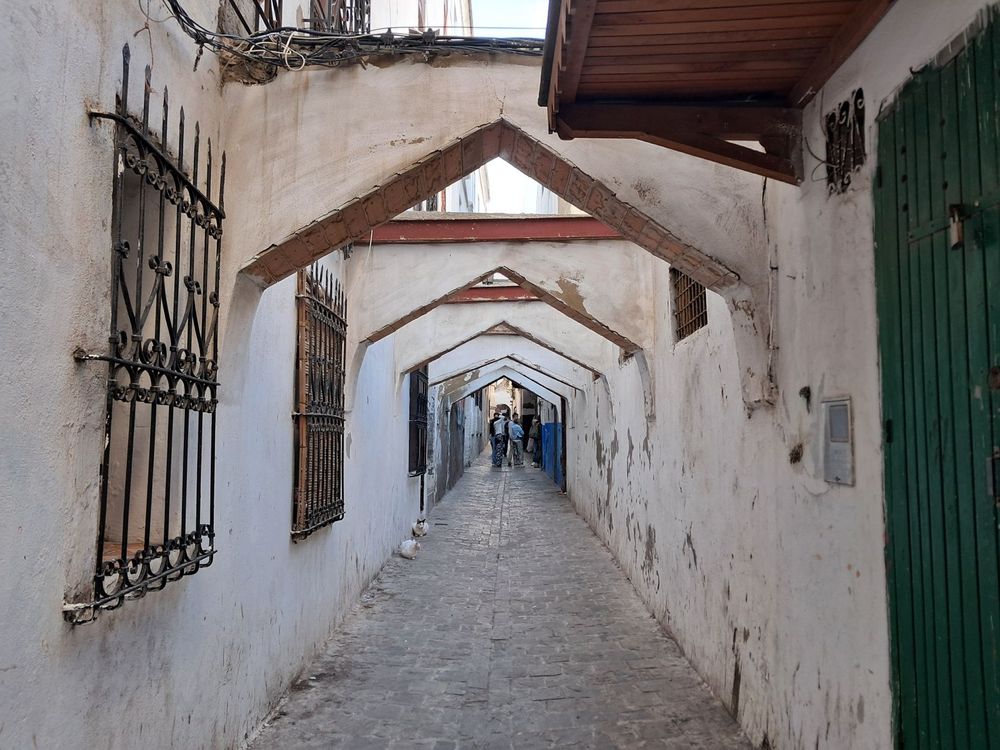
Cover photograph: Whitewashed lane with pointed arches in Tetouan’s medina — Archive photograph Image adapted for publication. — Ideophagous, CC BY-SA 4.0.
Frequently Asked Questions
How much time does Tetouan medina need?
A selective walk with one museum and a pause can occupy about 3–4 hours, excluding transport and a long lunch. This is a planning estimate, not a fixed tour length.
Which museum best complements a first medina walk?
Bab El Oqla is a useful choice for local dress, craft and cultural life. Choose the Archaeological Museum for earlier regional history, or Dar El Oddi for a cultural-house stop.
Are the museums open on Tuesday?
The FNM listings close Bab El Oqla and the Archaeological Museum on Tuesday. Dar El Oddi lists Tuesday opening and Monday closure; confirm your date directly.
Do I need a guide to enter the medina?
A guide is a choice, not a general entry requirement. Agree the route, language, price and shopping expectations beforehand if you hire one.
Can I visit every workshop and photograph artisans?
No access or demonstration is guaranteed. Ask before entering workspaces or taking portraits, and establish any fee before an activity begins.


Keep Exploring
Fes Medina: Plan a First Visit
Plan a first Fes medina walk with Bab Boujloud, Nejjarine, craft streets and an optional tannery view, plus current Al Batha museum details.
Chefchaouen: Plan a First Visit
Plan Chefchaouen with a medina walk, kasbah, Ras El Ma, an optional viewpoint and food heritage, with time for a stay beyond a rushed transfer.
CCBB Rio de Janeiro: Plan Your Cultural Visit
Plan CCBB Rio with free exhibition tickets, the historic rotunda, a permanent money display, access details and advice for shows and family visits.