
Santa Teresa Rio: Art and a Neighborhood Visit
Plan Santa Teresa around Chácara do Céu, Parque Glória Maria and a meal, with verified tram rules and careful advice on museum hours.
Santa Teresa is most rewarding when you choose a few places to spend time, rather than treating every uphill street as part of a sightseeing circuit. The neighborhood combines art collections, cultural spaces, workshops, restaurants and homes. Its yellow tram can be part of the outing, but the visit should still make sense if the queue is long or the service changes.
For a first visit, build a half-day around Museu Chácara do Céu, neighboring Parque Glória Maria and a meal around Largo dos Guimarães. That is an editorial planning allowance, including pauses within the neighborhood but excluding travel from your accommodation. Choose fewer stops if slopes or heat make walking tiring. The famous Selarón staircase is an optional separate component, not a necessary entrance to the entire district.
Our broader Rio de Janeiro guide compares Santa Teresa with the city’s beaches, summits and waterfront museums. This guide helps you turn the neighborhood choice into a manageable visit.
Choose the focus before the route
| Main interest | Anchor the visit around | Practical consequence |
|---|---|---|
| Art and collecting | Museu Chácara do Céu | Check museum opening separately from the park |
| Cultural architecture and views | Parque Glória Maria | Look at the current program and available viewing areas |
| Streets, cafés and a meal | Largo dos Guimarães | Leave time to sit rather than adding distant addresses |
| The historic tram | An actual departure from Carioca | Allow for capacity limits and arrange another return option |
| Selarón’s tiled staircase | Escadaria Selarón | Treat the stairs and onward climb as their own physical commitment |
| Working artists | A confirmed studio opening or appointment | Do not assume every atelier welcomes walk-ins |
A good neighborhood visit has an anchor and some room around it. If the museum matters most, choose the day for its opening. If you mainly want the tram, begin with the operator’s service status. If your group wants lunch and a short look around, avoid attaching a demanding walk merely because the landmarks appear close on a map.
Understand the two cultural stops on Rua Murtinho Nobre
Museu Chácara do Céu and Parque Glória Maria are neighbors, but they are separate institutions. The museum occupies a former residence associated with collector Raymundo Ottoni de Castro Maya. The park incorporates the remains of a different historic house and a contemporary cultural venue. Visiting one does not automatically give access to everything at the other.
The official Museus Castro Maya page identifies Chácara do Céu at Rua Murtinho Nobre, 93, and places its art within the legacy of Castro Maya’s collections and residences. Paintings, works on paper and furnishings offer a useful change of scale after looking at Rio from above. Rather than rushing past every label, choose a small group of works and consider how a domestic setting changes the way a collection is encountered.
Allow roughly 60–90 minutes as a flexible museum estimate if you enjoy art. It is not a promise about the size of the current display. Check temporary exhibitions before coming, and do not assume a famous work you have seen in an old article is on view. A collection’s holdings and a particular day’s exhibition are different things.
The museum’s opening information needs care
At the 13 November 2026 check, two Ibram sources agreed that admission was free and Tuesdays were closed, but differed on other details. The main Castro Maya page listed 10:00–16:30, excluding Tuesdays, Sundays and holidays. The museum’s institutional visitor record listed museum access from 10:00–17:00 except Tuesdays, with last entry at 16:45; it separately listed the outdoor area from 09:00–17:00 with last entry at 16:30.
For planning, a Wednesday-to-Saturday visit between 10:00 and 16:30 stays within the shared museum window, provided it is not a holiday or exceptional closure. Confirm directly if Sunday, a holiday or a late arrival is essential to your plan. Do not build the day around an assumed late admission simply because one official listing permits it.
This also affects the order of your stops. A morning street walk followed by a confirmed museum visit can work well; an unhurried lunch followed by arrival near closing is less forgiving. Keep enough time to enjoy the collection rather than treating the final possible entry as a target.
Parque Glória Maria: use the current name and program
The place still widely called Parque das Ruínas is now Parque Glória Maria. Riotur’s current description places it at Rua Murtinho Nobre, 169, and explains how the historic remains were combined with iron and glass. It includes galleries, the Teatro Ruth de Souza and a lookout, so it is more than an empty shell to photograph.
Look for a current exhibition or performance that gives the stop a purpose beyond the view. A theater event has its own timing and admission conditions; a general park visit does not imply a seat at a performance. Check the venue’s current channels through the tourism page for opening arrangements, temporary restrictions and the available areas.
The change of name is useful practical information when searching maps, finding current announcements or asking a driver for the destination. Both names may appear in older travel material. The municipal site connects the place with Laurinda Santos Lobo, Ruth de Souza and journalist Glória Maria; those different cultural histories are worth noticing instead of reducing the venue to a panoramic backdrop.
If a staircase or upper viewing area does not suit your mobility, ask what can be reached by the available route before committing. A historic building with a cultural program is not, by itself, proof that every viewing point is accessible. You can still build a visit around the parts that work for your group.
Largo dos Guimarães, food and working studios
The Visit Rio neighborhood guide identifies Largo dos Guimarães as a focal point with restaurants, bars and cafés. Use it as a place to pause and choose your next step, rather than making an ever-growing list of addresses. A meal here can be the main social part of the outing, especially when the morning has involved close looking in a museum.
Check a restaurant’s own menu, hours and reservation rules before making a special trip. The aim is to choose something that suits your group and budget, not to imply that a particular table or view is available on arrival. If you are combining lunch with the museum, reserve the more time-sensitive element first and leave the other flexible.
Studios require a different approach from shops. Look for a current open-studio event, a clearly published visiting schedule or an appointment with an artist whose work interests you. An address in a cultural directory is not a standing invitation to enter. Ask before photographing work or people, and accept that a working atelier may be closed to casual visitors that day.
Taking the Santa Teresa tram
The official Bondes de Santa Teresa page is the key source for the journey. On 13 November 2026 it advertised 08:00–17:00 Monday to Friday and 09:00–16:00 on weekends and holidays, with a R$20 return ticket valid in both directions. Confirm payment methods and any concession eligibility with the operator before boarding.
Board at Carioca and arrive early: departures depend on operations and capacity. The operator also warns that construction at Carioca station can temporarily restrict access at busy times, although the trams continue operating. An advertised closing time therefore does not guarantee a last-minute boarding.
Carioca’s tram address is Rua Lélio Gama, 2, in Centro. Confirm the actual platform and current route before joining a queue. Ask which stop best serves your first venue and clarify return and reboarding conditions when buying; do not assume every departure follows the same branch or that the ticket functions like an unlimited sightseeing bus pass.
The operator’s current page identifies Silvestre as a separate branch. That does not turn a neighborhood visit into an automatic connection with the Corcovado train. If you want that branch specifically, verify its current departures and return arrangements separately. For the museum-and-lunch outing, a longer tram journey is optional.
A workable half-day and a sensible return
Choose a confirmed museum day, arrive by the transport that suits your group, and start with Chácara do Céu or the park according to their actual opening arrangements. Continue to the other if you still have interest and energy, then make the Largo dos Guimarães area your meal stop. This is a sequence of priorities, not a timed walking route or a promise of uninterrupted pavements.
Keep Selarón separate in your planning. Its tiles are a reason to visit the staircase itself, but the stairs and onward slopes add effort. You do not need to ascend from Lapa to justify a Santa Teresa visit. Likewise, descending is not automatically easy for someone whose knees or balance are affected by steps and uneven surfaces.
Use established streets between chosen destinations, check local advice about the route and avoid unfamiliar shortcuts suggested solely by a navigation app. Keep valuables discreet, step aside to consult your phone and ask permission before close photographs of residents. These are practical precautions, not a guarantee about safety or a judgment about everyone who lives in the neighborhood.
Arrange the return while you still have options. Confirm whether the tram suits your departure time; otherwise choose a clear, accessible pickup point for a licensed taxi or booked ride. If the plan becomes dinner rather than lunch, review the return separately instead of assuming the daytime transport arrangement continues into the evening.
If you are considering sleeping here as well, our Rio neighborhood accommodation guide helps compare Santa Teresa’s hillside setting with other bases. A rewarding half-day visit and the most convenient place for every journey on your trip are different decisions.
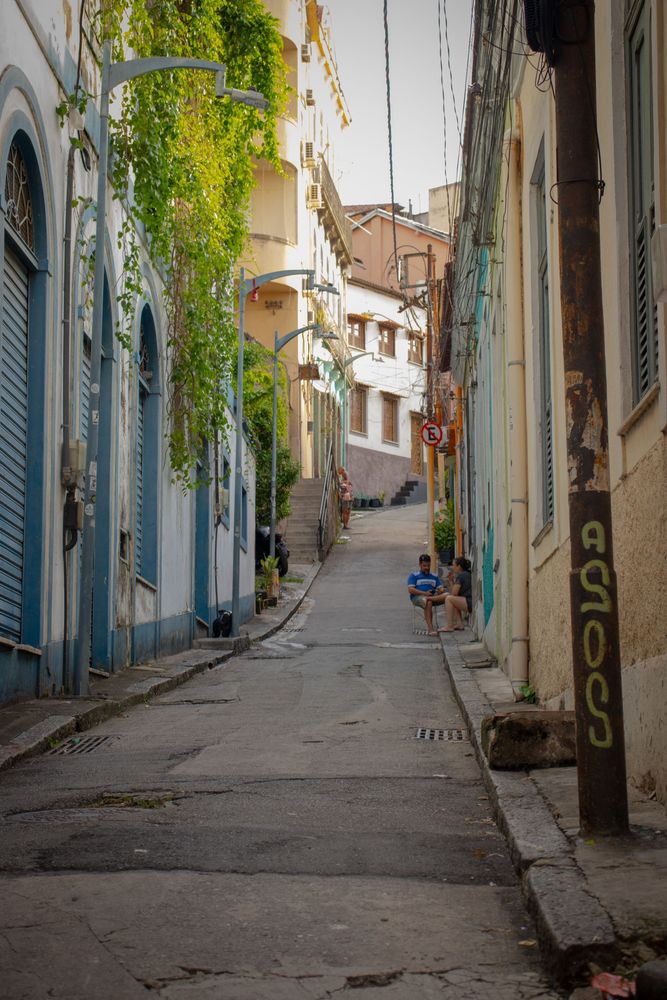
Cover photograph: Sloping street with pastel facades and greenery in Santa Teresa, Rio — Well Santana, Pexels License. Archive photograph from February 2026.
Frequently Asked Questions
How much time should I allow for Santa Teresa?
A half-day is a useful planning allowance for one cultural visit, some neighborhood time and a meal. It excludes travel from your accommodation and can be shortened by choosing fewer stops.
Is Museu Chácara do Céu open on Sundays?
The official sources checked disagree. One excludes Sundays and holidays; another lists daily opening except Tuesdays. Confirm directly before making a Sunday visit depend on the museum.
Do I need to take the tram to visit Santa Teresa?
No. It can be part of the experience, but the neighborhood visit can use another arrival or return. Check current operation, capacity and ticket conditions if the tram matters to you.
Is Parque das Ruínas the same place as Parque Glória Maria?
Yes. Parque Glória Maria is the current name of the cultural venue formerly known as Parque das Ruínas. Use the current name when checking its program and visitor information.

Keep Exploring
Museu de Arte do Rio: Plan Your MAR Visit
Choose MAR exhibitions, architecture and educational visits on Praça Mauá, with current opening days, tickets and the library’s separate calendar.
Academy Museum Los Angeles: Plan Your Visit
Plan an Academy Museum visit with gallery tickets, separate screenings and Oscars Experience, current closures and a realistic afternoon route.
Oaxaca Textile Museum: Plan Your Visit
Plan a thoughtful textile museum visit, with current hours, guided tours, workshop checks and a useful link to Oaxaca’s weaving communities.