
Lee Kong Chian Museum: Dinosaurs and Current Closures
Plan Lee Kong Chian Natural History Museum: dinosaurs, tickets and NUS access, with the Mammal Zone closure explained.
Choose Lee Kong Chian Natural History Museum for dinosaur skeletons and a closer look at Southeast Asian biodiversity, with one important current limitation: the entire Mammal Zone is closed for renovation. The museum's official notice dates that closure from 24 November 2026, without a reopening date. Do not book specifically to see the Singapore Whale, Jubilee, until the museum confirms access has resumed.
The museum is on the National University of Singapore campus at Kent Ridge. It is worth a deliberate journey for an interested visitor, rather than a quick extra between central sights. Our Singapore highlights guide helps place it within a first visit; this guide concentrates on choosing a session, reaching the building and getting value from the accessible galleries.
Fast facts for your visit
| Detail | What to plan around |
|---|---|
| Address | 2 Conservatory Drive, NUS, Singapore 117377 |
| Published hours | Tuesday–Sunday, 10:00–18:00; last admission 16:30 |
| Monday | Closed, including Monday public holidays unless announced otherwise |
| Admission sessions | 10:00, 13:00 and 16:00 |
| Standard adult price displayed | S$27; confirm the final checkout total |
| Rail and bus approach | Clementi MRT, then bus 96 to Raffles Hall |
| Suggested time | About 90 minutes to two hours inside, plus transport |
| Current restriction | Entire Mammal Zone closed from 24 November 2026 |
The museum's visitor page supplies the operating pattern, session times and displayed adult price, checked on 26 November 2026. Our longer time allowance is an editorial suggestion for visitors who want to read and pause. A session is an entry arrangement, not a promise of a guided tour or permission to remain after closing.
Decide whether the journey suits your interests
This is a natural history museum, so the central experience is looking at specimens and understanding what they show. Choose it if comparing forms, reading about animals or discussing the natural world is enjoyable in itself. The large dinosaur skeletons offer an immediate visual focus, but a visit becomes more rewarding when that first impression leads to closer observation elsewhere.
It is a different choice from watching living animals at a wildlife park. Nor should it be booked solely on the assumption that every room is full of interactive experiments. For a child fascinated by bones, shells or unfamiliar creatures, a compact specimen-based visit can work well. For someone seeking rides or continuous physical activity, it may be a poor match despite the dinosaur appeal.
Think about the travel commitment before buying. An indoor afternoon on the university campus is a coherent plan; inserting it between a rushed morning at Sentosa and an early city-centre reservation creates avoidable pressure. Keep the next activity flexible, especially if you expect to spend time reading rather than moving directly from one large exhibit to the next.
Understand what the current closure changes
The museum's general descriptions still mention Jubilee in the Mammal Zone. The dated renovation notice takes priority over that evergreen description. Treat the whale as unavailable for planning purposes, and avoid promising children that they will see it. The closure concerns a zone; the notice does not say that the whole museum has closed.
This distinction helps you make a real decision. If the whale is your principal reason for travelling, contact the museum or defer the visit. If dinosaurs, other biodiversity displays and the history of collecting are enough to justify the outing, assess those on their own. There is no need to describe a partial visit as complete to make it worthwhile.
Check the notice again immediately before booking and before leaving your accommodation. A future reopening may change the best route through the galleries; an additional maintenance notice could affect another display. Staff on arrival are the most useful source for which sections are currently accessible and where to begin without doubling back unnecessarily.
Choose an admission session and check the ticket total
An earlier session gives more flexibility for slow reading and a meal afterwards. The final session can suit a shorter visit, but it leaves less room to recover from a delayed journey. Work backwards from closing, including time to find the entrance and present the ticket, rather than interpreting last admission as the ideal arrival time.
The published price table says its figures include the SISTIC booking fee, while other text on the same page says a booking fee applies at checkout. Use the displayed S$27 standard adult amount as the museum's advertised figure, then verify the final total before paying; do not automatically add a fee twice. Resident, student, child and other concession categories have different conditions.
The official FAQ explains that the counter is cashless, tickets can be shown electronically and eligibility documents may be checked. Save each traveller's barcode before setting off. For a discounted category, carry the required proof rather than relying on the name entered during booking. Price information here is an advertised tariff checked on the stated date, not a personal booking quotation.
Arrive through Clementi or use a direct drop-off
The museum documents a public-transport approach through Clementi MRT, followed by bus 96 from Clementi Bus Interchange to Raffles Hall. Another listed stop is Museum, served by bus 151. Check the direction and current stop information in your journey planner; the same campus road system does not make every bus suitable for the journey back.
Allow for the bus connection and the final walk, not just the MRT ride. A large university campus can be confusing on a first visit, particularly when it is raining. Use the museum's complete name and address in your map application. A generic NUS destination may leave you a long way from the public entrance.
For a taxi or ride-hailing arrival, specify Lee Kong Chian Natural History Museum, 2 Conservatory Drive. A direct vehicle journey may be sensible with tired children or someone who needs to conserve energy. Confirm the appropriate entrance and drop-off beforehand if step-free access is essential. Do not assume that every campus shortcut provides an equivalent accessible route.
Use the dinosaurs as a starting point
The museum identifies three sauropod fossils as a central gallery highlight. Start by standing back far enough to understand the whole skeleton, then look more closely at the relationship between the limbs, spine and neck. Let the labels distinguish evidence from reconstruction; a mounted skeleton is an interpretation assembled for study and display, not a photograph of a living animal.
With children, ask one concrete question: what feature would make this animal difficult to fit into a modern room? Then move from scale to structure. Adults can compare how a single joint or bone helps support the larger body. The point is to look at the object before turning it into a background for a photograph.
Avoid spending the entire visit trying to reproduce images seen online. Different viewpoints, other visitors and current barriers may make a particular composition impractical. One photograph and several minutes of attention usually leave a stronger memory than repeatedly rearranging a group beneath the same display. Keep passageways clear and respect all barriers around specimens.
Give smaller specimens and museum history some time
After the largest displays, select a few accessible cases that reward a different kind of attention. Compare shapes, textures or the information attached to specimens. Read enough of a label to understand where an object came from and why it is here. A small case can make the museum's regional purpose clearer than another quick lap around a dramatic skeleton.
The institution's research introduction explains the importance of its Zoological Reference Collection, with a strong Southeast Asian focus. That research collection is not the same thing as the public gallery. Do not expect a standard admission ticket to open collection stores, laboratories or working areas used by researchers.
The museum history traces earlier natural history displays to the Raffles Library and Museum. Use the Heritage Gallery to consider how collecting, public education and Singapore's development connect. You need not memorise a timeline: choose one example that changes how you understand the specimens downstairs and carry that question into the rest of the visit.
Families, access needs and gallery etiquette
Our Singapore with children guide helps compare this focused museum outing with larger family attractions. Here, a good plan might be one dinosaur stop, several smaller displays and a break afterwards. Decide the priorities together before entering so that leaving before everyone is exhausted feels like a successful visit.
The museum lists a nursing room, an accessible toilet and a limited supply of wheelchairs. Those facilities are useful, but they do not establish every detail of an individual's route or guarantee equipment will be free when you arrive. Ask staff about your specific requirements, including arrival, movement between gallery levels and any assistance needed during the renovation.
Food and drinks belong outside the galleries; flash and selfie sticks are prohibited. Plan a snack or drink before entering if someone in the group will need one soon. A museum visit works better when basic needs do not compete with the exhibits. Keep tickets available until departure, and ask staff where to leave bulky luggage or a stroller if required.
Finish with a manageable afternoon
A café stop or meal can be the natural conclusion, without requiring another major attraction. Check the actual outlet's opening hours before relying on campus dining, particularly on weekends and public holidays. Carry enough flexibility to eat elsewhere if your first choice is closed, busy or unsuitable for dietary needs.
Weekend volunteer tours can add context, but admission alone does not reserve a guide. Enquire about current availability and language if that matters to you. Equally, a self-guided visit can be satisfying when you have already chosen a few subjects to examine closely.
Before travelling, put four things together: the latest closure notice, the session you have booked, your transport route and a realistic onward plan. The strongest reason to visit is interest in the accessible collection. With that clear, the museum can offer a thoughtful change of pace from Singapore's outdoor attractions and central shopping districts.
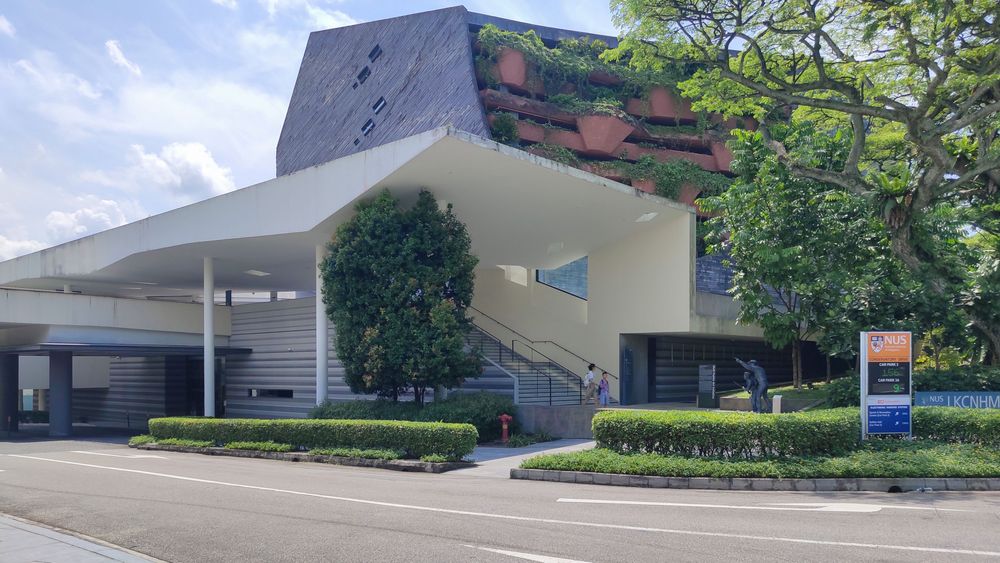
Cover photograph: Lee Kong Chian Natural History Museum facade and entrance in 2023 — Archive photograph 2023 — Moheen Reeyad, CC BY-SA 4.0.
Frequently Asked Questions
Can I see the Singapore Whale, Jubilee, now?
Do not plan on it. The museum announced closure of the entire Mammal Zone from 24 November 2026. No reopening date was stated when checked on 26 November; confirm access directly before a whale-focused visit.
Is the museum open on Mondays?
Its published pattern is Tuesday–Sunday, with Monday closure. The museum says Monday public holidays remain closed unless it announces an exception. Check the notice for your date.
How much time should I allow?
About 90 minutes to two hours inside is a practical editorial allowance. Add the journey to the NUS campus separately, and allow longer if you read closely or join an available tour.
Which public-transport route does the museum recommend?
Clementi MRT followed by bus 96 to Raffles Hall is the documented rail-and-bus approach. Check current service direction and the final walk to 2 Conservatory Drive.
Does my admission session include a guided tour?
No. Admission is for a self-guided visit. Weekend volunteer tours depend on availability and capacity; ask the museum about the arrangements for your date.


Keep Exploring
Haw Par Villa: Closures and Hell’s Museum
Understand Haw Par Villa’s partial park closure, Hell’s Museum admission exceptions and the Ten Courts before deciding whether to visit.
National Museum Maldives: Plan Your Malé Visit
Visit the National Museum in Malé: official hours, admission, collection themes, bag rules and a practical pairing with Sultan Park.
Natural History Museum Los Angeles: Plan Your Visit
Plan the Natural History Museum in Los Angeles: free Commons, Dinosaur Hall, admission, extras, transport and access for a focused visit.