
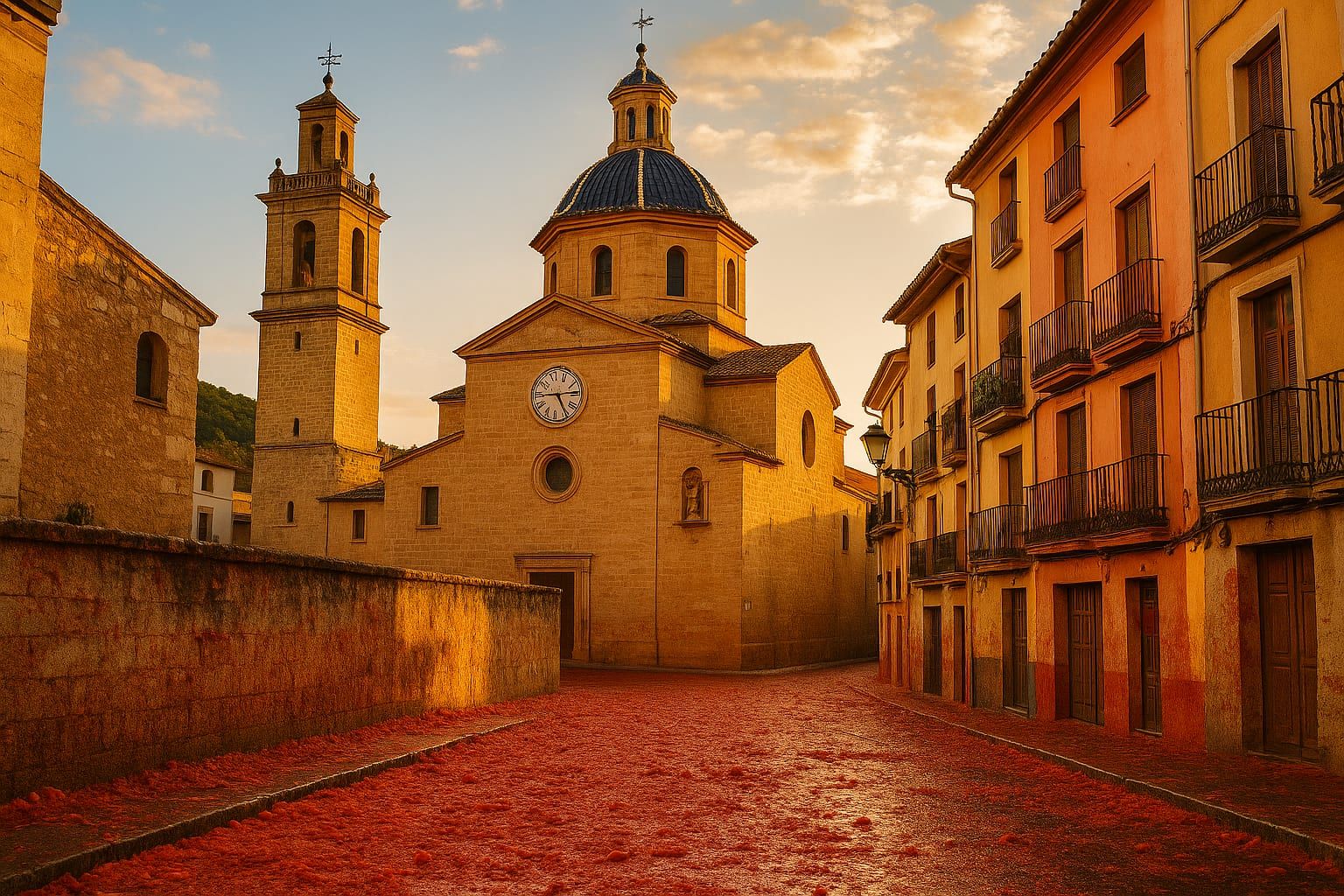
From Buñol’s tomato-soaked streets to bull runs and firework-soaked plazas, explore La Tomatina and Spain’s wildest festivals with practical tips, history, and local insights.
La Tomatina & Spain's Craziest Festivals
Spain is a country of exuberant public celebrations — from the thunderous fireworks of Las Fallas to the visceral rush of Pamplona’s bull run. But if you want one image that sums up Spanish festival chaos and joy, think of a muddy, red-splattered street where thousands laugh and fling ripe tomatoes at one another: La Tomatina.
In this guide you’ll find the story behind Buñol’s famous tomato fight, practical tips for attending, safety and etiquette rules, and a whistle-stop tour of other Spain festivals that rank among the country’s wildest. Whether you’re planning to take part in the mess or watching from the sidelines, read on for local insights that will help you travel smart (and clean up after).
What is La Tomatina? A quick history
La Tomatina takes place in the small Valencian town of Buñol each year on the last Wednesday of August. The messy tradition began in 1945 during a parade for the local “Gigantes y Cabezudos” (giants and big-heads). A spontaneous scuffle near a vegetable stand turned into friendly tomato-throwing, and the custom grew from there.
Over decades the event swelled in popularity from a local prank to a global spectacle. Today the town organizes the festival tightly: trucks deliver thousands of tomatoes (usually low-grade, overripe ones unsuitable for eating), safety rules are enforced, and cleaning crews wash the streets soon after the fight.
Fun facts:
- The fight lasts roughly one hour after the second and final horn sounds.
- Before the tomato battle, many participants try to climb a greased pole known as el palo jabón to reach a ham at the top — catching it signals the real start of festivities.
- Approximately tens of thousands attend; some years have seen over 100 tons of tomatoes used (figures vary by year).
When to go & how to get there
- Date: Last Wednesday in August (check the official La Tomatina site for the current year’s exact date and ticketing details).
- Nearest city: Valencia (about 40 minutes by commuter train).
- Train: Regular Cercanías Renfe services run from Valencia Nord station to Buñol. On the festival day extra services and crowd-control measures are in place.
- Flights: Fly into Valencia (VLC) — it’s the fastest base. Madrid and Barcelona are options but add several hours by train.
Most visitors stay in Valencia and make a day trip to Buñol. If you want to stay local and soak up Buñol’s pre- and post-fight atmosphere, book a room well in advance: accommodations sell quickly around the festival.
Tickets, regulations and how the event works
La Tomatina is now ticketed to control crowds. Tickets are limited and typically go on sale weeks to months before the event — popular years sell out fast, so plan ahead.
Key regulations (enforced by local police and organisers):
- Only tomatoes provided by the organisers may be used. Do not bring your own projectiles.
- Squash tomatoes before throwing — this reduces impact injuries.
- No bottles, hard objects, or motorcycles in the fighting zone.
- Do not tear other people’s clothes.
- The event begins and ends with horn signals; obey them.
Local authorities and organisers prioritize safety and order, with first-aid tents and cleaning crews staged nearby. Follow instructions from officials and volunteers.
What to wear, bring, and how to protect yourself
La Tomatina is a full-body tomato immersion. Dress accordingly — and expect to be red until your next laundry day.
Wear:
- Old clothes you can throw away — cotton T-shirt and quick-dry shorts are common.
- Closed-toe shoes with good grip (sandals and flip-flops get lost and are slippery).
- Protective goggles — these are invaluable if you wear contact lenses or have sensitive eyes. Many vendors sell cheap goggles near the event.
Bring:
- A small towel and a change of clothes (stow them in a locker or leave them with non-participating friends).
- Waterproof phone case or disposable camera (phones will get ruined if not protected).
- Cash for trains, lockers (if available), and food in Buñol or Valencia.
Safety tips:
- Don’t bring jewelry, watches, or anything valuable.
- Avoid wearing glasses unless you have an appropriate strap; glasses can be smashed.
- If you’re worried about crowding, stay on the edges — you’ll still get splashed but have an easier exit.
Practical timeline for the day
- Morning: Arrive early in Buñol (many participants gather well before the action). There are street parties before the main event.
- Before the fight: Watch the palo jabón (greased pole) ceremony — it’s part spectacle, part contest.
- The fight (~1 hour): After the final horn, thousands throw tomatoes until the horn blows again.
- After the fight: Street cleaning crews and fire trucks rinse down the square. Many participants head back to Valencia to shower and continue the night out.
Cleaning up — you will be messy
Tomato juice and pulpy bits stick to everything. Fortunately the acidity washes off skin fairly quickly (aside from staining hair and clothes). Bring a towel and expect to rinse off with public showers or in your accommodation’s bathroom. Many hotels in Valencia offer special facilities for festival-goers — contact them before you book.
Local etiquette and responsible tourism
La Tomatina is high-spirited, but respect goes a long way. A few local tips:
- Don’t steal other people’s T-shirts or cameras.
- Squash tomatoes before throwing them — it’s the polite and safer way.
- Respect signage and barriers set up by organisers.
- Remember Buñol is a working town — behave respectfully in bars, restaurants, and streets.
Environmental note: the tomatoes used are usually unsuited for eating, but critics sometimes highlight food waste concerns. Organisers and local farmers frequently work to ensure the fruit used is not part of the edible supply chain.
Other wild Spanish festivals worth traveling for
If you love exuberant public rituals, Spain has plenty more. Below are a few that pair well with a festival-first trip through Spain.
San Fermín — Pamplona (Running of the Bulls)
When: July 6–14 Why it’s wild: The encierro — people running in front of bulls through narrow streets — is adrenaline-packed and dangerous. Thousands of visitors and deep-rooted local ritual make Pamplona one of Spain’s most famous (and controversial) fiestas. Safety: Strict rules are enforced; experience and caution are essential. If you’re curious but cautious, watch from safe vantage points.
Las Fallas — Valencia (Fire, puppets and fireworks)
When: March, main events peak around March 15–19 Why it’s wild: Gigantic papier-mâché monuments (ninots) are paraded and then spectacularly burned amid thunderous daytime fireworks (mascletà) and nightly pyrotechnics. Local tip: Book Valencia accommodation early — this festival draws massive domestic and international crowds.
La Batalla del Vino — Haro (Wine battle)
When: June 29 Why it’s wild: Like La Tomatina but with wine — participants douse one another in red wine. Expect stains and a party atmosphere in La Rioja’s wine capital.
El Colacho — Castrillo de Murcia (Baby-jumping)
When: Corpus Christi (varies, typically in late spring) Why it’s wild: Men dressed as devils jump over rows of babies laid on mattresses in the street. It’s an ancient rite intended to cleanse the babies of original sin — controversial but preserved as a cultural tradition.
These festivals reflect a broad Spanish palette: fire, water, wine, and a lot of passion. If you’re creating a festival-driven itinerary, consider pairing La Tomatina with other regional events for variety.
How to plan a festival trip around La Tomatina
- Base yourself in Valencia: Valencia is the natural hub for La Tomatina and other Valencian fiestas like Las Fallas.
- Book accommodation months in advance: Festival weekends are peak demand.
- Combine experiences: If your schedule allows, add a few days in Madrid, Barcelona, or a nearby wine region like La Rioja (for La Batalla del Vino) to the trip.
- Travel insurance: Cover cancellations and health issues — running with bulls or large crowds can increase risk.
If you’re heading further north after Buñol, a weekend break in Porto is an easy hop across the Iberian coast; for an equally theatrical festival experience outside Spain, check our guide to Carnival in Venice to compare European pageantry. See our practical itineraries for ideas on linking festival stops with city stays: /en/itineraries/48-hours-porto-wine-views-azulejos and /en/local-culture/carnival-venice-complete-guide.
Health and safety essentials
- First aid: Organisers provide medical tents; still bring basic plasters if you have a cut.
- Heat: Late August in Valencia can be hot — hydrate well and wear sunscreen before the fight (you’ll get a tomato bath, but UV still gets through).
- Crowd risk: If you have mobility issues, consider a safer viewing spot. The main fighting square gets very crowded and slippery.
Local insights from regulars
- Locals love the spectacle: Buñol residents benefit economically from the influx of visitors; many families run stalls or rent rooms.
- The best vantage points: For photos, aim for rooftops or balconies overlooking the Plaza del Pueblo — many locals rent balcony space to tourists. If you plan that, book early and confirm safety.
- Afterparty culture: The fight is usually followed by more music, drinks, and fiesta atmosphere — La Tomatina’s thrill is as much social as it is physical.
Final checklist for first-timers
- Buy official La Tomatina ticket in advance.
- Pack old clothes, closed shoes, goggles, and a waterproof phone case.
- Plan transport to and from Valencia; book trains early.
- Take travel insurance and keep emergency contacts handy.
- Respect local rules and the town that hosts you.
Conclusion: Why La Tomatina still captivates
There’s something elemental in La Tomatina’s joy: communal release, absurdity, and a temporary suspension of everyday order. For a short hour each year, strangers become collaborators in a massive, pulpy performance — and the result is one of travel’s most visceral stories.
If you go, treat the event as both a once-in-a-lifetime spectacle and a responsibility: come prepared, respect Buñol and its people, and you’ll return home red-stained, tired, and with an unforgettable tale.
For more festival inspiration or to plan connecting trips before or after La Tomatina, check our guides and itineraries — whether you want quiet cultural days or more fireworks and parades, Spain has a festival to match every kind of adventurer.
Related
Keep Exploring

The Art Nouveau Trail: Europe's Most Beautiful Buildings
Discover Europe's finest Art Nouveau and Modernisme — from Riga's ornate façades to Gaudí's Barcelona masterpieces. A practical guide to must-see buildings, walking routes and local tips.

Understanding the Balkans: History & Culture
A traveler's guide to the Balkans that untangles history, explains cultural diversity, and gives practical tips — from food and festivals to routes and local etiquette.

Carnival in Venice: Complete Guide
Everything you need to know to experience Venice Carnival: history, key events, costume tips, where to watch, budgets, and smart planning for an unforgettable Carnevale in Venice.