
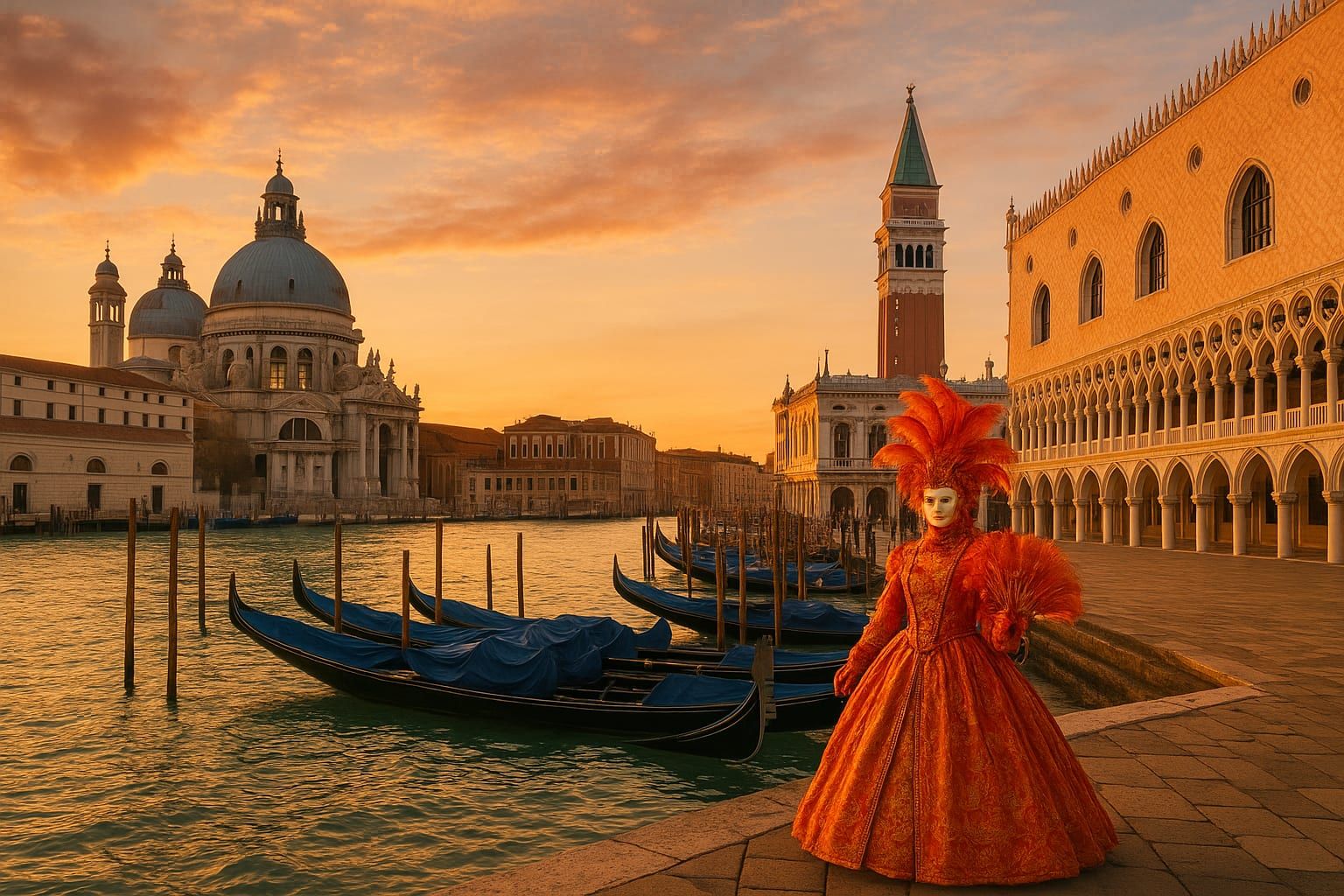
Everything you need to know to experience Venice Carnival: history, key events, costume tips, where to watch, budgets, and smart planning for an unforgettable Carnevale in Venice.
Carnival in Venice: Complete Guide
Venice Carnival (Carnevale di Venezia) is one of the world’s most evocative festivals — two weeks of masked mystery, lavish period costumes, theatrical street performances and a city reimagined as a stage. If you’re planning to visit, this guide covers the history, the must-see events, practical tips, local insights and sample itineraries to help you enjoy a safe, photogenic and unforgettable Carnevale.
What is Venice Carnival? A brief history
Venice has celebrated Carnevale in various forms since medieval times. The festival became famous in the Renaissance when masks and costumes allowed Venetians to blur social boundaries and indulge in public revelry before the somber season of Lent. Carnival was banned under Napoleonic rule and only revived in the late 20th century as a cultural and tourist event — but many traditions (masks, masked balls, theatrical displays) were restored or reimagined to capture the city’s historic glamour.
Keywords: Venice Carnival, Carnevale di Venezia, Venetian masks
When does it happen?
Carnival runs for about two weeks every year, ending on Shrove Tuesday (Mardi Gras), the day before Ash Wednesday. Exact dates move according to the Christian calendar — usually in February, sometimes spilling into early March. Major public events and the official programme are published months ahead, so check the official Venice Carnival calendar before booking.
The highlights: events you shouldn’t miss
Piazza San Marco — the heart of the action
Piazza San Marco (St Mark’s Square) is the main stage. Expect daily spectacles: costumed promenades, orchestras, stilt-walkers, and the famous “Volo dell’Angelo” (Flight of the Angel), a dramatic descent from the Campanile to launch the festivities. Arrive early — and treat Piazza San Marco as the busiest place in town during Carnival.
The Flight of the Angel (Volo dell'Angelo)
An emblematic opening — a costumed figure (historically a guest of honour or celebrity) descends by rope from the bell tower to the square. It’s theatrical and photogenic, but crowds gather; secure a vantage point well in advance.
Mask parades and the Best Mask contest
Daily and nightly mask parades thread through the city. One of the Carnival’s most photogenic competitions is the Best Mask contest — elegantly costumed participants pose for judges and crowds. If you plan to photograph masks, always ask permission first.
Historic masked balls and ticketed events
Ticketed balls — from opulent private parties like the Ballo del Doge to smaller themed soirées — recreate the theatrical glamour of 18th-century Venice. These are pricey (expect €150–€1000+ for premium events) and sell out early; tickets often include dinner and live entertainment.
Street performances, concerts and family shows
Beyond the grand spectacles, look for free street theatre, live classical music in churches, and family-friendly shows. Many local cultural centres host workshops and mask-making demonstrations.
Where to see Carnival beyond St Mark’s
- Rialto and the Rialto Market area host vibrant daily life and are great for candid costume photos.
- Dorsoduro and Campo Santa Margherita offer a more relaxed vibe with cafes and student energy.
- Cannaregio is ideal for quieter mask spotting and discovering local bakeries selling fritole (Carnival doughnuts).
Pro tip: Step off the main tourist routes at peak times — you’ll still find excellent costumes in side canals and campos, with fewer crowds.
Costumes and masks: buying, renting, or wearing your own
Venice is famed for its masks (maschere veneziane). Popular styles include:
- Bauta: full-face mask with a square jawline; historically allowed anonymity at the gaming tables and council chambers.
- Colombina: half-mask that covers the eyes — elegant and easier to wear all day.
- Volto (or Larva): simple white full-face mask.
- Moretta: an oval, black mask traditionally worn by women.
Where to get them:
- Mask shops around San Marco and the Rialto sell everything from inexpensive tourist masks to handmade papier-mâché creations. Expect higher prices for authentic, hand-painted masks.
- Workshops and artisans in Venice sell custom-made masks; booking ahead may be necessary for bespoke pieces.
- Costume rental shops will dress you in period attire if you want the full effect for a ball or photoshoot.
Local insight: If you want authenticity and fair prices, shop beyond the immediate tourist loop — Cannaregio and Dorsoduro have ateliers and artisans who can advise on materials and historical styles.
Practical tips: planning, packing and money matters
Book ahead
Carnival is peak season. Book flights and accommodation at least 3–6 months in advance. If you plan to attend a masked ball or a specific event, secure tickets early.
Where to stay
Staying near San Marco is convenient but expensive and crowded. Consider Cannaregio, Dorsoduro or Castello for quieter evenings with good access by foot or vaporetto. Mestre (on the mainland) offers cheaper hotels but factor in transport time.
Getting around
- Walk as much as possible — Venice is a walking city and many streets are pedestrian-only.
- Vaporetti (water buses) are the public transport backbone. Buy multi-day passes if you’ll use them frequently.
- Avoid private water taxis unless you need to travel late at night or want direct transfers.
What to pack
- Warm, waterproof layers. February in Venice can be cold and damp; bring a warm coat, hat and gloves.
- Comfortable, non-slip shoes — cobbles and wooden bridges get slippery.
- Waterproof bag cover — sudden rain or canal spray can dampen phones and cameras.
- Power bank for long days of photography.
Budgeting
- Free events and street performances are abundant.
- Expect to pay extra for mask workshops, costume hire and evening balls.
- Meals near tourist squares can be overpriced; explore bacari (Venetian wine bars) for cicchetti (small plates) — affordable and authentic.
Food and Carnival treats
Carnival has its own culinary traditions. Don’t miss:
- Fritole (or fritole veneziane): sweet fried dough often filled with raisins or custard.
- Galani/chiacchiere: thin, crisp fried pastries dusted with sugar.
- Cicchetti: Venetian small plates — try baccalà mantecato, sarde in saor and polpette.
Local tip: Pair cicchetti with a glass of local wine or spritz at a bacaro for an authentic break from the crowds.
Photography, etiquette and cultural sensitivity
- Always ask permission before photographing people, especially those wearing elaborate, often handmade costumes.
- Respect private property and avoid stepping on narrow bridges or leaning over low parapets for a shot.
- Don’t touch a mask or costume without consent — many are delicate and handcrafted.
Safety and crowd management
- Expect large crowds in focal areas — keep personal belongings secure and consider a money belt or anti-theft bag.
- Avoid overindulging in public and be mindful of canal edges; there are no guardrails in many places.
- If travelling with children, establish a meeting point and keep an eye on them in dense crowds.
What to avoid
- Don’t rely on last-minute ball tickets — most sell out.
- Avoid dining exclusively in the main tourist squares — prices and quality vary.
- Don’t wear extremely heavy or unwieldy costumes in narrow alleyways — they can be tiring and impractical.
Sample itineraries
These sample plans assume you’ll be based centrally and want to experience the Carnival highlights across 1–3 days.
1-Day Snapshot
- Morning: Early walk through Rialto Market; coffee and a pastry. Explore side canals for candid costume sightings.
- Midday: Stroll to Piazza San Marco for street performances; enjoy lunch at a nearby bacaro with cicchetti.
- Afternoon: Visit a mask atelier (book ahead) and try a mask-making workshop.
- Evening: Watch a local parade or attend a small concert; enjoy a late dinner away from the square.
2-Day Experience
Day 1: Follow the 1-day plan and add a private photoshoot in costume for iconic Venice images.
Day 2: Book a guided walking tour focused on Carnival history and mask traditions. In the evening, attend a ticketed masked ball or join an evening gondola cruise to see the city lit up.
3-Day Luxury or Deep Dive
- Day 1: Arrival, market visit, mask workshop.
- Day 2: Full-day guided historical tour, artisan visits, and a rehearsal/private viewing of a ball (if available).
- Day 3: Attend a grand ball or spend the day exploring quieter sestieri (neighbourhoods), try more local foods and a late-afternoon vaporetto ride at sunset.
Local experiences and tours worth considering
- Guided mask-making workshops with local artisans.
- Private photo sessions with period costumes and a professional photographer.
- Themed walking tours exploring Carnevale’s history and secret spots.
Booking tip: Look for small-group or private experiences for a more authentic connection to Venice’s artisan culture.
Sustainable and respectful travel during Carnival
- Support artisan mask-makers and small bacari rather than large tourist shops.
- Respect neighborhoods — Carnival is more than a spectacle; Venetians live here year-round.
- Avoid single-use plastics and dispose of waste responsibly; the city’s canals and narrow streets are vulnerable to litter.
Day trips and extensions
If you want to extend your trip beyond Venice, winter is a good time for city-hopping in northern Italy and nearby capitals. Trains make short work of places like Verona, Padua or even Milan. For more seasonal travel inspiration, see our guide to other European festival favourites such as the Vienna Christmas Markets or plan a multi-city itinerary including Prague — a cultural pairing popular with winter travellers: 3 Days in Prague.
Final tips and quick checklist
- Book accommodation and major events early.
- Dress in layers and bring waterproof, non-slip shoes.
- Buy a vaporetto pass if you’ll move around frequently.
- Respect locals and artisans; ask before photographing.
- Budget for both free street spectacles and pricier private balls.
Carnival in Venice is a celebration of disguise, pageantry and living history. Whether you drift along the canals in a simple Colombina mask, watch the Volo dell'Angelo with a hot chocolate in hand, or dance at a candlelit ball, Carnevale invites you to play a part in Venice’s theatrical heart. Plan ahead, move off the beaten track and let the city reveal its quieter, more magical corners between the crowds.
Buon Carnevale — and enjoy Venice at its most theatrical and unforgettable.
Related
Keep Exploring
The Art Nouveau Trail: Europe's Most Beautiful Buildings
Discover Europe's finest Art Nouveau and Modernisme — from Riga's ornate façades to Gaudí's Barcelona masterpieces. A practical guide to must-see buildings, walking routes and local tips.

Understanding the Balkans: History & Culture
A traveler's guide to the Balkans that untangles history, explains cultural diversity, and gives practical tips — from food and festivals to routes and local etiquette.
La Tomatina & Spain's Craziest Festivals
From Buñol’s tomato-soaked streets to bull runs and firework-soaked plazas, explore La Tomatina and Spain’s wildest festivals with practical tips, history, and local insights.