
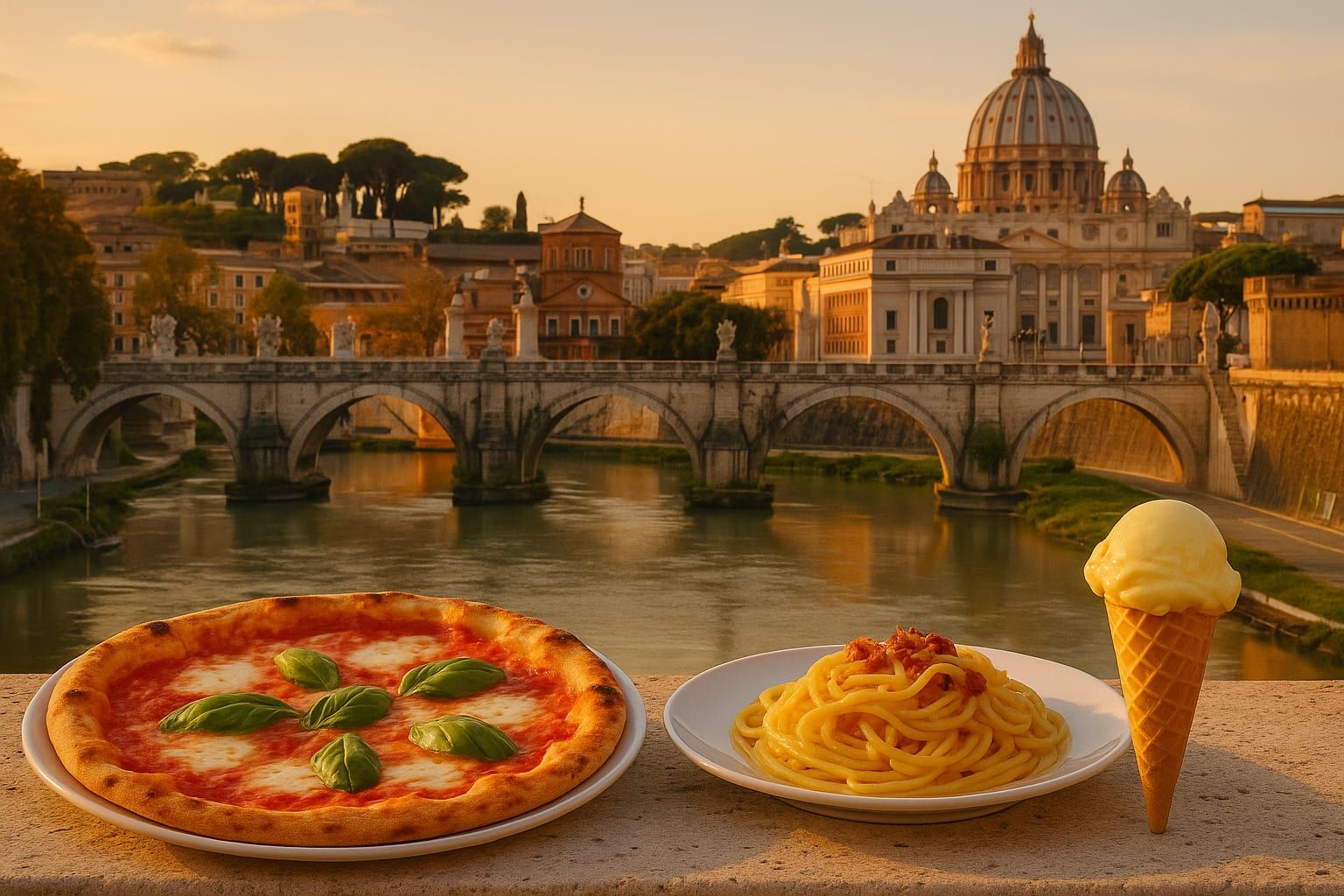
A practical, delicious guide to eating your way through Rome — where to find true Roman pizza, how to order pasta the right way, and where to get authentic gelato.
Rome Food Guide: Pizza, Pasta & Gelato Done Right
Rome is a city you taste as much as you see. From sun-warmed slices sold by weight to silky bowls of cacio e pepe and scoops of gelato that outshine the heat, the Eternal City has culinary rules — and glorious exceptions. This guide will show you how to eat like a Roman: what to order, where to look, and how to avoid tourist traps while savoring pizza, pasta and gelato done right.
Quick orienting facts: Rome’s food personality
- Roman food is simple, ingredient-driven and anchored in technique.
- Expect centered flavors: pecorino, guanciale, olive oil, seasonal vegetables and just a few high-quality toppings.
- Rome’s pizza traditions include pizza al taglio (by the slice, by weight) and pizza tonda (round, sit-down pizza) — both worth trying.
- Pasta in Rome tends to be not-too-saucy; classic Roman sauces are emulsions of cheese, egg and cured pork.
How to read the map: best neighborhoods for food
- Trastevere — charming lanes and many traditional trattorie, great for evening strolls and casual meals.
- Testaccio — an old working-class neighborhood and Rome’s culinary laboratory; markets and real-deal Roman cooking live here.
- Campo de' Fiori and the Jewish Ghetto — lively markets by day, restaurants and bakeries by night.
- Centro Storico / Monti — handy for sightseeing, full of bakeries and small eateries (watch out: some are overpriced).
- Prati — near the Vatican, excellent for pizza al taglio and neighborhood bakeries.
Pizza in Rome: thin, crisp, or by the kilogram
Pizza al taglio vs pizza tonda
- Pizza al taglio: Baked in large rectangular trays, sold by the slice or by weight. The crust is thicker and airier than a traditional Roman “tonda” but still crisper than Neapolitan pizza. Perfect for a quick street-food lunch, often topped creatively.
- Pizza tonda: The round, sit-down pizza. Romans favor a thinner, crisper base than the Neapolitan style; the edges are generally flatter and less puffy.
Practical tips:
- Look for places where locals queue at lunchtime. That’s a good sign.
- If you want the best crust, ask for pizza to be reheated briefly if it’s been sitting — they’ll usually crisp it back up.
- Try classic toppings first: Margherita, marinated seasonal vegetables, prosciutto and burrata (when in season). Avoid over-the-top combos in traditional places.
- Don’t expect pizza to replace a full dinner in every restaurant — many Romans enjoy pizza as a casual meal or snack.
Where to try
Seek out neighborhood bakeries and al taglio counters in Prati, Trastevere and Testaccio. The best slices are simple, focused on dough and balanced toppings — not overloaded.
Pasta the Roman way: three rules and five dishes to know
Roman pasta is about restraint and technique. Rule of thumb:
- Respect the ingredients — good pecorino, guanciale (not bacon), fresh pasta where possible.
- Don’t ask for cream in carbonara — the creaminess comes from eggs and cheese.
- Order pasta first if you’re dining at a trattoria — in Rome, pasta is typically a primo (first course) and should be eaten before main meat courses.
Five Roman classics you must try
- Carbonara: Eggs, pecorino romano, guanciale and black pepper. Silky, savory and absolutely not creamy by factory standards.
- Cacio e pepe: Pecorino and black pepper emulsified with pasta water — a study in simplicity and timing.
- Amatriciana: Tomato-based sauce with guanciale and pecorino, originating from nearby Amatrice.
- Gricia: The ancestor of both carbonara and amatriciana — guanciale, pecorino and black pepper (no eggs, no tomato).
- Bucatini all'amatriciana or alla gricia: The long-holed bucatini noodle captures sauces beautifully; don’t hesitate to order it.
Practical tips:
- Avoid asking for parmesan on carbonara/amatriciana — these dishes demand pecorino. If you’re unsure, ask your server.
- If a trattoria’s menu lists “pasta fatta in casa,” go for it — homemade pasta is often worth the splurge.
- Portion sizes vary: a primo is usually enough for lunch, but if you’re sharing, order two plates to sample more varieties.
Gelato: spotting the real thing
Gelato is more than dessert — it’s a technical craft. To find authentic gelato, watch for these cues:
- Look for “artigianale” on the sign — that means made by hand on site, usually with natural ingredients.
- Avoid gelaterie with overly bright colors (neon greens or fluorescent pinks are a red flag) — they often use artificial colors and flavors.
- The texture should be dense and creamy, not fluffy like soft-serve.
- Price matters: many places charge by scoop; others charge by weight. You’ll often pay more in tourist-heavy zones.
Ordering tips:
- “Cono” for cone, “coppetta” for cup. If you want two flavors in a cone: ask for “due gusti.”
- Try unusual local flavors in addition to classics — ricotta and fig, pistachio from Bronte, or fior di latte are great benchmarks.
- If you sit at a table, there may be a service charge; standing at the counter is cheaper.
Where to go
- Look for small, neighborhood gelaterie tucked down side streets. Standouts in Rome’s gelato scene mix seasonal fruit with artisanal bases for layered flavor.
Markets, delis and snacks: beyond the big three
- Mercato Testaccio: A food market and culinary hub with butcher stalls, produce and informal food counters — great for sampling local specialties and street eats.
- Campo de' Fiori market: Produce, flowers and a lively morning scene. Good for buying picnic supplies.
- Mercato Centrale (near Termini): A modern food hall with regional vendors — handy for varied tastes but can be busy.
Snacks to try
- Supplì: Fried rice croquettes, usually with ragù and mozzarella inside — a Roman street-food staple.
- Pizza bianca: A simple flatbread, salted and often stuffed with prosciutto or eaten as-is — buy fresh from a forno (bakery).
- Porchetta sandwiches in markets or street stalls: Slow-roasted, herb-stuffed pork carved to order.
Where to sit, where to stand: dining etiquette and tips
- Coffee: Italians often stand at the bar for espresso — cheaper and quicker. Cappuccino is traditionally a morning drink, usually not after a heavy meal.
- Tipping: Service is often included (“servizio incluso”) for sit-down restaurants; small change or 5–10% is fine for exceptional service. Leaving a euro or two at a bar is common.
- Reservations: For popular trattorie and restaurants, reserve especially for dinner (8–10pm is peak dining time).
- Payment: Cards are widely accepted, but bring some cash for small bakeries, markets and tiny counters.
- Pace: Meals are meant to be enjoyed. Expect a relaxed tempo at dinner — take the time to savor.
Avoiding tourist traps (and what to do instead)
- Avoid menus plastered with English translations and pictures of dishes — these are often tourist-focused and lower quality.
- Sidestep restaurants directly across from major sights (e.g., the Colosseum, Trevi Fountain) unless you check reviews and the menu closely.
- Instead, follow where locals eat: neighborhood streets in Testaccio, Trastevere and Monti are full of genuine options.
Local insight: If you want authentic Roman dishes at reasonable prices, prioritize places with a regional focus on the menu (Roman classics, seasonal produce) and a clientele of locals rather than overtly touristy decor.
A sample day of eating in Rome
- Morning: Espresso at a standing bar; grab a warm cornetto from a forno.
- Midday: Pizza al taglio for a quick slice or a market-bought sandwich; explore the market stalls for supplì.
- Afternoon: Gelato while you stroll near the Tiber or through charming lanes in Trastevere.
- Evening: A relaxed dinner at a trattoria — start with antipasti, then a primo (cacio e pepe or carbonara), followed by a small secondo if you’re still hungry. Finish with a digestive and conversation.
Allergy, dietary and budget notes
- Vegetarians: Rome has excellent vegetable-forward starters and many pasta dishes can be adapted. Ask whether sauces contain animal fats (guanciale) before ordering.
- Vegans: Finding vegan gelato and dedicated vegan trattorie is easier than before; many modern gelaterie offer fruit-based vegan sorbets.
- Gluten-free: Increasingly available at mainstream and some artisanal places; always ask.
- Budget: Pizza al taglio and markets are your best low-cost options. A sit-down meal can range from reasonable to expensive depending on location and reputation.
Useful Italian phrases for food ordering
- Un caffè, per favore — An espresso, please.
- Un cono con due gusti — One cone with two flavors.
- Vorrei la carbonara, per favore — I’d like the carbonara, please.
- È artigianale? — Is it artisanal?
- Senza panna, per favore — Without cream, please.
Where to go next (if you have more time)
Italy’s food scene is wonderfully regional. If you plan to continue exploring southern Italy after Rome, consider visiting Matera for its unique heritage and food traditions: /en/hidden-gems/matera-ancient-cave-city-rising-again. Or head south-east for baroque towns and coastal cuisine in Puglia — Lecce is a beautiful next stop: /en/hidden-gems/lecce-florence-of-the-south.
Final tips and a short checklist
- Eat with your eyes first: watch how locals order and what they eat. Lines are rarely wrong.
- Learn the language basics above — chefs appreciate respectful attempts.
- Come hungry and plan to sample: a scoop of gelato, a slice of pizza al taglio, and a plate of pasta can make three perfect stops in a single afternoon.
- Stay curious and try seasonal items — Roman cuisine celebrates what’s fresh.
Rome feeds the senses and the soul. Approach every meal as a small ritual, and you’ll leave with a notebook of flavors, not just photos. Buon appetito!
Related
Keep Exploring

Wine Tasting in Bordeaux: Complete Guide
Everything you need to plan the perfect Bordeaux wine-tasting experience: regions, top châteaux, how to taste, booking tips, transport, seasonality and local insights.
Cooking Classes in Italy: Florence, Rome & Beyond
Learn to make pasta, pizza, gelato and regional classics with hands-on classes in Florence, Rome and beyond — market tours, agriturismo experiences and practical tips.
Best Gelato in Italy: City-by-City Guide
A tasty city-by-city guide to Italy’s best gelato: top shops, regional flavors, how to pick an artisan gelateria, and local tips to make every scoop memorable.