
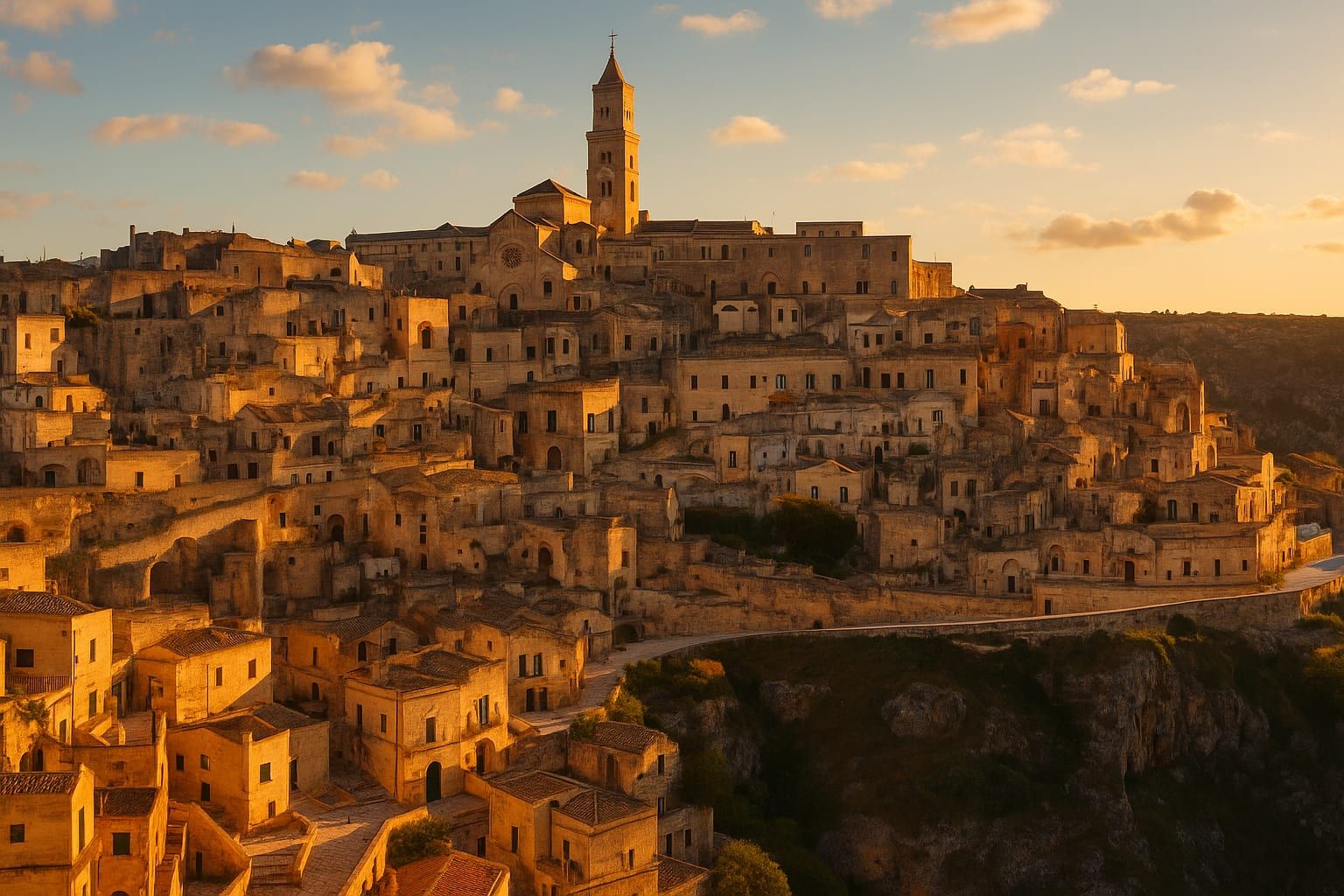
Discover Matera — Europe’s ancient cave city reborn. Explore the Sassi, rupestrian churches, cave hotels, local food, practical tips and the best viewpoints in this UNESCO gem.
Matera: The Ancient Cave City Rising Again
Hidden in the rugged hills of Basilicata, southern Italy, Matera looks like a town carved from the very earth that holds it. For millennia people have hollowed homes, churches and streets from the soft limestone; today the city’s honey‑coloured rock, narrow alleys and dramatic ravines form one of Europe’s most extraordinary living landscapes. Once called the “Shame of Italy” in the mid‑20th century for its poor living conditions, Matera has been meticulously restored and reinvented. It’s now a UNESCO World Heritage site, a European Capital of Culture (2019), and a must‑visit for anyone who loves history, photography, or offbeat travel.
This guide takes you beyond the postcards: the best things to see and do, where to stay and eat, how to get around, practical tips, and local insights so you can experience Matera like a traveller in the know.
Why Matera matters
- Ancient continuity: The carved neighborhoods known as the Sassi (Sasso Caveoso and Sasso Barisano) are among the world’s oldest continuously inhabited settlements. Archaeological evidence shows human presence in the area dating back thousands of years.
- Cultural rebirth: After mass evacuations in the 1950s, Matera languished until UNESCO recognition in 1993 triggered restoration. Since then locals and newcomers have adapted cave dwellings into homes, museums, restaurants and boutique hotels.
- Cinematic allure: Matera’s raw, timeless streets have made it a favourite film location. Its landscapes double for ancient cities in international productions, adding to its cultural cachet.
The Sassi: two neighborhoods, endless discovery
The Sassi are the heart of Matera’s appeal. Carved into a gorge called the Gravina, they form a tiered urban maze.
Sasso Caveoso
Sasso Caveoso offers the most dramatic, photogenic panoramas overlooking the ravine. Early morning and late afternoon light turns its facades incandescent — perfect for photographers and wanderers who want the classic view of Matera.
Sasso Barisano
Sasso Barisano is slightly more urban, with lively cafés, artisan shops and a denser concentration of restored cave dwellings. You’ll find small museums and some of the best boutique cave hotels here.
Must‑see micro‑sites
- Casa Grotta (the cave house museum): step inside a recreated cave dwelling to understand daily life in the Sassi before modernisation.
- Matera Cathedral (Duomo): perched on the ridge above the Sassi, the cathedral offers sweeping views and a Romanesque‑Gothic interior to explore.
- Rupestrian churches: dotted across the Sassi and the opposite Murgia cliffs, these rock‑cut chapels are frescoed and atmospheric.
Parco della Murgia and the rupestrian churches
Cross the ravine into the Parco della Murgia Materana for a quieter, wilder perspective. Trails lead to dozens of rupestrian churches—small rock chapels with Byzantine and medieval frescoes. Hike to viewpoints like the Plateau of the Murgia for sweeping views back across the Sassi; it’s an addictive contrast of wilderness and ancient urbanism.
Where to stay: cave hotels and neighbourhoods
Staying in a cave hotel is one of Matera’s signature experiences. Converted grottos often blend ancient stone with modern comforts — think vaulted ceilings, thick rock walls that keep rooms naturally cool in summer and warm in winter, and dramatic décor.
Recommended (examples):
- Sextantio Le Grotte della Civita — a widely known, atmospheric cave hotel in the Sassi.
- Le Dodici Lune — a comfortable option mentioned by travellers who want authentic cave stays.
If you prefer a more conventional hotel, choose accommodations near Piazza Vittorio Veneto or the modern centre for easier parking and bus connections.
Eat and drink: Matera’s flavours
Matera’s cuisine reflects Basilicata’s peasant traditions with hearty shepherd dishes and simple, bold flavours.
Local specialties to try:
- Pane di Matera: a dense, flavourful bread made from local wheat.
- Peperone crusco: crunchy sweet red peppers, often fried and used as a garnish.
- Lamb and wild herbs: slow‑cooked and robust.
- Regional cheeses and salumi.
For a memorable meal, look for family‑run trattorie in the Sassi and osterie in the town centre. Many cave restaurants turn dining into an atmospheric experience set in vaulted rock rooms.
Sample itineraries
One‑day highlights
- Morning: Start at the Piazza Duomo and visit the cathedral, then walk down into Sasso Barisano.
- Midday: Explore Casa Grotta and have lunch in a cave trattoria.
- Afternoon: Cross to Sasso Caveoso for panoramic views and visit a rupestrian church or small museum.
- Evening: Sunset from a viewpoint above the Gravina and dinner in a cave restaurant.
Two days (deeper dive)
Day 1: Follow the one‑day plan and linger in the Sassi’s alleyways.
Day 2: Hike the Parco della Murgia to visit rupestrian churches and abandoned hermitages. In the afternoon, stroll the modern centre, sample local wines, and catch the Festa della Bruna (if visiting in July—see below).
Practical tips and local insights
- Best time to visit: Spring (April–June) and autumn (September–October) offer mild weather, blooming landscapes and fewer crowds. Winters are quiet and atmospheric; summers can be hot.
- How to get there: The nearest major airport is Bari Karol Wojtyła (about 60–70 minutes by car). Brindisi is another option. There are regional trains and buses from Bari to Matera; a new rail link and bus network improved connections in recent years. Renting a car makes it easier to explore the surrounding Basilicata countryside.
- Getting around: Matera is best explored on foot: expect steep steps, uneven stone, and narrow alleys. Public buses and taxis connect the modern town and the Sassi; many hotels offer pick‑up services. Parking in or near the Sassi is limited—ask your hotel in advance.
- Accessibility: The Sassi’s stone steps and rough surfaces make parts of Matera challenging for wheelchairs and strollers. If mobility is a concern, plan routes with your accommodation and allow more time.
- Money and language: Italy uses the euro. Italian is the language; English is commonly understood in hotels and main tourist sites, but learning a few Italian phrases is appreciated.
- Safety: Matera is very safe. Usual urban vigilance applies; watch your step on uneven streets at night.
- Photography tips: Early morning and late afternoon offer the best light. For postcard shots, head to the viewpoints opposite Sasso Caveoso and the ridge near the Duomo. Blue hour produces magical scenes when the city lights warm the stone.
Local insight: Pace yourself. Matera’s temptation is to rush from viewpoint to viewpoint, but the real magic is in lingering—sipping espresso in a shaded square, watching laundry sweep in the breeze, or wandering a lesser‑known alley where a frescoed chapel waits uncovered.
Festivals and culture
- Festa della Bruna (July 2): Matera’s most famous event—a mix of religious pageantry, folk performances and a spectacular, centuries‑old tradition where a papier‑mâché cart is paraded and then dramatically destroyed. It’s noisy, colourful and deeply local.
- Cultural events: As a former European Capital of Culture, Matera hosts exhibitions, contemporary art and performances year‑round. Check local listings—small galleries and pop‑up shows often appear in renovated cave spaces.
Day trips and combining Matera with other destinations
Matera sits between Puglia and Calabria, making it an excellent base for regional exploration. Combine a visit with coastal Puglia towns, the trulli of Alberobello, or inland medieval villages.
If you’re exploring the wider Mediterranean and Provence, pairing different regional itineraries can be rewarding; see our guide to Provence day trips for ideas on combining varied landscapes and food cultures: /en/itineraries/provence-day-trips-aix-marseille-guide
For readers who love underrated European cities, Matera fits the bill as a destination that rose from obscurity into the spotlight—read more about other overlooked cities here: /en/hidden-gems/5-underrated-european-cities-visit-before-mainstream
Tips for responsible travel
- Respect the Sassi as a living neighbourhood: Many cave houses are still private residences. Keep noise low, follow local rules and be mindful of where you photograph.
- Preserve fragile sites: Rupestrian churches contain ancient frescoes—follow signs, don’t touch paintings, and use permitted cameras only.
- Support local businesses: Eat at family restaurants, buy from local artisans, and consider guided tours led by Matera residents.
Practical checklist
- Footwear: Sturdy, comfortable shoes for uneven stone and steps.
- Clothing: Layers for cool mornings and warm afternoons; a light jacket for evening.
- Cash: Small cafés and market stalls may prefer cash.
- Reservations: Book popular cave hotels and sought‑after restaurants in high season.
- Timing: Arrive early at viewpoints for photos and to avoid tour‑group crowds.
Final thoughts
Matera is one of those rare destinations where history, landscape and contemporary life come together in an intimate, unforgettable way. You can feel the weight of centuries underfoot and the optimism of a city that has reinvented itself without losing its soul.
Whether you’re a photographer chasing one perfect shot at blue hour, a history lover tracing early human settlements, or a curious traveller who wants to sleep in a cave and dine by candlelight in vaulted stone, Matera rewards the patient and the curious. Rise early, wander slowly, and let the city reveal itself one stair at a time.
Related
Keep Exploring
Siracusa: Sicily's Most Beautiful Ancient City
Siracusa is Sicily’s most beautiful ancient city: Greek theatres, Baroque Ortigia, seafood markets and sun-drenched alleys. This guide covers highlights, food, itineraries and practical tips.
Sarajevo: Europe's Jerusalem You've Never Visited
Discover Sarajevo — a compact, soulful capital where mosques, churches and synagogues stand within earshot, Ottoman bazaars meet Austro-Hungarian boulevards, and history hums in every street.
Ohrid: Europe's Hidden Lake Paradise
Discover Ohrid, North Macedonia — a UNESCO lakeside jewel. From crystal-clear Lake Ohrid and ancient churches to hidden beaches and local food, this practical guide covers what to see, do and how t...