
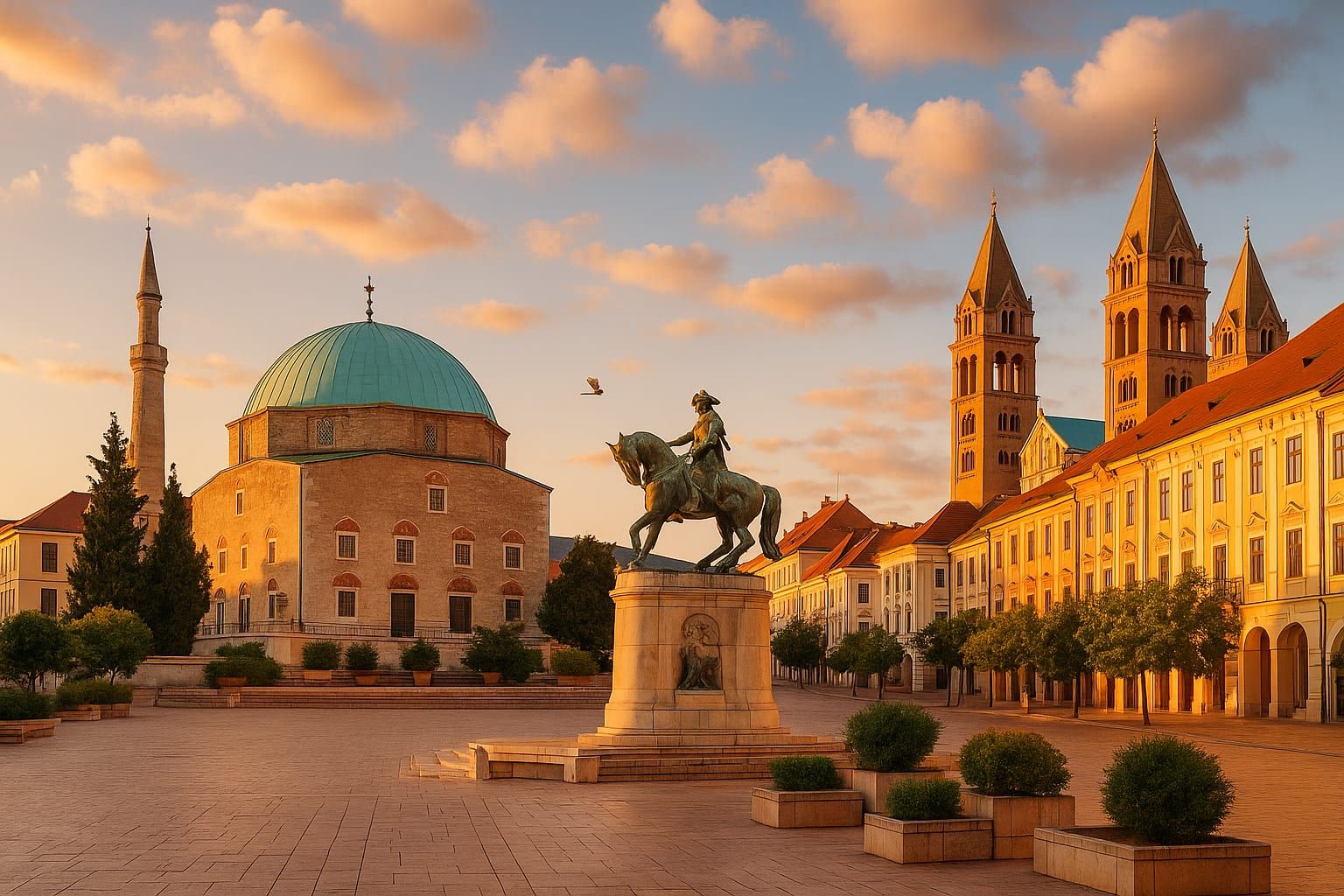
Discover Pécs — Hungary’s sunlit southern city with Mediterranean flair: Ottoman monuments, Zsolnay porcelain, vineyards, lively cafés and practical local tips for a perfect visit.
Pécs: Hungary’s Hidden Mediterranean City
Tucked into the sunny slopes of the Mecsek Hills in Hungary’s southwest, Pécs is the kind of place that surprises every visitor. It doesn't shout like a capital city; instead it seduces with shady squares, fig trees, mellow stone facades, Ottoman-era monuments and a relaxed university-town energy. Many travelers who picture Hungary think of Budapest — but Pécs is the country’s little Mediterranean: milder climate, a strong arts scene, and a palate of flavors and architecture that feels more southern Europe than Central.
This guide explains what to see and do, where to eat and drink, how to get there, and local tips that will make your visit feel like a local discovery.
Why Pécs feels Mediterranean
Pécs’ atmosphere comes from geography and history. Sitting on southern slopes with plenty of sunshine, the city developed trade and cultural links across the Balkans and the Ottoman world. Ottoman rule left a striking imprint: mosques (some adapted as churches), baths, and a street layout that invites lingering. Later, the 19th-century Zsolnay porcelain factory added a distinct decorative arts tradition and brightened façades across the city.
Walk its main squares and you’ll spot examples of Romanesque and baroque churches, Art Nouveau and Secessionist buildings, Ottoman stonework, and the colourful egg-and-floral tiles of Zsolnay porcelain. There’s a leisurely café culture, summer terraces and a vineyard-dotted countryside — all the ingredients of a Mediterranean mood, transplanted to Central Europe.
Must-see highlights
Széchenyi Square and the Mosque of Pasha Qasim
Start in the heart of town at Széchenyi tér, the bustling main square. The Mosque of Pasha Qasim — an Ottoman-era mosque converted into a church — is one of the city’s best-known sights and an emblem of its layered past.
Pécs Cathedral
The cathedral’s twin towers dominate the skyline. Inside, historic frescoes, carved details and a stately interior make it one of Hungary’s important religious monuments.
Early Christian Necropolis (Cella Septichora)
A UNESCO World Heritage site, the necropolis is a rare, atmospheric collection of early Christian burial chapels and mosaics that tells the story of the region’s ancient communities.
Zsolnay Cultural Quarter
The Zsolnay factory transformed Pécs into a centre for decorative arts. Today the Zsolnay Quarter is a lively cultural hub with museums, galleries, workshops and cafés — a great place to learn about the city’s ceramic legacy and catch exhibitions or performances.
Vasarely Museum
Built for the works of Victor Vasarely — the Hungarian-French father of Op Art — this museum is a must for design lovers. Its optical pieces are engaging and visually arresting.
Mecsek Hills & TV Tower (Misina)
For a panoramic perspective, take the short trip up into the Mecsek Hills to the TV tower on Misina. Walking routes, leafy picnic spots and panoramic views of the city below make the Mecsek a favorite escape for locals.
Local markets and neighbourhoods
Wander the markets for fresh produce, artisanal breads and local cheeses. The area around Király Street and the university has a lively café and bar scene, with an affordable, youthful energy.
Food, wine and where to eat like a local
Pécs benefits from being in Hungary’s southern wine country. The Villány wine region — famous for robust reds — is a short drive away and makes an excellent half- or full-day trip for wine tasting.
Eating in Pécs blends Hungarian staples with Mediterranean touches. Look for:
- Hearty goulash and paprika-seasoned stews done in traditional kitchens.
- Lighter, vegetable-forward dishes and salads that reflect the sunnier climate.
- Zsolnay-decorated cafés serving excellent filter coffee and pastries.
Local tips:
- Try a wine tasting in Villány (book ahead on weekends). Expect warm, peppery reds and friendly cellar doors.
- Markets sell seasonal figs and peaches in summer — simple street snacks that feel Mediterranean.
- Lunch menus (menü) are common and good value — perfect for tasting local dishes without overspending.
Culture, festivals and nightlife
Pécs is a university city, and that youthful presence keeps the cultural calendar busy. The city hosted the European Capital of Culture in 2010, and the momentum remains: there are concerts, theatre productions and seasonal festivals across the year.
Nightlife in Pécs is low-key but flavorful. The university neighbourhoods support relaxed bars, wine spots and cafés that stay open late. Instead of clubbing, expect live music, wine bars and convivial terraces.
Day trips and nearby escapes
- Villány wine region: 30–45 minutes south for tastings and vineyard views.
- Mecsek hills: immediate hiking, caves and lookout points.
- Cross-border Croatia: the border is close enough for a day trip if you’re planning a multi-country itinerary.
If you’re comparing Mediterranean cities, Pécs pairs beautifully with destinations like Aix-en-Provence or Marseille — both known for sunlit squares and a relaxed pace — though Pécs remains quieter and far less touristy. For travelers who love atmospheric southern European towns, read more about similar vibes in Aix-en-Provence: The Elegant Heart of Provence and the underrated raw energy of Marseille.
Practical travel tips
Getting there
- From Budapest: trains run regularly; the journey takes roughly 2.5–3 hours by rail. By car, the M6/M60 motorway has shortened driving times to approximately two hours (traffic and season dependent).
- By air: Pécs has a small regional airport with limited services; most international visitors arrive via Budapest and continue by train or car.
Getting around
Pécs is compact and walkable — most sights in the centre are within a 15–25 minute stroll of each other. Public buses connect outer neighbourhoods and the Mecsek Hills. Taxis are available but confirm the price or use a reputable local company.
Money and language
- Currency: Hungarian forint (HUF). Credit cards are widely accepted in restaurants and larger shops, but carry cash for markets and smaller cafés.
- Language: Hungarian is the local language. In tourist areas and among younger people, English is commonly understood. A few basic phrases in Hungarian are appreciated.
Best time to visit
- Late spring to early autumn (May–September) offers the most pleasant weather, outdoor dining, festivals and vineyard visits. Summers can be warm — perfect for terraces.
- Winters are quieter and cheaper but much colder and less Mediterranean in mood.
Safety and local etiquette
Pécs is generally safe. Usual city-smarts apply: watch your belongings in crowded areas, respect religious and historic sites, and ask permission before photographing people in private settings.
Suggested itineraries
A relaxed 48-hour itinerary
Day 1:
- Morning: Széchenyi Square, Mosque of Pasha Qasim, and a coffee in a Zsolnay-influenced café.
- Afternoon: Pécs Cathedral and a wander through the historic centre; late lunch at a local bistro.
- Evening: Wine and small plates near the university district.
Day 2:
- Morning: Zsolnay Cultural Quarter and Vasarely Museum.
- Afternoon: Short hike or cable ride to the Mecsek TV tower for views. Evening concert or a casual bar.
3–4 days (for slower travel)
Add a day trip to Villány for wine tasting, or more time exploring hillside villages and local vineyards. Use a final day to visit smaller museums, galleries, or to relax in a thermal bath or spa if you enjoy that kind of downtime.
Where to stay
Choose based on your travel rhythm:
- Central/Old Town: Perfect for first-time visitors who want to be within walking distance of main sights and cafes.
- Near Zsolnay Quarter: A great choice for culture lovers and families, close to museums and green spaces.
- Suburbs or hill lodgings: If you prefer quiet evenings and nature access, stay closer to the Mecsek Hills.
Accommodation ranges from boutique guesthouses and design hotels to budget hostels and university guest rooms during the academic breaks.
Local insights from people who live here
- Pace yourself: Pécs is not a checklist city. The magic is in slow morning coffees, long lunches, and unplanned discoveries down side streets.
- Ask locals about seasonal produce: markets change through the year and often reflect what’s freshest — figs, cherries and tomatoes in summer; root vegetables in winter.
- Explore beyond the main square: some of the best cafés, murals and small galleries are a few minutes’ walk from tourist hotspots.
Final thoughts
Pécs rewards the curious traveller. It’s not a city built for instant gratification — it’s a place to sit under a plane tree, let the light shift on a terracotta roof, sip a local wine and watch a slow parade of daily life. If you love Mediterranean atmospheres but prefer them without the crowds, Pécs is a rare find in Central Europe: sunny, cultured, and quietly confident.
Ready to plan? Combine a few days in Pécs with other southern European explorations — whether you’re chasing coastal light in Marseille or the Provençal charm of Aix — and you’ll notice how this Hungarian city offers a warm, unexpected coda to a Mediterranean tour.
Related
Written by
Léa Brunet
Léa hunts down the places that aren't yet on the lists — quiet villages, overlooked neighbourhoods, side-streets that locals keep to themselves. She's drawn to anywhere a guidebook gives less than half a page.
Keep Exploring
Ultimate Balkans Road Trip: Slovenia to Montenegro
Explore the Balkans by road: Ljubljana, Lake Bled, Plitvice, Mostar and Durmitor. A 12-day itinerary with tips on driving, where to stay, must-see hikes and local eats.

Discover Montenegro: Coast, Canyons & Towns
From the turquoise fjord-like bay of Kotor to the soaring peaks and canyons inland, Montenegro packs dramatic scenery, medieval towns and outdoor adventure into a compact, unforgettable trip.
A Week in the Balkans: Lakes, Mountains & Towns
A practical 7-day Balkans guide blending lakes, mountains and medieval towns—itinerary, transport tips, budgets and local insights for a memorable week-long trip.