
Plan Fulidhoo around beach time, snorkeling or diving, with realistic transfer checks, room choices and full-cost questions.
Choose Fulidhoo if you want a small inhabited-island stay with beach time and boat-based activities in Vaavu Atoll. It is especially worth considering when diving or guided snorkeling gives the holiday its purpose. Choose it less readily if your ideal day depends on a large resort's facilities, a busy restaurant scene or complete independence from boat schedules.
The useful question is what you will enjoy between excursions. A guesthouse room, a designated visitor beach and unhurried meals can make a satisfying holiday. They can also feel limiting if you expected a different attraction every afternoon. Our guide to choosing a Maldives island compares that broader decision; this guide focuses on making a Fulidhoo stay work in practice.
What kind of stay fits Fulidhoo?
Fulidhoo is an inhabited island in Vaavu, not a private resort and not Fulhadhoo, a different island with a confusingly similar name. Check the spelling on accommodation and transfer confirmations. A correct-looking photograph of a Maldivian beach is not enough to establish the destination.
| Priority | Why consider Fulidhoo | What to establish before booking |
|---|---|---|
| Beach and a slow routine | A compact local-island base with a designated visitor beach | Current beach access, shade and the room's actual location |
| Guided snorkeling | Operators offer reef and wildlife outings | Site, swimming requirements, group size and cancellation terms |
| Scuba diving | Access to Vaavu's channel and other dive sites | Suitability for your experience and the planned programme |
| A short island stay | A speedboat connection from the airport area | Confirmed outward and return sailings compatible with flights |
| A tightly controlled budget | Guesthouse and activity costs can be compared separately | Full room, meal, transfer and excursion total |
For a first stay, 3–4 nights is a useful editorial starting point if you want a beach day and some flexibility around an outing. A diving course or a specific programme may require longer. This is a planning suggestion, not a promise that any activity will run within that period.
A very short visit makes sense only when the transfer works comfortably. Losing a substantial part of both arrival and departure days can leave little time to enjoy the island. Conversely, a longer stay works best when you actively want repeated beach, reading or diving days rather than a checklist of land-based sights.
Confirm the transfer before choosing the room
Local providers describe the speedboat journey as roughly an hour or a little longer, but that is sailing time, not the interval from landing to checking in. Immigration, baggage collection, finding the crew and waiting for departure remain separate parts of the journey.
Thundi Sea View's transfer information lists shared boats and asks for confirmation the day before travel. Fulidhoo Dive's access page gives different Friday arrangements. Because these published descriptions do not fully agree, use a written confirmation for your actual date instead of selecting a timetable from an older guide.
Send your host the flight number, arrival time, number of travellers and luggage details. Ask for the boat operator, boarding point, meeting procedure, fare and what happens if the flight is delayed. Establish whether pickup is at the airport or in Malé: these are not the same boarding location. Save a contact you can use after landing and keep the booking confirmation available offline.
The return matters just as much. Ask the host to match the sailing to your airline's required airport arrival time, with a practical buffer for disruption. A departure shown on a website does not reserve a seat, and a short advertised crossing does not make a tight flight connection sensible. If the proposed connection is uncomfortable, change the overnight plan before committing to non-refundable bookings.
A public ferry may suit flexible travellers, but confirm its current operating day, terminal and ticket arrangements locally. Do not make it the automatic fallback for a missed speedboat. For the wider differences between boat services and other connections, use our Maldives transfer guide.
Choose a room for the hours you will spend there
A small island does not make every room equivalent. Ask where the booked category sits relative to the beach, harbour and communal dining space. A property photograph may show a terrace shared by all guests, while the room you are buying faces another building. Request current images of the actual category and confirmation of the view.
Decide whether air conditioning, an outdoor place to sit, drying space and meal arrangements matter more than a sea-view label. If you plan early dives, ask whether breakfast can fit the departure. If your companion is staying ashore, assess whether the room and beach routine work for them independently of your activity package.
Check stairs and the route from the boat if mobility or heavy luggage is a concern. An island described as walkable can still involve sand, steps and boarding arrangements that need assistance. Ask the property to explain the complete arrival rather than infer access from a map.
For a family, confirm beds, occupancy and the exact meaning of a child rate. For a solo traveller, compare the room cost with any minimum numbers on excursions. A cheap room is not necessarily a cheap stay if every preferred outing needs a private supplement.
Beach time and everyday island etiquette
Fulidhoo Dive's island information identifies a designated bikini beach and advises covering up when walking through the settlement. Ask your host to show you the current visitor beach and route on arrival. Do not assume that every attractive strip of sand follows the same swimwear arrangements.
Bring a light layer for the walk between beach and guesthouse. Keep paths and working areas clear, and ask before photographing residents. The harbour is a place where boats and people work; a scenic waterfront photograph does not turn it into a swimming area. Follow local directions about where to enter the water and keep away from boat movements.
A beachfront room also does not guarantee an easy snorkeling entry directly outside. Ask about the day's conditions, suitable entry and exit points, and whether a guided outing is more appropriate for your ability. Choose a beach afternoon for the beach itself, not as a substitute for a reef experience you have not checked.
The local dive centre's FAQ explains that alcohol is not available as part of local-island life and that food choices are relatively limited. That is a useful expectation to settle before booking. If a cocktail bar or extensive restaurant choice is central to the holiday, reconsider the type of island rather than expecting your guesthouse to recreate a resort.
Snorkeling: compare the actual outing
Thundi Sea View's excursion menu includes snorkeling, nurse-shark outings, dolphin searches and sandbank trips. Treat this as an example of activities offered by an island business, not an endorsement or a guarantee that every trip departs every day.
A named animal in an excursion title describes the operator's intention. It does not guarantee a sighting, good visibility or conditions suitable for every swimmer. Ask which site is proposed, how long the boat journey is, how much time is spent in the water and what happens if conditions change. A combined tour may contain more boat travel and less time at each stop than you imagine.
Check whether the price includes a guide in the water, correctly fitting equipment, a flotation aid, drinking water and any promised meal. Discuss your swimming confidence honestly. An attractive underwater photograph does not show the current, depth or effort required to reboard the boat.
Choose operators who explain how they avoid disturbing wildlife. Do not feed, touch, chase or crowd rays, sharks or turtles for photographs. Ask about the encounter method before paying, and decline an activity whose appeal depends on handling animals. Keep the option to skip an outing when its conditions do not suit you.
Diving: distinguish an introduction from channel diving
The PADI listing for Fulidhoo Dive highlights the area's currents, while the operator's Vaavu diving page distinguishes channel dives, easier sites and Alimatha night dives. These are different experiences, not interchangeable items on a package.
Send the centre your certification, recent experience and comfort with currents before choosing a programme. Ask which sites are suitable, whether a refresher is appropriate and how groups are matched. An introductory session should be planned as an introduction; it does not establish readiness for every site advertised around Vaavu.
If Alimatha is your priority, ask which night it is provisionally planned and what could alter that plan. The operator describes it as an excursion rather than a dive immediately outside your room. Keep some flexibility, but do not interpret extra nights as a wildlife guarantee.
Request the equipment inclusions, insurance requirements, medical paperwork and cancellation policy before arrival. Plan the last dive around professional guidance and your onward flight, rather than fitting it into a remaining gap in the schedule. The right package is the one suited to your experience and travel dates, not the one with the largest headline number of dives.
Meals, payments and a realistic total
Ask the guesthouse for a sample menu and what breakfast, half board or full board actually includes. Establish how dietary needs will be handled before paying, particularly when a restricted diet is essential. Check whether an excursion meal replaces an included meal or is simply another charge.
Do not rely on withdrawing cash after arrival: island businesses currently advise that Fulidhoo has no ATM. Confirm accepted currencies, card availability and any fees with each provider. Thundi's own payment policy illustrates why one hotel's arrangements should not be treated as an island-wide rule.
Compare quotes using the same room dates, party size and activities. Include mandatory charges, return transfers, meals, equipment and the outings you realistically want. Keep a separate allowance for a changed transfer or extra overnight stay. No universal daily budget can capture those choices accurately.
Information was checked on 30 October 2026. Transfer descriptions conflict and services remain date-dependent, so reconfirm arrangements before paying and again before travel. Fulidhoo works best when the practical details are settled and the remaining days can stay simple.
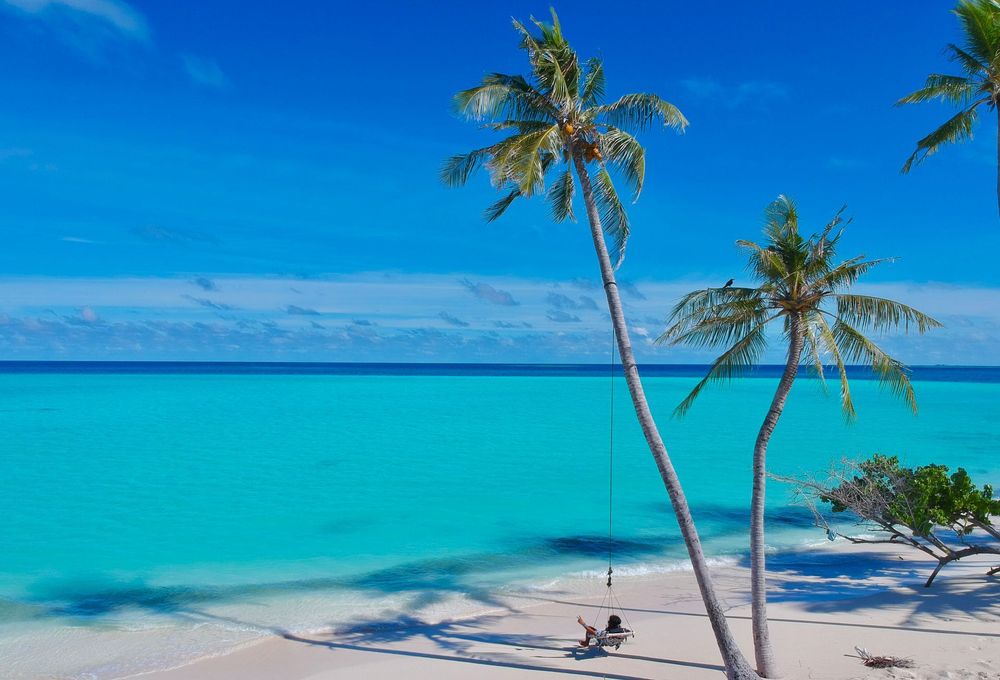
Cover photograph: Palm trees and turquoise water on a Fulidhoo beach — Photograph taken in 2018. — Hamody Omar, Pexels License.
Frequently Asked Questions
Is Fulidhoo a resort island?
No. It is an inhabited island in Vaavu Atoll with guesthouse accommodation. Daily life, designated visitor beach arrangements and local customs are part of the stay.
Can I reach Fulidhoo directly from the airport?
Local businesses arrange shared speedboat transfers from the airport area, subject to the sailing and your booking. Confirm the exact boarding point, meeting instructions and flight compatibility with your host.
Do I need to scuba dive to enjoy Fulidhoo?
No. Beach time and guided snorkeling can form the stay. However, choose it because that slower routine appeals, and confirm the activities suitable for your swimming ability rather than relying on a long excursion list.
Are nurse-shark or dolphin sightings guaranteed?
No. Excursion names are not wildlife guarantees. Ask about the proposed site, conditions and encounter practices, and keep a beach or rest day as an acceptable alternative.

Keep Exploring
Rasdhoo: Plan a Maldives Local-Island Stay
Plan Rasdhoo around diving, suitable snorkeling, confirmed boat transfers, guesthouse routines and a complete Maldives stay budget.
Ukulhas: Plan a Maldives Local-Island Stay
Plan a Ukulhas stay with confirmed speedboat connections, the right room, beach customs, reef guidance and a complete Maldives budget.
Thoddoo: Plan a Stay on a Local Island
Choose Thoddoo for a local-island stay combining beaches, cultivated land and village life. Compare transfer options and room locations before booking.